Die vorliegende Schrift wurde von Dr. Mohammad Djassemi 1981 im Rahmen einer Dissertation an der Universit t Augsburg erstellt. Aber sie ist heute genauso aktuell wie vor 36 Jahren. Deshalb wird sie jetzt durch der breiten ffentlichkeit pr sentiert. Westerland im Dezember 2001 Mohammed Djassemi
The current treatments available to treat tobacco dependency offer primary care providers a unique opportunity to reduce the morbidity and mortality associated with chronic tobacco use. The mission of the dental profession is to clinically apply knowledge and skill with the goal of optimising a patient's oral and craniofacial health. This concise handbook, part of the American Academy of Oral Medicine's (AAOM) Clinician's Guide series offers a useful outline of common oral diseases and dental conditions found in smokers and alerts dental professionals to the systemic diseases hazarded by tobacco users.The guide is written to help professionals develop effective strategies for assisting patients toward recovery from tobacco addiction using a combination of interventional therapies, including nicotine-replacement therapy and smoking cessation counseling.The authors make a strong case for the role of the oral health team as vanguards of patient education, disease prevention and effective treatment.
Focusing on conflict resolution, Water Resources Systems Analysis discusses systematic approaches to the mathematical modeling of various water resources issues, which helps decision-makers allocate water effectively and efficiently. Readers will gain an understanding of simulation, optimization, multi-criterion-decision-making, as well as engineering economics and time series analysis, all necessary for successful water systems analysis. The book explores recent developments in surface and groundwater systems optimization and modeling, and it relates these to real field applications and case studies. Supported by essential mathematical tools, this book gives current and future hydrologists, water resources managers, and civil engineers a logical reference for prioritizing and addressing critical issues such as flood control, power generation, and water quality management.
This book is a comprehensive, practical guide and reference to today's mechanical conveyor systems. It covers all types of mechanical conveyors, providing in-depth information on their design, function and applications. More than 180 photographs and schematics illustrate details of design and system layout. An introductory chapter provides an understanding of the characteristics of various types of bulk solids, including their conveyability and the types of conveying systems most effective for each. Following chapters examine each of five major categories of conveying systems, with practical details on their design, operation and applications. The final chapter presents basic information on motors and drives for conveying systems, as well as related equipment such as speed reduction systems and conveyor brakes. The emphasis throughout the text is on practical engineering and operating information, with a minimum of theory. The presentation is systematic and organized for easy reference. A very detailed index enables the quick location of needed information. This guide and reference will be useful to all engineers and other personnel involved in the continuous movement of bulk solids. It serves as both a basic introduction and a desk-top reference. The Authors Dr. Fayed is a Professor and Director of the Powder Science & Technology Group at Ryerson Polytechnic University in Toronto. He is also a licensed Consulting Engineer, a Fellow of the American Institute of Chemical Engineers and the Canadian Society of Chemical Engineering. Previously he held positions in process design and development with ICI, Davy McKee, M. W. Kellogg, and Peabody. He has lectured at numerous seminars and workshops at meetings of the American Institute of Chemical Engineers, and other organizations. He has published many papers on particulate technology and is the co-editor of Powder Science & Technology Handbook. Thomas Skocir in an engineer presently with ECO-TEC, an environmental engineering company in Toronto.
This important study seeks to address the issues of state building and regime security as key variables affecting and determining a foreign policy-making process during a crisis and confrontation. Mohamedou proceeds from the notion that decision makers' dispositions matter their worldview, ideology, beliefs, and axioms play a role in state building as well as the historical operational environment (societal, regional, and international). The case this study is concerned with is the Second Gulf War, initiated on August 2, 1990, with the Iraqi invasion of Kuwait, and which came to an end on February 28, 1991, after a military confrontation between Iraq and an international coalition of twenty-eight countries led by the United States of America.
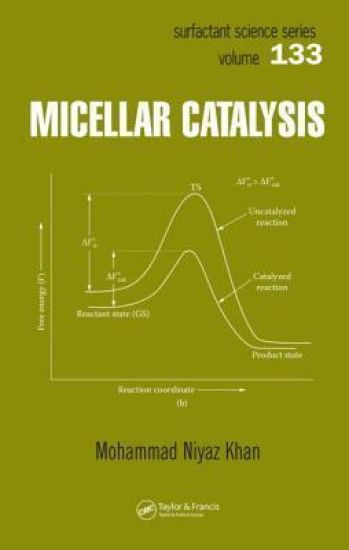
Micelles are prevalent in naturally occurring and biological catalytic reactions. However, it is only in recent decades that scientists have developed kinetic models clarifying how micelle-mediated catalysis works at a molecular level. Written by a leading expert in the field, Micellar Catalysis is an in-depth examination of how micelles affect reaction mechanisms and reaction rates in organic and inorganic reactions. The book first discusses the structural and chemical properties of micelles and the role of thermodynamics, concentration, and additives in forming micelles. Demonstrating how intermolecular forces influence the reaction mechanisms, the author presents kinetic models for reactions catalyzed by normal micelles, as well as mixed micelles and metallomicelles. The book also compares various types of catalytic reactions with and without micelles to quantify their effect on reaction rates and rate constants. Using this information, it illustrates how micelles can modify reaction rates and improve catalytic efficiency, particularly for industrial processes. The final chapter explains the principles of kinetics used for data analysis. Focused on kinetic, chemical, and physical aspects of micelle-mediated reactions, this book offers clear insight into the complex mechanisms that occur in biological reactions. Micellar Catalysis is an essential source of reference for scientists involved in the research and development of micelles for industrial and biochemical applications.
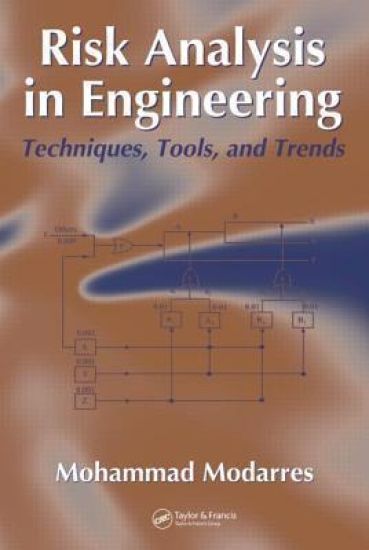
Based on the author’s 20 years of teaching, Risk Analysis in Engineering: Techniques, Tools, and Trends presents an engineering approach to probabilistic risk analysis (PRA). It emphasizes methods for comprehensive PRA studies, including techniques for risk management. The author assumes little or no prior knowledge of risk analysis on the part of the student and provides the necessary mathematical and engineering foundations. The text relies heavily on, but is not limited to, examples from the nuclear industry, because that is where PRA techniques were first developed. Since PRA provides a best-estimate approach, the author pays special attention to explaining uncertainty characterization.The book begins with a description of the basic definitions and principles of risk, safety, and performance and presents the elements of risk analysis and their applications in engineering. After highlighting the methods for performing PRAs, the author describes how to assess and measure performance of the building blocks of PRAs, such as reliability of hardware subsystems, structures, components, human actions, and software. He covers methods of characterizing uncertainties and methods for propagating them through the PRA model to estimate uncertainties of the results. The book explores how to identify and rank important and sensitive contributors to the estimated risk using the PRA and performance assessment models. It also includes a description of risk acceptance criteria and the formal methods for making decisions related to risk management options and strategies. The book concludes with a brief review of the main aspects, issues, and methods of risk communication. Drawing on notes, homework problems, and exams from courses he has taught as well as feedback from his students, Professor Modarres provides a from-the-trenches method for teaching risk assessment for engineers. This is a textbook that is easy to use for students and professors alike.
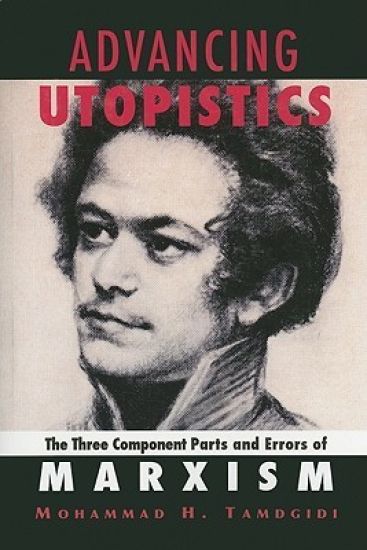
Mohammad H. Tamdgidi is Assistant Professor of Sociology at the University of Massachusetts Boston. He is the Founding Editor of Human Architecture:Journal of the Sociology of Self-Knowledge.
Mohammad H. Tamdgidi is Assistant Professor of Sociology at the University of Massachusetts Boston. He is the Founding Editor of Human Architecture:Journal of the Sociology of Self-Knowledge.
The primary purpose of this book is to investigate the various facets of the life of Jacqueline Kennedy Onassis, a person who symbolised herself as an American icon for most of her adult life both before, during and after her years in the White House as the First Lady of the United States. The book also examines the early years of Jacqueline Kennedy in order to find out whether there were any traits in her personality that prepared her for the more challenging times which she had to endure in her later years. The book makes an honest attempt to touch upon the fascinating life Jacqueline Kennedy led which touched one and all crossing across various sections of American society. Through an organisation of ten chapters, the book covers Jackie's life from her early childhood years in East Hampton, Long Island to the final days in Manhattan, New York City.
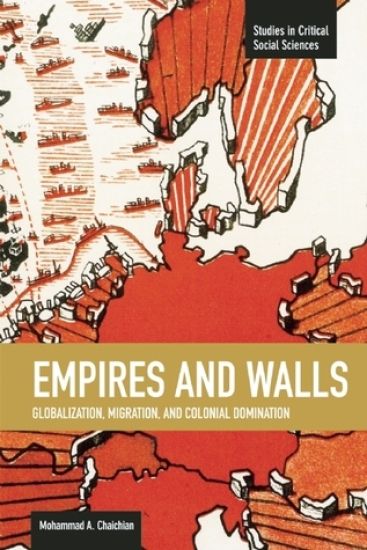
Why do empires build walls and fences? Are they for defensive purposes only, to keep the 'barbarians' at the gate; or do they also function as complex offensive military structures to subjugate and control the colonised? In Empires and Walls, Mohammad A. Chaichian meticulously examines the rise and fall of the walls that are no longer around; as well as the impending fate of 'neo-liberal' barriers that imperial and colonial powers have erected in the new Millennium. Chaichian provides evidence that walls always signal the fading power of an empire.
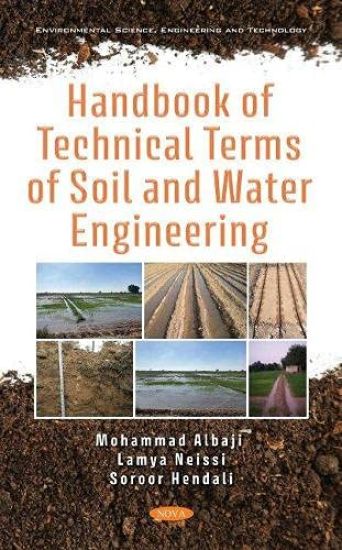
This book is designed as a text for undergraduate soil and water engineering courses and as preliminary reading for postgraduate courses in soil and water engineering. It is hoped that it will also be of value to specialists, experts and engineers already in the field and to students preparing for the M.Sc. and PhD examinations. The texts and exercises are based on my lecture courses to undergraduate water science engineers augmented by material prepared for extramural short courses. Wherever possible, illustrations have been used to clarify the texts. The purpose of this book is to bring together and integrate in a single text the subject matter that deals with soil and water engineering. The book is divided into 24 chapters and is intended for students, researchers, and professionals working on various aspects of soil and water engineering. Various soil and water subjects have been discussed in the chapters.
The exponential distribution is often used to model the failure time of manufactured items in production. This book presents various properties of the exponential distribution and inferences about them.
Devastating cartoons from acclaimed Palestinian political cartoonist that convey the outrage and scope of the genocide in Gaza. Mohammad Sabaaneh is an acclaimed Palestinian political cartoonist who has gained worldwide attention for his insightful and provocative linocut artwork, which sheds light on the reality of Palestinian life under occupation. His striking black-white-and-gray cartoons bring attention to the horrors of the Israeli assaults and atrocities in Gaza and open people's eyes to the suffering Palestinians endure under Israel's brutal settler colonialism and its system of apartheid. After his social media accounts were shadow banned and taken down, resulting in the loss of 15 years worth of content, Sabaaneh started questioning the fate of the thousands of videos and pictures of Gaza that can be erased in a second--the commemoration of its historical importance and the importance of documenting what is happening on the ground. The fate of Gaza's story and history is in the hands of a few corporations intent on hiding the crimes committed against the people of Gaza. Capturing and drawing scenes from videos posted on social media was a decision Sabaaneh made as a way to archive moments and information that are expected to be banned and erased later. From the genocide in Gaza to the atrocities in the West Bank, Sabaaneh's political cartoons portray a world in which injustice is unending, but so is the resilience of the Palestinian people. 30 Seconds from Gaza: Diary of Genocide is an artistic triumph and a powerful testament to Palestinian sumud (steadfastness). It is proof of art's capacity to make visible what oppressors want the world to forget. In the words of Mohammad Sabaaneh "30 seconds. 30-second peek through videos from the heart of Gaza to social media platforms. 30 seconds of people's lives in Gaza; a small window showcasing the atrocities and hell Palestinians in Gaza are living in. 30 seconds of people's lives, of people like us. Humans, nothing less... Watching the full scene unfold is gut wrenching, scenes that not many people can watch. Sometimes, we get the 'sensitive content' warning before the video begins... Can you imagine how the ones living those 30 seconds feel? Capturing and drawing scenes from these videos was a decision I made as a way to archive moments and information that are expected to be banned later. It allows me to showcase what is happening on the ground, showcasing the crimes committed against the people of Gaza ... The reasoning behind using Indian drawing ink is its permanence; water cannot erase it. No substance at all can erase it, resembling the dried-up blood splattered across the roads of Gaza, its hospitals, its children's faces... never erased, never forgotten." Notes from the author My story begins in prison. The occupation has held Palestinians in various prisons, some of them small and called jails; others larger and called towns and villages, which are surrounded by military checkpoints, walls, and settlements. The political reporting seen on the news every day can sometimes feel removed and distant, and I am saddened to see our stories are being reduced to numbers and statistics. The life of the Palestinian has become a hemorrhage between military checkpoints, and between one prison and another. This is the reality of settler colonialism. And this is how it impacts us as individuals. This book is an attempt to translate headlines into stories and illustrations, so that you, the reader, can see and feel the reality of Palestinian life.
Despite the status of Arabic as a global language and the high demand to learn it, the field of Arabic second language acquisition remains underinvestigated. Second language acquisition findings are crucial for informing and advancing the field of Arabic foreign language pedagogy including Arabic language teaching, testing, and syllabus design. Arabic Second Language Learning and Effects of Input, Transfer, and Typology provides data-driven empirical findings for a number of basic and high-frequency morphosyntactic structures with two novel typological language pairings, examining Arabic second language acquisition data from adult L1 Chinese- and Russian-speaking learners of Arabic as a foreign language. Alhawary’s study examines the different processes, hypotheses, and acquisition tendencies from the two learner groups, and documents the extent of the successes and challenges faced by such learners in their L2 Arabic grammatical development during the first three years of learning the language. In addition, the book offers both theoretical and practical implications related to input exposure, L1 and L2 transfer, and typological and structural proximity effects. This book serves as a valuable resource for both second language acquisition experts and foreign language teaching practitioners.
Despite the status of Arabic as a global language and the high demand to learn it, the field of Arabic second language acquisition remains underinvestigated. Second language acquisition findings are crucial for informing and advancing the field of Arabic foreign language pedagogy including Arabic language teaching, testing, and syllabus design. Arabic Second Language Learning and Effects of Input, Transfer, and Typology provides data-driven empirical findings for a number of basic and high-frequency morphosyntactic structures with two novel typological language pairings, examining Arabic second language acquisition data from adult L1 Chinese- and Russian-speaking learners of Arabic as a foreign language. Alhawary’s study examines the different processes, hypotheses, and acquisition tendencies from the two learner groups, and documents the extent of the successes and challenges faced by such learners in their L2 Arabic grammatical development during the first three years of learning the language. In addition, the book offers both theoretical and practical implications related to input exposure, L1 and L2 transfer, and typological and structural proximity effects. This book serves as a valuable resource for both second language acquisition experts and foreign language teaching practitioners.