

Kirjahaku
Etsi kirjoja tekijän nimen, kirjan nimen tai ISBN:n perusteella.
1000 tulosta hakusanalla Morrison Meade Davis
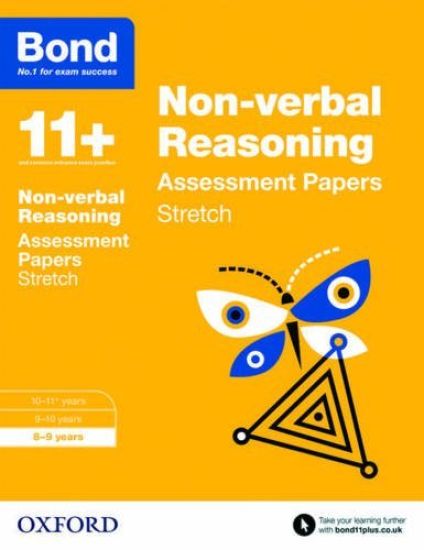
Bond 11+: Non-verbal Reasoning: Stretch Papers
Karen Morrison; Frances Down; Alison Primrose; Sarah Lindsay
Oxford University Press
2015
nidottu
Bond is the number 1 provider of 11+ practice, helping millions of children pass selective entrance exams. Bond Non-verbal Reasoning Stretch Practice for ages 8-9 years books are designed to challenge the most able children. Covering all the core 11+ question types your child will experience in their actual exam, building their skills and confidence for exam success.
Knowledge of public affairs matters: this friendly guide is an invaluable read for journalism students and journalists looking for a firm grasp on how central and local governments work, how public services operate, and how political events generate informative new stories. · Offers engaging coverage of the constitutional framework and the governing institutions of the UK, and gives stimulating insights into how they are, and could be, covered by journalists · Designed to complement NCTJ-accredited syllabi, this text is also recommended for a broad range of media qualifications · Chapters move logically through relevant topics including the economy, the electoral system, political parties, healthcare, education and housing, and conclude with 'take-home points' and 'current issues' to summarise the chapter and provide contextual knowledge · Fully updated to reflect policy changes introduced by the governments of Boris Johnson, Liz Truss, and Rishi Sunak · Includes detailed overviews of the key impacts on British politics, public services, and the economy of the Covid-19 pandemic, the 'cost-of-living crisis', and the war in Ukraine · New sections outlining the impact of Chancellor Kwasi Kwarteng's 2022 'mini-Budget' and policy changes affecting a range of areas including asylum and immigration, housing and planning, ownership of the railways, and the National Health Service in England Digital formats and resources The eighth edition is available for students and institutions to purchase in a variety of formats, and is supported by online resources. The e-book offers a mobile experience and convenient access along with functionality tools, navigation features and links that offer extra learning support: www.oxfordtextbooks.co.uk/ebooks
Complicating Articulation in Art Cinema argues that art cinema draws attention to its disjointed, multi-parted form, but that criticism has too frequently sought to explain this complexity away by stitching the parts together in totalizing readings. This stitching together has often relied on the assumption that the solution to art cinema's puzzles lies in interpreting each film as the expression of a focalizing character's internal disturbance. This book challenges this assumption. It argues that the attempt to explain formal complexity through this character-centric approach reduces formal achievements and enigmatic characters to inadequate approximations of one another. Reference to character cannot fully tame unschematic and unpredictable combinations of - and collisions between - contradictory levels of narration, clashing styles, discontinuously edited shots, jarring allusions, dislocated genre signifiers, and intermedial elements. Through close analyses of films by Roberto Rossellini, Robert Bresson, Luis Buñuel, Terence Davies, Peter Greenaway, and Kelly Reichardt, Complicating Articulation in Art Cinema offers an ethics of criticism that suggests that the politics of art cinema's eccentric form are limited by character-centred readings. Each of the featured films presents inarticulate characters, whose emotional and intellectual lives are unknowable, further complicating the relationship between character and form. This book argues that, by acknowledging this resistance to interpretation, critics can think in new ways about art cinema's interrogation of the possibilities of knowledge.
Morrison examines the modernist poetics of Ezra Pound and T. S. Eliot, and traces their influence on the current crisis in post-structuralist literary theory. He concludes with a provocative analysis of deconstruction and the work of Paul de Man.
From Camelot to Kent State
Joan Morrison; Robert K. Morrison
Oxford University Press Inc
2001
nidottu
No decade in American history continues to fascinate us like the Sixties. No decade combines such hopeful idealism with such violence and disillusionment, or witnesses such profound political, cultural, and personal upheavals. And no decade benefits more from being seen through the eyes of those who experienced first-hand the shocks and revelations that still reverberate today. Newly revised and updated, with an expanded introduction, From Camelot to Kent State tells the story of ten of the most dramatic years in the life of America, and of fifty-nine men and women who lived through those years. In their own words, civil rights activists, soldiers who fought in Vietnam, anti-war protesters, student radicals, feminists, Peace Corps workers, and many others take us inside the major events and movements of the period. Far from a dispassionate history of the Sixties, these stories bristle with the tension and immediacy of lived experience. How did it feel to wake up into step out of a helicopter into a Vietnamese jungle; to ride south on a freedom bus, to march on the Pentagon; to take over a college administration building; to hear Jimi Hendrix play the national anthem at Woodstock; to attend the first consciousness-raising meetings for women at the Bread and Roses café? This captivating oral history will let you know. Included are first-hand accounts from both the famous-including Eldridge Cleaver, Abbie Hoffman, Philip Berrigan, and John Lewis-and the ordinary men and women who were swept up in major historical events, From Camelot to Kent State offers a uniquely valuable view of a decade that forever changed the history and consciousness of America.
This book examines the pivotal role of Johann Joachim Winckelmann as an arbiter of classical taste. It identifies the key features of Winckelmann's treatment of classical beauty, particularly in his famous descriptions, and investigates his teaching of the appreciation of beauty. The work identifies and examines the point at which theory and descriptive method are merged in a practical attempt to offer aesthetic education. The publications and correspondence of Winckelmann's pupils are offered as criteria for judging the success of his mission, eventually casting doubt upon his concept of aesthetic education, both in theory and practice. The final chapter of the book is concerned with Goethe's reception of Winckelmann, which shows unusual sensitivity to his work's aesthetic core. It also shows how Goethe's own writing on Italy reveals a process of independent aesthetic education akin to Winckelmann's and distinct from his pupils. The work is founded in close textual analysis but also covers the principles of the aesthetic education, the value of the Grand Tour and the role of Rome in the European imagination.
Journalism Textbook Multipack
James Morrison; Mark Hanna; Mike Dodd
Oxford University Press
2017
pokkari
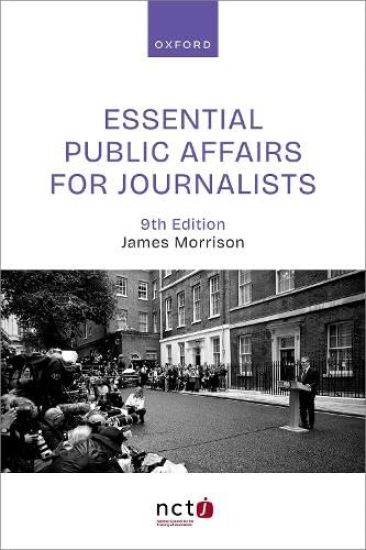
Published in partnership with the NCTJ, Essential Public Affairs for Journalists is the indispensable public affairs guide for journalism students and industry professionals. Knowledge of public affairs matters: this friendly guide is an invaluable read for journalism students and journalists looking for a firm grasp on how central and local governments work, how public services operate, and how political events generate informative new stories. Key Features - Offers engaging coverage of the constitutional framework and the governing institutions of the UK, and gives stimulating insights into how they are, and could be, covered by journalists - Published in partnership with the National Council for the Training of Journalists and designed to complement accredited syllabi. This text is also recommended for a broad range of media qualifications. - Chapters move logically through relevant topics including the economy, political parties, health care, education and housing, and conclude with 'take-home points' and 'current issues' to summarise the chapter and provide contextual knowledge - Also available as an e-book with functionality tools, navigation features, and links that offer extra learning support New to this Edition - Fully updated to reflect constitutional and policy changes introduced by the recently elected Labour government - Includes details of significant reforms relating to areas such as regional devolution, local government structures, the NHS, prisons, employment rights, public transport, and town and country planning - Reflections and updates on key policy controversies including the Assisted Dying Bill and the backlash against the Winter Fuel Allowance and tax-raising autumn 2024 Budget - Fully revised and updated 'current issues' and 'further reading' sections Digital formats and resources The ninth edition is available for students and institutions to purchase in a variety of formats. The e-book offers a mobile experience and convenient access along with functionality tools, navigation features, and links that offer extra learning support: www.oxfordtextbooks.co.uk/ebooks .
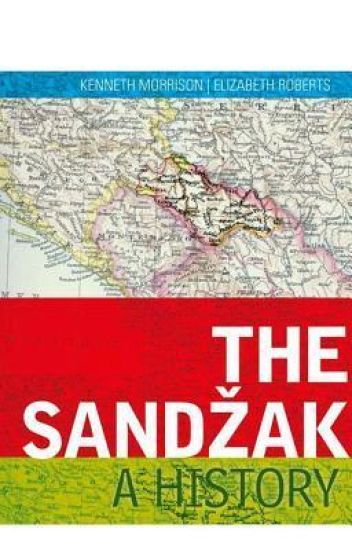
One of the few unexamined pieces of the Balkan jigsaw, the Sandzak region, straddling the border area between the now independent states of Serbia and Montenegro, is heir to a complex and contested history, characterised by foreign occupation and domestic conflict. The heartland of the first Serbian medieval kingdom, the area fell under the control of the Ottoman Turks in the late fourteenth century. But as the Ottoman Empire was rolled back during the tumultuous nineteenth century, the Sandzak, positioned at the interface between the Hapsburg and Ottoman Empires, became the focus of Great Power politics. Divided by Serbia and Montenegro during the Balkan Wars, occupied by the Austrians during the First World War, the Sandzak was then incorporated into the Kingdom of Serbs, Croats and Slovenes in 1918. The area was again occupied by Italian and German forces during the Second World War, during which internecine conflicts between competing domestic political forces intensified. Granted autonomous status by the communist-led Partisans in 1943, the Sandzak was again divided between Serbia and Montenegro in 1945. Yet this short period of autonomy remained a powerful symbol, and as Yugoslavia began to unravel in the 1990s, the 'Sandzak Question' re-emerged.The Sandzak: A History attempts to demystify the enigma of this little-know part of the Balkans. Offering a detailed yet succinct analysis of its religious and ethnic dynamics, the authors chart a course through conflicting historical narratives to provide a comprehensive overview of the complex history of this contested land.
Attempts to understand various aspects of the empirical world often rely on modelling processes that involve a reconstruction of systems under investigation. Typically the reconstruction uses mathematical frameworks like gauge theory and renormalization group methods, but more recently simulations also have become an indispensable tool for investigation. This book is a philosophical examination of techniques and assumptions related to modelling and simulation with the goal of showing how these abstract descriptions can contribute to our understanding of the physical world. Particular issues include the role of fictional models in science, how mathematical formalisms can yield physical information, and how we should approach the use of inconsistent models for specific types of systems. It also addresses the role of simulation, specifically the conditions under which simulation can be seen as a technique for measurement, replacing more traditional experimental approaches. Inherent worries about the legitimacy of simulation "knowledge " are also addressed, including an analysis of verification and validation and the role of simulation data in the search for the Higgs boson. In light of the significant role played by simulation in the Large Hadron Collider experiments, it is argued that the traditional distinction between simulation and experiment is no longer applicable in some contexts of modern science. Consequently, a re-evaluation of the way and extent to which simulation delivers empirical knowledge is required. "This is a, lively, stimulating, and important book by one of the main scholars contributing to current topics and debates in our field. It will be a major resource for philosophers of science, their students, scientists interested in examining scientific practice, and the general scientifically literate public. "-Bas van Fraassen, Distinguished Professor of Philosophy, San Francisco State University
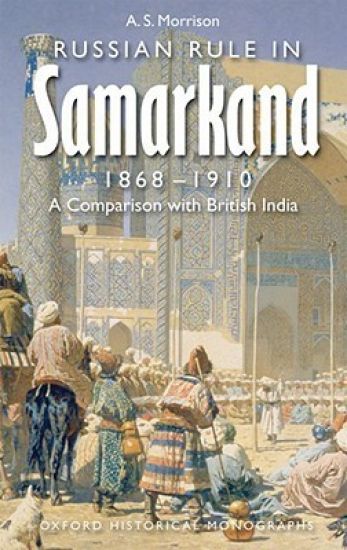
Russian Rule in Samarkand examines the structures, personnel, and ideologies of Russian imperialism in Turkestan, taking Samarkand and the surrounding region as a case-study. The creation of a colonial administration in Central Asia presented Russia with similar problems to those faced by the British in India, but different approaches to governance meant that the two regimes often stood in stark contrast to one another. While the Russian administration was characterised by corruption and inefficiency, British rule in India was often more violent, and its subjects much more heavily taxed. Opening with the background to the political situation in Central Asia and a narrative of the Russian conquest itself, the book moves on to analyse official attitudes to Islam and to pre-colonial elites, and the earliest attempts to establish a functioning system of revenue collection. Uncovering the religious and ethnic composition of the military bureaucracy, and the social background, education and training of its personnel, Alexander Morrison assesses the competence of these officers vis-à-vis their Anglo-Indian counterparts. Subsequent chapters look at the role of the so-called 'native administration' in governing the countryside and collecting taxes, the attempt to administer the complex systems of irrigation leading from the Zarafshan and Syr-Darya rivers, and the nature and functions of the Islamic judiciary under colonial rule. Based on extensive archival research in Russia, India, and Uzbekistan, and containing much rare source material translated from the original Russian, Russian Rule in Samarkand will be of interest to all those interested in the history of the Russian Empire and European Imperialism more generally.

'The Jago had got him, and it held him fast.' In the worst of London's East End slums, in an area called the Jago, young Dicky Perrott is used to a life of poverty, crime, and violence. Gang warfare is the order of the day, deaths are commonplace, and thieving the only way to survive. At first Dicky dreams of becoming a High Mobsman - one of the aristocrats of Jago crime - but the efforts of Father Sturt to improve conditions offer him a different path. Dicky's journey takes him through a savage but colourful community of pickpockets and cosh-carriers, where the police only enter in threes, and where murder erupts with an unusual horror and intimacy. Morrison's portrayal of the Victorian underclass and its underworld drew attention to the bleak prospects for children living in such surroundings, and it is a classic of slum-fiction. In this edition Peter Miles provides a rich contextual background to the creation of the novel, and the social debates to which it contributed. ABOUT THE SERIES: For over 100 years Oxford World's Classics has made available the widest range of literature from around the globe. Each affordable volume reflects Oxford's commitment to scholarship, providing the most accurate text plus a wealth of other valuable features, including expert introductions by leading authorities, helpful notes to clarify the text, up-to-date bibliographies for further study, and much more.

Breaking The Glass Ceiling
Ann Morrison; Ellen Van Velsor; Randall P. White
Perseus Books
1994
pokkari
At a time when women have more tools than ever before to help them break through the glass ceiling, including the government's Glass Ceiling Initiative and the 1991 Civil Rights Act, far too many remain trapped beneath it. Based on the ground-breaking three-year study of female executives that brought the glass ceiling to national attention, this book examines the factors that determine success or derailment in the corporate environment, reveals how the executive environment is different for women, and looks at the new obstacles along the road to the top.Vital reading for every woman in business and for every employer and manager now responsible for the removal of advancement barriers for women, Breaking the Glass Ceiling explodes the long-held myths and provides practical advice on how to smash the glass ceiling.

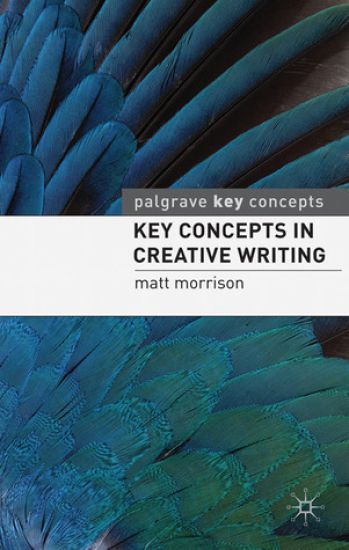
A comprehensive writers' guide to the terminology used across the creative writing industries and in the major literary movements. Packed with practical tips for honing writing skills and identifying opportunities for publication and production, it also explains the workings of publishing houses, literary agencies and producing theatres.

Defined as operations other than war, stability operations can include peacekeeping activities, population control, and counternarcotics efforts, and for the entire history of the United States military, they have been considered a dangerous distraction if not an outright drain on combat resources. Yet in 2005, the U.S. Department of Defense reversed its stance on these practices, a dramatic shift in the mission of the armed forces and their role in foreign and domestic affairs. With the elevation of stability operations, the job of the American armed forces is no longer just to win battles but to create a controlled, nonviolent space for political negotiations and accord. Yet rather than produce revolutionary outcomes, stability operations have resulted in a large-scale mission creep with harmful practical and strategic consequences. Jennifer Morrison Taw examines the military's sudden embrace of stability operations and its implications for American foreign policy and war. Through a detailed examination of deployments in Iraq and Afghanistan, changes in U.S. military doctrine, adaptations in force preparation, and the political dynamics behind this new stance, Taw connects the preference for stability operations to the far-reaching, overly ambitious American preoccupation with managing international stability. She also shows how domestic politics have reduced civilian agencies' capabilities while fostering an unhealthy overreliance on the military. Introducing new concepts such as securitized instability and institutional privileging, Taw builds a framework for understanding and analyzing the expansion of the American armed forces' responsibilities in an ever-changing security landscape.