Compiled in the 14th century AD by a prominent Syrian scholar, the As-Seerah An-Nabawiyya of Imam Ibn Kathir is a full examination in chronological order, of the Prophet Muhammad, peace be upon him.Drawn from the earliest and most reliable Arabic sources, it offers, in this close English translation, the fullest available account of the historical circumstances and personalities most important in the founding of Islam. Ibn Kathir's work offers a fine example of Islamic scholarship; the quotations and anecdotes that constitute its core are evaluated in terms of the trustworthiness of their sources.Variant wordings that are related through differing lines of transmission are noted, and Ibn Kathir gives both his own assessments and those of the earliest Islamic authorities concerning the likely authenticity of these records. The comments and conversations derived from ancient texts, that are quoted in this work constitute the basis of our knowledge of Islam during the lifetime of its founder.Volume 3 (of this 4 volume series) gives details of the numerous battles and campaigns waged between 3 (AH) and 8 (AH) to defend and spread the religion of Islam.Ibn Kathir was born in approximately 1313 in the Boesra district of eastern Damascus, and studied with many great scholars working in the city during his time. He died in 1374.Trevor Le Gassick is professor of Arabic Literature at the University of Michigan. He has devoted himself to the translation and commentary of important works, both contemporary and from earlier eras, that reveal important aspects of the rich texture of Arabic literary culture.
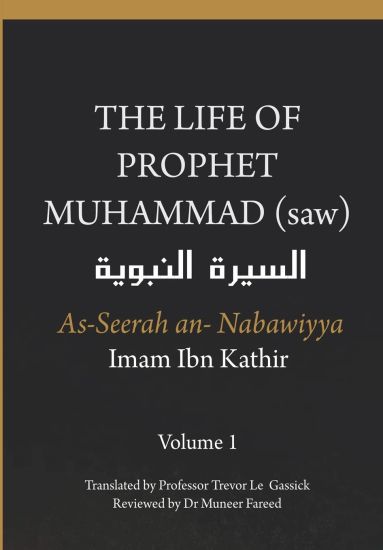
Compiled in the 14th century AD by a prominent Syrian scholar, the As-Seerah An-Nabawiyya of Imam Ibn Kathir is a full examination in chronological order, of the Prophet Muhammad, peace be upon him.Drawn from the earliest and most reliable Arabic sources, it offers, in this close English translation, the fullest available account of the historical circumstances and personalities most important in the founding of Islam. Ibn Kathir's work offers a fine example of Islamic scholarship; the quotations and anecdotes that constitute its core are evaluated in terms of the trustworthiness of their sources.Variant wordings that are related through differing lines of transmission are noted, and Ibn Kathir gives both his own assessments and those of the earliest Islamic authorities concerning the likely authenticity of these records. The comments and conversations, derived from ancient texts, that are quoted in this work constitute the basis of our knowledge of Islam during the lifetime of its founder.Volume 1 (of this 4 volume series) relates the history of the Arab tribes who were the Prophet's forebears, the lives of his parents, and the accounts of unusual events surrounding his birth. It then goes on to relate anecdotes regarding his childhood, the signs of the Prophethood, and the first revelations.Ibn Kathir was born in approximately 1313 in the Boesra district of eastern Damascus, and studied with many great scholars working in the city during his time. He died in 1374.Trevor Le Gassick is professor of Arabic Literature at the University of Michigan. He has devoted himself to the translation and commentary of important works, both contemporary and from earlier eras, that reveal important aspects of the rich texture of Arabic literary culture.
Compiled in the 14th century AD by a prominent Syrian scholar, the As-Seerah An-Nabawiyya of Imam Ibn Kathir is a full examination in chronological order, of the Prophet Muhammad, peace be upon him.Drawn from the earliest and most reliable Arabic sources, it offers, in this close English translation, the fullest available account of the historical circumstances and personalities most important in the founding of Islam. Ibn Kathir's work offers a fine example of Islamic scholarship; the quotations and anecdotes that constitute its core are evaluated in terms of the trustworthiness of their sources.Variant wordings that are related through differing lines of transmission are noted, and Ibn Kathir gives both his own assessments and those of the earliest Islamic authorities concerning the likely authenticity of these records. The comments and conversations, derived from ancient texts, that are quoted in this work constitute the basis of our knowledge of Islam during the lifetime of its founder.Volume 1 (of this 4 volume series) relates the history of the Arab tribes who were the Prophet's forebears, the lives of his parents, and the accounts of unusual events surrounding his birth. It then goes on to relate anecdotes regarding his childhood, the signs of the Prophethood, and the first revelations.Ibn Kathir was born in approximately 1313 in the Boesra district of eastern Damascus, and studied with many great scholars working in the city during his time. He died in 1374.Trevor Le Gassick is professor of Arabic Literature at the University of Michigan. He has devoted himself to the translation and commentary of important works, both contemporary and from earlier eras, that reveal important aspects of the rich texture of Arabic literary culture.
This book "Linguopoetics of the works of Murad Muhammad Dost" analyzes the textual structure of Murad Muhammad Dost's works, language features, the writer's ability to use vocabulary tools to create characters' characters.
Embark on an enchanting voyage through India's rich educational history with "Promotion of Learning in India" by Narendra Nath Law. This meticulously researched book unveils centuries of scholarly evolution, from the ancient Vedic and Buddhist eras to the heights of Mughal patronage and the transformative impact of British colonialism.Law's narrative spans two comprehensive volumes, meticulously tracing the development of educational systems and institutions across India's diverse cultural landscape. Delving into the pre-Mughal era, he explores the contributions of early dynasties like the Ghaznavids and Ghurids, illuminating the profound influence of Islamic rule on Indian education, including the establishment of renowned centers of learning such as Nalanda and Takshashila.In the second volume, Law brings to life the golden age of Mughal education, highlighting the visionary leadership of figures like Akbar the Great and Shah Jahan. Their reigns witnessed unprecedented advancements in literature, science, and the arts, shaping India's intellectual heritage for centuries to come.Throughout both volumes, Law meticulously examines the clash and confluence of traditional Indian educational practices with the Western models introduced during British colonial rule. His insightful analysis reveals how these reforms continue to resonate in India's modern educational framework, offering profound insights into the continuity and transformation of one of the world's oldest civilizations."Promotion of Learning in India" is not just a historical account but a testament to India's enduring quest for knowledge and cultural synthesis. It celebrates the resilience of India's scholars and educators, who, across epochs, have championed learning against formidable odds.For those fascinated by history, culture, and the evolution of education, Narendra Nath Law's magnum opus is an essential addition to your library. Rich in detail and meticulously researched, this book promises to enlighten and inspire, offering a deeper understanding of India's intellectual journey through the ages.
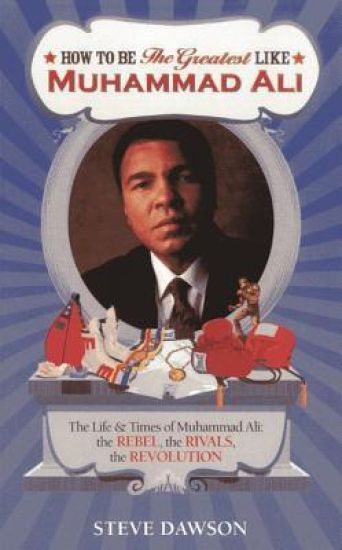
Loved as much for his fluid fighting style as his colourful personality and brazen pre-match hype, Muhammad Ali is widely considered to be the greatest heavyweight boxer of all time. Charismatic, outspoken and unafraid to fight for his beliefs, Ali has deftly jabbed, danced and trash-talked his way into the annals of sporting history.Ali's controversial refusal to be drafted for the Vietnam War meant that his license to fight was withdrawn for three years. And yet Ali achieved all that he did while being denied the right to box at his peak. From Olympic gold medallist to cultural icon and fearless freedom fighter, Steve Dawson takes a candid, honest look at the man who, amidst racial and religious turbulence in 1960s white America, soared to his destiny as The Greatest".
Three real and true stories were written to help people seeing the prophet Muhammad peace be upon him (PBUH) in dreams.Seeing the prophet PBUH is most important for the soul and the right behavior of people. It is a dear wish that every Muslim has. Many virtuous Muslims have seen him many times. He even solved their problems.The prophet PBUH said: "He who sees me in dream, it is as if he sees me in reality because Satan cannot disguise himself in me" (Muslim 2266, Abu Dawud 5023, Ahmad 5/306).
The Rice Genetics Collection of past symposia and other selected literature contains nearly 4,400 pages of searchable information on rice genetics and cytogenetics published by the IRRI and its partners since 1964. In addition to the five genetics symposi
This book contains satisfying answers to 10 controversial questions that arise regarding our beloved Prophet Muhammad (PBUH). Answers have been written in a very clear and comprehensive manner to address all doubts and misinterpretation about Islam and its Prophet.
Comment Muhammad Baqir al-Sadr repense-t-il l' conomie au-del du capitalisme et du socialisme ? En quoi son projet politique et financier r pond-il aux in galit s d'aujourd'hui ? Ce livre pr sente une alternative islamique fond e sur la justice et la dignit , articulant pouvoir, jurisprudence et conomie. Al-Sadr critique les doctrines dominantes et propose des outils concrets - notamment la banque islamique non usuraire - pour un d veloppement plus inclusif. L'analyse restitue ses sources, la logique de sa pens e et l'actualit de ses solutions face aux crises contemporaines. Sont examin s la place de l' thique, la redistribution, le cr dit sans int r t et des m canismes de gouvernance reliant tat et soci t civile. Ce travail a vocation clairer les d bats sur la finance thique et les politiques de d veloppement.
In der hier vorliegenden Habilitationsschrift befasst sich die Autorin mit den Konzepten Sexualitat und Geschlecht im Werk des schiitischen Gelehrten Muhammad Husayn Fadlallah. Unter Berucksichtigung einer Vielzahl von Textquellen in Originalsprache uber die gesamte Schaffensphase des Gelehrten hinweg rekonstruierte die Autorin zum einen die Themenfelder, in denen Sexualitat und Geschlecht eine tragende Rolle spielen (bspw. Masturbation, Gewalt in der Ehe, Frauen im Richteramt). Zum anderen zeichnet sie so Veranderungen in den religiosen Empfehlungen und Ansichten des Gelehrten nach. Insgesamt fordert sie - vor allem fur westliche LeserInnen - uberraschende und teils uberraschend progressive Ansichten und Urteile des Grossayatollahs zu Tage - die sich wiederum mit konservativen konstrastieren. Dabei werden die Kategorien "progressiv" und "konservativ" als kulturspezifisch entlarvt.
Rose Paradise: The Life of Prophet Muhammad (saw) is a comprehensive and devotional narrative that presents the events, virtues, and spiritual atmosphere of the Prophet's (saw) blessed life through sixty-three carefully crafted chapters. The book follows a chronological arc-from the anticipation of his arrival, to his birth and upbringing, to the revelation, migration, establishment of the Muslim community, major trials, victories, and his final teachings. Each chapter functions as a standalone reflection while contributing to the larger tapestry of the Sīrah. The text captures the Prophet's exalted character, describing his mercy, generosity, justice, courage, humility, and gentleness in ways that speak to contemporary readers. Scenes such as the Year of Sorrow, the Consolation of Ṭā'if, the Hijrah, the Conquest of Mecca, and the Farewell Sermon are written with sensitivity and reverence, inviting thoughtful contemplation. The accessible tone makes the book suitable for a wide audience-youth, adults, reading groups, introductory Islamic studies courses, and community education programs. While rich in spiritual insights, it maintains clarity and readability, avoiding technical terminology and focusing on moral lessons: patience in adversity, gratitude, trust in God, compassion toward the weak, and unity among believers. Table of Content Part 1 - Victory Belongs to the Believers Part 2 - The Guide for Life Part 3 - Long-awaited Part 4 - Good News to the World Part 5 - The Unique Pearl Part 6 - The Apple of Humanity's Eye Part 7 - The Birth of the Rose Prophet Part 8 - Glowing Mother: Amina Part 9 - The Fortunate Foster-Mother Part 10 - The Blessed Guest Part 11 - A Wait Like Jacob's Part 12 - The Teacher of Good Morals Part 13 - Longing for a Father Part 14 - The Meeting with the Father Part 15 - Farewell to Medina Part 16 - The Journey of Amina to Paradise Part 17 - The Tender-Hearted Grandfather Part 18 - Like a Second Mother Part 19 - Rahmatul Lil Alameen Part 20 - Heart of the City Part 21 - The Awaited Guest Part 22 - Al-Amin (Most Trustable) Part 23 - The Teacher of Love Part 24 - The Most Beautiful Family Part 25 - Endless Mercy Part 26 - Blessed Duty: Being a Referee Part 27 - The Noor Mountain Part 28 - First Support Part 29 - Waraqah Part 30 - The Lion of Allah Part 31 - To Love Dearly Part 32 - The First Soldier of Freedom Part 33 - A Muslim is the Brother of Another Muslim Part 34 - The Fondness of Compassion Part 35 - The Revival that Began in Safa Part 36 - The Supreme Authority Part 37 - The Name of Rebirth: Umar Part 38 - First Immigration Part 39 - Boycott Part 40 - Farewell to Uncle Mushfiq Part 41 - Year of Sorrow Part 42 - The Consolation of Taif Part 43 - Invitation from the Heavens Part 44 - Permission for Immigration Part 45 - Protection Officers Part 46 - Allah is with Us Part 47 - A Full Moon at the Madina Horizon Part 48 - The Luckiest Orphan Part 49 - Unless You Love Each Other Part 50 - The Date Tree Part 51 - A Rose That Rose in the Heart of Prophet Part 52 - The Best Teacher Part 53 - The Civilized City: Yathrib Part 54 - Allah is the Best Planner Part 55 - The Revenge in Uhud Part 56 - Most Merciful Grandfather Part 57 - Wind on Duty Part 58 - The Longing for the Ka'bah Part 59 - Under a Locust Tree Part 60 - Reunion with Ka'bah Part 61 - The Conquest of Mecca Part 62 - Farewell Sermon Part 63 - We Bear Witness, O Prophet Muhammad (saw)
In Poet of Jordan, William Tamplin presents two decades’ worth of the political poetry of Muhammad Fanatil al-Hajaya, a Bedouin poet from Jordan and a public figure whose voice channels a popular strain of popular Arab political thought. Tamplin’s footnoted translations are supplemented with a biography, interviews, and pictures in order to contextualize the man behind the poetry. The aesthetics and politics of vernacular Arabic poetry have long gone undervalued. By offering a close study of the life and work of Hajaya, Tamplin demonstrates the impact that one poet’s voice can have on the people and leaders of the contemporary Middle East.