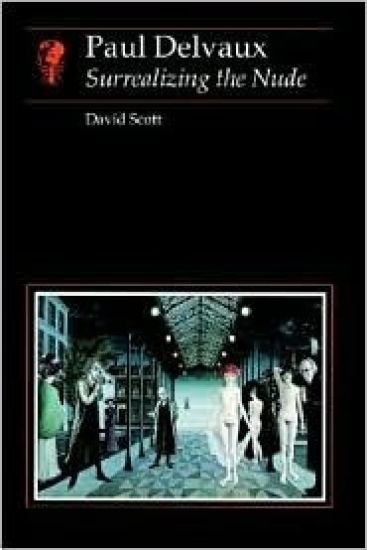
Distributed by the U. of Washington Press. Although Delvaux (born 1897) is an artist of international standing, his work is relatively little known in the Anglo-Saxon world. This study places Delvaux's work in the tradition of European figurative painting, as well as in the more immediate context of
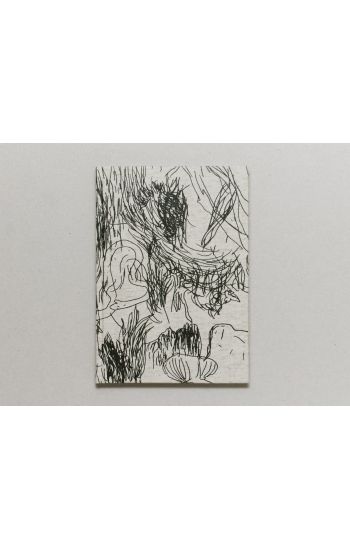
Damien Hirst provides the illustrations for Paul Fryer's first collection of poems, the two minds meeting in the middle as they survey their lives and those of their fellow men and women with an acute distillation of manners, cultures and prejudices. Drinking, fooling with toxic substances, loving and losing and loving again - the components of life in its fullness and beguiling ordinariness.This is Paul Fryer's first collection of poems, and it has been illustrated with keen insight by Damien Hirst. Together they have produced a beautiful diatribe against current complacencies that, remarkably, also shows a precious tolerance and love for their fellow men and women. The novelist and painter Harland Miller has written the foreword.Hirst and Fryer have concocted an acute distillation of manners, cultures and prejudices, a polemic even, that reflects a light suffused with a powerful disinterest, a disturbing sine qua non.Drinking, fooling with toxic substances, loving and losing and loving again, railing against authority, sinking one's head in one's hands at the ordinariness of life's decisions, these are but part of Don't Be So...It is also, remarkably, a book of love and curious humility. Paul Fryer deconstructs accepted conceits and replaces them with commonplace sensibilities that make you wonder how you ever got dressed in the morning, let alone go out in the world."I've had tougher dilemmas," Fryer says. "But I do find it a bit embarrassing to talk about the writing of poems. I remember my first effort at primary school; I was nine. It was a cheerful composition entitled 'The End Of The World'. Funnily enough I still know it by heart."
In a distinctively engaging style David Trobish introduces a wide variety of readers to the fascinating field of ancient manuscripts, textual traditions, letter collections, and the earliest stages of Christian publishing.
A major book in Haitian literature, edited by Prof. Franck Laraque. A series of homages, reminiscences, poems and essays by writers who have known Paul Laraque. The list includes: Josaphat-Robert Large, Frantz-Antoine Leconte, Hughes St-Fort, Max Manigat, Frantz Latour, Jean M tellus, Jean Proph te, Ren D pestre, Robert Garoute, G rard P trus, Claude Pierre, Elie Leblanc, Jr., Gary Klang, Kar n Bogat, Georges Jean Charles, Deniz Lauture, Clotaire Saint-Natus, Lochard No l, Serge Fran ois, Berthony Dupont, Papados, Jean Andr Constant, Danielle Laraque Arena, Jack Hirschman, Michele Laraque, Marc Anthony Arena, Hatuey Laraque Two Elk, Ashley Laraque, Max Schwartz, Prosper Sylvain, Jr., Gabrielle Vimer, Anthony Phelps, Rodney Saint-Eloi, G rard Etienne, Eddy M sidor, Emmanuel Gilles, Frantz Ludeke, Fritz Clermont, Camille Gauthier, Kern Delince, Raymond Chassagne, Jean Gateau, Jean Claude Valbrun, Tontongi, Jean Mapou, Roger Savain, Michel-Ange Hyppolite.
Paul Eluard (1895-1952) is widely considered to be one of France's most important poets. This bilingual edition translates Eluard's marvelous books of Last Love Poems composed during 1946-1951. Included is an enlightening introduction covering Eluard's later works.
This is the first retrospective monograph from the Comic Destroyer, Paul Pope. It contains many unseen pieces of art and comics from the creator who has brought us "THB", "Heavy Liquid" and "100 %".
Twenty four stories of subterfuge, told through their characters’ gloves The Glovers’ Repository, by New York–based artist Paul Etienne Lincoln (born 1959), tells the stories of 24 characters who either practiced deception or were the unwitting victims of subterfuge. From Mary Toft who claimed to have given birth to a rabbit, to King Zog who survived 55 assassination attempts, the characters are all legends in their own right. Their lives are related by Lincoln with characteristic wit and are documented with photographs. This book was inspired by a large-scale installation by Lincoln, a vitrine containing 24 gloves, one for each character. Each glove rotated via a mechanism based on the workings of Big Ben. The book is bound so that, when it is opened flat, two small books of the characters’ stories are revealed, one left- and the other right-handed. The book then folds out further to reveal documentation of the installation.
A gem of an historical source...This unique book provides a wonderfully illustrated and nuanced account of one of America's most significant twentieth-century designers. -- Alison J. Clarke, University of Applied Arts, Vienna A page turner [that] captures this leading Modernist in his own words. -- Bennett Johnson, Chicago Art Deco Society Magazine Frankl's autobiography sheds even more light on the man, other key artists and designers, and most important, Austrian and American culture in the first half of the twentieth century. -- Wendy Kaplan, Los Angeles County Museum of Art Viennese emigre Paul T. Frankl was a pioneer of early modern design in America, known for his "Skyscraper" furniture of the 1920s and later for the work he did for Hollywood celebrities such as Fred Astaire, Alfred Hitchcock, Cary Grant and Katherine Hepburn. His autobiography, thought for decades to be lost, was written at the end of Frankl's long career and is a vivid account of his early life, his rise in the profession, and his many travels in search of ideas and forms. What will now be known as Frankl's last book is written in a captivating style befitting the personality of a gentle and cultured man who revolutionized and advocated for American modernism. This edition, hand-sewn with a printed linen cover, won a design award in Austria and is introduced and annotated by modern design scholar Christopher Long, author of Paul T. Frankl and Modern American Design (Yale 2007). The book includes a remembrance written by his daughter Paulette Frankl as well as many previously unpublished photographs and drawings.