Kirjojen hintavertailu. Mukana 12 016 292 kirjaa ja 12 kauppaa.

Kirjahaku

Etsi kirjoja tekijän nimen, kirjan nimen tai ISBN:n perusteella.

1000 tulosta hakusanalla Penelope Shuttle

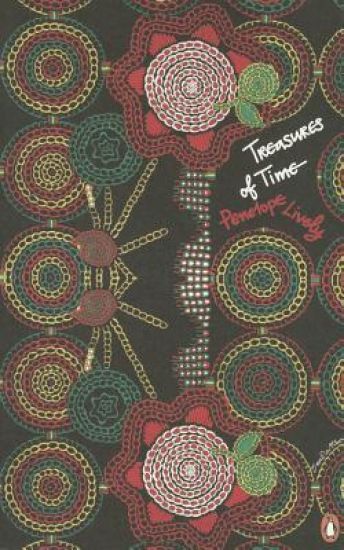
Treasures of Time

Treasures of Time

Penelope Lively

Penguin Books Ltd
2010
pokkari
Treasures of Time is the twelfth novel by Booker Prize winning author Penelope Lively, a spellbinding story of the dangers of digging up the dark secrets of the past. This edition features an introduction by Selina Hastings.Penguin Decades bring you the novels that helped shape modern Britain. When they were published, some were bestsellers, some were considered scandalous, and others were simply misunderstood. All represent their time and helped define their generation, while today each is considered a landmark work of storytelling.Penelope Lively's Treasures of Time was published in 1979, and is an acutely observed study of marriage and manipulation. When the BBC want to make a documentary about acclaimed archaeologist Hugh Paxton, his widow Laura, daughter Kate and her fiancé Tom are a little nervous: digging up the past can also disturb the present . . . Penelope Lively is the author of many prize-winning novels and short-story collections for both adults and children. She has twice been shortlisted for the Booker Prize: once in 1977 for her first novel, The Road to Lichfield, and again in 1984 for According to Mark. She later won the 1987 Booker Prize for her highly acclaimed novel Moon Tiger. Her other books include Going Back; Judgement Day; Next to Nature, Art; Perfect Happiness; Passing On; City of the Mind; Cleopatra's Sister; Heat Wave; Beyond the Blue Mountains, a collection of short stories; Oleander, Jacaranda, a memoir of her childhood days in Egypt; Spiderweb; her autobiographical work, A House Unlocked; The Photograph; Making It Up; Consequences; Family Album, which was shortlisted for the 2009 Costa Novel Award, and How It All Began. She is a popular writer for children and has won both the Carnegie Medal and the Whitbread Award. She was appointed CBE in the 2001 New Year's Honours List, and DBE in 2012. Penelope Lively lives in London.
Moon Tiger

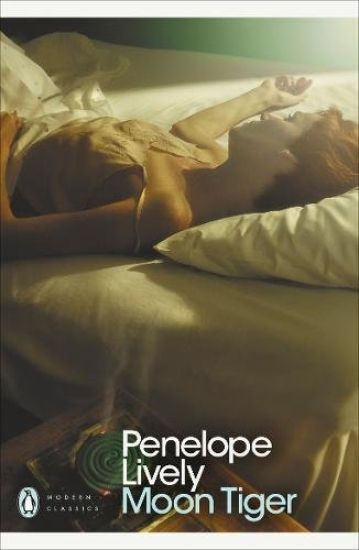
Moon Tiger

Penelope Lively

Penguin Classics
2006
pokkari
Winner of the Booker Prize, Penelope Lively's Moon Tiger is the tale of a historian confronting her own, personal history, unearthing the passions and pains that have defined her life. This Penguin Modern Classics edition includes an introduction by Anthony Thwaite.Claudia Hampton, a beautiful, famous writer, lies dying in hospital. But, as the nurses tend to her with quiet condescension, she is plotting her greatest work: 'a history of the world ... and in the process, my own'. Gradually she re-creates the rich mosaic of her life and times, conjuring up those she has known. There is Gordon, her adored brother; Jasper, the charming, untrustworthy lover and father of Lisa, her cool, conventional daughter; and Tom, her one great love, both found and lost in wartime Egypt. Penelope Lively's Booker Prize-winning novel weaves an exquisite mesh of memories, flashbacks and shifting voices, in a haunting story of loss and desire.Penelope Lively (b. 1933) was born in Cairo. She has twice been shortlisted for the Booker Prize; once in 1977 for her first novel, The Road to Lichfield, and again in 1984 for According to Mark. She later won the 1987 Booker Prize for her highly acclaimed novel Moon Tiger. Her novels include Passing On, City of the Mind, Cleopatra's Sister and Heat Wave, and many are published by Penguin.If you enjoyed Moon Tiger, you might like L.P. Hartley's The Go-Between, also available in Penguin Modern Classics.'It's a fine, intelligent piece of work, the kind that Leaves its traces in the air long after you've put it away'Anne Tyler'Funny, thoughtful ... a perfect example of the Lively art' Mark Lawson, Independent
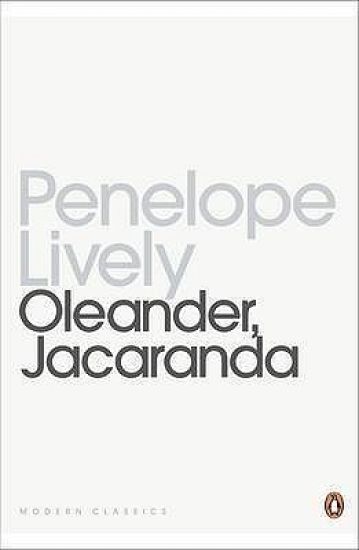
Oleander, Jacaranda

Oleander, Jacaranda

Penelope Lively

Penguin Classics
2006
pokkari
This autobiography is about growing up in Egypt. It is also an investigation into childhood perception in which the author uses herself and her memories as an insight into how children see and know. It is a look at Eygpt up to, and including, World War II from a small girl's point of view, which is also, ultimately, a moving and rather sad picture of an isolated and lonely little girl.
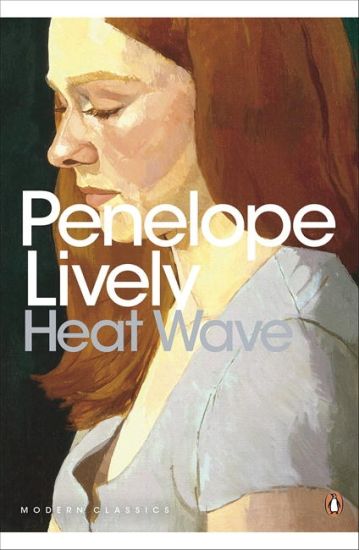
Heat Wave

Heat Wave

Penelope Lively

Penguin Classics
2011
pokkari
Published in Penguin Modern Classics, Penelope Lively's Heat Wave is a moving portrayal of a fragile family damaged and defined by adultery, and the lengths to which a mother will go to protect the ones she loves.Pauline is spending the summer at World's End, a cottage somewhere in the middle of England. This year the adjoining cottage is occupied by her daughter Teresa and baby grandson Luke; and, of course, Maurice, the man Teresa married. As the hot months unfold, Maurice grows ever more involved in the book he is writing - and with his female copy editor - and Pauline can only watch in dismay and anger as her daughter repeats her own mistakes in love. The heat and tension will lead to a violent, startling climax. Penelope Lively (b. 1933) was born in Cairo. She has twice been shortlisted for the Booker Prize; once in 1977 for her first novel, The Road to Lichfield, and again in 1984 for According to Mark. She later won the 1987 Booker Prize for her highly acclaimed novel Moon Tiger. Her novels include Passing On, City of the Mind, Cleopatra's Sister and Heat Wave, and many are published by Penguin.If you enjoyed Heat Wave, you might like Lively's Moon Tiger, also available in Penguin Modern Classics.'Extraordinarily good, intelligent and perceptive ... very moving' Susan Hill, author of The Woman in Black'[Heat Wave is] short, but the emotions are so intense and the writing so good that it punches well above its weight'Independent
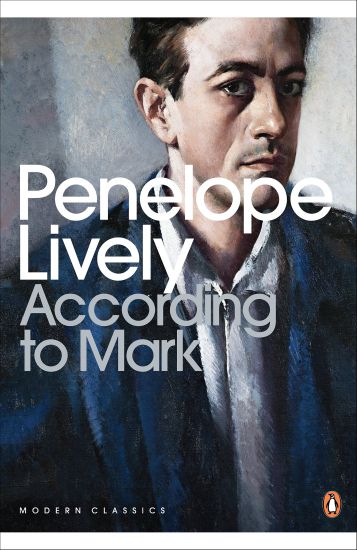
According to Mark

According to Mark

Penelope Lively

Penguin Classics
2011
pokkari
A respected literary biographer, Mark is working on the life of Gilbert Strong - a writer about whom he thinks he knows everything. Happily married, and apparently dedicated to a life of letters, he nevertheless falls in love with Strong's granddaughter Carrie, a vague and unsophisticated young woman more interested in bedding plants than books or passion. As Mark's obsessions develop over a hot, complicated summer, he begins to understand that nothing is ever what it seems; not Gilbert Strong, and certainly not himself.According to Mark is a witty and moving look at love, literature and the dangers of middle-aged folly.
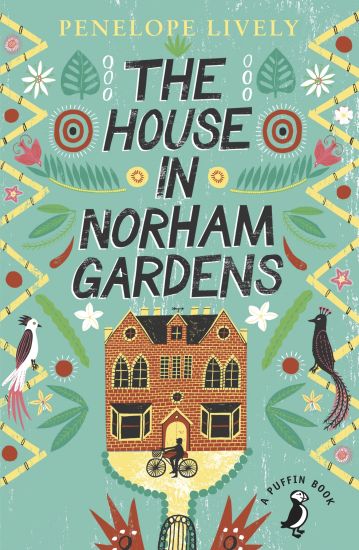
The House in Norham Gardens

The House in Norham Gardens

Penelope Lively

Puffin
2016
pokkari
No.40 Norham Gardens, Oxford, is the home of Clare Mayfield, her two aged aunts and two lodgers. The house is a huge Victorian monstrosity, with rooms all full of old furniture, old papers, old clothes, memorabilia - it is like a living museum.Clare discovers in a junk room the vividly painted shield which her great-grandfather, an eminent anthropologist, had brought back from New Guinea. She becomes obsessed with its past and determined to find out more about its strange tribal origins.Dreams begin to haunt her - dreams of another country, another culture, another time, and of shadowy people whom she feels are watching her. Who are they, and what do they want?
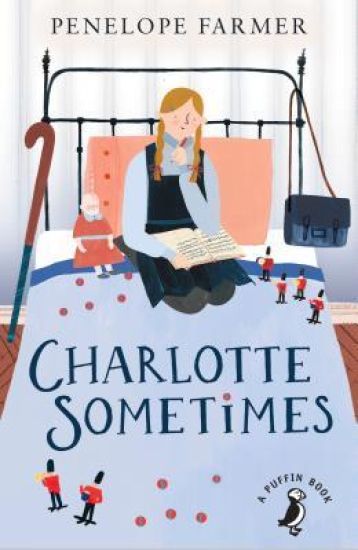
Charlotte Sometimes

Charlotte Sometimes

Penelope Farmer

Puffin
2019
pokkari
It is Charlotte's first night at boarding school, and as she's settling down to sleep, she sees the corner of the new building from her window. But when she wakes up, instead of the building there is a huge, dark cedar tree, and the girl in the next bed is not the girl who slept there last night. Somehow, Charlotte has slipped back forty years to 1918 and has swapped places with a girl called Clare. Charlotte and Clare swap places ever night until one day Charlotte becomes trapped in 1918 and must find a way to return to her own time before the end of term.
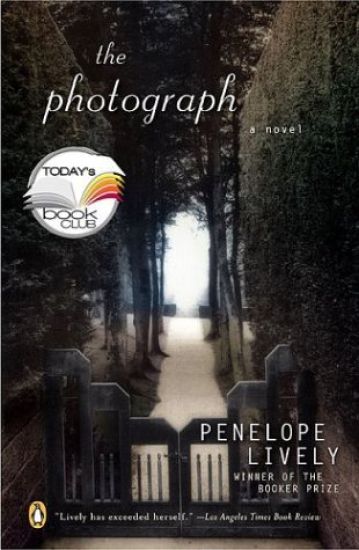
The Photograph

The Photograph

Penelope Lively

PENGUIN BOOKS
2004
nidottu
Receiving a mysterious photograph of his late wife, Kath, holding hands with another man, self-centered professor Glyn begins a search that proves shocking to Kath's family and friends, who include in their number a remorseless sister, a doyenne garden designer, and a feckless ne'er-do-well. Reprint.
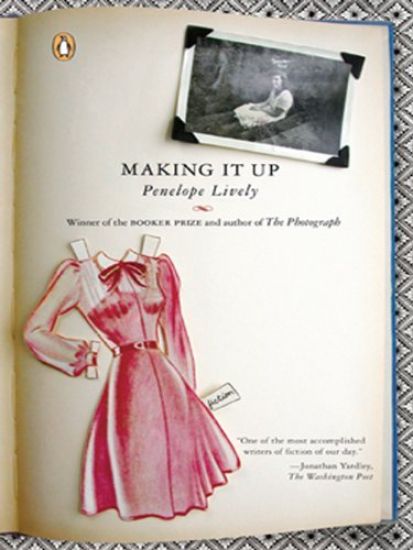
Making It Up

Making It Up

Penelope Lively

PENGUIN BOOKS
2006
nidottu
"Nobody writes more astutely or affectingly about love]... than Penelope Lively." -- The Washington Post An intelligent examination of alternative destinies, choices and the moments in our lives when we could have chosen a different path, from Booker Prize-winning author Penelope Lively In this fascinating piece of fiction, Penelope Lively takes moments from her own life and asks 'what if' she had made other choices: what if she hadn't escaped from Alexandria at the outbreak of WWII? What would her life have been like if she had become pregnant when she was 18? If she had married someone else? If she taken a different job? If she had lived her life abroad? These stories offer a sublime dance between realityand imaganation, inviting the reader to ask similar questions.
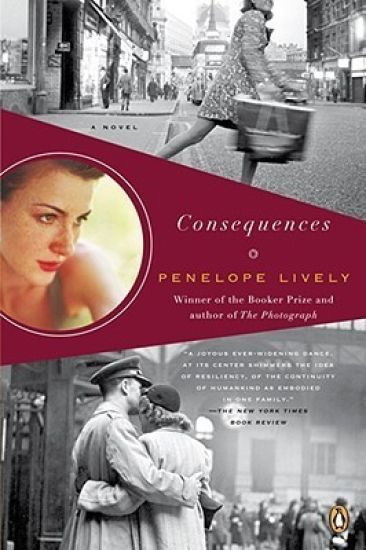
Consequences

Consequences

Penelope Lively

PENGUIN BOOKS
2008
nidottu
The Booker Prize winning author's sweeping saga of three generations of women "One of the most accomplished writers of fiction of our day" (The Washington Post ) follows the lives and loves of three women--Lorna, Molly, and Ruth--from World War II-era London to the close of the century. Told in Lively's incomparable prose, this is a powerful story of growth, death, and renewal, as well as a penetrating look at how the major and minor events of the twentieth century changed lives. By chronicling the choices and consequences that comprise one family's history, Lively offers an intimate and profound reaffirmation of the force of connection between generations.
Family Album

Family Album

Penelope Lively

PENGUIN BOOKS
2010
nidottu
"In this haunting new novel, the act of forgetting is as strange and interesting as the power of remembering." --The New York Times Book Review An enjoyable read filled with memorable characters and secrets from Booker Prize winner Penelope Lively Allersmead is a big shabby Victorian suburban house. The perfect place to grow up for elegant Sandra, difficult Gina, destructive Paul, considerate Katie, clever Roger and flighty Clare. But was it? Now adults, the children return to Allersmead one by one. To their home-making mother and aloof writer father, and a house that for years has played silent witness to a family's secrets. And one devastating secret of which no one speaks . . .
How It All Began

How It All Began

Penelope Lively

PENGUIN BOOKS
2012
nidottu
A vibrant novel from Booker Prize winner Penelope Lively--a wry, wise story about the surprising ways lives intersect When Charlotte Rainsford, a retired schoolteacher, is accosted by a petty thief on a London street, the consequences ripple across the lives of acquaintances and strangers alike. A marriage unravels after an illicit love affair is revealed through an errant cell phone message; a posh yet financially strapped interior designer meets a business partner who might prove too good to be true; an old-guard historian tries to recapture his youthful vigor with an ill-conceived idea for a TV miniseries; and a middle-aged central European immigrant learns to speak English and reinvents his life with the assistance of some new friends.In this engaging, utterly absorbing and brilliantly told novel, Penelope Lively shows us how one random event can cause marriages to fracture and heal themselves, opportunities to appear and disappear, lovers who might never have met to find each other and entire lives to become irrevocably changed. Funny, humane, touching, sly and sympathetic, How It All Began is a brilliant sleight of hand from an author at the top of her game.
Dancing Fish and Ammonites: A Memoir

Dancing Fish and Ammonites: A Memoir

Penelope Lively

PENGUIN BOOKS
2015
nidottu
"Sharp, unsentimental and ruefully funny. A fascinating portrait not only of Lively but of the times through which she has lived" -- Daily Telegraph (London) Rare personal reflections from "one of our most talented writers" (The New York Times Book Review), Booker Prize winner Penelope Lively At age eighty, Penelope Lively wrote this powerful and compelling 'view from old age', reporting back on what she found. There are meditations on what it is like to be old as well as on how memory shapes us. There are intriguing examinations of the key personal as well as historical moments she has lived through and her thoughts on her own bookishness - both as reader and writer. Lastly, she turns to six treasured possessions to speak eloquently about who she is and where she's been - fragments of memories from a life well lived.
What do Philosophers Do?

What do Philosophers Do?

Penelope Maddy

Oxford University Press Inc
2017
sidottu
How do you know the world around you isn't just an elaborate dream, or the creation of an evil neuroscientist? If all you have to go on are various lights, sounds, smells, tastes and tickles, how can you know what the world is really like, or even whether there is a world beyond your own mind? Questions like these -- familiar from science fiction and dorm room debates -- lie at the core of venerable philosophical arguments for radical skepticism: the stark contention that we in fact know nothing at all about the world, that we have no more reason to believe any claim -- that there are trees, that we have hands -- than we have to disbelieve it. Like non-philosophers in their sober moments, philosophers, too, find this skeptical conclusion preposterous, but they're faced with those famous arguments: the Dream Argument, the Argument from Illusion, the Infinite Regress of Justification, the more recent Closure Argument. If these can't be met, they raise a serious challenge not just to philosophers, but to anyone responsible enough to expect her beliefs to square with her evidence. What Do Philosophers Do? takes up the skeptical arguments from this everyday point of view, and ultimately concludes that they don't undermine our ordinary beliefs or our ordinary ways of finding out about the world. In the process, Maddy examines and evaluates a range of philosophical methods -- common sense, scientific naturalism, ordinary language, conceptual analysis, therapeutic approaches -- as employed by such philosophers as Thomas Reid, G. E. Moore, Ludwig Wittgenstein, and J. L. Austin. The result is a revealing portrait of what philosophers do, and perhaps a quiet suggestion for what they should do, for what they do best.
Hieroglyphs

Hieroglyphs

Penelope Wilson

Oxford University Press
2004
nidottu
Hieroglyphs were far more than a language. They were an omnipresent and all-powerful force in communicating the messages of ancient Egyptian culture for over three thousand years; used as monumental art, as a means of identifying Egyptianness, and for rarefied communication with the gods. In this exciting new study, Penelope Wilson explores the cultural significance of the script with an emphasis on previously neglected areas such as cryptography, the continuing decipherment into modern times, and examines the powerful fascination hieroglyphs still hold for us today. ABOUT THE SERIES: The Very Short Introductions series from Oxford University Press contains hundreds of titles in almost every subject area. These pocket-sized books are the perfect way to get ahead in a new subject quickly. Our expert authors combine facts, analysis, perspective, new ideas, and enthusiasm to make interesting and challenging topics highly readable.
A Plea for Natural Philosophy

A Plea for Natural Philosophy

Penelope Maddy

OXFORD UNIVERSITY PRESS INC
2023
sidottu
The philosopher Penelope Maddy is well-known for her pursuit of 'Second Philosophy', a form of naturalism that sees the methods of philosophy as indistinguishable from those of the empirical sciences. This volume collects eleven of her recent essays (five new and six reprinted), exploring a wide range of philosophical topics--from methodology, epistemology, and the philosophy of science, to the philosophies of logic, arithmetic, and higher mathematics. Though the topics vary widely, each essay bears in one way or another on the description, exploration, or application of Second Philosophy, revealing the underlying systematic character of Maddy's thought. The title essay traces the source of second-philosophical thinking to the 'natural philosophy' of the early modern period, when 'science' and 'philosophy' weren't separate disciplines; a companion essay, drawing second-philosophical morals for the realism/instrumentalism debate in the philosophy of science rounds out the opening section on philosophical method. The second section, on external world skepticism, is largely historical: an essay comparing the naturalistic credentials of Hume and Reid, then one each on Moore and Wittgenstein. A second-philosophical examination of debates over truth and reference, starring J. L. Austin, opens the section on language and logic, followed by a broad-brush description of historical landmarks in the philosophy of logic and an executive summary of the Second Philosopher's view. The concluding section on mathematics begins with an essay addressed to undergraduates on the ontology of number and another assessing the bearing of contemporary developmental psychology on the philosophies of logic and arithmetic. The concluding essay is an attempt to revive the often-ridiculed if-thenist position in the philosophy of mathematics. Maddy's second-philosophical essays offer new insight into long-standing questions in the philosophy of science, epistemology, the philosophies of language, logic, mathematics-all with an eye to the methodological themes that connect them.
The Logical Must

The Logical Must

Penelope Maddy

Oxford University Press Inc
2020
nidottu
The Logical Must is an examination of Ludwig Wittgenstein's philosophy of logic, early and late, undertaken from an austere naturalistic perspective Penelope Maddy has called "Second Philosophy." The Second Philosopher is a humble but tireless inquirer who begins her investigation of the world with ordinary perceptual beliefs, moves from there to empirical generalizations, then to deliberate experimentation, and eventually to theory formation and confirmation. She takes this same approach to logical truth, locating its ground in simple worldly structures and our knowledge of it in our basic cognitive machinery, tuned by evolutionary pressures to detect those structures where they occur. In his early work Tractatus Logico-Philosophicus, Wittgenstein also links the logical structure of representation with the structure of the world, but he includes one key unnaturalistic assumption: that the sense of our representations must be given prior to-independently of-facts about how the world is. When that assumption is removed, the general outlines of the resulting position come surprisingly close to the Second Philosopher's roughly empirical account. In his later discussions of logic in Philosophical Investigations and Remarks on the Foundations of Mathematics, Wittgenstein also rejects this earlier assumption in favor of a picture that arises in the wake of the famous rule-following considerations. Here Wittgenstein and the Second Philosopher operate in even closer harmony-locating the ground of our logical practices in our interests, our natural inclinations and abilities, and very general features of the world-until the Second Philosopher moves to fill in the account with her empirical investigations of the world and cognition. At this point, Wittgenstein balks, but as a matter of personal animosity rather than philosophical principle.
Naturalism in Mathematics

Naturalism in Mathematics

Penelope Maddy

Clarendon Press
1997
sidottu
Our much-valued mathematical knowledge rests on two supports: the logic of proof and the axioms from which those proofs begin. Naturalism in Mathematics investigates the status of the latter, the fundamental assumptions of mathematics. These were once held to be self-evident, but progress in work on the foundations of mathematics, especially in set theory, has rendered that comforting notion obsolete. Given that candidates for axiomatic status cannot be proved, what sorts of considerations can be offered for or against them? That is the central question addressed in this book. One answer is that mathematics aims to describe an objective world of mathematical objects, and that axiom candidates should be judged by their truth or falsity in that world. This promising view--realism--is assessed and finally rejected in favour of another--naturalism--which attends less to metaphysical considerations of objective truth and falsity, and more to practical considerations drawn from within mathematics itself. Penelope Maddy defines this naturalism, explains the motivation for it, and shows how it can be helpfully applied in the assessment of candidates for axiomatic status in set theory. Maddy's clear, original treatment of this fundamental issue is informed by current work in both philosophy and mathematics, and will be accessible and enlightening to readers from both disciplines.
Realism in Mathematics

Realism in Mathematics

Penelope Maddy

Clarendon Press
1992
nidottu
When engaged in mathematics, most people tend to think of themselves as scientists investigating the features of real mathematical things, and the wildly successful application of mathematics in the physical sciences reinforces this picture of mathematics as an objective study. For philosophers, however, this realism about mathematics raises serious questions: What are mathematical things? Where are they? How do we know about them? Penelope Maddy delineates and defends a novel version of mathematical realism that answers the traditional questions and refocuses philosophical attention on the pressing foundational issues of contemporary mathematics.