Clad in the black robe of his priestly order and armed only with a crucifix, for more than a quarter of a century Father De Smet relentlessly tramped the American frontier to bring peace and religion to the tribes of the Pacific Northwest and the upper Missouri River country.In this biography, Robert Carriker describes De Smet's love for the great American West and the native tribes who lived there, the Potawatomis, Flatheads, Coeur d'Alenes, Kalispels, Blackfeet, Yankton Sioux, and others to whom the Jesuit father carried Christianity. Soon the man called Black Robe became known throughout the mountains and plains as a man of peace and a friend of all Indians.
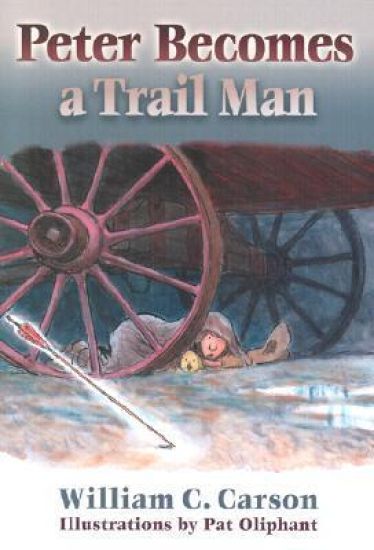
Set in the early 1850s, this is a gripping Santa Fe Trail story for young readers. Peter Bowen is a twelve-year-old St Louis boy whose mother has recently died and whose father has gone to Santa Fe to seek his fortune. A St Louis friend agrees to care for Peter. When his father's acquaintance Uncle Seth returns to St Louis, he checks on Peter. The lonely boy persuades his Uncle, a weather-beaten trapper, to take him to Santa Fe to be with his father. Uncle Seth leads their wagon train through an Indian attack, desertion by greenhorns, a buffalo stampede, a violent storm, and other hardships. When Peter finally reaches his destination, he finds that his father has left Santa Fe. He must go on another journey, one that almost proves fatal.
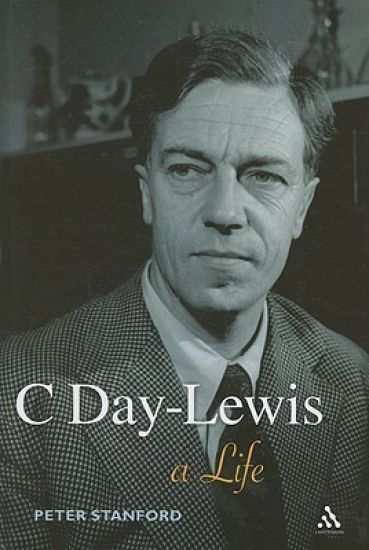
How unfair", wrote one national newspaper in 1951, 'that accomplishments enough to satisfy the pride of six men should be united in Mr Day-Lewis.' Poet, translator of classical texts, novelist, detective writer (under the pen-name Nicholas Blake), performer and, at that time, Professor of Poetry at Oxford, C. Day-Lewis had many careers all at once. This first authorised biography tells the private story behind the many headlines that this handsome, charming Anglo-Irish Poet Laureate generated in his lifetime. With unparalleled access to Day-Lewis' archives and the recollections of first-hand witnesses, Peter Stanford traces the link between life and art to reassess the work of a poet lauded in his lifetime but whose literary reputation has latterly become a matter of controversy, with Westminster Abbey refusing him the place in Poets' Corner traditionally allotted to Poets Laureate. Day-Lewis first made his name as one of the 'poets of the thirties', launching a communist-influenced poetic revolution alongside WH Auden and Stephen Spender that aspired to spark wholesale political change to face down fascism. In the 1940s, 'Red Cecil', as he had become known, broke with communism and Auden and went on to produce some of his most popular and enduring verse, prompted by his long love affair with the novelist Rosamond Lehmann. Torn between her and his wife, he reflected on his double life in verse and became for some the supreme poet of the divided heart. Later, with his second wife, the actress Jill Balcon, he promoted poetry with a series of popular recitals and radio and television programmes. Together, they had two children, Tamasin and Daniel, later an Oscar-winning actor. Day-Lewis was always pulled between a fulfilling domestic life and a restless desire to explore. His travels, exploration of his Irish roots and his infidelities are all part of the rich and many-faceted life that Peter Stanford describes. It is, however, as a poet that he is best remembered and the poetry itself, often autobiographical, forms an integral part of this intriguing and long-overdue biography.
Renaissance and Reformationâpartners or enemies? The popular image of these two historical phenomena is one of opposition and contradiction: the Renaissance was a cultural revival influenced by classical philosophy; the Reformation was a radical religious movement which rejected traditional authority. But in the life and work of Peter Martyr Vermigli, a "Calvinist Thomist" and the leading sixteenth-century Italian Reformer, scholasticism and Protestantism converge. An international conference, sponsored by the Faculty of Religious Studies, McGill University, reflects the recent renewed interest in Italian reform. Entitled "The Cultural Impact of Italian Reformers," its aim was to gather Vermigli scholars along with Renaissance and Reformation scholars. Half the essays (by Paul Grendler, Cesare Vasoli, Rita Belladonna, Anthony Santosuosso, and Antonio D'Andrea) deal with the general question of Renaissance and Reformation interaction: How are humanism and scholasticism related? Marvin Anderson, Philip McNair, J. Patrick Donnelly, Robert Kingdon, and Joseph C. McLelland focus on the thought and activity of Vermigli himself. Students of theology, history, and philosophy, and specifically of the Renaissance and the Reformation, will welcome this book.
This work has been selected by scholars as being culturally important, and is part of the knowledge base of civilization as we know it. This work was reproduced from the original artifact, and remains as true to the original work as possible. Therefore, you will see the original copyright references, library stamps (as most of these works have been housed in our most important libraries around the world), and other notations in the work.This work is in the public domain in the United States of America, and possibly other nations. Within the United States, you may freely copy and distribute this work, as no entity (individual or corporate) has a copyright on the body of the work.As a reproduction of a historical artifact, this work may contain missing or blurred pages, poor pictures, errant marks, etc. Scholars believe, and we concur, that this work is important enough to be preserved, reproduced, and made generally available to the public. We appreciate your support of the preservation process, and thank you for being an important part of keeping this knowledge alive and relevant.
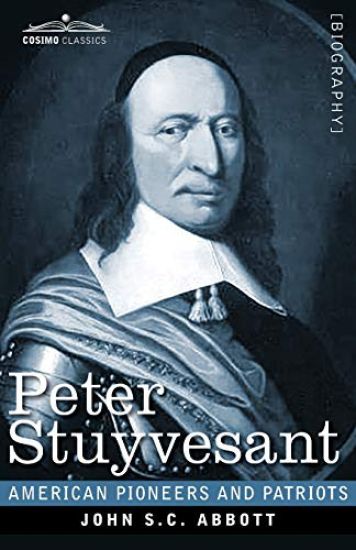
This engrossing work details the early history of the colonization of Manhattan and its surrounding regions from the exploration of the Hudson River in 1610 through to the final surrender of the colony to the English in 1664. The thoroughly-researched history takes the reader through the trials and tribulations of colonists, Indians, slaves, soldiers, and politicians alike. Hardships, religious struggles, and Indian wars dominated the early history of the settlement, but Peter Stuyvesant's rule was marked by many building projects, of which the end results are still seen today: a protective wall ("Wall Street"), the canal that became Broad Street, and Broadway. The author writes with objectivity about the suffering of colonists, Indians, and slaves-and of the fighting between the English and Dutch over possession of the colony. "It is impossible to understand the very remarkable character and career of Peter Stuyvesant, the last, and by far the most illustrious, of the Dutch governors of New Amsterdam, without an acquaintance with the early history of the Dutch colonies upon the Hudson and the Delaware. Peter Stuyvesant leads us to the Hudson, from the time when its majestic waters were disturbed only by the arrowy flight of the birch canoe, till European colonization had laid there the foundations of one of the most flourishing cities on this globe." - From the Preface.
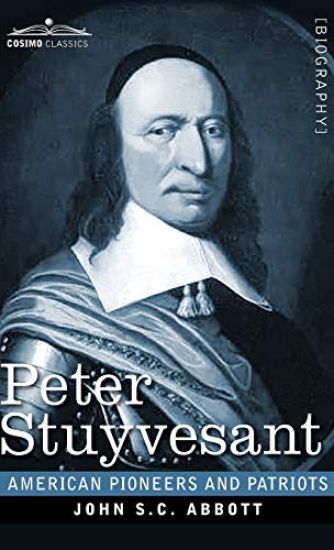
This engrossing work details the early history of the colonization of Manhattan and its surrounding regions from the exploration of the Hudson River in 1610 through to the final surrender of the colony to the English in 1664. The thoroughly-researched history takes the reader through the trials and tribulations of colonists, Indians, slaves, soldiers, and politicians alike. Hardships, religious struggles, and Indian wars dominated the early history of the settlement, but Peter Stuyvesant's rule was marked by many building projects, of which the end results are still seen today: a protective wall ("Wall Street"), the canal that became Broad Street, and Broadway. The author writes with objectivity about the suffering of colonists, Indians, and slaves-and of the fighting between the English and Dutch over possession of the colony. "It is impossible to understand the very remarkable character and career of Peter Stuyvesant, the last, and by far the most illustrious, of the Dutch governors of New Amsterdam, without an acquaintance with the early history of the Dutch colonies upon the Hudson and the Delaware. Peter Stuyvesant leads us to the Hudson, from the time when its majestic waters were disturbed only by the arrowy flight of the birch canoe, till European colonization had laid there the foundations of one of the most flourishing cities on this globe." - From the Preface.
This quick reference is a condensed guide to the essential data structures, algorithms, and functions provided by the C++17 Standard Library. It does not explain the C++ language or syntax, but is accessible to anyone with basic C++ knowledge or programming experience. Even the most experienced C++ programmer will learn a thing or two from it and find it a useful memory-aid. It is hard to remember all the possibilities, details, and intricacies of the vast and growing Standard Library. This handy reference guide is therefore indispensable to any C++ programmer. It offers a condensed, well-structured summary of all essential aspects of the C++ Standard Library. No page-long, repetitive examples or obscure, rarely used features. Instead, everything you need to know and watch out for in practice is outlined in a compact, to-the-point style, interspersed with practical tips and well-chosen, clarifying examples. This new edition is updated to include all Standard Library changes in C++17, including the new vocabulary types std::string_view, any, optional, and variant; parallel algorithms; the file system library; specialized mathematical functions; and more.What You Will LearnGain the essentials that the C++ Standard Library has to offerUse containers to efficiently store and retrieve your dataInspect and manipulate your data with algorithms See how lambda expressions allow for elegant use of algorithmsDiscover what the standard string class provides and how to use itWrite localized applicationsWork with file and stream-based I/OPrevent memory leaks with smart pointersWrite safe and efficient multi-threaded code using the threading librariesWho This Book Is ForAll C++ programmers, irrespective of their proficiency with the language or the Standard Library. A secondary audience is developers who are new to C++, but not new to programming, and who want to learn more about the C++ Standard Library in a quick, condensed manner.
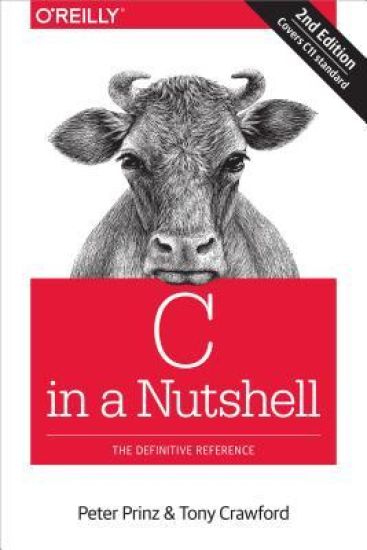
The new edition of this classic O'Reilly reference provides clear, detailed explanations of every feature in the C language and runtime library, including multithreading, type-generic macros, and library functions that are new in the 2011 C standard (C11). If you want to understand the effects of an unfamiliar function, and how the standard library requires it to behave, you'll find it here, along with a typical example. Ideal for experienced C and C++ programmers, this book also includes popular tools in the GNU software collection. You'll learn how to build C programs with GNU Make, compile executable programs from C source code, and test and debug your programs with the GNU debugger. In three sections, this authoritative book covers: C language concepts and language elements, with separate chapters on types, statements, pointers, memory management, I/O, and more The C standard library, including an overview of standard headers and a detailed function reference Basic C programming tools in the GNU software collection, with instructions on how use them with the Eclipse IDE
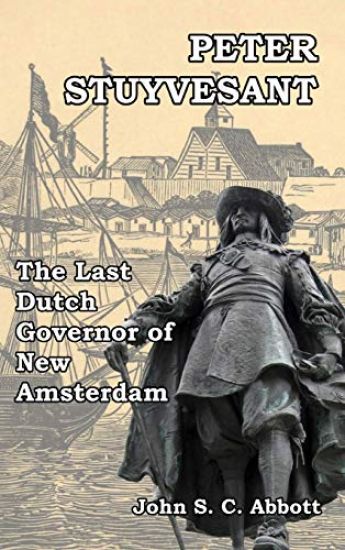
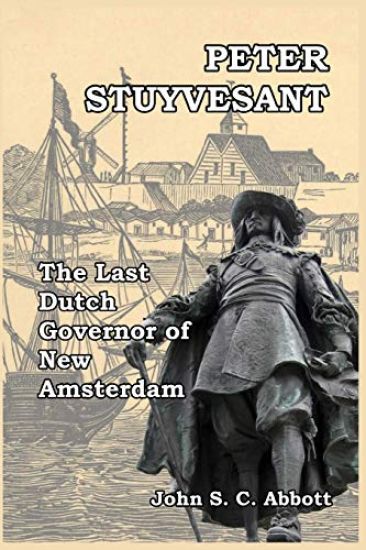
"'Peter Stuyvesant' leads us to the Hudson, from the time when its majestic waters were disturbed only by the arrowy flight of the birch canoe, till European colonization had laid there the foundations of one of the most flourishing cities on this globe." --John S.C. Abbott, Preface, 1873American historian John S.C. Abbott wrote Peter Stuyvesant: The Last Dutch Governor of New Amsterdam (1873) as part of his American Pioneers and Patriots series. Peter Stuyvesant (1592-1672) served as the director-general of all Dutch possessions in North America and the Caribbean, including the colony of New Netherland from 1647 until 1664. At that time, it was ceded to the English and renamed New York. He spent the rest of his life on his farm, "the Bouwerie" (currently known as the Bowery in New York City).
"'Peter Stuyvesant' leads us to the Hudson, from the time when its majestic waters were disturbed only by the arrowy flight of the birch canoe, till European colonization had laid there the foundations of one of the most flourishing cities on this globe." -John S.C. Abbott, Preface, 1873American historian John S.C. Abbott wrote Peter Stuyvesant: The Last Dutch Governor of New Amsterdam (1873) as part of his American Pioneers and Patriots series. Peter Stuyvesant (1592-1672) served as the director-general of all Dutch possessions in North America and the Caribbean, including the colony of New Netherland from 1647 until 1664. At that time, it was ceded to the English and renamed New York. He spent the rest of his life on his farm, "the Bouwerie" (currently known as the Bowery in New York City).