Kirjojen hintavertailu. Mukana 11 717 486 kirjaa ja 12 kauppaa.

Kirjahaku

Etsi kirjoja tekijän nimen, kirjan nimen tai ISBN:n perusteella.

1000 tulosta hakusanalla Philo

Philosophy of Psychology

Philosophy of Psychology

Jose Luis Bermudez

Routledge
2005
sidottu
José Luis Bermúdez introduces the philosophy of psychology as an interdisciplinary exploration of the nature and mechanisms of cognition. Philosophy of Psychology charts out four influential 'pictures of the mind' and uses them to explore central topics in the philosophical foundations of psychology, including the relation between different levels of studying the mind/brain; the nature and scope of psychological explanation; the architecture of cognition; and the relation between thought and language. Chapters cover all the core concepts, including:models of psychological explanationthe nature of commonsense psychologyarguments for the autonomy of psychologyfunctionalist approaches to cognitioncomputational models of the mindneural network modelingrationality and mental causationperception, action and cognitionthe language of thought and the architecture of cognition.Philosophy of Psychology: A Contemporary Introduction is a very clear and well-structured textbook from one of the leaders in the field.
Philosophy of Psychology

Philosophy of Psychology

Jose Luis Bermudez

Routledge
2005
nidottu
José Luis Bermúdez introduces the philosophy of psychology as an interdisciplinary exploration of the nature and mechanisms of cognition. Philosophy of Psychology charts out four influential 'pictures of the mind' and uses them to explore central topics in the philosophical foundations of psychology, including the relation between different levels of studying the mind/brain; the nature and scope of psychological explanation; the architecture of cognition; and the relation between thought and language. Chapters cover all the core concepts, including:models of psychological explanationthe nature of commonsense psychologyarguments for the autonomy of psychologyfunctionalist approaches to cognitioncomputational models of the mindneural network modelingrationality and mental causationperception, action and cognitionthe language of thought and the architecture of cognition.Philosophy of Psychology: A Contemporary Introduction is a very clear and well-structured textbook from one of the leaders in the field.

Philosopher A Kind Of Life

Philosopher A Kind Of Life

Prof Ted Honderich; Ted Honderich

Routledge
2002
nidottu
The story of Ted Honderich, philosopher, a story of a perilous philosophical life, marked by critical examination, and a compelling personal life full of human drama. This is the story of Ted Honderich's perilous progress from boyhood in Canada to the Grote Professorship of Mind and Logic at University College London, A. J. Ayer's chair. It is compelling, candid and revealing about the beginning and the goal, and everything in between: early work as a journalist on The Toronto Star, travels with Elvis Presley, arrival in Britain, loves and friendships, academic rivalries and battles, marriages and affairs, self-interest and empathy. It sets out resolutely to explain how and why it all happened.It is as much a narrative of Ted Honderich's philosophy. He makes hard problems real. Philosophy from consciousness and determinism to political violence and democracy comes into sharp focus.Along the way, questions keep coming up. Does the free marriage owe anything to the analytic philosophy? What are the costs of truth? Are the politics of England slowly making it an ever-better place? Is an action's rightness independent of the mixture of motives out of which it came?
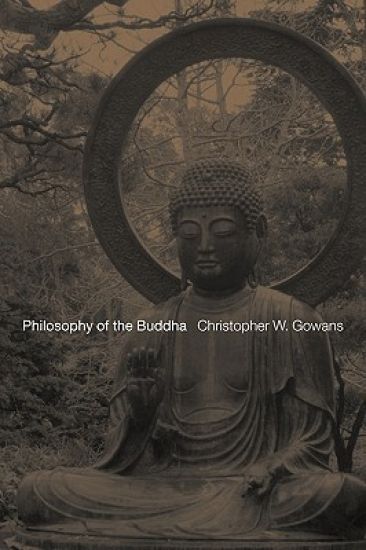
Philosophy of the Buddha

Philosophy of the Buddha

Christopher Gowans

Routledge
2003
sidottu
Philosophy of the Buddha is a philosophical introduction to the teaching of the Buddha. It carefully guides readers through the basic ideas and practices of the Buddha, including kamma (karma), rebirth, the not-self doctrine, the Four Noble Truths, the Eightfold Path, ethics, meditation, non-attachment, and Nibbâna (Nirvana).The book includes an account of the life of the Buddha as well as comparisons of his teaching with practical and theoretical aspects of some Western philosophical outlooks, both ancient and modern. Most distinctively, Philosophy of the Buddha explores how Buddhist enlightenment could enable us to overcome suffering in our lives and reach our full potential for compassion and tranquillity.This is one of the first books to introduce the philosophy of the Buddha to students of Western philosophy. Christopher W. Gowans' style is exceptionally clear and appropriate for anyone looking for a comprehensive introduction to this growing area of interest.
Philosophy of the Buddha

Philosophy of the Buddha

Christopher Gowans

Routledge
2003
nidottu
Philosophy of the Buddha is a philosophical introduction to the teaching of the Buddha. It carefully guides readers through the basic ideas and practices of the Buddha, including kamma (karma), rebirth, the not-self doctrine, the Four Noble Truths, the Eightfold Path, ethics, meditation, non-attachment, and Nibbâna (Nirvana).The book includes an account of the life of the Buddha as well as comparisons of his teaching with practical and theoretical aspects of some Western philosophical outlooks, both ancient and modern. Most distinctively, Philosophy of the Buddha explores how Buddhist enlightenment could enable us to overcome suffering in our lives and reach our full potential for compassion and tranquillity.This is one of the first books to introduce the philosophy of the Buddha to students of Western philosophy. Christopher W. Gowans' style is exceptionally clear and appropriate for anyone looking for a comprehensive introduction to this growing area of interest.
Philosophy of Mind: Contemporary Readings
Philosophy of Mind: Contemporary Readings is a comprehensive anthology that draws together leading philosophers writing on the major topics within philosophy of mind. Robb and O'Connor have carefully chosen articles under the following headings:*Substance Dualism and Idealism*Materialism*Mind and Representation*ConsciousnessEach section is prefaced by an introductory essay by the editors which guides the student gently into the topic in which leading philosophers are included.The book is highly accessible and user-friendly and provides a broad-ranging exploration of the subject. Ideal for any philosophy student, this book will prove essential reading for any philosophy of mind course. The readings are designed to complement John Heil's Philosophy of Mind: A Contemporary Introduction, Second edition (Routledge 2003), although the anthology can also be used as a stand-alone volume.
Philosophy of Mind: Contemporary Readings
Philosophy of Mind: Contemporary Readings is a comprehensive anthology that draws together leading philosophers writing on the major topics within philosophy of mind. Robb and O'Connor have carefully chosen articles under the following headings:*Substance Dualism and Idealism*Materialism*Mind and Representation*ConsciousnessEach section is prefaced by an introductory essay by the editors which guides the student gently into the topic in which leading philosophers are included.The book is highly accessible and user-friendly and provides a broad-ranging exploration of the subject. Ideal for any philosophy student, this book will prove essential reading for any philosophy of mind course. The readings are designed to complement John Heil's Philosophy of Mind: A Contemporary Introduction, Second edition (Routledge 2003), although the anthology can also be used as a stand-alone volume.
Philosophy in America

Philosophy in America

Max Black

Routledge
2002
sidottu
This is Volume V of twenty-two of a collection on 20th Century Philosophy. Originally published in 1964, this collection contains original papers assembled and representative in their styles, methods, and preoccupations. The various problems here discussed where to the author both important and unsolved: if others are stimulated to make further progress in solving them, the main purpose of this collection will have been achieved.
Philosophical Papers

Philosophical Papers

George Edward Moore

Routledge
2002
sidottu
This is Volume XVII of twenty-two in a series on 20th Century Philosophy. Originally published in 1959, it is a contribution to the History of Modern Philosophy under the heads: first of different Schools of Thought-Sensationalist, Realist, Idealist, Intuitivist; secondly of different Subjects-Psychology, Ethics, Aesthetics, Political Philosophy, Theology. This is a collection of papers by George Edward Moore, Emeritus Professor of Philosophy and Fellow of Trinity College in the University of Cambridge.
Philosophy and Illusion

Philosophy and Illusion

Morris Lazerowitz

Routledge
2002
sidottu
First published in 2002. This book carries on the work of The Structure of Metaphysics and Studies in Metaphilosophy. Setting out to construct a hypothesis which would explain both the nonexistence of stable results in one of the oldest of the intellectual disciplines, this title then applies the hypothesis to basic and representative problems in the major branches of philosophy. Lazerowitz describes the constant motivation of this book as 'to improve our understanding of philosophy; an enigmatic, if time-honoured, subject'.
Philosophy of Space and Time

Philosophy of Space and Time

Michael Whiteman

Routledge
2002
sidottu
This is Volume XVII of seventeen in a series on Metaphysics. Originally published in 1967, this is a phenomenological study into the philosophy of space and time and the inner constitution of nature and the theory of everything being 'simply located'.
Philosophy and Psychical Research

Philosophy and Psychical Research

Shivesh C Thakur

Routledge
2002
sidottu
First published in 2002. This is Volume XV of seventeen in the Philosophy of Mind and Psychology series. The Muirhead Library of Philosophy was designed as a contribution to the History of Modern Philosophy under the heads: first of Different Schools of Thought-Sensationalist, Realist, Idealist, Intuitivist; secondly of different Subjects-Psychology, Ethics, Aesthetics, Political Philosophy, Theology. Written in 1976, this is a collection of essays by a number of well-known philosophers who were invited to write on whichever philosophical issue relating to psychical research interested them most.
Philosophy and Religion

Philosophy and Religion

Axel Hagerstrom

Routledge
2002
sidottu
The present volumes makes some of Hägerström’s most important writings available to English readers. At the same time, because of Hägerström’s influence, it should contribute to an increased awareness of the nature of Swedish philosophical reflection in the twentieth century.This edition first published in 2002. Routledge is an imprint of Taylor & Francis, an informa company.
Philosophy and the Sciences of Exercise, Health and Sport
Philosophy and the Sciences of Exercise, Health and Sport is a unique interdisciplinary study that calls on researchers in these disciplines to reflect more critically on the nature and aims of scientific enquiry. In doing so, the book questions the underlying assumptions and development of science itself. Written by a range of internationally respected philosophers, scientists and social scientists, each chapter addresses a key issue in research methodology. Questions asked by the authors include: Do natural and social scientists need to understand the philosophy of science? Are statistics misused in sport and exercise science research?Is sport science research gender-biased?How do external and commercial interests skew professional guidelines in health and sport reserach?Should scientists focus their attention on confirmation of theories, or on attempts to falsify them?Philosophy and the Sciences of Exercise, Health and Sport serves notice to exercise, health and sport researchers to think more philosophically about their subject and its scientific bases. It is essential reading for postgraduate researchers seeking to establish a sound theoretical foundation for their work.
Philosophy After Postmodernism

Philosophy After Postmodernism

Paul Crowther

Routledge
2003
sidottu
Formulating a new approach to philosophy which, instead of simply rejecting postmodern thought, tries to assimilate some of its main features, Paul Crowther identifies conceptual links between value, knowledge, personal identity and civilization understood as a process of cumulative advance.To establish these links, Crowther deploys a mode of analytic philosophy influenced by Cassirer. This approach recontextualizes precisely those aspects of postmodernism which appear, superficially, to be fuel for the relativist fire. This method also enables him to illuminate some of the great practical dangers of the postmodern era - most notably the widespread inability or unwillingness to distinguish between signs and reality. Crowther renews analytic philosophy as a searching form of conceptual and cultural critique that pushes beyond the limits of postmodern thought.Essential reading for advanced students and academics interested in Twentieth Century Philosophy, Philosophy After Postmodernism will also be of value to scholars working in the fields of Cultural Studies and Sociology.
Philosophy of Biology

Philosophy of Biology

Alex Rosenberg; Daniel W. McShea

Routledge
2007
sidottu
Is life a purely physical process? What is human nature? Which of our traits is essential to us? In this volume, Daniel McShea and Alex Rosenberg – a biologist and a philosopher, respectively – join forces to create a new gateway to the philosophy of biology; making the major issues accessible and relevant to biologists and philosophers alike.Exploring concepts such as supervenience; the controversies about genocentrism and genetic determinism; and the debate about major transitions central to contemporary thinking about macroevolution; the authors lay out the broad terms in which we should assess the impact of biology on human capacities, social institutions and ethical values.
Philosophy of Biology

Philosophy of Biology

Alex Rosenberg; Daniel W. McShea

Routledge
2007
nidottu
Is life a purely physical process? What is human nature? Which of our traits is essential to us? In this volume, Daniel McShea and Alex Rosenberg – a biologist and a philosopher, respectively – join forces to create a new gateway to the philosophy of biology; making the major issues accessible and relevant to biologists and philosophers alike.Exploring concepts such as supervenience; the controversies about genocentrism and genetic determinism; and the debate about major transitions central to contemporary thinking about macroevolution; the authors lay out the broad terms in which we should assess the impact of biology on human capacities, social institutions and ethical values.
Philosophy and Ordinary Language

Philosophy and Ordinary Language

Oswald Hanfling

Routledge
2003
nidottu
What is philosophy about and what are its methods? Philosophy and Ordinary Language is a defence of the view that philosophy is largely about questions of language, which to a large extent means ordinary language. Some people argue that if philosophy is about ordinary language, then it is necessarily less deep and difficult than it is usually taken to be but Oswald Hanfling shows us that this isn't true.Hanfling, a leading expert in the development of analytic philosophy, covers a wide range of topics, including scepticism and the definition of knowledge, free will, empiricism, folk psychology, ordinary versus artificial logic, and philosophy versus science. Drawing on philosophers such as Austin, Wittgenstein, and Quine, this book explores the nature of ordinary language in philosophy.