Kirjojen hintavertailu. Mukana 12 296 988 kirjaa ja 12 kauppaa.

Kirjahaku

Etsi kirjoja tekijän nimen, kirjan nimen tai ISBN:n perusteella.

1000 tulosta hakusanalla Rafael Class

Illegalized

Illegalized

Rafael A. Martínez

University of Arizona Press
2024
sidottu
Illegalized: Undocumented Youth Movements in the United States takes readers on a journey through the history of the rise of undocumented youth social movements in the United States in the twenty-first century. The book follows the documentation trail of undocumented youth activists spanning over two decades of organizing. Each chapter carefully analyzes key organizing strategies used by undocumented youth to produce direct forms of activism that expose and critique repressive forms of state control and violence. This inquiry is particularly generative in relation to how immigrant bodies are erased, contained, and imagined as “aliens” or “illegal.” Rafael A. MartÍnez, an undocu-scholar, intricately weaves his lived experience into this deeply insightful exploration. MartÍnez’s interdisciplinary approach will engage scholars and readers alike, resonating with disciplines such as history, American studies, Chicana and Chicano studies, and borderlands studies.Illegalized shows that undocumented youth and their activism represent a disruption to the social imaginary of the U.S. nation-state and its figurative and physical borders. It invites readers to explore how undocumented youth activists changed the way immigrant rights are discussed in the United States today.
Mestizaje

Mestizaje

Rafael Perez-Torres

University of Minnesota Press
2005
nidottu
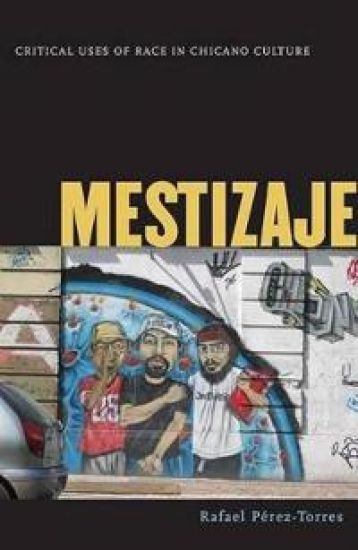
Focusing on the often unrecognized role race plays in expressions of Chicano culture, Mestizaje is a provocative exploration of the volatility and mutability of racial identities. In this important moment in Chicano studies, Rafael Pérez-Torres reveals how the concepts and realities of race, historical memory, the body, and community have both constrained and opened possibilities for forging new and potentially liberating multiracial identities. Informed by a broad-ranging theoretical investigation of identity politics and race and incorporating feminist and queer critiques, Pérez-Torres skillfully analyzes Chicano cultural production. Contextualizing the history of mestizaje, he shows how the concept of mixed race has been used to engage issues of hybridity and voice and examines the dynamics that make mestizo and mestiza identities resistant to, as well as affirmative of, dominant forms of power. He also addresses the role that mestizaje has played in expressive culture, including the hip-hop music of Cypress Hill and the vibrancy of Chicano poster art. Turning to issues of mestizaje in literary creation, Pérez-Torres offers critical readings of the works of Emma Pérez, Gil Cuadros, and Sandra Cisneros, among others. This book concludes with a consideration of the role that the mestizo body plays as a site of elusive or displaced knowledge. Moving beyond the oppositions—nationalism versus assimilation, men versus women, Texans versus Californians—that have characterized much of Chicano studies, Mestizaje synthesizes and assesses twenty-five years of pathbreaking thinking to make a case for the core components, sensibilities, and concerns of the discipline. Rafael Pérez-Torres is professor of English at the University of California, Los Angeles. He is author of Movements in Chicano Poetry: Against Myths, Against Margins, coauthor of To Alcatraz, Death Row, and Back: Memories of an East LA Outlaw, and coeditor of The Chicano Studies Reader: An Anthology of Aztlán, 1970–2000.
Militant Zionism in America

Militant Zionism in America

Rafael Medoff

The University of Alabama Press
2006
nidottu
This in-depth look at a controversial faction of American Zionism fills a void in the story of American Zionism--and in the story of American Judaism. This book recounts the fascinating and little-known story of the militant American Zionists who lobbied Congress, rallied American public opinion, and influenced British-American relations in their campaign for Jewish statehood in the 1930s and 1940s. Although these activists have been dismissed as fanatics who fragmented the American Zionist movement, Rafael Medoff reveals that the faction--which included an Academy Award-winning screenwriter and several future members of the Israeli parliament--was more influential than has been previously acknowledged. These militants stirred America's conscience by placing controversial newspaper ads, lobbying conservative as well as liberal members of Congress, and staging dramatic protest rallies. Through these tactics, Medoff shows, they attracted a wave of support from an extraordinary cross-section of leading Americans, including comedians Harpo Marx and Carl Reiner, actors Vincent Price, Marlon Brando, and Jane Wyatt, musician Leonard Bernstein, and rising young politicians Jacob Javits and Hubert Humphrey. Medoff also describes the shadowy underground division that smuggled weapons to the Holy Land in caskets, naming and interviewing for the first time members of this gunrunning network. Based on years of archival research and interviews and written in a compelling style, Militant Zionism in America documents events that reshaped the American Jewish community, influenced American foreign policy, and contributed to one of the most extraordinary events of modern history: the creation of the State of Israel. Rafael Medoff is a Visiting Scholar at the State University of New York -- Purchase College.
Control of Turbulent and Magnetohydrodynamic Channel Flows

Control of Turbulent and Magnetohydrodynamic Channel Flows

Rafael Vazquez; Miroslav Krstic

Birkhauser Boston Inc
2007
sidottu
This monograph presents new constructive design methods for boundary stabilization and boundary estimation for several classes of benchmark problems in flow control, with potential applications to turbulence control, weather forecasting, and plasma control. One of the main features of the book is a unique "backstepping" approach to parabolic partial differential equations, which yields not only the stabilization of the flow, but also the explicit solvability of the closed-loop system. The work is an excellent reference for a broad, interdisciplinary engineering and mathematics audience: control theorists, fluid mechanicists, mechanical engineers, aerospace engineers, chemical engineers, electrical engineers, applied mathematicians, as well as research and graduate students in these fields.
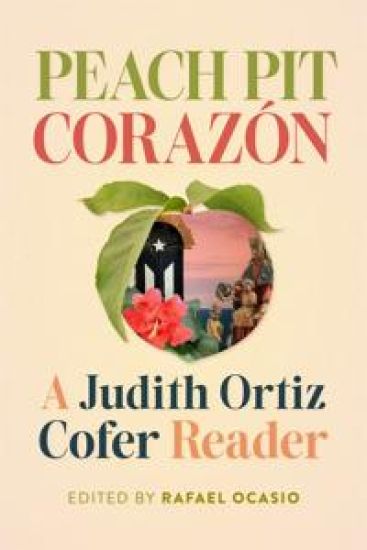
Peach Pit Corazón

Peach Pit Corazón

Rafael Ocasio

UNIVERSITY OF GEORGIA PRESS
2025
sidottu
Judith Ortiz Cofer (1952–2016), a prominent Latina writer, was, among various recognitions, nominated for a Pulitzer Prize for her 1989 first novel, The Line of the Sun (Georgia); awarded the coveted O. Henry Prize for her short story “The Latin Deli” in 1994; and inducted into the Georgia Writer’s Hall of Fame in 2010. Beginning her literary career as a poet, Ortiz Cofer was a prolific writer of novels, short stories, and creative nonfiction essays, often inspired by her diverse cultural background. She was born in Hormigueros, Puerto Rico, and moved to Paterson, New Jersey, as a child in the mid-1950s. In Paterson, she witnessed the rise of a Puerto Rican community. During her early teenage years, her family left for Augusta, Georgia, the state where she put down roots. She joined the English Department at the University of Georgia in 1984, eventually being named the Franklin Professor of English and Creative Writing, before retiring from teaching in 2014. Her work often engaged with the intersections of the various geographies, cultures, and languages of the places she called home throughout her life.Rafael Ocasio's critical introduction and commentary on representative literary pieces are guided by interviews conducted during his twenty-seven-year friendship with Ortiz Cofer. One common subject of their conversations, as they joked, was labeling themselves as “Georgia-Ricans.” From a temporal hindsight point of view, as a Georgia-Rican writer, Ortiz Cofer recalls events that led to her rise as a Latina writer who was celebratory of a Latinx identity, a multiethnic community that comprised a range of socioeconomic backgrounds, while also being critical of their traditional binary concepts pertaining to gender and sexual orientations.
Peach Pit Corazón

Peach Pit Corazón

Rafael Ocasio

UNIVERSITY OF GEORGIA PRESS
2025
pokkari
Judith Ortiz Cofer (1952–2016), a prominent Latina writer, was, among various recognitions, nominated for a Pulitzer Prize for her 1989 first novel, The Line of the Sun (Georgia); awarded the coveted O. Henry Prize for her short story “The Latin Deli” in 1994; and inducted into the Georgia Writer’s Hall of Fame in 2010. Beginning her literary career as a poet, Ortiz Cofer was a prolific writer of novels, short stories, and creative nonfiction essays, often inspired by her diverse cultural background. She was born in Hormigueros, Puerto Rico, and moved to Paterson, New Jersey, as a child in the mid-1950s. In Paterson, she witnessed the rise of a Puerto Rican community. During her early teenage years, her family left for Augusta, Georgia, the state where she put down roots. She joined the English Department at the University of Georgia in 1984, eventually being named the Franklin Professor of English and Creative Writing, before retiring from teaching in 2014. Her work often engaged with the intersections of the various geographies, cultures, and languages of the places she called home throughout her life.Rafael Ocasio's critical introduction and commentary on representative literary pieces are guided by interviews conducted during his twenty-seven-year friendship with Ortiz Cofer. One common subject of their conversations, as they joked, was labeling themselves as “Georgia-Ricans.” From a temporal hindsight point of view, as a Georgia-Rican writer, Ortiz Cofer recalls events that led to her rise as a Latina writer who was celebratory of a Latinx identity, a multiethnic community that comprised a range of socioeconomic backgrounds, while also being critical of their traditional binary concepts pertaining to gender and sexual orientations.
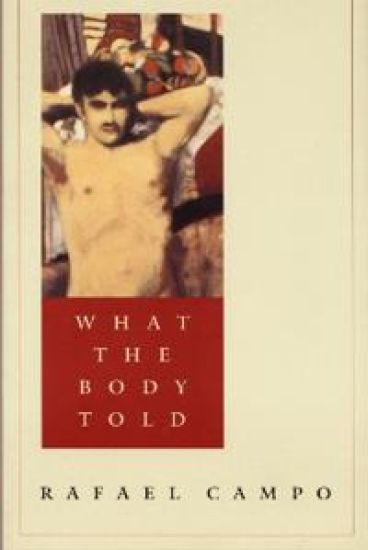
What the Body Told

What the Body Told

Rafael Campo

Duke University Press
1996
sidottu
What the Body Told is the second book of poetry from Rafael Campo, a practicing physician, a gay Cuban American, and winner of the National Poetry Series 1993 Open Competition. Exploring the themes begun in his first book, The Other Man Was Me, Campo extends the search for identity into new realms of fantasy and physicality. He travels inwardly to the most intimate spaces of the imagination where sexuality and gender collide and where life crosses into death. Whether facing a frenetic hospital emergency room to assess a patient critically ill with AIDS, or breathing in the quiet of his mother’s closet, Campo proposes with these poems an alternative means of healing and exposes the extent to which words themselves may be the most vital working parts of our bodies. The secret truths in What the Body Told, as the title implies, are already within each of us; in these vivid and provocative poems, Rafael Campo gives them a voice.Lost in the Hospital It’s not that I don’t like the hospital.Those small bouquets of flowers, pert and brave.The smell of antiseptic cleansers.The ill, so wistful in their rooms, so true.My friend, the one who’s dying, took me outTo where the patients go to smoke, IV’sAnd oxygen tanks attached to them-A tiny patio for skeletons. We sharedA cigaratte, which was delicious butToo brief. I held his hand; it feltLike someone’s keys. How beautiful it was,The sunlight pointing down at us, as ifWe were important, full of life, unbound.I wandered for a moment where his ribsHad made a space for me, and there, besideThe thundering waterfall of is heart,I rubbed my eyes and thought “I’m lost.”
What the Body Told

What the Body Told

Rafael Campo

Duke University Press
1996
pokkari
What the Body Told is the second book of poetry from Rafael Campo, a practicing physician, a gay Cuban American, and winner of the National Poetry Series 1993 Open Competition. Exploring the themes begun in his first book, The Other Man Was Me, Campo extends the search for identity into new realms of fantasy and physicality. He travels inwardly to the most intimate spaces of the imagination where sexuality and gender collide and where life crosses into death. Whether facing a frenetic hospital emergency room to assess a patient critically ill with AIDS, or breathing in the quiet of his mother’s closet, Campo proposes with these poems an alternative means of healing and exposes the extent to which words themselves may be the most vital working parts of our bodies. The secret truths in What the Body Told, as the title implies, are already within each of us; in these vivid and provocative poems, Rafael Campo gives them a voice.Lost in the Hospital It’s not that I don’t like the hospital.Those small bouquets of flowers, pert and brave.The smell of antiseptic cleansers.The ill, so wistful in their rooms, so true.My friend, the one who’s dying, took me outTo where the patients go to smoke, IV’sAnd oxygen tanks attached to them-A tiny patio for skeletons. We sharedA cigaratte, which was delicious butToo brief. I held his hand; it feltLike someone’s keys. How beautiful it was,The sunlight pointing down at us, as ifWe were important, full of life, unbound.I wandered for a moment where his ribsHad made a space for me, and there, besideThe thundering waterfall of is heart,I rubbed my eyes and thought “I’m lost.”
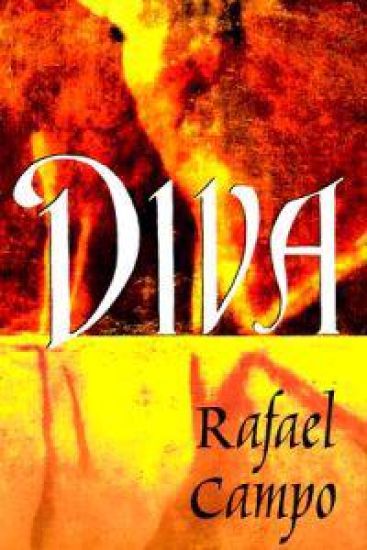
Diva

Diva

Rafael Campo

Duke University Press
1999
sidottu
A major new work from one of America's most acclaimed younger poets, Rafael Campo's Diva appears at the intersection of confession and confinement, hyperbole and humility. In his masterful third collection, Campo explores further the epic themes of his Cuban heritage and America's newness, his work as a doctor caring for AIDS patients and his identity as a gay man. At once relishing and resisting the poetic traditions of formal English verse, Diva showcases Campo moving deftly between received forms and free verse. In each poem the sound of words is transformed into the highest of arts, the act of performance into the exercise of power, and the most profound abjection into the sweet promise of divinity. Culminating with his new and daring translations of Federico GarcÍa Lorca's sonetos-the great Spanish poet's most homoerotically explicit and formally accomplished poems-Campo's music instills in the reader an exalted understanding of beauty, suffering, and, ultimately, the human capacity for empathy. From reviews of Campo's previous poetry: “Extraordinary meditations on illness and the healing power of words.”-Lambda Literary Foundation“Read Campo to enter the bloodstream of a man who, with a haunting clarity of vision, shares his memories, his anguish, his healing love.”-Cortney Davis, Literature and Medicine“Riveting, provocative, and refreshing-[this volume] is a gift to the clinician who is trying to re-invoke in his or her students the humility, compassion, and deep caring that brought us all into medicine in the first place.”-Dr. Sandra L. Bertman, Annals of Internal Medicine“[Campo] listens to the sounds the body makes, but what he hears is poetry.”-ZoË Ingalls, Chronicle of Higher Education“Powerful and accessible.”-Jonathan Jackson, Washington Blade“Bemused, indelible, and heartbreaking.”-Marilyn Hacker, Out“[Campo’s] private corral of disparate words twist, torque, collide with gorgeous creative imperative.”-Nomi Eve, Independent Weekly
Diva

Diva

Rafael Campo

Duke University Press
1999
pokkari
A major new work from one of America's most acclaimed younger poets, Rafael Campo's Diva appears at the intersection of confession and confinement, hyperbole and humility. In his masterful third collection, Campo explores further the epic themes of his Cuban heritage and America's newness, his work as a doctor caring for AIDS patients and his identity as a gay man. At once relishing and resisting the poetic traditions of formal English verse, Diva showcases Campo moving deftly between received forms and free verse. In each poem the sound of words is transformed into the highest of arts, the act of performance into the exercise of power, and the most profound abjection into the sweet promise of divinity. Culminating with his new and daring translations of Federico GarcÍa Lorca's sonetos-the great Spanish poet's most homoerotically explicit and formally accomplished poems-Campo's music instills in the reader an exalted understanding of beauty, suffering, and, ultimately, the human capacity for empathy. From reviews of Campo's previous poetry: “Extraordinary meditations on illness and the healing power of words.”-Lambda Literary Foundation“Read Campo to enter the bloodstream of a man who, with a haunting clarity of vision, shares his memories, his anguish, his healing love.”-Cortney Davis, Literature and Medicine“Riveting, provocative, and refreshing-[this volume] is a gift to the clinician who is trying to re-invoke in his or her students the humility, compassion, and deep caring that brought us all into medicine in the first place.”-Dr. Sandra L. Bertman, Annals of Internal Medicine“[Campo] listens to the sounds the body makes, but what he hears is poetry.”-ZoË Ingalls, Chronicle of Higher Education“Powerful and accessible.”-Jonathan Jackson, Washington Blade“Bemused, indelible, and heartbreaking.”-Marilyn Hacker, Out“[Campo’s] private corral of disparate words twist, torque, collide with gorgeous creative imperative.”-Nomi Eve, Independent Weekly
Landscape with Human Figure

Landscape with Human Figure

Rafael Campo

Duke University Press
2002
sidottu
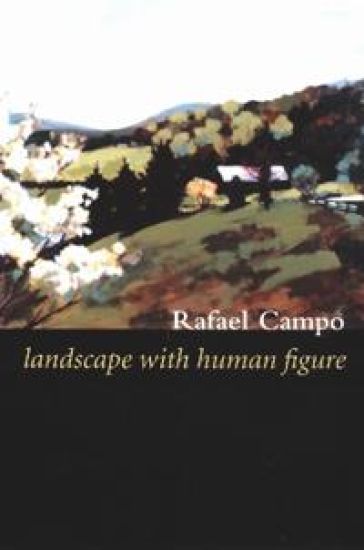
In Landscape with Human Figure, his fourth and most compelling collection of poetry, Rafael Campo confirms his status as one of America’s most important poets. Like his predecessor William Carlos Williams, who was also a physician, Campo plumbs the depths of our capacity for empathy. Campo writes stunning, candid poems from outside the academy, poems that arise with equal beauty from a bleak Boston tenement or a moonlit Spanish plaza, poems that remain unafraid to explore and to celebrate his identity as a doctor and Cuban American gay man. Yet no matter what their unexpected and inspired sources, Campo’s poems insistently remind us of the necessity of poetry itself in our increasingly fractured society; his writing brings us together-just as did the incantations of humankind’s earliest healers-into the warm circle of community and connectedness. In this heart-wrenching, haunting, and ultimately humane work, Rafael Campo has painted as if in blood and breath a gorgeously complex world, in which every one of us can be found.
Landscape with Human Figure

Landscape with Human Figure

Rafael Campo

Duke University Press
2002
pokkari
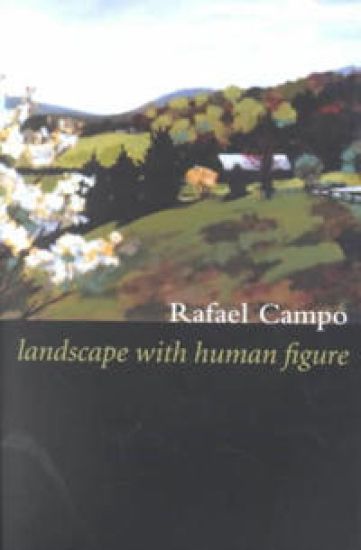
In Landscape with Human Figure, his fourth and most compelling collection of poetry, Rafael Campo confirms his status as one of America’s most important poets. Like his predecessor William Carlos Williams, who was also a physician, Campo plumbs the depths of our capacity for empathy. Campo writes stunning, candid poems from outside the academy, poems that arise with equal beauty from a bleak Boston tenement or a moonlit Spanish plaza, poems that remain unafraid to explore and to celebrate his identity as a doctor and Cuban American gay man. Yet no matter what their unexpected and inspired sources, Campo’s poems insistently remind us of the necessity of poetry itself in our increasingly fractured society; his writing brings us together-just as did the incantations of humankind’s earliest healers-into the warm circle of community and connectedness. In this heart-wrenching, haunting, and ultimately humane work, Rafael Campo has painted as if in blood and breath a gorgeously complex world, in which every one of us can be found.
The Enemy

The Enemy

Rafael Campo

Duke University Press
2007
sidottu
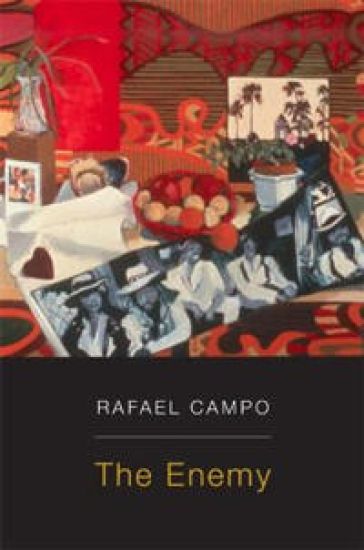
In his fifth collection of poetry, the physician and award-winning writer Rafael Campo considers what it means to be the enemy in America today. Using the empathetic medium of a poetry grounded in the sentient physical body we all share, he writes of a country endlessly at war-not only against the presumed enemy abroad but also with its own troubled conscience. Yet whether he is addressing the U.S. invasion of Iraq, the battle against the AIDS pandemic, or the culture wars surrounding the issues of feminism and gay marriage, Campo’s compelling poems affirm the notion that hope arises from even the most bitter of conflicts. That hope-manifest here in the Cuban exile’s dream of returning to his homeland, in a dying IV drug user’s wish for humane medical treatment, in a downcast housewife’s desire to express herself meaningfully through art-is that somehow we can be better than ourselves. Through a kaleidoscopic lens of poetic forms, Campo soulfully reveals this greatest of human aspirations as the one sustaining us all.
The Enemy

The Enemy

Rafael Campo

Duke University Press
2007
pokkari
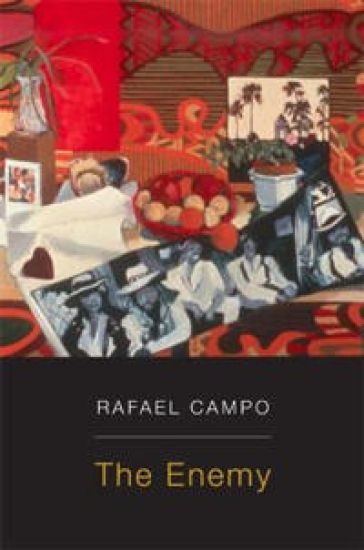
In his fifth collection of poetry, the physician and award-winning writer Rafael Campo considers what it means to be the enemy in America today. Using the empathetic medium of a poetry grounded in the sentient physical body we all share, he writes of a country endlessly at war-not only against the presumed enemy abroad but also with its own troubled conscience. Yet whether he is addressing the U.S. invasion of Iraq, the battle against the AIDS pandemic, or the culture wars surrounding the issues of feminism and gay marriage, Campo’s compelling poems affirm the notion that hope arises from even the most bitter of conflicts. That hope-manifest here in the Cuban exile’s dream of returning to his homeland, in a dying IV drug user’s wish for humane medical treatment, in a downcast housewife’s desire to express herself meaningfully through art-is that somehow we can be better than ourselves. Through a kaleidoscopic lens of poetic forms, Campo soulfully reveals this greatest of human aspirations as the one sustaining us all.
Queering the Public Sphere in Mexico and Brazil

Queering the Public Sphere in Mexico and Brazil

Rafael de la Dehesa

Duke University Press
2010
sidottu
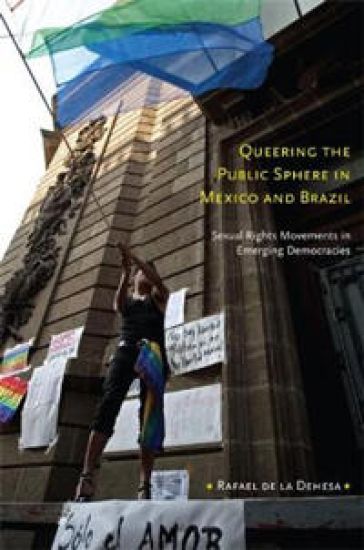
Queering the Public Sphere in Mexico and Brazil is a groundbreaking comparative analysis of the historical development and contemporary dynamics of LGBT activism in Latin America’s two largest democracies. Rafael de la Dehesa focuses on the ways that LGBT activists have engaged with the state, particularly in alliance with political parties and through government health agencies in the wake of the AIDS crisis. He examines this engagement against the backdrop of the broader political transitions to democracy, the neoliberal transformation of state–civil society relations, and the gradual consolidation of sexual rights at the international level. His comparison highlights similarities between sexual rights movements in Mexico and Brazil, including a convergence on legislative priorities such as antidiscrimination laws and the legal recognition of same-sex couples. At the same time, de la Dehesa points to notable differences in the tactics deployed by activists and the coalitions brought to bear on the state. De la Dehesa studied the archives of activists, social-movement organizations, political parties, religious institutions, legislatures, and state agencies, and he interviewed hundreds of individuals, not only LGBT activists, but also feminists, AIDS and human-rights activists, party militants, journalists, academics, and state officials. He marshals his prodigious research to reveal the interplay between evolving representative institutions and LGBT activists’ entry into the political public sphere in Latin America, offering a critical analysis of the possibilities opened by emerging democratic arrangements, as well as their limitations. At the same time, exploring activists’ engagement with the international arena, he offers new insights into the diffusion and expression of transnational norms inscribing sexual rights within a broader project of liberal modernity. Queering the Public Sphere in Mexico and Brazil is a landmark examination of LGBT political mobilization.
Queering the Public Sphere in Mexico and Brazil

Queering the Public Sphere in Mexico and Brazil

Rafael De la Dehesa

Duke University Press
2010
pokkari
Queering the Public Sphere in Mexico and Brazil is a groundbreaking comparative analysis of the historical development and contemporary dynamics of LGBT activism in Latin America’s two largest democracies. Rafael de la Dehesa focuses on the ways that LGBT activists have engaged with the state, particularly in alliance with political parties and through government health agencies in the wake of the AIDS crisis. He examines this engagement against the backdrop of the broader political transitions to democracy, the neoliberal transformation of state–civil society relations, and the gradual consolidation of sexual rights at the international level. His comparison highlights similarities between sexual rights movements in Mexico and Brazil, including a convergence on legislative priorities such as antidiscrimination laws and the legal recognition of same-sex couples. At the same time, de la Dehesa points to notable differences in the tactics deployed by activists and the coalitions brought to bear on the state. De la Dehesa studied the archives of activists, social-movement organizations, political parties, religious institutions, legislatures, and state agencies, and he interviewed hundreds of individuals, not only LGBT activists, but also feminists, AIDS and human-rights activists, party militants, journalists, academics, and state officials. He marshals his prodigious research to reveal the interplay between evolving representative institutions and LGBT activists’ entry into the political public sphere in Latin America, offering a critical analysis of the possibilities opened by emerging democratic arrangements, as well as their limitations. At the same time, exploring activists’ engagement with the international arena, he offers new insights into the diffusion and expression of transnational norms inscribing sexual rights within a broader project of liberal modernity. Queering the Public Sphere in Mexico and Brazil is a landmark examination of LGBT political mobilization.
Alternative Medicine

Alternative Medicine

Rafael Campo

Duke University Press
2013
sidottu
In his sixth collection of poetry, the celebrated poet-physician Rafael Campo examines the primal relationship between language, empathy, and healing. As masterfully crafted as they are viscerally powerful, these poems propose voice itself as a kind of therapeutic medium. For all that most ails us, Alternative Medicine offers the balm of song and the salve of the imagination: from the wounds of our stubborn differences of identity, to the pain of alienation in a world of unfeeling technologies, to the shame of the persistent injustices in our society, Campo's poetry displays a deep understanding of hurt as the possibility for healing. Demonstrating an abiding faith in our survival, this stunning, heartfelt book ultimately embraces the great diversity of our ways of knowing and dreaming, of needing and loving, and of living and dying.
Alternative Medicine

Alternative Medicine

Rafael Campo

Duke University Press
2013
pokkari
In his sixth collection of poetry, the celebrated poet-physician Rafael Campo examines the primal relationship between language, empathy, and healing. As masterfully crafted as they are viscerally powerful, these poems propose voice itself as a kind of therapeutic medium. For all that most ails us, Alternative Medicine offers the balm of song and the salve of the imagination: from the wounds of our stubborn differences of identity, to the pain of alienation in a world of unfeeling technologies, to the shame of the persistent injustices in our society, Campo's poetry displays a deep understanding of hurt as the possibility for healing. Demonstrating an abiding faith in our survival, this stunning, heartfelt book ultimately embraces the great diversity of our ways of knowing and dreaming, of needing and loving, and of living and dying.
Dancing Jacobins

Dancing Jacobins

Rafael Sánchez

Fordham University Press
2016
sidottu
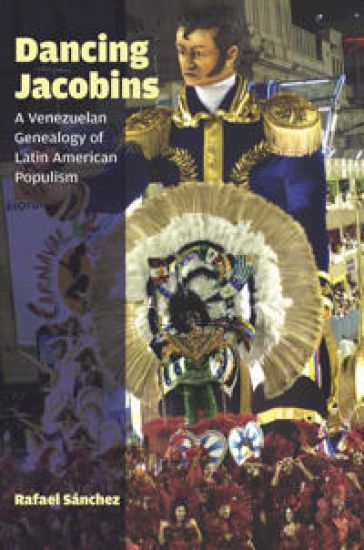
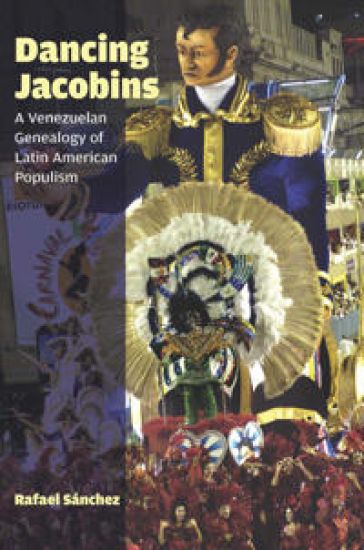
Since independence from Spain, a trope has remained pervasive in Latin America's republican imaginary: that of an endless antagonism pitting civilization against barbarism as irreconcilable poles within which a nation's life unfolds. This book apprehends that trope not just as the phantasmatic projection of postcolonial elites fearful of the popular sectors but also as a symptom of a stubborn historical predicament: the cyclical insistence with which the subaltern populations menacingly return to the nation's public spaces in the form of crowds. Focused on Venezuela but relevant to the rest of Latin America, and drawing on a rich theoretical literature including authors like Derrida, Foucault, Lacoue-Labarthe, Nancy, Lyotard, Laclau, Taussig, and others, Dancing Jacobins is a genealogical investigation of the intrinsically populist "monumental governmentality" that in response to this predicament began to take shape in that nation at the time of independence. Informed by a Bolivarian political theology, the nation's representatives, or "dancing Jacobins," recursively draw on the repertoire of busts, portraits, and equestrian statues of national heroes scattered across Venezuela in a montage of monuments and dancing—or universal and particular. They monumentalize themselves on the stage of the polity as a ponderously statuesque yet occasionally riotous reflection of the nation's general will. To this day, the nervous oscillation between crowds and peoplehood intrinsic to this form of government has inflected the republic's institutions and constructs, from the sovereign "people" to the nation's heroic imaginary, its constitutional texts, representative figures, parliamentary structures, and, not least, its army. Through this movement of collection and dispersion, these institutions are at all times haunted and imbued from within by the crowds they otherwise set out to mold, enframe, and address.
Dancing Jacobins

Dancing Jacobins

Rafael Sánchez

Fordham University Press
2016
pokkari
Since independence from Spain, a trope has remained pervasive in Latin America's republican imaginary: that of an endless antagonism pitting civilization against barbarism as irreconcilable poles within which a nation's life unfolds. This book apprehends that trope not just as the phantasmatic projection of postcolonial elites fearful of the popular sectors but also as a symptom of a stubborn historical predicament: the cyclical insistence with which the subaltern populations menacingly return to the nation's public spaces in the form of crowds. Focused on Venezuela but relevant to the rest of Latin America, and drawing on a rich theoretical literature including authors like Derrida, Foucault, Lacoue-Labarthe, Nancy, Lyotard, Laclau, Taussig, and others, Dancing Jacobins is a genealogical investigation of the intrinsically populist "monumental governmentality" that in response to this predicament began to take shape in that nation at the time of independence. Informed by a Bolivarian political theology, the nation's representatives, or "dancing Jacobins," recursively draw on the repertoire of busts, portraits, and equestrian statues of national heroes scattered across Venezuela in a montage of monuments and dancing—or universal and particular. They monumentalize themselves on the stage of the polity as a ponderously statuesque yet occasionally riotous reflection of the nation's general will. To this day, the nervous oscillation between crowds and peoplehood intrinsic to this form of government has inflected the republic's institutions and constructs, from the sovereign "people" to the nation's heroic imaginary, its constitutional texts, representative figures, parliamentary structures, and, not least, its army. Through this movement of collection and dispersion, these institutions are at all times haunted and imbued from within by the crowds they otherwise set out to mold, enframe, and address.