Kirjojen hintavertailu. Mukana 11 342 296 kirjaa ja 12 kauppaa.

Kirjahaku

Etsi kirjoja tekijän nimen, kirjan nimen tai ISBN:n perusteella.

1000 tulosta hakusanalla Richard Howe Earl Howe

Richard Potter

Richard Potter

John A. Hodgson

UNIVERSITY OF VIRGINIA PRESS
2024
pokkari
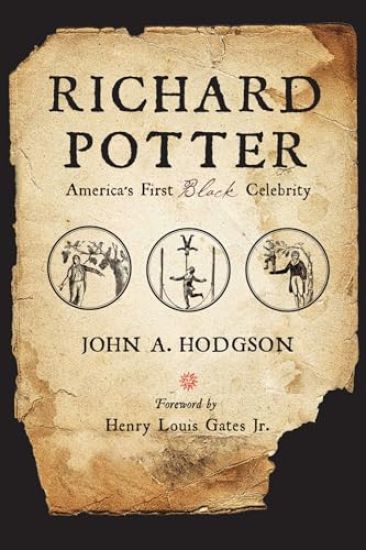
Apart from a handful of exotic--and almost completely unreliable--tales surrounding his life, Richard Potter is almost unknown today. Two hundred years ago, however, he was the most popular entertainer in America--the first showman, in fact, to win truly nationwide fame. Working as a magician and ventriloquist, he personified for an entire generation what a popular performer was and made an invaluable contribution to establishing popular entertainment as a major part of American life. His story is all the more remarkable in that Richard Potter was also a black man.This was an era when few African Americans became highly successful, much less famous. As the son of a slave, Potter was fortunate to have opportunities at all. At home in Boston, he was widely recognized as black, but elsewhere in America audiences entertained themselves with romantic speculations about his "Hindu" ancestry (a perception encouraged by his act and costumes).Richard Potter's performances were enjoyed by an enormous public, but his life off stage has always remained hidden and unknown. Now, for the first time, John A. Hodgson tells the remarkable, compelling--and ultimately heartbreaking--story of Potter's life, a tale of professional success and celebrity counterbalanced by racial vulnerability in an increasingly hostile world. It is a story of race relations, too, and of remarkable, highly influential black gentlemanliness and respectability: as the unsung precursor of Frederick Douglass, Richard Potter demonstrated to an entire generation of Americans that a black man, no less than a white man, could exemplify the best qualities of humanity. The apparently trivial "popular entertainment" status of his work has long blinded historians to his significance and even to his presence. Now at last we can recognize him as a seminal figure in American history.
Richard Hooker and his Early Doctrine of Justification
Richard Hooker and his Early Doctrine of Justification explores the doctrine of justification, the doctrine of faith and grace, and the doctrine of Scripture and use of reason in the early theology of Richard Hooker. In order to prove that Hooker was a Protestant Reformed theologian, Simut concentrates on Hooker's doctrine of justification as reflected in his Learned Discourse of Justification, which is the most important work of his early theology. Unlike previous books on Hooker which use primarily the theology of Luther and Calvin to draw conclusions, this book brings together quotations and ideas from the works of Luther, Melanchthon, Zwingli, Bucer, Calvin and Beza to show that Hooker was a Protestant Reformed theologian. Simuth also discusses the theological context of Hooker's career by offering an analysis of the doctrine of justification in the theology of John Jewel, John Whitgift (Hooker's patrons), and Thomas Cartwright and Walter Travers (Hooker's Puritan opponents).
Richard Wright - American Writers 74

Richard Wright - American Writers 74

Bone Robert

UNIVERSITY OF MINNESOTA PRESS
1989
nidottu
Richard Wright - American Writers 74 was first published in 1989. Minnesota Archive Editions uses digital technology to make long-unavailable books once again accessible, and are published unaltered from the original University of Minnesota Press editions.
The English Poems of Richard Crashaw

The English Poems of Richard Crashaw

Richard Crashaw

University of Minnesota Press
2013
sidottu
“Crashaw is quite alone in his peculiar kind of greatness.” -T. S. EliotThis is the first new critical edition in more than forty years of an astounding and unjustly neglected poet of sacred eroticism and homoeroticism-the traditional yet nevertheless startling expression of ecstatic religious feeling in sexual terms. Flamboyant, experimental, and cosmopolitan in his literary and religious preferences, Richard Crashaw (ca. 1613–1649) wrote exultant, high-flying verse that remains the most sustained effort in English to render ecstasy poetically. Routinely misunderstood and at times even maligned for his supposed bad taste, Crashaw mixes the languages of erotic and religious rapture in powerful poems about holy women such as Mary Magdalene, Teresa of Ávila, and the Virgin Mary, but also in lyrics about Christ’s naked, crucified body, making Crashaw one of the queerest of religious poets.Presenting Crashaw to a new generation of readers, Richard Rambuss has newly edited all of his English poems, with modern spelling and full annotations. This volume replicates Crashaw’s books, the 1646 version of Steps to the Temple and Carmen Deo Nostro (1652), and includes his important verse letter to the Countess of Denbigh, as well as manuscript poems. Rambuss offers an extensive critical, biographical, and historical introduction that reassesses Crashaw and his significance and gives a chronology of the poet’s life.
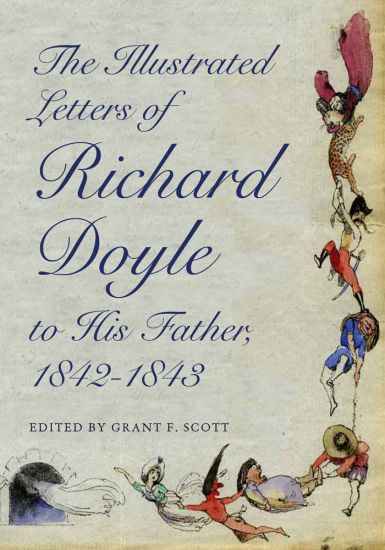
The Illustrated Letters of Richard Doyle to His Father, 1842–1843
Before he joined the staff of Punch and designed its iconic front cover, illustrator Richard "Dicky" Doyle was a young man whose father (political caricaturist John Doyle) charged him with sending a weekly letter, even though they lived under the same roof. This volume collects the fifty-three illustrated missives in their entirety for the first time and provides an uncommon peek into the intimate but expansive observations of a precocious social commentator and artist. In a series of vivid manuscript canvases, Doyle observes Victorian customs and society. He visits operas, plays, and parades. He watches the queen visiting the House of Commons and witnesses the state funeral of the Duke of Sussex. He is caught up in the Chartist riots of August 1842 and is robbed during one of the melees. And he provides countless illustrations of ordinary people strolling in the streets and swarming the parks and picture galleries of the metropolis. The sketches offer a fresh perspective on major social and cultural events of London during the early 1840s by a keen observer not yet twenty years old. Doyle's epistles anticipate the modern comic strip and the graphic novel, especially in their experimentation with sequential narrative and their ingenious use of space. The letters are accompanied by a full biographical and critical introduction with new material about Doyle's life.
Richard Price and the Ethical Foundations of the American Revolution
Richard Price was a loyal, although dissenting, subject of Great Britain who thought the British treatment of their colonies as wrong, not only prudentially, financially, economically, militarily, and politically, but, above all, morally wrong. He expressed these views in his first pamphlet early in 1776. It concluded with a plea for the cessation of hostilities by Great Britain and reconciliation. Its analyses, arguments, and conclusions, however, along with its admiration for the colonists, their moral position and qualities, could hardly fail to contribute to their reluctant recognition that there was no real alternative to independence. Price found some of his views not only misunderstood but vilified by negative critics in the ensuing controversy. So he wrote a second pamphlet which was published in early 1777. He expanded his analysis of liberty, extended its application to the war with America, and greatly expanded his discussion of the economic impact upon Great Britain. After the war, in 1784, he published a third pamphlet on the importance of the American Revolution and the means of making it a benefit to the world, appending an extensive letter from the Frenchman, Turgot. Implicitly the letter regards Price as a perceptive theorist of the revolution; explicitly it identifies the problems facing the prospective new nation and expresses a wish that it will fulfill its role s the hope of the world. Selections in the appendices present a part of the pamphlet controversy and the selection of correspondence shows how seriously Price was regarded by Revolutionary leaders.
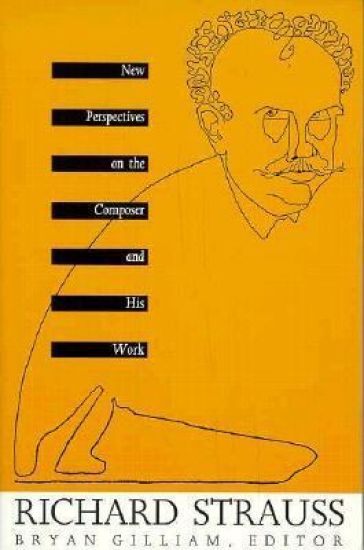
Richard Strauss

Richard Strauss

Duke University Press
1997
pokkari
As we approach the fiftieth anniversary of Richard Stauss’s death, scholarly interest in the composer continues to grow. Despite what was once a tendency by musicologists to overlook or deny Strauss’s importance, these essays firmly place the German composer in the musical mainstream and situate him among the most influential composers of the late nineteenth and early twentieth centuries. Originally published in 1992, this volume examines Strauss’s life and work from a number of approaches and during various periods of his long career, opening up unique corridors of insight into a crucial time in German history. Contributors discuss Strauss as a young composer steeped in a conservative instrumental tradition, as a brash young modernist tone poet of the 1890s, as an important composer of twentieth-century German opera, and as a cultural icon manipulated by the national socialists during the 1930s and early 1940s. Individual essays use Strauss’s creative work as a framework for larger musicological questions such as the tension between narrative and structure in program music, the problem of extended tonality at the turn of the century, stylistic choice versus stylistic obligation, and conflicting perspectives of progressive versus conservative music. This collection will interest Strauss scholars, musicologists, and those interested in the artistic and cultural life of Germany from 1880 through the Second World War.Contributors. Kofi Agawu, Günter Brosche, Bryan Gilliam, Stephen Hefling, James A. Hepokoski, Timothy L. Jackson, Michael Kennedy, Lewis Lockwood, Barbara A. Peterson, Pamela Potter, Reinhold Schlötterer, R. Larry Todd
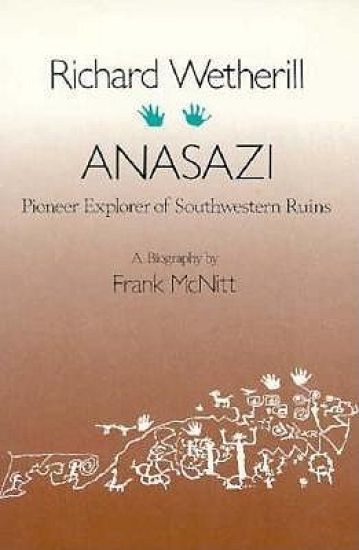
Richard Wetherill: Anasazi

Richard Wetherill: Anasazi

F. McNitt

University of New Mexico Press
1974
nidottu
Anasazi, the Navajos' name for the "Ancient Ones" who preceded them into the Southwest, is the nickname of Richard Wetherill, who devoted his life to a search for remains of these vanished peoples. He discovered the cliff dwellings of Mesa Verde and Kiet Siel and the Basket Maker sites at Grand Gulch, Utah, and at Chaco Canyon he initiated the excavation of Pueblo Bonito, the largest prehistoric ruin in the United States. His discoveries are among the most important ever made by an American archaeologist.
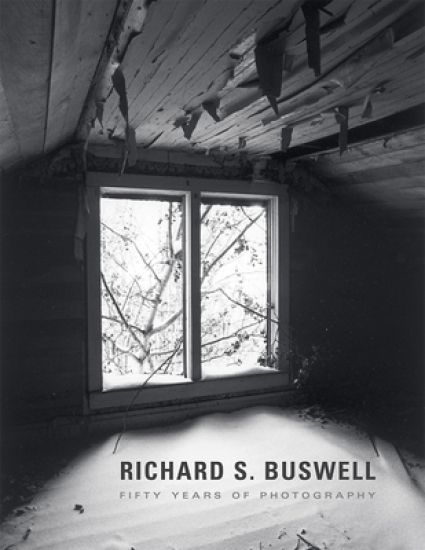
Richard S. Buswell

Richard S. Buswell

Richard S. Buswell; Barbara Koostra

University of New Mexico Press
2020
sidottu
Richard S. Buswell has been photographing Montana's ghost towns and homesteads for five decades. The photographs in Richard S. Buswell: Fifty Years of Photography illustrate the range and variety of his work from his earliest days to his most recent projects. Beautifully crafted, sometimes unnerving, and always thought-provoking, Buswell's photographs showcase his love for Montana and the American West. From panoramic sweeps of abandoned buildings to tightly framed depictions of natural and man-made objects, this book celebrates wide-open skies and a landscape that moves forward in time even when places and objects are forgotten. This stunning collection features seventy-two duotone photographs, a reflective essay by Buswell, and a foreword by Barbara Koostra, the former director of the Montana Museum of Art and Culture.
Richard Tregaskis

Richard Tregaskis

Ray E. Boomhower

University of New Mexico Press
2021
sidottu
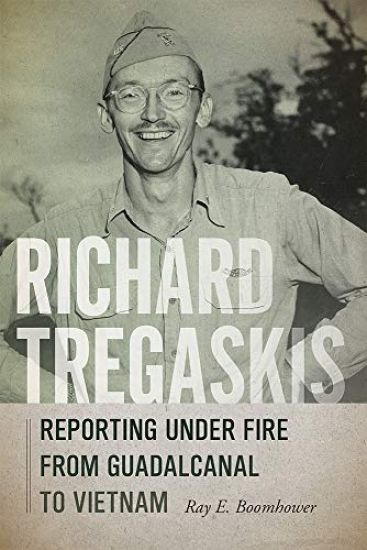
In the late summer of 1942, more than ten thousand members of the First Marine Division held a tenuous toehold on the Pacific island of Guadalcanal. As American marines battled Japanese forces for control of the island, they were joined by war correspondent Richard Tregaskis. Only one of two civilian reporters to land and stay with the marines, Tregaskis's notebook captured the daily and nightly terrors faced by American forces in one of World War II's most legendary battles--and it served as the premise for his bestselling book, Guadalcanal Diary.One of the most distinguished combat reporters to cover World War II, Tregaskis later reported on Cold War conflicts in Korea and Vietnam. In 1964 the Overseas Press Club recognized his first-person reporting under hazardous circumstances by awarding him its George Polk Award for his book Vietnam Diary. Boomhower's riveting book is the first to tell Tregaskis's gripping life story, concentrating on his intrepid reporting experiences during World War II and his fascination with war and its effect on the men who fought it.
Richard Tregaskis

Richard Tregaskis

Ray E. Boomhower

UNIVERSITY OF NEW MEXICO PRESS
2024
nidottu
In the late summer of 1942, more than ten thousand members of the First Marine Division held a tenuous toehold on the Pacific island of Guadalcanal. As American marines battled Japanese forces for control of the island, they were joined by war correspondent Richard Tregaskis. Tregaskis was one of only two civilian reporters to land and stay with the marines, and in his notebook he captured the daily and nightly terrors faced by American forces in one of World War II's most legendary battles - and it served as the premise for his bestselling book, Guadalcanal Diary.One of the most distinguished combat reporters to cover World War II, Tregaskis later reported on Cold War conflicts in Korea and Vietnam. In 1964 the Overseas Press Club recognized his first-person reporting under hazardous circumstances by awarding him its George Polk Award for his book Vietnam Diary. Boomhower's riveting book is the first to tell Tregaskis's gripping life story, concentrating on his intrepid reporting experiences during World War II and his fascination with war and its effect on the men who fought it.
Richard and Linda Thompson's Shoot Out the Lights

Richard and Linda Thompson's Shoot Out the Lights

Hayden Childs

Continuum International Publishing Group Ltd.
2008
nidottu
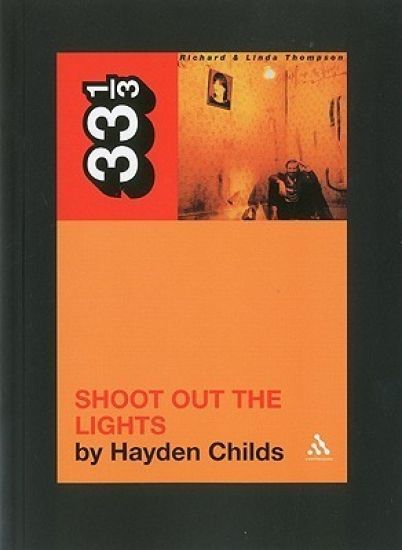
Hayden Childs' "Shoot Out The Lights" puts Richard and Linda Thompson's album in context.In the fall of 1980 Richard and Linda Thompson (of Fairport Convention fame) had recently been dumped from their record label and were on the verge of divorce. Somehow they overcame these miserable circumstances and managed to make an album considered by many to be a masterpiece."Shoot Out The Lights" puts the album - from the personal history driving the songs, to the recording difficulties they encountered and the subsequent fall-out - in context. This is a brilliant, emotional book about a brilliant, emotional album."33 1/3" is a series of short books about a wide variety of albums, by artists ranging from James Brown to the Beastie Boys. Launched in September 2003, the series now contains over 50 titles and is acclaimed and loved by fans, musicians and scholars alike.
Richard Rorty's New Pragmatism

Richard Rorty's New Pragmatism

Edward J. Grippe

Continuum International Publishing Group Ltd.
2007
sidottu
This book is a study of Richard Rorty's "New Pragmatism" on its own terms, and a critical analysis of its implications for contemporary thought. As an anti-foundationalist and a liberal, Rorty's version of pragmatism is designed to promote personal freedom and democratic solidarity. Having as his target the stultifying effects of Western philo-scientific tradition, encrusted with the barnacles of metaphysical essentialism and epistemic foundationalism, Rorty writes to liberate the contemporary mind and to promote the growth of individual creativity and social tolerance. Admirable as the goals of greater personal creativity and tolerant solidarity are, it is Edward J. Grippe's contention that Rorty fails to achieve either of them. Liberated from the notion of essentialism, Rorty develops a vision of self that is radically unfettered in its originality. So, to forestall the misanthropy that would inevitably emerge, a "solidarity of forbearance" is to be inculcated. But given his anti-foundationalist stance, Rorty cannot appeal to a rational consensus to ground tolerance. With only a Darwinian struggle between competing constructs, sophistic persuasion must be the deciding factor as to which narrative "works." And since there can be no ultimate or "final" vocabulary as arbiter, those that control the meaning of words control the basis for pragmatic conversation, i.e., what counts as "a working solidarity." Thus, the book concludes that Rorty's pragmatism is self-defeating, suppressing genuine conversation and ultimately constricting creativity.
Richard Diebenkorn

Richard Diebenkorn

Gerald Nordland

Universe Publishing
2001
sidottu
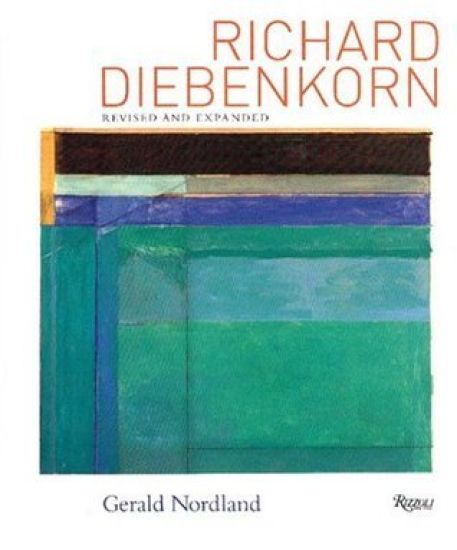
Richard Diebenkorn is generally acknowledged as one of the most influential artists of the twentieth century. The luminous abstractions of his later career and the innovative figurative works of his middle years firmly established him as a master in the high tradition of modernism. This revised and expanded edition of the first comprehensive monograph on the artist presents a rich selection of the artist's oeuvre. Until the mid-1950s, he painted in the abstract expressionist tradition (synthesizing, as he has since, such disparate influences as de Kooning, Gorky, Hopper, and Cezanne) before turning (unfashionably) to figurative painting along with artists David Park and Elmer Bischoff. He then embarked on the series of large abstract paintings for which he is best known--each titled Ocean Park after the beachside community where he worked. Reminiscent of Matisse in color and Mondrian in geometry, these are some of the most remarkable accomplishments of twentieth-century art. The updated section of this edition follows Diebenkorn's career from the mid-1980s until his death, focusing particularly on his adventurous late works on paper. In each "phase" of his career, Diebenkorn explored the intricate interplay between formal rigor and luminous, sensual color with the same masterful hand. Along with several hundred reproductions of the artist's work, critic Gerald Norland provides a thoughtful and informative study of Diebenkorn's life and career, an updated comprehensive exhibition history, and a selected bibliography. Author Bio: GERALD NORLAND is an art critic and former museum administrator whose work has appeared in many national and international publications. A contributor to Richard Diebenkorn: Paintings and Drawings, 1943-1980, he his also the author of Gaston Lachaise: The Man and His Work. As a museum administrator, he has held positions at the Milwaukee Art Museum, the San Francisco Museum of Modern Art, and the Frederick S. Wight Art Gallery at the University of California in Los Angeles. He has been a commentator on the life and art of Richard Diebenkorn for almost 40 years.
Richard Wright

Richard Wright

Rizzoli International Publications
2010
sidottu
An extensive monograph surveying the recent major works of artist Richard Wright. This fully illustrated publication presents Wright’s exquisite paintings and drawings. Wright states "I wanted to get to the idea without the object getting in the way." This attitude led to paintings of extraordinary skill made directly onto the wall that do away with the physicality of the canvas. This publication records these special transient events where paintings have appeared, and for the most part, no longer exist. Winner of the prestigious Turner Prize (2009), Wright’s work was praised by the judges for its "profound originality and beauty."
Richard Prince

Richard Prince

Rizzoli International Publications
2011
pokkari
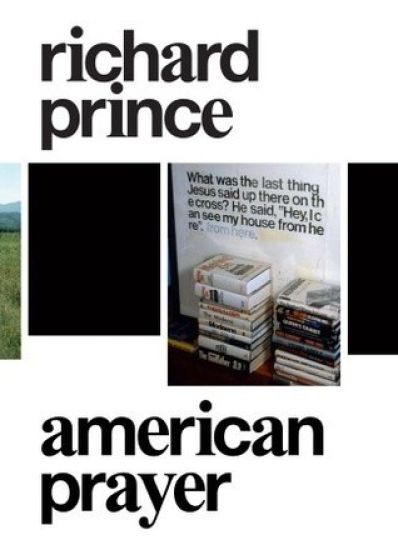
A look into Richard Prince’s private library and his influences, published on the occasion of an exhibition of the artist’s work at the Bibliotheque nationale de France, Paris. Artist Richard Prince is renowned for appropriating icons that capture the American cultural zeitgeist, such as Marlboro cowboys, femme-fatale nurses, and muscle cars. Prince is also a bibliophile, collecting rare volumes published from 1949 to 1984 which include Naked Lunch, Jack Kerouac’s rolled manuscript for Big Sur, and editions of Vladimir Nabokov’s Lolita in several languages. An exhibition at the Bibliotheque nationale de France, Paris, presents rare books selected by the artist from its collection alongside Prince’s artwork.Richard Prince: American Prayer is an accompanying volume that offers a rare glimpse into Prince’s intellectual explorations, revealing the source material for many of his well-known series through the pairing of literary excerpts and complementary illustrations of artwork.
Richard Phillips

Richard Phillips

Richard Phillips

Rizzoli International Publications
2013
sidottu
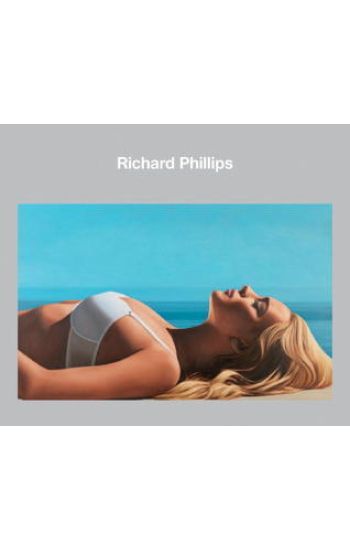
Richard Phillips’s new work hinges on the self-awareness of real-life subjects, using collaborative forms of image production to reorder the relationship of pop art to its subjects. For Richard Phillips, critique is as much an intrinsic material in the conception and staging of his work as the materials of their making. His conflating of subject and genre continues to provide challenging commentary on the condition and reach of contemporary art. His first two films, Lindsay Lohan (2011) and Sasha Grey (2011), are erotically posed "motion portraits." The notorious actresses pose erotically—Grey in a modernist John Lautner home, and Lohan in an aquamarine infinity pool. First Point (2012) marks his second collaboration with Lohan and third collaboration with legendary surf filmmaker Taylor Steele. In addition to working with Lohan and Grey, Phillips has collaborated with Brazilian supermodel Adriana Lima to create a series of paintings that depict her against backdrops of iconic Brazilian landmarks. The staging and format of his films present their subjects as paintings, forming the foundation for lush, large-scale, realist portraits of the placeholders of their own mediated existence. The book is generously illustrated with film stills and the paintings made from the films.
Richard Hudson

Richard Hudson

Paul Moorhouse

RIZZOLI INTERNATIONAL PUBLICATIONS
2025
sidottu
Richard Hudson (b. 1954, Yorkshire, UK) began working on his organic forms and sculptures at a relatively late age after many years of traveling. Drawing inspiration from luminaries such as Henry Moore, Jean Arp, and Constantin Brancu?i, Hudson creates work that is meticulously refined, timeless, and contemporary. Hudson s imaginative forms are frequently emblematic of the human figure and, at the same time, possess reflective surfaces and evoke surreal reflections of the environment. This landscape-format book illustrates a wide range of Hudson s work, from never-before-seen models and sketches to miniature and monumental pieces, including his major installations at Chatsworth, notably Frog with Fly in 2015 and Tear in 2016, and his numerous commissions globally, such as Love Me in Donum Sculpture Park, California, in 2016, and a second version in Valle de Bravo, Mexico, in 2021. Despite the immense size of these installations, Hudson s creative process nevertheless remains distinctively unassuming, studio-based, private, and introspective. This book substantiates Hudson s cultural impact, positioning him as a pivotal figure in contemporary sculpture.