Kirjojen hintavertailu. Mukana 12 016 292 kirjaa ja 12 kauppaa.

Kirjahaku

Etsi kirjoja tekijän nimen, kirjan nimen tai ISBN:n perusteella.

1000 tulosta hakusanalla Robert A. Cook

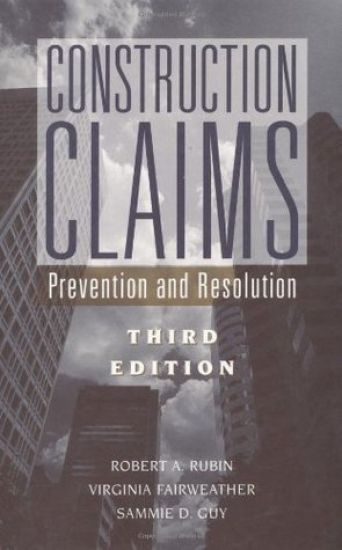
Construction Claims

Construction Claims

Robert A. Rubin; Virginia Fairweather; Sammie D. Guy

John Wiley Sons Inc
1999
sidottu
Praise for the Second Edition . . . "A basic, how-to guide . . . for all those involved in the construction industry."—The Construction Lawyer "This book is indispensable for any contractor who, against his better judgment, bids a fixed price contract . . . highly recommended."—David S. Thaler, The Daily Record "Particularly useful to the construction contractor [and] also instructive to owners and design professionals."—Journal of Performance of Constructed Facilities "Practical advice on how to prevent a dispute—from the moment that the contract preparation begins through performance by the contractor and administration by the owner."—Concrete International Over two successful editions, Construction Claims has become the sourcebook of choice on the subject for construction professionals from all areas of the industry. Now extensively updated, the Third Edition includes new material on design/build implications for construction; dispute review boards and their proper use; partnering to avoid disputes; and federal and relevant state environmental regulations. Written by a prestigious and experienced author team, it uses an accessible, step-by-step approach that follows the contracting process from start to finish, with detailed coverage of provisions of the law, "red flag" contract clauses, and documentation issues and procedures. It also addresses the key aspects of prosecuting and defending claims, from claims presentation to formal dispute resolution. Complete with dozens of new forms and checklists, plus case histories, mini-cases, and more, this edition is an essential resource for anyone involved in construction and the law.
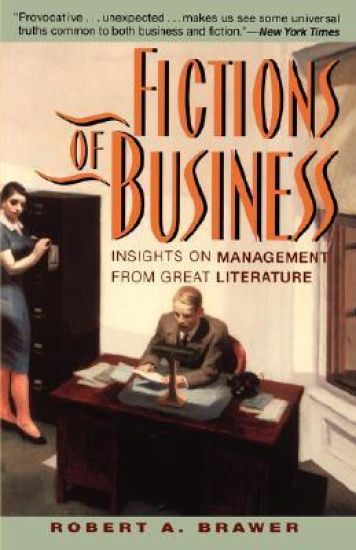
Fictions of Business

Fictions of Business

Robert A. Brawer

John Wiley Sons Inc
2000
nidottu
"If Willy Loman had had a better boss, his career might not have ended as badly. book examines the human problems encountered in business in works as diverse as The Canterbury Tales by Geoffrey Chaucer and Glengarry Glen Ross by David Mamet." -Wall Street Journal "Reading Brawer's book is like taking a stimulating crash course in literature and management." - USA Today " wide-ranging interpretations make for stimulating and enjoyable reading." -Harvard Business Review "Brawer...weaves fascinating patterns of interpretation and illumination..." -Boston Book Review "Once in a blue moon, a CEO book comes forth that is written in sparkling fashion, goes far beyond the normal CEO thought patterns, and yet tells what it's like to be a CEO. One of these rare books is Fictions of Business....Read the book. You'll be glad you did." -Chief Executive "For those who prefer to take inspiration from the classics, Fictions of Business...will fit the bill." -Publishers Weekly
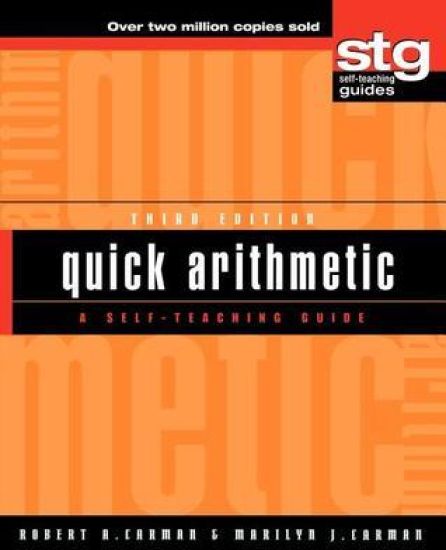
Quick Arithmetic

Quick Arithmetic

Robert A. Carman

John Wiley Sons Inc
2001
nidottu
Master math at your own pace! Does working with numbers often frustrate you? Do you need to brush up on your basic math skills? Do you feel math stands between you and your career goals, or a better grade at school? Quick Arithmetic, Third Edition is the quickest and easiest way to teach yourself the basic math skills you need to advance on the job or in school. Using cartoons and a clear writing style, this practical guide provides a fresh start for learning or reviewing how to work with whole numbers, fractions, decimals, and percentages. The book’s proven self-teaching approach allows you to work at your own pace and learn only the material you need. Previews and objectives at the beginning of each section help you determine your particular needs, while self-tests, practice problems, and a final exam let you measure your progress and reinforce what you’ve learned. For anyone who has ever felt intimidated by a page of numbers, Quick Arithmetic, Third Edition has the answers!
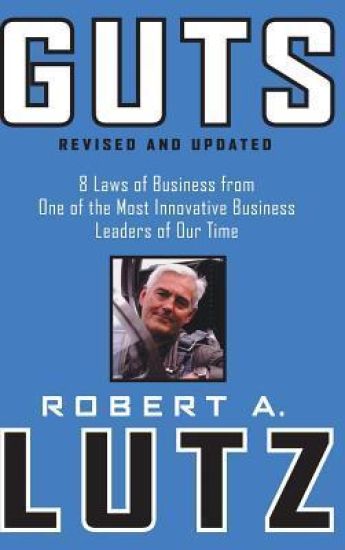
Guts

Guts

Robert A. Lutz

John Wiley Sons Inc
2003
sidottu
"Read it for no other reason than to learn Bob's Seven Immutable Laws of Business. . . . This is vintage Bob-contrarian, thoughtful, and he's really fun to read." Forbes In this edition of Bob Lutz's bestselling account of the business philosophy with which he revolutionized Chrysler and much of the automotive industry, Lutz reveals his unique brand of creative management. Readers will learn many lessons herein, including why the key to success in any business is maintaining a positive tension between the creative minds and the buttoned-up financial minds, and how to attract, motivate, and strategically deploy each type throughout an organization. This book features a new introduction and an epilogue in which Lutz introduces an eighth law that helps today's business leaders put his famed Seven Immutable Laws of Business into sharper perspective. Robert A. Lutz (Scarsdale, NY) is General Motor's Vice Chairman of Product Development and Chairman of GM North America.
Risk Assessment for Chemicals in Drinking Water

Risk Assessment for Chemicals in Drinking Water

Robert A. Howd; Anna M. Fan

John Wiley Sons Inc
2007
sidottu
A comprehensive reference on state-of-the-art risk assessment methodologies for drinking water Risk Assessment for Chemicals in Drinking Water discusses the major steps and goals in risk assessments and suggests ways to improve the methodologies and accuracy, while consolidating up-to-date information on the current principles and practices in one authoritative reference. After an enlightening overview of risk assessment practices and regulatory guidelines, it: Includes descriptions of the use of variability analysis, exposure analysis, physiologically based pharmacokinetics, and modeling for both cancer and non-cancer endpointsDescribes the practices of major organizations, including the U.S. EPA, Health Canada, World Health Organization, and California Office of Environmental Health Hazard AssessmentIncludes complete chapters on risk assessment for essential nutrients, arsenic, chloroform, and perchlorateExplains how to address susceptible sub-populations, including the elderly and infants and children, in risk assessmentsCovers the potential of using genomic and proteomic screensAddresses recent advances, emerging issues, and future challenges With contributions and perspectives from leading scientists, this is the definitive resource for health and environmental scientists, toxicologists, risk assessors and managers, regulators, consultants, and other professionals responsible for the safety of drinking water.
Historic Preservation Technology

Historic Preservation Technology

Robert A. Young

John Wiley Sons Inc
2008
sidottu
This introduction to historic preservation goes well beyond the Secretary of the Interior's Standards for Rehabilitation and shows how wood, stone, masonry, and metal were used in the past and how adaptive re-use can be employed to bring modern amenities to historic structures. The book covers all aspects of the exterior and interior building fabric, including windows, roofing, doors, porches, and electrical and mechanical systems for both residential and small-scale commercial buildings. Richly illustrated with photographs showing typical elements of historic buildings, decay mechanisms, and remediation techniques, the book also contains a variety of useful case studies and features a companion Website that offers dozens of additional images and resources.
Signals and Linear Systems

Signals and Linear Systems

Robert A. Gabel; Richard A. Roberts

John Wiley Sons Inc
1987
sidottu
Unifies the various approaches used to characterize the interaction of signals with systems. Stresses their commonality, and contrasts difference/differential equation models, convolution, and state variable formulations in presenting continuous- and discrete-time systems. Transform methods are also discussed as they relate to corresponding time-domain techniques. This edition expands discussion of applications of the theoretical material in physical problems, enhancing students' ability to relate this material to design activities. Material on deconvolution has also been added to the time-domain and transform-domain treatments of discrete-time systems. Contains many examples and equations.
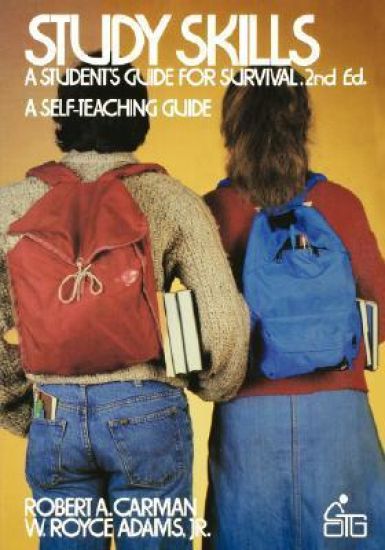
Study Skills

Study Skills

Robert A. Carman; W. Royce Adams

John Wiley Sons Inc
1984
nidottu
Shows how to survive in college by providing the reader with a skills approach tailored to individual needs and interests. With this guide students will teach themselves basic strategies for improving reading, writing, listening, researching, test-taking and classroom learning skills. Conversational and entertaining, it provides clear explanations and exercises with immediate feedback. Practice exercises include typical textbook material.
Economic Organizations and Social Systems

Economic Organizations and Social Systems

Robert A. Solo

The University of Michigan Press
2000
nidottu
Originally published in 1967 to stunning reviews, Economic Organizations and Social Systems presents one of the few comprehensive visions of the relationship between the economy and other aspects of the social system. Robert Solo endeavors to answer the question of how to describe an actual economy, compare economies, or confront problems where the capacity to mobilize energies and to act as a coherent social force is at issue. The book, with a new preface, will be important reading for economists, sociologists, and law scholars seeking to develop an alternative vision of our economy and society.Robert A. Solo is Professor Emeritus of Economics, Michigan State University.
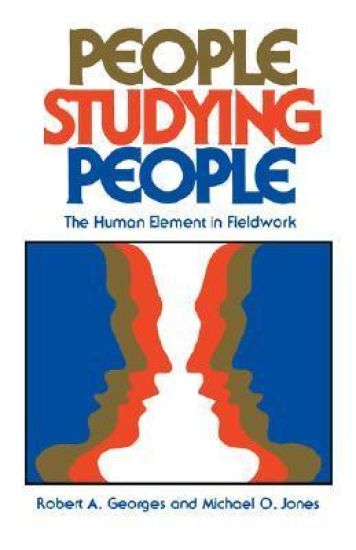
People Studying People

People Studying People

Robert A. Georges; Michael Owen Jones

University of California Press
1980
pokkari
The authors of this book demonstrate that fieldwork is first and foremost a human pursuit. They draw upon published and unpublished accounts of fieldworkers' personal experiences to develop the thesis that an appreciation of fieldwork as a unique mode of inquiry depends upon an understanding of the role the human element plays in it. They analyze the processes involved when people study people firsthand, focusing upon the recurrent human problems that arise and must be solved. The human processes and problems, they argue, are common to all fieldwork, regardless of the disciplinary backgrounds or the specific interests of individual researchers.
Guardians of Language

Guardians of Language

Robert A. Kaster

University of California Press
1988
sidottu
What did it mean to be a professional teacher in the prestigious "liberal schools" - the schools of grammar and rhetoric - in late antiquity? How can we account for the abiding prestige of these schools, which remained substantially unchanged in their methods and standing despite the political and religious changes that had taken place around them? The grammarian was a pivotal figure in the lives of the educated upper classes of late antiquity. Introducing his students to correct language and to the literature esteemed by long tradition, he began the education that confirmed his students' standing in a narrowly defined elite. His profession thus contributed to the social as well as cultural continuity of the Empire. The grammarian received honor - and criticism; the profession gave the grammarian a firm sense of cultural authority but also placed him in a position of genteel subordination within the elite. Robert A. Kaster provides the first thorough study of the place and function of these important but ambiguous figures. He also gives a detailed prosopography of the grammarians, and of the other "teachers of letters" below the level of rhetoric, from the middle of the third through the middle of the sixth century, which will provide a valuable research tool for other students of late-antique education.
The Concept of Neutrality in Classical Greece

The Concept of Neutrality in Classical Greece

Robert A. Bauslaugh

University of California Press
1991
sidottu
Looking at Classical warfare from the perspective of the non-belligerents, Robert A. Bauslaugh brings together the scattered evidence testifying to neutral behavior among the Greek city-states and their non-Greek neighbors. Were the Argives of 480/479 B.C. really "Medizers," as many have accused, or were they pursuing a justifiable policy of neutrality as they claimed? On what basis in international law or custom did the Corcyraeans claim non-alignment? Why were the leading belligerent states willing to accept the inclusion of a "neutrality clause" in the Common Peace of 371? These questions have not been asked by historians of international law, and the answers provide a far more complex and sophisticated picture of interstate relations than has so far been available. Despite the absence of exclusively diplomatic language, the concept of respect for neutrals appears early in Greek history and remains a nearly constant feature of Classical wars. The problems confronting uncommitted states, which have clear parallels in modern history, were balanced by widespread acceptance of the need for limitations on the chaos of warfare.
Masculinity and Male Codes of Honor in Modern France

Masculinity and Male Codes of Honor in Modern France

Robert A. Nye

University of California Press
1998
pokkari
In this study of upper-class masculinity from the end of the ancien regime in 1789 to the end of World War I, Robert Nye argues that manhood, masculinity, and male sexuality is, like femininity, a cultural construct, comprising a strict set of heroic ideals and codes of honor which few men have been able to realize in practice. In doing so, Nye destabilizes and historicizes the male body, and incorporates gender into the brand of cultural history inaugurated by Norbert Elias in the 1930s.
Death Is That Man Taking Names

Death Is That Man Taking Names

Robert A. Burt

University of California Press
2004
pokkari
The American culture of death changed radically in the 1970s. For terminal illnesses, hidden decisions by physicians were rejected in favor of rational self-control by patients asserting their 'right to die' - initially by refusing medical treatment and more recently by physician-assisted suicide. This new claim rested on two seemingly irrefutable propositions: first, that death can be a positive good for individuals whose suffering has become intolerable; and second, that death is an inevitable and therefore morally neutral biological event. "Death Is That Man Taking Names" suggests, however, that a contrary attitude persists in our culture - that death is inherently evil, not just in practical but also in moral terms. The new ethos of rational self-control cannot refute but can only unsuccessfully try to suppress this contrary attitude. The inevitable failure of this suppressive effort provokes ambivalence and clouds rational judgment in many people's minds and paradoxically leads to inflictions of terrible suffering on terminally ill people. Judicial reforms in the 1970s of abortion and capital punishment were driven by similarly high valuations of rationality and public decision-making - rejecting physician control over abortion in favor of individual self-control by pregnant women and subjecting unsupervised jury decisions for capital punishment to supposed rationally guided supervision by judges. These reforms also attempt to suppress persistently ambivalent attitudes toward death, and are therefore prone to inflicting unjustified suffering on pregnant women and death-sentenced prisoners. In this profound and subtle account of psychological and social forces underlying American cultural attitudes toward death, Robert A. Burt maintains that unacknowledged ambivalence is likely to undermine the beneficent goals of post-1970s reforms and harm the very people these changes were intended to help.
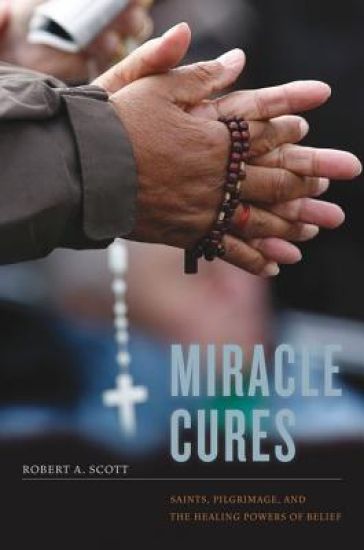
Miracle Cures

Miracle Cures

Robert A. Scott

University of California Press
2010
sidottu
Iconic images of medieval pilgrims, such as Chaucer's making their laborious way to Canterbury, conjure a distant time when faith was the only refuge of the ill and infirm, and thousands traveled great distances to pray for healing. Why, then, in an age of advanced biotechnology and medicine, do millions still go on pilgrimages? Why do journeys to important religious shrines--such as Lourdes, Compostela, Fatima, and Medjugorje--constitute a major industry? In Miracle Cures, Robert A. Scott explores these provocative questions and finds that pilgrimage continues to offer answers for many. Its benefits can range from a demonstrable improvement in health to complete recovery. Using research in biomedical and behavioral science, Scott examines accounts of miracle cures at medieval, early modern, and contemporary shrines. He inquires into the power of relics, apparitions, and the transformative nature of sacred journeying and shines new light on the roles belief, hope, and emotion can play in healing.
The Gothic Enterprise

The Gothic Enterprise

Robert A. Scott

University of California Press
2011
pokkari
The great Gothic cathedrals of Europe are among the most astonishing achievements of Western culture. Evoking feelings of awe and humility, they make us want to understand what inspired the people who had the audacity to build them. This engrossing book surveys an era that has fired the historical imagination for centuries. In it Robert A. Scott explores why medieval people built Gothic cathedrals, how they built them, what conception of the divine lay behind their creation, and how religious and secular leaders used cathedrals for social and political purposes. As a traveler's companion or a rich source of knowledge for the armchair enthusiast, "The Gothic Enterprise" helps us understand how ordinary people managed such tremendous feats of physical and creative energy at a time when technology was rudimentary, famine and disease were rampant, the climate was often harsh, and communal life was unstable and incessantly violent. While most books about Gothic cathedrals focus on a particular building or on the cathedrals of a specific region, "The Gothic Enterprise" considers the idea of the cathedral as a humanly created space. Scott discusses why an impoverished people would commit so many social and personal resources to building something so physically stupendous and what this says about their ideas of the sacred, especially the vital role they ascribed to the divine as a protector against the dangers of everyday life. Scott's narrative offers a wealth of fascinating details concerning daily life during medieval times. The author describes the difficulties master-builders faced in scheduling construction that wouldn't be completed during their own lifetimes, how they managed without adequate numeric systems or paper on which to make detailed drawings, and how climate, natural disasters, wars, variations in the hours of daylight throughout the year, and the celebration of holy days affected the pace and timing of work. Scott also explains such things as the role of relics, the quarrying and transporting of stone, and the incessant conflict cathedral-building projects caused within their communities. Finally, by drawing comparisons between Gothic cathedrals and other monumental building projects, such as Stonehenge, Scott expands our understanding of the human impulses that shape our landscape.
Miracle Cures

Miracle Cures

Robert A. Scott

University of California Press
2011
pokkari
Iconic images of medieval pilgrims, such as Chaucer's making their laborious way to Canterbury, conjure a distant time when faith was the only refuge of the ill and infirm, and thousands traveled great distances to pray for healing. Why, then, in an age of advanced biotechnology and medicine, do millions still go on pilgrimages? Why do journeys to important religious shrines - such as Lourdes, Compostela, Fatima, and Medjugorje - constitute a major industry? In "Miracle Cures", Robert A. Scott explores these provocative questions and finds that pilgrimage continues to offer answers for many. Its benefits can range from a demonstrable improvement in health to complete recovery. Using research in biomedical and behavioral science, Scott examines accounts of miracle cures at medieval, early modern, and contemporary shrines. He inquires into the power of relics, apparitions, and the transformative nature of sacred journeying and shines new light on the roles belief, hope, and emotion can play in healing.
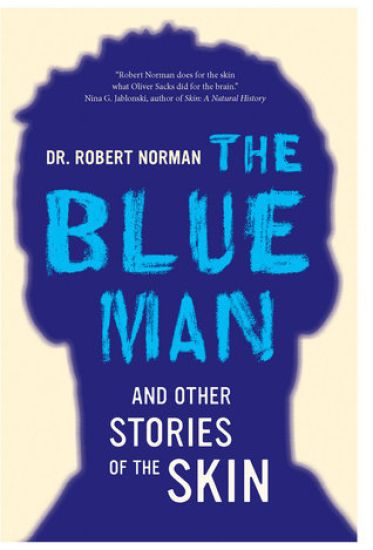
The Blue Man and Other Stories of the Skin

The Blue Man and Other Stories of the Skin

Robert A. Norman

University of California Press
2014
sidottu
Written by a leading dermatologist, The Blue Man and Other Stories of the Skin provides a compelling and accessible introduction to the life of our largest organ, while also recounting the author's experiences with memorable patients he has treated who suffer from mysterious skin conditions. Robert Norman begins by highlighting the qualities of the skin, tracing the history of its conditions and diseases, then examining the cultural, social and psychological impact of both color and irregularity. The book also features an absorbing collection of stories about some of his most intriguing patients: from a man whose skin mysteriously turned blue, to a hypochondriacal woman who begins to show signs of a life-threatening disease. This is a fascinating account of the dynamic nature of the skin, and the people who inhabit it.
Population Health in America

Population Health in America

Robert A. Hummer; Erin R. Hamilton

University of California Press
2019
sidottu
In this engaging and accessibly written book, Population Health in America weaves demographic data with social theory and research to help students understand health patterns and trends in the U.S. population. While life expectancy was estimated to be just 37 years in the United States in 1870, today it is more than twice as long, at over 78 years. Yet today, life expectancy in the U.S. lags behind almost all other wealthy countries. Within the U.S., there are substantial social inequalities in health and mortality: women live longer but less healthier lives than men; African Americans and Native Americans live far shorter lives than Asian Americans and White Americans; and socioeconomic inequalities in health have been widening over the past 20 years. What accounts for these population health patterns and trends? Inviting students to delve into population health trends and disparities, demographers Robert Hummer and Erin Hamilton provide an easily understandable historical and contemporary portrait of U.S. population health. Perfect for courses such as population health, medical or health sociology, social epidemiology, health disparities, demography, and others, as well as for academic researchers and lay persons interested in better understanding the overall health of the country, Population Health in America also challenges students, academics, and the public to understand current health policy priorities and to ask whether considerably different directions are needed.