Kirjojen hintavertailu. Mukana 12 041 597 kirjaa ja 12 kauppaa.

Kirjahaku

Etsi kirjoja tekijän nimen, kirjan nimen tai ISBN:n perusteella.

1000 tulosta hakusanalla Rohan Candappa

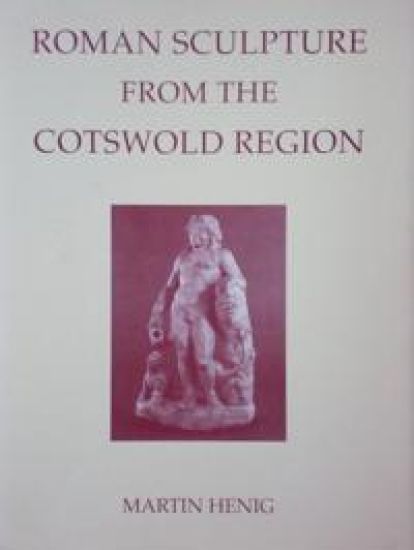
Roman Sculpture from the Cotswold Region, with Devon and Cornwall
Roman sculpture from the Cotswolds (principally Gloucestershire and Oxfordshire) forms one of the most consistent regional traditions of Roman Britain. These sculptors, working with the soft local limestone, displayed a considerable feeling for pattern and texture. Many of the pieces are well known and the best are among the most distinguished works of art from Roman Britain, but they have never before been discussed as a whole. This volume features detailed catalogue entries and over 300 illustrations, providing a full record of the material. An introductory essay sets the historical and stylistic contexts. Concluding the text, Dr Henig also covers the Roman sculpture from Devon and Cornwall.
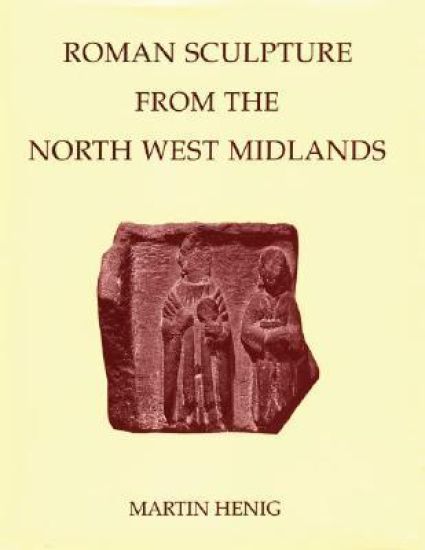
Roman Sculpture from the North West Midlands
This is the first comprehensive catalogue of the sculpture from this region of Roman Britain, including the first proper record of the sculpture from Wroxeter. The sculptures, all in local sandstone, were carved locally and provide an index of Romanisation in the far north-west of the Roman Empire - at the Fortress of Legio II Adivtrix and then Legio XX Valeria Victrix at Devra (Chester), and at the Fortress and subsequently the civil town of the Cornovii at Viroconium (Wroxeter). The sculpture from Letcetum (Wall, Staffs) is also considered. The works range in quality from highly accomplished and decorative altars and tombstones, to rather ham-fisted efforts which hint that it was not always possible to attract sculptors to these relatively remote places. Such factors are discussed in an extended introduction.
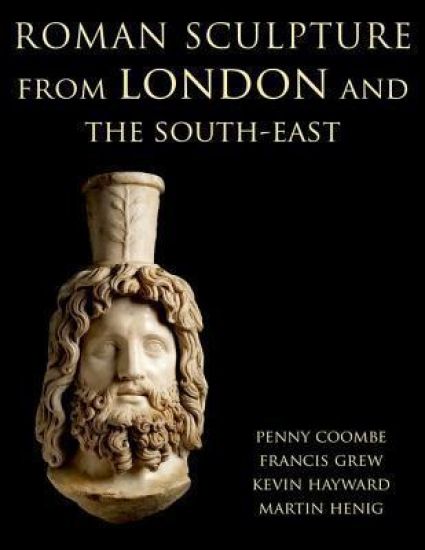
Roman Sculpture from London and the South-East

Roman Sculpture from London and the South-East

Penny Coombe; Martin Henig; Francis Grew; Kevin Hayward

Oxford University Press
2015
sidottu
This, the tenth fascicule in the British section of the international series Corpus Signorum Imperii Romani, concerns Roman sculpture from south-east England. Over 200 individual items are catalogued, from the counties of Kent, Surrey and Hertfordshire, as well as from Greater London. In contrast to the rest of Britain, this region has yielded a substantial collection of marble and bronze statuary. The sculptures from the Temple of Mithras in London are notable highlights, as are the busts probably of the emperor Pertinax and his father from the villa at Lullingstone. The famous head of Hadrian from the Thames is one of only three bronze statues of that emperor from the entire Roman world. Scarcely less impressive is the limestone sculpture, which includes important funerary monuments and sarcophagi, alongside depictions of Classical and Romano-British deities. In the last of these categories, a Matronae relief with four rather than the usual three matrons, and several representations of a Hunter God are particularly intriguing. A substantial part of the book concerns architectural sculpture, in particular fragments of three major monuments: the quadrifrons arch at Richborough, and a small arch and screen from London. The figural and floral motifs on the London monuments are analysed in detail, revealing close links with contemporary sculpture in the Rhineland. For the first time in the British CSIR series, this fascicule contains a comprehensive study of the types and sources of the stone. Nearly every item was examined visually by an archaeological petrologist, Dr Kevin Haywood, and approaching half in thin-section. It emerges that in the early Roman period sculptors in Kent used stone quarried in northern France rather than Britain, so demonstrating the importance of cross-Channel connections in the formative years of the province of Britannia.
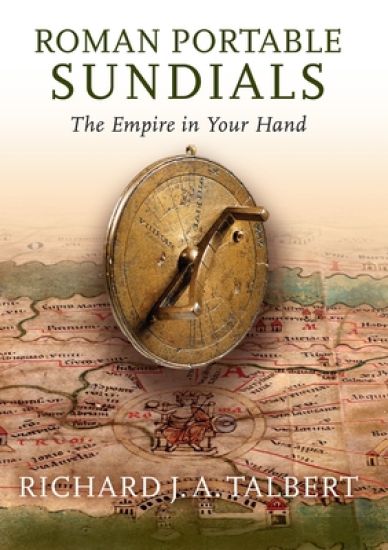
Roman Portable Sundials

Roman Portable Sundials

Richard J.A. Talbert

Oxford University Press Inc
2020
nidottu
In an unscientific era when maps were rarities, how did ancient Romans envisage their far flung empire? This was done by various means for certain, including with the aid of an ingenious type of portable sundial that has barely attracted notice. As the Romans understood before the first century BCE, to track the passage of the sun across the sky hour-by-hour one needed to know one's latitude and the time of year, and that, furthermore, sundials did not have to be fixed objects. These portable instruments, crafted in bronze, were adjustable for the changes of latitude to be expected on long journeys--say, for instance, from Britain to Spain, or from Alexandria to Rome, or even on a Mediterranean tour. For convenient reference, these sundials incorporated lists of twenty to thirty names of cities or regions, each with its specific latitude. One of the insights of Roman Portable Sundials is that the choice of locations offers unique clues to the mental world-map and self-identity of individuals able to visualize Rome's vast empire latitudinally. The sixteen such sundials known to date share common features but designers also vied to create enhancements. Comparison with modern calculations shows that often the latitudes listed are incorrect, in which case the sundial may not perform at its best. But then the nature of Romans' time-consciousness (or lack of it) must be taken into consideration. Richard Talbert suspects that owners might prize these sundials not so much for practical use but rather as prestige objects attesting to scientific awareness as well as imperial mastery of time and space. In retrospect, they may be seen as Roman precursors to comparable Islamic and European instruments from the Middle Ages onwards, and even to today's luxury watches which display eye-catching proof of their purchasers' wealth, sophistication, and cosmopolitanism. Richly enhanced with detailed photographs, line drawings, maps, a gazetteer, and a table of latitudes and locations, Roman Portable Sundials brings these overlooked gadgets out of the shadows at last to reveal their hitherto untapped layers of meaning.
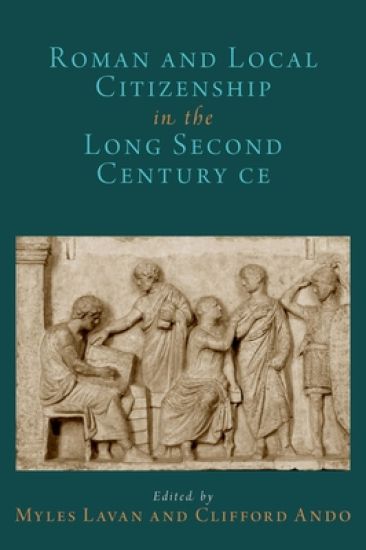
Roman and Local Citizenship in the Long Second Century CE
Imperial and Local Citizenship in the Long Second Century CE offers a radical new history of Roman citizenship in the long century before Caracalla's universal grant of citizenship in 212 CE. Earlier work portrayed the privileges of citizen status in this period as eroded by its wide diffusion. Building on recent scholarship that has revised downward estimates for the spread of citizenship, this work investigates the continuing significance of Roman citizenship in the domains of law, economics and culture. From the writing of wills to the swearing of oaths and crafting of marriage, Roman citizens conducted affairs using forms and language that were often distinct from the populations among which they resided. Attending closely to patterns at the level of province, region and city, this volume offers a new portrait of the early Roman empire: a world that sustained an exclusive regime of citizenship in a context of remarkable political and cultural integration.
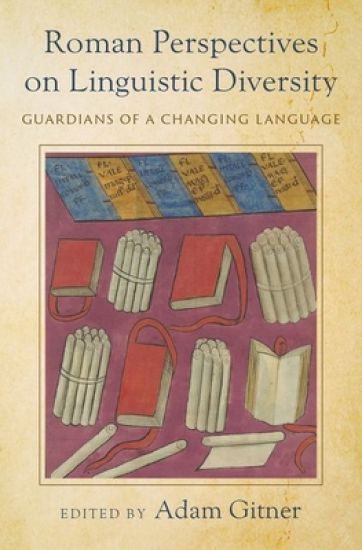
Roman Perspectives on Linguistic Diversity
Thirty years ago Robert Kaster's Guardians of Language: The Grammarian and Society in Late Antiquity investigated ancient Greco-Roman grammarians as social agents within their social and cultural context. This collection of twelve essays develops that line of inquiry by focusing on one dimension of their activity: how Roman grammarians - as well as scholars and intellectuals more broadly - described, made sense of, and resisted linguistic diversity within the Roman republic and empire. This includes social and diachronic variety within Latin as well as multilingual contact with Greek and other Mediterranean languages. The essays cover five centuries of Latin reflection on language, from Varro to the fifth or sixth century CE. The book concludes with an autobiographical Epilogue by Robert Kaster about the origins of Guardians of Language and updates to the prosopography of known ancient grammarians found in Guardians.
Roman Virtue in the Early Christian Thought of Lactantius

Roman Virtue in the Early Christian Thought of Lactantius

Jason M. Gehrke

OXFORD UNIVERSITY PRESS INC
2025
sidottu
Known since the Renaissance as the "Christian Cicero," Lucius Caecilius Firmianus Lactantius was a professor of Latin rhetoric, Christian apologist, and theologian at the court of Emperor Constantine. In this historical study, Jason M. Gehrke examines the central notion ofvirtusin Lactantius's major work,The Divine Institutes of the Christian Religion. This book begins by tracing the reception of classical Roman political and philosophical arguments about divinevirtusfrom their classical sources into the apologetic, exegetical, and doctrinal writings of Lactantius's predecessors — Tertullian, Minucius Felix, and Cyprian. Recognition of their influence illuminates the fundamental notion ofvirtusthat animates Lactantius's doctrine of God and his Christology. In this context, Lactantius's account of divinevirtusrevealed in Christ indicates the profound influence of classical Roman literature, philosophy, and politics upon the development of Christian thought in the third-century Latin West. Lactantius's Christology provides the immediate basis for his attempt to correct and reform classical Roman thinking about moral and political order. Gehrke thus examines Lactantius's arguments about wealth, sexuality, and warfare to show their intimate connection to his Christology and scriptural exegesis. In this account, Gehrke argues, Lactantius attempts a comprehensive synthesis of third century Latin Christian thinking about Christ's revelation and its implications for ethics and politics. Roman Virtue in the Early Christian Thought of Lactantiusthus presentsTheDivine Institutesas the first programmatic expression of early Latin Christian political theology in the Constantinian era. By attending to the traditional character of his arguments, this work provides a new basis for historical accounts of Lactantius and his contributions to Christianity in the pivotal era of Constantine's rise. Foreword by Anthony Briggman.
Roman Inequality

Roman Inequality

Edward E. Cohen

OXFORD UNIVERSITY PRESS INC
2023
sidottu
Roman Inequality explores how in Rome in the first and second centuries CE a number of male and female slaves, and some free women, prospered in business amidst a population of generally impoverished free inhabitants and of impecunious enslaved residents. Edward E. Cohen focuses on two anomalies to which only minimal academic attention has been previously directed: (1) the paradox of a Roman economy dependent on enslaved entrepreneurs who functioned, and often achieved considerable personal affluence, within a legal system that supposedly deprived unfree persons of all legal capacity and human rights; (2) the incongruity of the importance and accomplishments of Roman businesswomen, both free and slave, successfully operating under legal rules that in many aspects discriminated against women, but in commercial matters were in principle gender-blind and in practice generated egalitarian juridical conditions that often trumped gender-discriminatory customs. This book also examines the casuistry through which Roman jurists created "legal fictions" facilitating a commercial reality utterly incompatible with the fundamental precepts--inherently discriminatory against women and slaves---that Roman legal experts ("jurisprudents") continued explicitly to insist upon. Moreover, slaves' acquisition of wealth was actually aided by a surprising preferential orientation of the legal system: Roman law--to modern Western eyes counter-intuitively--in reality privileged servile enterprise, to the detriment of free enterprise. Beyond its anticipated audience of economic historians and students and scholars of classical antiquity, especially of Roman history and law, Roman Inequality will appeal to all persons working on or interested in gender and liberation issues.
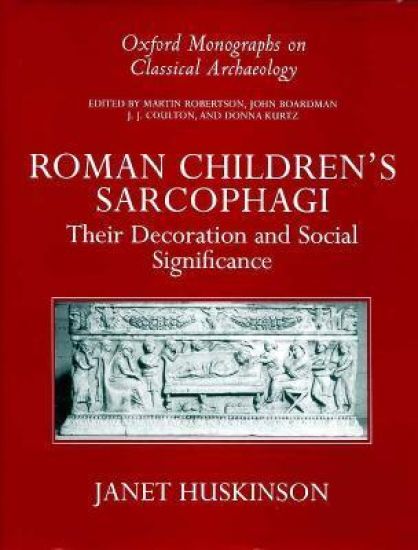
Roman Children's Sarcophagi

Roman Children's Sarcophagi

Janet Huskinson

Clarendon Press
1996
sidottu
This book is the first major study of the themes which were used in the decoration of sarcophagi made for children in Rome and Ostia from the late first to early fourth century AD. It provides a selective catalogue of examples of each type, followed by discussion of how these fit into the general pattern. This allows certain themes to be identified which are virtually exclusive to childre's sarcophagi. The second part of the book discusses the choice of subjects and how these reflect the standing of children in Roman society: to what extent, for instance, was childhood shown as a differentiated stage of life, or was it dominated by aspirations of the adult world? How is the death of a child treated in art? There are separate sections on the role of workshops and customers in the development of child-specific imagery, and on material from the early Christian era, providing some interesting differences resulting from differing attitudes towards children and beliefs about life and death.
Roman Freedmen During the Late Republic

Roman Freedmen During the Late Republic

S. Treggiari

Oxford University Press
2000
sidottu
Oxford Scholarly Classics brings together a number of great academic works from the archives of Oxford University Press. Reissued in a uniform series design, they will enable libraries, scholars, and students to gain fresh access to some of the finest scholarship of the last century.
Roman Theatres

Roman Theatres

Frank Sear

Oxford University Press
2006
sidottu
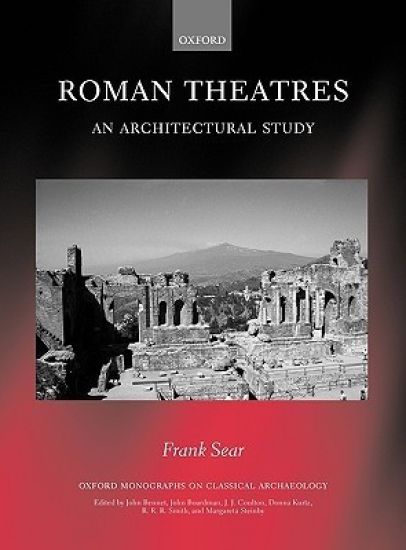
This book is a definitive architectural study of Roman theatre architecture. In nine chapters it brings together a massive amount of archaeological, literary,and epigraphic information under one cover. It also contains a full catalogue of all known Roman theatres, including a number of odea (concert halls) and bouleuteria (council chambers) which are relevant to the architectural discussion, about 1,000 entries in all. Inscriptional or literary evidence relating to each theatre is listed and there is an up-to-date bibliography for each building. Most importantly the book contains plans of over 500 theatres or buildings of theatrical type, as well as numerous text figures and nearly 200 figures and plates.
Roman Imperial Themes

Roman Imperial Themes

P. A. Brunt

Clarendon Press
1990
sidottu
This book comprises sixteen articles published over thirty years, with supplements including two additional essays. Its range is broad, from discussions of Rome's aspirations to world dominion, to studies of provincial administration. The results of these studies suggest that Roman rule was not endeared to the subjects by the lightness of the burdens imposed, nor by the integrity and professional competence of the administrators; both have often been overestimated. The higher orders among the conquered peoples, however, were eventually reconciled by the Roman policy of assimilating them to Romans, and entrusting to them control of local affairs and an increasing influence in central government. Though the attitude of the masses to the empire is virtually unknowable, there was, except in Judaea, no national resistance comparable to that in the British empire, a theory illustrated by detailed consideration of the first-century revolts in Gaul and Judaea. About one-third of the contents of this volume is new.
Roman Papers Volume VII

Roman Papers Volume VII

Ronald Syme

Clarendon Press
1991
sidottu
Before his death in late 1989, Sir Ronald Syme approved the publication of these 59 papers on Roman history which complete this collection of his life's work. Volume VI covers such varied topics as "Human Rights and Social Status at Rome", "Marriage Ages for Roman Senators", "Oligarchy at Rome: A Paradigm for Political Science", "Military Geography at Rome", "Diet on Capri ", "A Dozen Early Priesthoods", and "Some Unrecognized Authors from Spain ". Volume VII contains solely later, unpublished work which was still in manuscript form at the time of Sir Ronald's death. The final item is a spoof on Tacitus, comprising a Latin text on the story of Titus and Berenice with historical commentary. The work is aimed at scholars and students of Roman history, Roman literature, Roman philosophy, and classics.
Roman Papers: Volume VI

Roman Papers: Volume VI

Ronald Syme

Clarendon Press
1991
sidottu
Shortly before his death in September 1989, Sir Ronald Syme approved the selection and publication of these fifty-nine papers. Volume VI, composed of previously published articles and reviews, offers a splendid cross-section of Syme's interests: the Roman revolution; the Augustan aristocracy; Tacitus and Sallust; historical geography; the Roman army; a variety of classical authors (Horace, Ovid, Strabo, Seneca, Justin, the Historia Augusta); the Emperor Hadrian; colonial elites; historiography, ancient and modern; and Roman political thought and society. Volume VII consists of twelve unpublished papers (originally intended to form part of a separate book, `Pliny and Italia Transpadana'), in which the two Plinies and their age are put under searching scrutiny. It is rounded off by a Latin text purporting to derive from a lost book of Tacitus' Histories (duly equipped with commentary); and by an Index to both volumes.
Roman Nature

Roman Nature

Mary Beagon

Clarendon Press
1992
sidottu
Pliny's Natural History has too often been regarded as simply a quarry for quaint stories - a view which has tended to overshadow its overall structure and purpose. Dr Beagon redresses the balance and illuminates the Natural History as the work of an author with an identifiable mode of thinking and a coherent attitude towards his clearly-stated theme, Nature. Taking its cue from Pliny, the book examines his cosmology and in particular his portrayal of the relationship between Nature and the creation he considered her greatest, Man. Author and work are also placed in their wider literary and historical context. Pliny himself emerges no longer as a faceless compiler, but as a character with a valuable contribution to make to an understanding of intellectual attitudes in the first century AD. A more typical Roman than most of the intellectual authors studied today, he can offer a much more accurate picture of the Roman in his `natural' setting.
Roman Culture and Society

Roman Culture and Society

Elizabeth Rawson

Clarendon Press
1991
sidottu
The late Elizabeth Rawson (1934-1988) was a distinguished specialist in the history, society, and culture of the later Roman Republic and Augustan period, whose sudden death at the end of a visit to China came when she was at the height of her powers, and had just been elected as a Fellow of the British Academy. Her papers form a closely related group, published over a short period of time between 1971 and 1989. The topics covered include the workings of Roman politics and society, historical and antiquarian thinking at Rome, and literary and cultural history. They are reproduced here in the order in which they were published, and together form an essential contribution to the understanding of the central period of Roman history.
Roman Papers: Volume IV

Roman Papers: Volume IV

Ronald Syme

Clarendon Press
1988
sidottu
Volumes Iv and V of Roman Papers contain forty-two of Sir Ronald Syme's papers composed between 1981 and 1985. A good many deal with the younger Pliny and Tacitus; other ancient authors examined here include Strabo, the elder Pliny, Statius, Quintilian, and Arrian. Several papers focus on the Spanish provinces and on the Greek east. New light is shed on the 'Hispano-Narbonensian nexus' that emerged under the Flavians and was to form the Antonine dynasty, on the emperor Hadrian and his Antonine successors, and on the usurper Avidius Cassius. There is an Index of Persons for the two volumes at the end of Roman Papers V.
Roman Papers: Volume V

Roman Papers: Volume V

Ronald Syme

Clarendon Press
1988
sidottu
These volumes contain papers composed between 1981 and 1985, many of them dealing with Pliny the Younger and Tacitus, as well as Strabo, Pliny the Elder, Statius, Quintilian, and Arrian. Several others concern the Spanish provinces and the Greek east.