Kirjojen hintavertailu. Mukana 12 083 983 kirjaa ja 12 kauppaa.

Kirjahaku

Etsi kirjoja tekijän nimen, kirjan nimen tai ISBN:n perusteella.

1000 tulosta hakusanalla S. Englander

Annals of King's Chapel from the Puritan Age of New England to the Present Day Volume 2, Pt.2
This work has been selected by scholars as being culturally important, and is part of the knowledge base of civilization as we know it. This work was reproduced from the original artifact, and remains as true to the original work as possible. Therefore, you will see the original copyright references, library stamps (as most of these works have been housed in our most important libraries around the world), and other notations in the work. This work is in the public domain in the United States of America, and possibly other nations. Within the United States, you may freely copy and distribute this work, as no entity (individual or corporate) has a copyright on the body of the work. As a reproduction of a historical artifact, this work may contain missing or blurred pages, poor pictures, errant marks, etc. Scholars believe, and we concur, that this work is important enough to be preserved, reproduced, and made generally available to the public. We appreciate your support of the preservation process, and thank you for being an important part of keeping this knowledge alive and relevant.
Orchard: A Year in England's Eden Lib/E

Orchard: A Year in England's Eden Lib/E

Benedict MacDonald; Nicholas Gates

William the 4th
2020
cd
By the Wainwright-Conservation-Prize-winning author of Rebirding. Spend a year in an orchard, celebrating its imperilled, overlooked abundance of life.England's ancient orchards, collaborations between people and nature, are sources of hope for the future. Protecting them promises a far richer England for the centuries to come, for wildlife and for us.As the seasons turn, a wealth of animals and plants are revealed: Bumble and solitary bees apartment-hunting in April; spotted flycatchers migrating in May; redstarts, hedgehogs and owls nesting in June; an explosion of life in the summer and the harvest and homespun cider-making in the autumn. And all throughout the year, the orchard's human and animal inhabitants work together, creating one of the richest ecosystems left in Britain.Explore this unique habitat throughout the course of a year, and marvel at the beauty and strength of nature.
Orchard: A Year in England's Eden

Orchard: A Year in England's Eden

Benedict MacDonald; Nicholas Gates

William the 4th
2020
cd
By the Wainwright-Conservation-Prize-winning author of Rebirding. Spend a year in an orchard, celebrating its imperilled, overlooked abundance of life.England's ancient orchards, collaborations between people and nature, are sources of hope for the future. Protecting them promises a far richer England for the centuries to come, for wildlife and for us.As the seasons turn, a wealth of animals and plants are revealed: Bumble and solitary bees apartment-hunting in April; spotted flycatchers migrating in May; redstarts, hedgehogs and owls nesting in June; an explosion of life in the summer and the harvest and homespun cider-making in the autumn. And all throughout the year, the orchard's human and animal inhabitants work together, creating one of the richest ecosystems left in Britain.Explore this unique habitat throughout the course of a year, and marvel at the beauty and strength of nature.
Orchard: A Year in England's Eden

Orchard: A Year in England's Eden

Benedict MacDonald; Nicholas Gates

William the 4th
2020
mp3 cd-levyllä
By the Wainwright-Conservation-Prize-winning author of Rebirding. Spend a year in an orchard, celebrating its imperilled, overlooked abundance of life.England's ancient orchards, collaborations between people and nature, are sources of hope for the future. Protecting them promises a far richer England for the centuries to come, for wildlife and for us.As the seasons turn, a wealth of animals and plants are revealed: Bumble and solitary bees apartment-hunting in April; spotted flycatchers migrating in May; redstarts, hedgehogs and owls nesting in June; an explosion of life in the summer and the harvest and homespun cider-making in the autumn. And all throughout the year, the orchard's human and animal inhabitants work together, creating one of the richest ecosystems left in Britain.Explore this unique habitat throughout the course of a year, and marvel at the beauty and strength of nature.
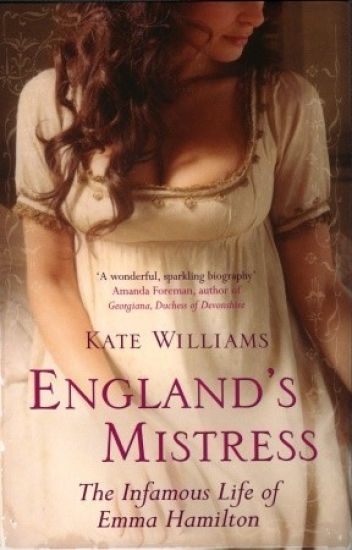
England's Mistress

England's Mistress

Kate Williams

Arrow Books Ltd
2007
pokkari
A dramatic, sparkling tale of sex, glamour, intrigue, romance and heartbreak, England's Mistress traces the rise and rise of the gorgeous Emma Hamilton. Born into poverty, she clawed her way up through London's underworlds of sex for sale to become England's first media superstar.
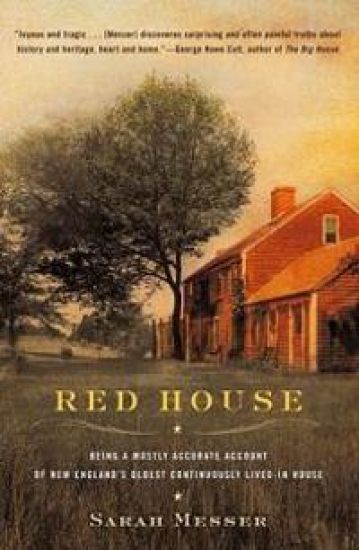
Red House: Being a Mostly Accurate Account of New England's Oldest Continuously Lived-In House
In her critically acclaimed, ingenious memoir, Sarah Messer explores America's fascination with history, family, and Great Houses. Her Massachusetts childhood home had sheltered the Hatch family for 325 years when her parents bought it in 1965. The will of the house's original owner, Walter Hatch--which stipulated Red House was to be passed down, "never to be sold or mortgaged from my children and grandchildren forever"--still hung in the living room. In Red House, Messer explores the strange and enriching consequences of growing up with another family's birthright. Answering the riddle of when shelter becomes first a home and then an identity, Messer has created a classic exploration of heritage, community, and the role architecture plays in our national identity.
Summer of Blood: England's First Revolution
From the New York Times bestselling author of Crusaders and a top authority on the historical events that inspired Game of Thrones, a vivid, blood-soaked account of one of the most famous rebellions in history--the first mass uprising by the people of England against their feudal masters. In the summer of 1381, ravaged by poverty and oppressed by taxes, the people of England rose up and demanded that their voices be heard. A ragtag army, led by the mysteri­ous Wat Tyler and the visionary preacher John Ball, rose up against the fourteen-year-old Richard II and his most powerful lords and knights, who risked their property and their lives in a desperate battle to save the English crown. Dan Jones brings this incendiary moment to life and captures both the idealism and brutality of that fate­ful summer, when a brave group of men and women dared to challenge their overlords, demand that they be treated equally, and fight for freedom.
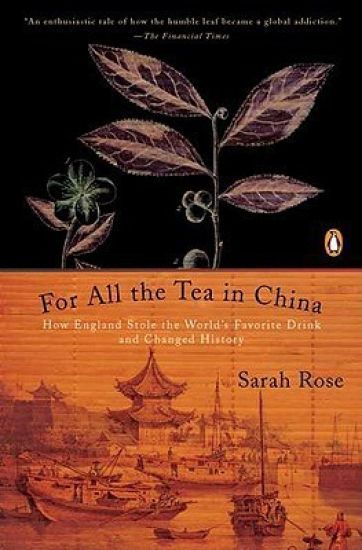
For All the Tea in China: How England Stole the World's Favorite Drink and Changed History
"If ever there was a book to read in the company of a nice cuppa, this is it." -The Washington Post In the dramatic story of one of the greatest acts of corporate espionage ever committed, Sarah Rose recounts the fascinating, unlikely circumstances surrounding a turning point in economic history. By the middle of the nineteenth century, the British East India Company faced the loss of its monopoly on the fantastically lucrative tea trade with China, forcing it to make the drastic decision of sending Scottish botanist Robert Fortune to steal the crop from deep within China and bring it back to British plantations in India. Fortune's danger-filled odyssey, magnificently recounted here, reads like adventure fiction, revealing a long-forgotten chapter of the past and the wondrous origins of a seemingly ordinary beverage.
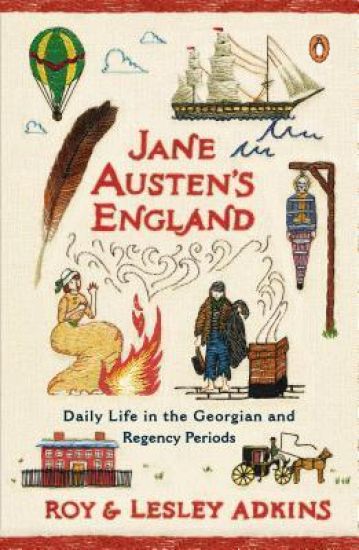
Jane Austen's England: Daily Life in the Georgian and Regency Periods
An authoritative account of everyday life in Regency England, the backdrop of Austen's beloved novels, from the authors of the forthcoming Gibraltar: The Greatest Siege in British History (March 2018) Nearly two centuries after her death, Jane Austen remains the most cherished of all novelists in the English language, incomparable in the wit, warmth, and insight with which she depicts her characters and life. Yet the milieu Austen presents is only one aspect of the England in which she lived, a time of war, unrest, and dramatic changes in the country's physical and social landscape. Jane Austen's England offers a fascinating new view of the great novelist's time, in a wide-ranging and richly detailed social history of English culture. As in their bestselling book Nelson's Trafalgar, Roy and Lesley Adkins have drawn upon a wide array of contemporary sources to chart the daily lives of both the gentry and the commoners, providing a vivid cultural snapshot of not only how people worked and played, but how they struggled to survive.
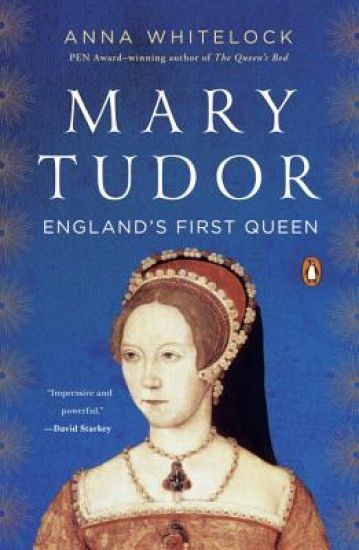
Mary Tudor: England's First Queen

Mary Tudor: England's First Queen

Anna Whitelock

Penguin Publishing Group
2016
nidottu
An engrossing, unadulterated biography of "Bloody Mary"--elder daughter of Henry VIII, Catholic zealot, and England's first reigning Queen Mary Tudor was the first woman to inherit the throne of England. Reigning through one of Britain's stormiest eras, she earned the nickname "Bloody Mary" for her violent religious persecutions. She was born a princess, the daughter of Henry VIII and the Spanish Katherine of Aragon. Yet in the wake of Henry's break with Rome, Mary, a devout Catholic, was declared illegitimate and was disinherited. She refused to accept her new status or to recognize Henry's new wife, Anne Boleyn, as queen. She faced imprisonment and even death. Mary successfully fought to reclaim her rightful place in the Tudor line, but her coronation would not end her struggles. She flouted fierce opposition in marrying Philip of Spain, sought to restore England to the Catholic faith, and burned hundreds of dissenters at the stake. But beneath her hard exterior was a woman whose private traumas of phantom pregnancies, debilitating illnesses, and unrequited love played out in the public glare of the fickle court. Though often overshadowed by her long-reigning sister, Elizabeth I, Mary Tudor was a complex figure of immense courage, determination, and humanity--and a political pioneer who proved that a woman could rule with all the power of her male predecessors.
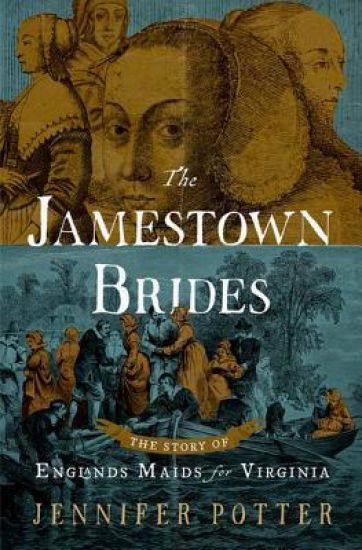
The Jamestown Brides: The Story of England's Maids for Virginia
Jamestown, England's first real foothold in the New World, was fraught with danger -- from starvation and disease to violent skirmishes between colonists and the native populations. Mortality rates were impossibly high: Six out of seven settlers died within the first few years. How clear these and other perils were made to the fifty-six young women who left their homes and boarded ships in England in 1621, nearly fifteen years after Jamestown's founding, is not known. But we do know who they were. Their ages ranged from sixteen to twenty-eight, and they were deemed "young and uncorrupt." Each had a bride price of 150 pounds of tobacco set by the Virginia Company, which funded their voyage. Though the women had all gone of their own free will, they were to be sold into marriage, generating a profit for investors and helping ensure the colony's long-term viability. Without letters or journals (young women from middling classes had not generally been taught to write), Jennifer Potter turned to the Virginia Company's merchant lists -- which were used as a kind of sales catalog for prospective husbands -- as well as censuses, court records, the minutes of Virginia's General Assemblies, letters to England from their male counterparts, and other such accounts of the everyday life of the early colonists. In The Jamestown Brides, she spins a fascinating tale of courage and survival, exploring the women's lives in England before their departure and their experiences in Jamestown. Some were married before the ships left harbor. Some were killed in an attack by the native population only months after their arrival. A few never married at all. In telling the story of these "Maids for Virginia" Potter sheds light on life for women in early modern England and in the New World.
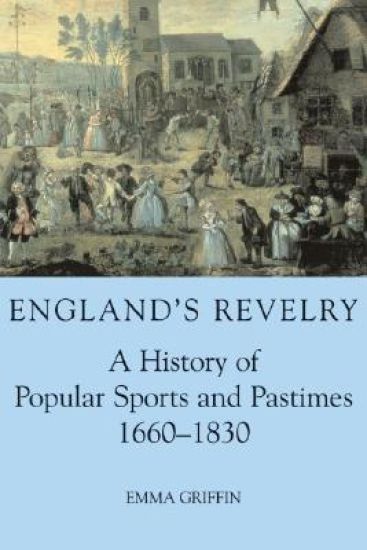
England's Revelry

England's Revelry

Emma Griffin

Oxford University Press
2005
muu
This study looks at the relationship between popular recreations and the spaces in which they took place, and in doing so it provides a history of how England enjoyed itself during the long eighteenth century. Because the poor lacked land of their own, public spaces were needed for their sports and pastimes. Such recreations included: parish wakes and feasts; civic fairs and celebrations; football, cricket and other athletic sports; bull- and bear-baiting; and the annual celebrations of Shrove Tuesday and Guy Fawkes. Three case studies form the core of this book, each looking at the recreations and spaces to be found in different types of settlement: first, the streets and squares of provincial market towns; then the diverse vacant spaces to be found in industrialising towns and villages of the west Midlands and West Riding of Yorkshire; and finally the village greens of rural England. Through a detailed examination of contemporary books, diaries and newspapers, and records in over forty archives, Dr Griffin addresses the questions of what spaces were used, and what was the interaction with those who used and controlled the land. The industrial revolution has been seen to have had a negative impact on popular recreation; through its innovative use of the concept of space, this book provides a welcome alternative to this traditional view.
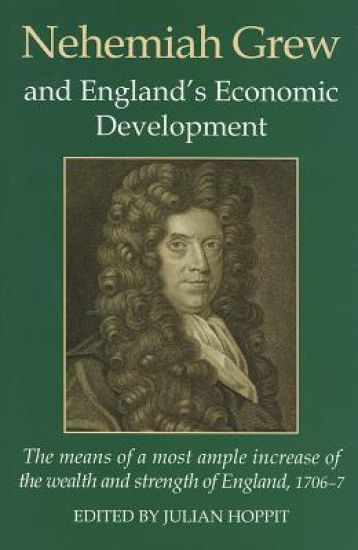
Nehemiah Grew and England's Economic Development
This edition publishes for the first time a little-known work on improving England's economy, written around 1706 and presented to Queen Anne on the eve of the parliamentary Union of England and Scotland. As such it contributed to a growing body of writing about managing the economy in Britain. That the work has often been overlooked is partly because its author, Nehemiah Grew, is best known as a botanist and as a medic. But his distinctive voice and decided views warrant wider appreciation. In part his unusual contribution to economic literature arose from his involvement in the early Royal Society, founded in 1660, informing as it did his view of England's material potential and how it might best be exploited. But he was also suspicious of people's motivations and was certain that the state had to regulate lives to a significant degree if society was to be as productive as possible. If Grew's religious beliefs were important here, it is also clear that he had read amongst contemporary writings on economic matters. Certainly, his work ranges widely, from natural resources to human capital, agriculture to industry, internal trade to overseas commerce. Sir William Petty was an especially important influence upon him, though he eschewed Petty's methodological emphasis upon 'political arithmetic'. Indeed, Grew's assumptions and conclusions prove very questionable when their statistical implications are worked through. Nonetheless, the work reminds us of the importance of blind alleys and false dawns in the history of early 'political economy'.
England's Iconoclasts

England's Iconoclasts

Margaret Aston

Clarendon Press
1988
sidottu
This is a study of the enormous religious reversal that England experienced as the avoidance of idolatry became a priority of the Reformation. Opposition to church images was a feature of English life from Wyclif to Oliver Cromwell. It was an aspect of reform that affected all believers, from theologians who wrote so massively on the topic of idolatry, to parishioners who were taught to reject idols and whose churches were denuded of colour and ornament. The phenomenon of iconoclasm cannot be understood except through the developments in theology brought about by sixteenth-century reformers. Both divine and secular laws were changed, as Protestants remodelled the text of the decalogue to give new prominence to the prohibition of images, and the new scriptural priority was reflected in the enactments of church and state. Pressure for image reform was building up long before Henry VIII turned iconoclast, and by the time of the civil war, a century of action and teaching against images had profoundly affected English belief, as well as English churches. England's Iconoclasts offers new insight into the nature and effect of these changes, and is a substantial contribution to our understanding of the entire process of Reformation.
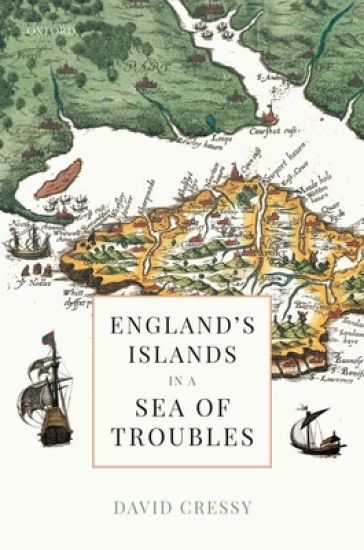
England's Islands in a Sea of Troubles

England's Islands in a Sea of Troubles

David Cressy

Oxford University Press
2020
sidottu
England's Islands in a Sea of Troubles examines the jurisdictional disputes and cultural complexities in England's relationship with its island fringe from Tudor times to the eighteenth century, and traces island privileges and anomalies to the present. It tells a dramatic story of sieges and battles, pirates and shipwrecks, prisoners and prophets, as kings and commoners negotiated the political, military, religious, and administrative demands of the early modern state. The Channel Islands, the Isle of Wight, the Isles of Scilly, the Isle of Man, Lundy, Holy Island and others emerge as important offshore outposts that long remained strange, separate, and perversely independent. England's islands were difficult to govern, and were prone to neglect, yet their strategic value far outweighed their size. Though vulnerable to foreign threats, their harbours and castles served as forward bases of English power. In civil war they were divided and contested, fought over and occupied. Jersey and the Isles of Scilly served as refuges for royalists on the run. Charles I was held on the Isle of Wight. External authority was sometimes light of touch, as English governments used the islands as fortresses, commercial assets, and political prisons. London was often puzzled by the linguistic differences, tangled histories, and special claims of island communities. Though increasingly integrated within the realm, the islands maintained challenging peculiarities and distinctive characteristics. Drawing on a wide range of sources, and the insights of maritime, military, and legal scholarship, this is an original contribution to social, cultural, and constitutional history.
England's Helicon

England's Helicon

Hester Lees-Jeffries

Oxford University Press
2007
sidottu
England's Helicon is about one of the most important features of early modern gardens: the fountain. It is also a detailed study of works by Philip Sidney, Edmund Spenser, and Ben Jonson, and of an influential Italian romance, the Hypnerotomachia Poliphili. Fountains were 'strong points' in the iconography and structure of gardens, symbolically loaded and interpretatively dense, soliciting the most active engagement possible from those who encountered them. These qualities are registered and explored in their literary counterparts. England's Helicon is not a simple motif study of fountains in English Renaissance literature: it is, rather, an investigation of how each might work; of how literary fountains both inform and are informed by real fountains in early modern literature and culture. While its main focus remains the literature of the late sixteenth century, England's Helicon recognises that intertextuality and influence can be material as well as literary. It demonstrates that the 'missing piece' needed to make sense of a passage in a play, a poem, or a prose romance could be a fountain, a conduit, a well, or a reflecting pool, in general or even in a specific, known garden; it also considers portraits, textiles, jewellery, and other artefacts depicting fountains. Early modern English gardens and fountains are almost all lost, but to approach them through literary texts and objects is often to recover them in new ways. This is the double project that England's Helicon undertakes; in so doing, it offers a new model for the exploration of the interconnectedness of texts, images, objects and landscapes in early modern literature and culture.
Renaissance England's Chief Rabbi: John Selden

Renaissance England's Chief Rabbi: John Selden

Jason P. Rosenblatt

Oxford University Press
2008
nidottu
In the midst of an age of prejudice, John Selden's immense, neglected rabbinical works contain magnificent Hebrew scholarship that respects, to an extent remarkable for the times, the self-understanding of Judaism. Scholars celebrated for their own broad and deep learning gladly conceded Selden's superiority and conferred on him titles such as 'the glory of the English nation' (Hugo Grotius), 'Monarch in letters' (Ben Jonson), 'the chief of learned men reputed in this land' (John Milton). Although scholars have examined Selden (1584-1654) as a political theorist, legal and constitutional historian, and parliamentarian, Renaissance England's Chief Rabbi is the first book-length study of his rabbinic and especially talmudic publications, which take up most of the six folio volumes of his complete works and constitute his most mature scholarship. It traces the cultural influence of these works on some early modern British poets and intellectuals, including Jonson, Milton, Andrew Marvell, James Harrington, Henry Stubbe, Nathanael Culverwel, Thomas Hobbes, and Isaac Newton. It also explores some of the post-biblical Hebraic ideas that served as the foundation of Selden's own thought, including his identification of natural law with a set of universal divine laws of perpetual obligation pronounced by God to our first parents in paradise and after the flood to the children of Noah. Selden's discovery in the Talmud and in Maimonides' Mishneh Torah of shared moral rules in the natural, pre-civil state of humankind provides a basis for relationships among human beings anywhere in the world. The history of the religious toleration of Jews in England is incomplete without acknowledgment of the impact of Selden's uncommonly generous Hebrew scholarship.
Renaissance England's Chief Rabbi: John Selden

Renaissance England's Chief Rabbi: John Selden

Jason P. Rosenblatt

Oxford University Press
2006
sidottu
In the midst of an age of prejudice, John Selden's immense, neglected rabbinical works contain magnificent Hebrew scholarship that respects, to an extent remarkable for the times, the self-understanding of Judaism. Scholars celebrated for their own broad and deep learning gladly conceded Selden's superiority and conferred on him titles such as 'the glory of the English nation' (Hugo Grotius), 'Monarch in letters' (Ben Jonson), 'the chief of learned men reputed in this land' (John Milton). Although scholars have examined Selden (1584-1654) as a political theorist, legal and constitutional historian, and parliamentarian, Renaissance England's Chief Rabbi is the first book-length study of his rabbinic and especially talmudic publications, which take up most of the six folio volumes of his complete works and constitute his most mature scholarship. It traces the cultural influence of these works on some early modern British poets and intellectuals, including Jonson, Milton, Andrew Marvell, James Harrington, Henry Stubbe, Nathanael Culverwel, Thomas Hobbes, and Isaac Newton. It also explores some of the post-biblical Hebraic ideas that served as the foundation of Selden's own thought, including his identification of natural law with a set of universal divine laws of perpetual obligation pronounced by God to our first parents in paradise and after the flood to the children of Noah. Selden's discovery in the Talmud and in Maimonides' Mishneh Torah of shared moral rules in the natural, pre-civil state of humankind provides a basis for relationships among human beings anywhere in the world. The history of the religious toleration of Jews in England is incomplete without acknowledgment of the impact of Selden's uncommonly generous Hebrew scholarship.
The Oxford Edition of Blackstone's: Commentaries on the Laws of England
Oxford's variorum edition of William Blackstone's seminal treatise on the common law of England and Wales offers the definitive account of the Commentaries' development in a modern format. For the first time it is possible to trace the evolution of English law and Blackstone's thought through the eight editions of Blackstone's lifetime, and the authorial corrections of the posthumous ninth edition. Introductions by the general editor and the volume editors set the Commentaries in their historical context, examining Blackstone's distinctive view of the common law, and editorial notes throughout the four volumes assist the modern reader in understanding this key text in the Anglo-American common law tradition. Book I: Of the Rights of People Volume Editor: David Lemmings Book II: Of the Rights of Things Volume Editor: Simon Stern Book III: Of Private Wrongs Volume Editor: Thomas P. Gallanis Book IV: Of Public Wrongs Volume Editor: Ruth Paley