Kirjojen hintavertailu. Mukana 11 342 296 kirjaa ja 12 kauppaa.

Kirjahaku

Etsi kirjoja tekijän nimen, kirjan nimen tai ISBN:n perusteella.

1000 tulosta hakusanalla Sandra Cook

Count the Waves

Count the Waves

Sandra Beasley

WW Norton Co
2015
sidottu
In Count the Waves, Sandra Beasley turns her eclectic imagination to the heart's pursuits. A man and a woman sit at the same dinner table, an ocean of worry separating them. An iceberg sets out to dance. A sword swallower ponders his dating prospects. "The vessel is simple, a rowboat among yachts," the poet observes in "Ukulele." "No one hides a Tommy gun in its case. / No bluesman runs over his uke in a whiskey rage." Beasley's voice is pithy and playful, with a ferocious intelligence that invites comparison to both Sylvia Plath and Dorothy Parker. In one of six signature sestinas, she warns, "You must not use a house to build a home, / and never look for poetry in poems." The collection’s centerpiece is a haunting sequence that engages The Traveler's Vade Mecum, an 1853 compendium of phrases for use by mail, telegraph, or the enigmatic “Instantaneous Letter Writer." Assembled over ten years and thousands of miles, these poems illuminate how intimacy is lost and gained during our travels. Decisive, funny, and as compassionate as she is merciless, Beasley is a reckoning force on the page.

The Madwoman and the Roomba: My Year of Domestic Mayhem

The Madwoman and the Roomba: My Year of Domestic Mayhem

Sandra Tsing Loh

W. W. Norton Company
2020
sidottu
Ah, 55. Gateway to the golden years Professional summiting. Emotional maturity. Easy surfing toward the glassy blue waters of retirement...Or maybe not? Middle age, for Sandra Tsing Loh, feels more like living a disorganized 25-year-old's life in an 85-year-old's malfunctioning body. With raucous wit and carefree candor, Loh recounts the struggles of leaning in, staying lean, and keeping her family well-fed and financially afloat--all those burdens of running a household that still, all-too-often, fall to women. The Madwoman and the Roomba chronicles a roller coaster year for Loh, her partner, and her two teenage daughters in their ramshackle quasi-Craftsman, with a front lawn that's more like a rectangle of compacted dirt and mice that greet her as she makes her morning coffee. Her daughters are spending more time online than off; her partner has become a Hindu, bringing in a household of monks; and she and her girlfriends are wondering over Groupon "well" drinks how they got here.Whether prematurely freaking out about her daughters' college applications, worrying over her eccentric aging father, or overcoming the pitfalls of long-term partnership and the temptations of paired-with-cheese online goddess webinars, Loh somehow navigates the realities of what it means to be a middle-aged woman in the twenty-first century. By day's end, we just might need a box of chardonnay and a Roomba to clean up the mess.
Emily's Bread

Emily's Bread

Sandra M. Gilbert

WW Norton Co
1984
nidottu
What is the daily bread of women? In these splendid poems, Sandra Gilbert imagines spiritual regeneration through the tradition pioneered by the two Emilys--Emily Dickinson and Emily Brontë--who are her emblematic foremothers. At the same time, she sees the perils as well as the possibilities of change. The "loved walls" might fall, some "animal goddess in her skull" might destroy what is cherished along with what is oppressive. Tracing the anxieties of history, this book captures the female "daguerreotypes" that persist today and the "still lives" of many women. In so doing, the poet has created a wide variety of voices, including confessional accounts of her own experiences and visionary encounters: little vials of mother's blood in a bureau, a refrigerator that hums blessings like a "complicitous mother," a dressmaker's dummy sailing forward into a mirror--images that invoke vivid, revealing meditations on myth and domesticity. Yet these poems also celebrate the joys that should endure: love and friendship, "haloes of desire," a piece of Emily Dickinson's black cake. Of this book, Frank Bidart has said, "These are poems of self-definition that heal rather than exacerbate the dramas of gender none of us can escape. They reflect Sandra Gilbert's characteristic subtlety, freshness of invention and insight, generosity of spirit. I enthusiastically recommend this book."
Blood Pressure

Blood Pressure

Sandra M. Gilbert

WW Norton Co
1989
pokkari
The range of this new collection is exciting. Gilbert travels along the shifting boundaries of past and present with wonderful deftness, making Jackson Heights into a magic kingdom. I love this rich ethnic mix.--Maxine Kumin
Ghost Volcano

Ghost Volcano

Sandra M. Gilbert

WW Norton Co
1997
nidottu
"Widow's Walk," the book's centerpiece, charts the poet's journey through the stages of grief, from bleak moments of desolation to tenuous instants of acceptance. Gilbert seeks both to elegize her husband and to understand his death in public, political, and philosophical contexts. Ghost Volcano is a tender, courageous, loving, and ultimately universal account of how we endure grief.
Wrongful Death

Wrongful Death

Sandra M. Gilbert

WW NORTON CO
1997
nidottu
On February 10, 1991, Elliot Gilbert, a sixty-year-old professor of English, checked into a major medical center for routine prostate surgery. Twenty-four hours later, he was pronounced dead in the recovery room. To this day, no one from the hospital has told his family how or why he died. In Wrongful Death his widow has produced a searingly frank account of one family's experience with a kind of medical disaster that occurs surprisingly often but is all-too-rarely discussed in a political arena dominated by concerns about the escalating costs of malpractice insurance. As her story unfolds, Sandra Gilbert describes the numbing shock into which she and her children were plunged by her husband's inexplicable death as well as the stages of grief they endured as they struggled to come to terms with their loss. But her major focus is on the process of discovery through which, with the help of friends and lawyers, they began to learn something about what had happened to Elliot. What are the implications of such a medical tragedy for the deceased and for his survivors? How does it feel to confront the possibility that a loved one has suffered what the law calls a "wrongful death"? As she examines the bewildering complexity of the legal, social, and medical questions surrounding "adverse events" like the one that killed her husband, Gilbert shows how vulnerable we all are to the power of the health-care establishment.
Last Oasis

Last Oasis

Sandra Postel

WW Norton Co
1997
pokkari
We have taken for granted seemingly endless supplies of water flowing from reservoirs wells, and diversion projects; access to water has been key to food security, industrialization, and the growth of cities. In this book from the Worldwatch Institute, Sandra Postel explains that decades of profligacy and mismanagement of the world's water resources have produced signs of shortages and environmental destruction. She writes with authority and clarity of the limits-ecological, economic, and political-of this vital natural resource. She explores the potential for conflict over water between nations, and between urban and rural residents. And she offers a sensible way out of such struggles. Last Oasis makes clear that the technologies and know-how exist to increase the productivity of every liter of water. But citizens must first understand the issues and insist on policies, laws, and institutions that promote the sustainable use of water.
Pillar of Sand: Can the Irrigation Miracle Last?

Pillar of Sand: Can the Irrigation Miracle Last?

Sandra Postel

W. W. Norton Company
1999
nidottu
For 6,000 years, irrigation has ranked among the most powerful tools of human advancement. The story of settled agriculture, the growth of cities, and the rise of early empires is, to no small degree, a story of controlling water to make the land more prosperous and habitable. Pillar of Sand examines the history, challenges, and pitfalls of irrigated agriculture from ancient Egypt and Mesopotamia to twentieth-century India and the United States. By unmasking the risks faced by irrigation-based societies including water scarcity, soil salinization, and conflicts over rivers water specialist Sandra Postel connects the lessons of the past with the challenge of making irrigation thrive into the twenty-first century and beyond. Protecting rivers and vital ecosystems as the world aims to feed 8 billion people will require a doubling of water productivity getting twice as much benefit from each gallon removed from rivers, lakes, and aquifers. Pillar of Sand points the way toward managing the growing competition for scarce water. And it lays out a strategy for correcting a startling flaw of the modern irrigation age its failure to better the lives of the majority of the world's poorest farmers."
Kissing the Bread: New and Selected Poems, 1969-1999

Kissing the Bread: New and Selected Poems, 1969-1999

Sandra M. Gilbert

W. W. Norton Company
2001
nidottu
This stunning new collection, winner of the American Book Award, documents some thirty years of Sandra Gilbert's career as a poet, from her sometimes fearful, sometimes exuberant early visions, through her feminist awakenings and the explorations of memory and desire, to a range of recent poems mapping the many meanings of grief, survival, and even regeneration.
The Saudis

The Saudis

Sandra Mackey

WW Norton Co
2003
nidottu
Sandra Mackey lived in Saudi Arabia for four years, and as far as the authorities knew, she was simply the wife of an American doctor. But she saw things and traveled to places rarely viewed by any outsider, let alone a Western woman, and she succeeded in smuggling out a series of crucial articles on Saudi culture and politics. The Saudis offers a fascinating portrait of Saudi life, chronicling Mackey's extraordinary travels and experiences and depicting Saudi Arabia's strange metamorphosis from backward desert kingdom to world power. Mackey reveals the chaos of a country in transformation: grappling with modernity, coming to terms with its own wealth, and battling to maintain an influential stance in an altogether new world. This updated edition provides the essential background to the new Saudi crisis as the mother state of international terrorism.
The Reckoning

The Reckoning

Sandra Mackey

WW Norton Co
2003
nidottu
An account of the forces that produced Saddam Hussein's dictatorship, this title reveals Iraq's history and how, ruling by terror, he pitted the various ethnic groups, religious interests and tribes against one another, to result in the destruction of Iraq's middle class and civilized society.
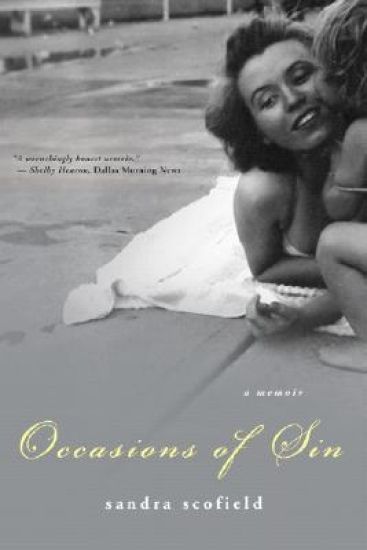
Occasions Of Sin

Occasions Of Sin

Sandra Scofield

WW Norton Co
2005
pokkari
In 1959, when Sandra Scofield was fifteen, she came home to stay in West Texas after years in Catholic boarding schools. She believed her presence would inspire her invalid mother to live. What she found-a fractured family; a distracted, dying mother-nudged her into the tumult of late adolescence and the awakening of her sexuality. More than forty years later, Scofield looks back on her Catholic girlhood and the ways in which her relationship with her mother was grounded in their intertwined aspirations for holiness, achievement, and love. Writing on the brink of old age, she looks back ruefully but without bitterness, forgiving both her mother's frailty and her own.
Belongings

Belongings

Sandra M. Gilbert

WW Norton Co
2006
pokkari
Belongings as possessions, as the history and furnishings of a life, and as the places in which life itself happens are the preoccupations at the heart of this affecting collection. Moving from memories of a childhood apartment to mourning for the poet's mother, Belongings explores the question: "Where, how, and to what do you belong?
Lebanon

Lebanon

Sandra Mackey

WW Norton Co
2006
nidottu
A definitive study of the history, present, and potential future of Lebanon examines the divisions within the country that led to civil war and influenced its progressively anti-western character. Reprint.
Death's Door

Death's Door

Sandra M. Gilbert

WW Norton Co
2007
nidottu
Prominent critic, poet, and memoirist Sandra M. Gilbert explores our relationship to death though literature, history, poetry, and societal practices. Does death change--and if it does, how has it changed in the last century? And how have our experiences and expressions of grief changed? Did the traumas of Hiroshima and the Holocaust transform our thinking about mortality? More recently, did the catastrophe of 9/11 alter our modes of mourning? And are there at the same time aspects of grief that barely change from age to age? Seneca wrote, "Anyone can stop a man's life but no one his death; a thousand doors open on to it." This inevitability has left varying marks on all human cultures. Exploring expressions of faith, burial customs, photographs, poems, and memoirs, acclaimed author Sandra M. Gilbert brings to the topic of death the critical skill that won her fame for The Madwoman in the Attic and other books, as she examines both the changelessness of grief and the changing customs that mark contemporary mourning.
Mirror of the Arab World

Mirror of the Arab World

Sandra Mackey

WW Norton Co
2009
nidottu
The security of the West is threatened by escalating turmoil rising out of the Arab states is Lebanon, a small, tortured country poised uneasily between East and West. Improbably, this most unique of Arab states has much to teach about the Arab world. Like many Arab little sense of common identity and no strong central government. The tumultuous history of Lebanon illuminates not only the challenges that Arabs pose to themselves but also the fear and hostility that arise in response to perceived threats from the West. Awareness and understanding circumstances and pressures are the first steps toward resolution, cooperation, and solidity on all sides.
I Was the Jukebox

I Was the Jukebox

Sandra Beasley

WW Norton Co
2011
nidottu
The winner of the 2009 Barnard Women Poets Prize—“These poems are fresh, crisp, and muscular. They are decisive and fearless. Every object, icon, or historical moment has a soul with a voice. In these poems these soulful ones elbow their way to the surface of the page, smartly into the contemporary now.”—Joy Harjo, prize citation from “The Piano Speaks” For an hour I forgot my fat self, my neurotic innards, my addiction to alignment. For an hour I forgot my fear of rain. For an hour I was a salamander shimmying through the kelp in search of shore, and under his fingers the notes slid loose from my belly in a long jellyrope of eggs that took root in the mud.
Aftermath

Aftermath

Sandra M Gilbert

W. W. Norton Company
2011
pokkari
The title of this collection--at times mournful, sardonic, and joyous--refers to the grief in the wake of loss. Yet these poems aren't just about the consequences of loss but also about the complex experiences of endurance, acquiescence, and rebirth that, with luck, mark the aftermath of sorrow. from Aftermath: Kite But the thought is only paper after all, a soul that clings to a stick, tears open, shreds as if it's flung to the ground in a final shiny fall, and at last the line goes limp, the climbing ends. Beyond the rush & sweep, an arc of silence-- though a mind imagined this flight, & proved it once.
The Wilderness

The Wilderness

Sandra Lim

WW Norton Co
2014
nidottu
Moving through myths of the American landscape, the fatalism of American Puritanism, family history, New England winters, aesthetic theory and the suavities and anxieties of contemporary life, the poems in this astonishing collection ultimately speak about the individual soul’s struggle with its own meaning.
The Inheritor's Powder

The Inheritor's Powder

Sandra Hempel

WW Norton Co
2014
pokkari
In the first half of the nineteenth century, an epidemic swept Europe: arsenic poisoning. Available at any corner shop for a few pence, arsenic was so frequently used by potential beneficiaries of wills that it was nicknamed "the inheritor's powder." But it was difficult to prove that a victim had been poisoned, let alone to identify the contaminated food or drink since arsenic was tasteless. Then came a riveting case. On the morning of Saturday, November 2, 1833, the Bodle household sat down to their morning breakfast. That evening, the local doctor John Butler received an urgent summons: the family and their servants had collapsed and were seriously ill. Three days later, after lingering in agony, wealthy George Bodle died in his bed at his farmhouse in Plumstead, leaving behind several heirs, including a son and grandson-both of whom were not on the best of terms with the family patriarch.The investigation, which gained international attention, brought together a colorful cast of characters: bickering relatives; a drunken, bumbling policeman; and James Marsh, an unknown but brilliant chemist who, assigned the Bodle case, attempted to create a test that could accurately pinpoint the presence of arsenic. In doing so, however, he would cause as many problems as he solved. Were innocent men and women now going to the gallows? And would George Bodle's killer be found? Incisive and wryly entertaining, science writer Sandra Hempel brings to life a gripping story of domestic infighting, wayward police behavior, a slice of Victorian history, stories of poisonings, and an unforgettable foray into the origins of forensic science.