

Kirjahaku
Etsi kirjoja tekijän nimen, kirjan nimen tai ISBN:n perusteella.
1000 tulosta hakusanalla Seth Ferranti


What Is Bright's Disease? Its Curability (1882)
Seth Pancoast
KESSINGER PUBLISHING, LLC
2009
pokkari

Scott Roberts is a mystery, even to himself. Alone and suffering amnesia, he reluctantly clings to the only person who seems aware of his existence: Abby McDaniel, an intelligent, capricious young woman with a mean streak. Scott and Abby dwell in the afterlife, where they journey effortlessly through the landscapes of her memories, guided by a rambling handbook for the dead. While he struggles to build an identity for himself, she is forced to confront her difficult past. As their unique connection deepens, they find themselves facing a fateful decision. But as Abby promised herself years ago, her choices will be hers alone. With crackling dialog, richly-drawn characters, mystery, and emotional gravity, With Her Eyes Wide Open offers itself as an enticing metaphysical reverie.

This is an accessible and up-to-date account of the Jews during the millennium following Alexander the Great's conquest of the East. Unusually, it acknowledges the problems involved in constructing a narrative from fragmentary yet complex evidence and is, implicitly, an exploration of how this might be accomplished. Moreover, unlike most other introductions to the subject, it concentrates primarily on the people rather than issues of theology and adopts a resolutely unsentimental approach to the subject. Professor Schwartz particularly demonstrates the importance of studying Jewish history, texts and artefacts to the broader community of ancient historians because of what they can contribute to wider themes such as Roman imperialism. The book serves as an excellent introduction for students and scholars of Jewish history and of ancient history.
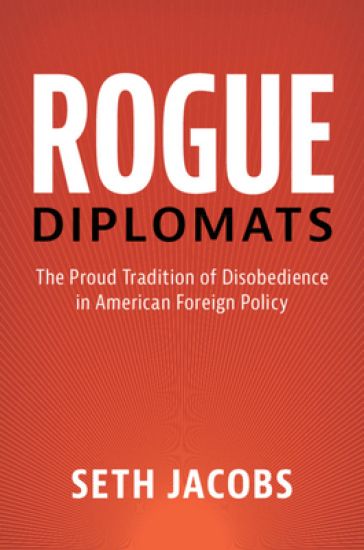
Many of America's most significant political, economic, territorial, and geostrategic accomplishments from 1776 to the present day came about because a U.S. diplomat disobeyed orders. The magnificent terms granted to the infant republic by Britain at the close of the American Revolution, the bloodless acquisition of France's massive Louisiana territory in 1803, the procurement of an even vaster expanse of land from Mexico forty years later, the preservation of the Anglo-American 'special relationship' during World War I—these and other milestones in the history of U.S. geopolitics derived in large part from the refusal of ambassadors, ministers, and envoys to heed the instructions given to them by their superiors back home. Historians have neglected this pattern of insubordination—until now. Rogue Diplomats makes a seminal contribution to scholarship on U.S. geopolitics and provides a provocative response to the question that has vexed so many diplomatic historians: is there a distinctively “American” foreign policy?

A History of Financial Technology and Regulation
Seth C. Oranburg
Cambridge University Press
2022
sidottu
Using the lens of history, A History of Financial Technology and Regulation illuminates recent changes to the world of finance. With lucid prose and the help of concrete examples, Seth Oranburg helps readers understand the role of technology in finance today, including complex phenomena such as mutual funds, cryptocurrencies, and the stock market itself. Chapters begin with basic principles and historical analogy before describing complex digital-investment strategies and instruments. Readers will also gain an introduction to key concepts in financial regulation, learning how law and regulations prevented some financial crises while perpetuating others. Oranburg concludes with ideas about what's next for finance and how the law should respond. This book will appeal to specialists and nonspecialists alike who are interesting in learning more about business, economics, finance, law, and regulation.

Historian Seth Archer traces the cultural impact of disease and health problems in the Hawaiian Islands from the arrival of Europeans to 1855. Colonialism in Hawai?i began with epidemiological incursions, and Archer argues that health remained the national crisis of the islands for more than a century. Introduced diseases resulted in reduced life spans, rising infertility and infant mortality, and persistent poor health for generations of Islanders, leaving a deep imprint on Hawaiian culture and national consciousness. Scholars have noted the role of epidemics in the depopulation of Hawai?i and broader Oceania, yet few have considered the interplay between colonialism, health, and culture - including Native religion, medicine, and gender. This study emphasizes Islanders' own ideas about, and responses to, health challenges on the local level. Ultimately, Hawai?i provides a case study for health and culture change among Indigenous populations across the Americas and the Pacific.
Many of America's most significant political, economic, territorial, and geostrategic accomplishments from 1776 to the present day came about because a U.S. diplomat disobeyed orders. The magnificent terms granted to the infant republic by Britain at the close of the American Revolution, the bloodless acquisition of France's massive Louisiana territory in 1803, the procurement of an even vaster expanse of land from Mexico forty years later, the preservation of the Anglo-American 'special relationship' during World War I—these and other milestones in the history of U.S. geopolitics derived in large part from the refusal of ambassadors, ministers, and envoys to heed the instructions given to them by their superiors back home. Historians have neglected this pattern of insubordination—until now. Rogue Diplomats makes a seminal contribution to scholarship on U.S. geopolitics and provides a provocative response to the question that has vexed so many diplomatic historians: is there a distinctively “American” foreign policy?

This is an accessible and up-to-date account of the Jews during the millennium following Alexander the Great's conquest of the East. Unusually, it acknowledges the problems involved in constructing a narrative from fragmentary yet complex evidence and is, implicitly, an exploration of how this might be accomplished. Moreover, unlike most other introductions to the subject, it concentrates primarily on the people rather than issues of theology and adopts a resolutely unsentimental approach to the subject. Professor Schwartz particularly demonstrates the importance of studying Jewish history, texts and artefacts to the broader community of ancient historians because of what they can contribute to wider themes such as Roman imperialism. The book serves as an excellent introduction for students and scholars of Jewish history and of ancient history.
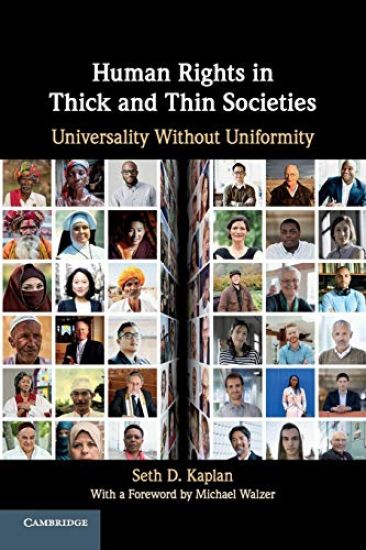
Socio-centric societies have vibrant - albeit different - concepts of human flourishing than is typical in the individualistic West. These concepts influence the promotion of human rights, both in domestic contexts with religious minorities and in international contexts where Western ideals may clash with local norms. Human Rights in Thick and Thin Societies uncovers the original intentions of the drafters of the Universal Declaration of Human Rights, finds inspiration from early leaders in the field like Eleanor Roosevelt, and examines the implications of recent advances in cultural psychology for understanding difference. The case studies included illustrate the need to vary the application of human rights in differing cultural environments, and the book suggests a new framework: a flexible universalism that returns to basics - focusing on the great evils of the human condition. This approach will help the human rights movement succeed in a multipolar era.
Socio-centric societies have vibrant - albeit different - concepts of human flourishing than is typical in the individualistic West. These concepts influence the promotion of human rights, both in domestic contexts with religious minorities and in international contexts where Western ideals may clash with local norms. Human Rights in Thick and Thin Societies uncovers the original intentions of the drafters of the Universal Declaration of Human Rights, finds inspiration from early leaders in the field like Eleanor Roosevelt, and examines the implications of recent advances in cultural psychology for understanding difference. The case studies included illustrate the need to vary the application of human rights in differing cultural environments, and the book suggests a new framework: a flexible universalism that returns to basics - focusing on the great evils of the human condition. This approach will help the human rights movement succeed in a multipolar era.
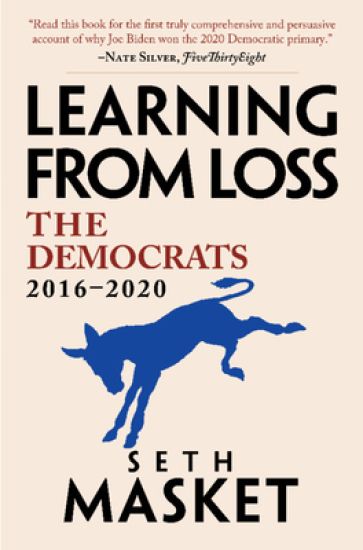
The Democrats' decision to nominate Joe Biden for 2020 was hardly a fluke but rather a strategic choice by a party that had elevated electability above all other concerns. In Learning from Loss, one of the nation's leading political analysts offers unique insight into the Democratic Party at a moment of uncertainty. Between 2017 and 2020, Seth Masket spoke with Democratic Party activists and followed the behavior of party leaders and donors to learn how the party was interpreting the 2016 election and thinking about a nominee for 2020. Masket traces the persistence of party factions and shows how interpretations of 2016 shaped strategic choices for 2020. Although diverse narratives emerged to explain defeat in 2016 - ranging from a focus on 'identity politics' to concerns about Clinton as a flawed candidate - these narratives collectively cleared the path for Biden.
Real-world strategies for uncovering potential and capitalizing on opportunity Innovation is worth little unless it generates lasting success, and gaining measurable results from new ideas requires more than creative risk-taking. Successful innovation demands a tactical approach, and Getting Innovation Right reveals how your company can secure real traction and growth in the marketplace. With Seth Kahan's outcome-based approach, based on his experience leading innovation initiatives at a diverse range of organizations, you will identify the inflection points that generate market opportunities for your company and leverage the best techniques for securing a foothold in a lucrative new space. Offers a framework of 7 key activities for results-driven innovation, from intelligence-gathering through executionGoes beyond abstract advice to offer hands-on approaches that are relevant and applicable in any organizationThe companion and follow-up to Seth Kahan's bestselling first book,Getting Change Right and FastCompany.com blog Leading Change Grounded in market-based reality, Getting Innovation Right is an indispensable resource for leaders looking to drive results and move in fresh directions.

Defending society against natural hazards is a high-stakes game of chance against nature, involving tough decisions. How should a developing nation allocate its budget between building schools for towns without ones or making existing schools earthquake-resistant? Does it make more sense to build levees to protect against floods, or to prevent development in the areas at risk? Would more lives be saved by making hospitals earthquake-resistant, or using the funds for patient care? What should scientists tell the public when – as occurred in L’Aquila, Italy and Mammoth Lakes, California – there is a real but small risk of an upcoming earthquake or volcanic eruption? Recent hurricanes, earthquakes, and tsunamis show that society often handles such choices poorly. Sometimes nature surprises us, when an earthquake, hurricane, or flood is bigger or has greater effects than expected from detailed hazard assessments. In other cases, nature outsmarts us, doing great damage despite expensive mitigation measures or causing us to divert limited resources to mitigate hazards that are overestimated. Much of the problem comes from the fact that formulating effective natural hazard policy involves combining science, economics, and risk analysis to analyze a problem and explore the costs and benefits of different options, in situations where the future is very uncertain. Because mitigation policies are typically chosen without such analysis, the results are often disappointing. This book uses general principles and case studies to explore how we can do better by taking an integrated view of natural hazards issues, rather than treating the relevant geoscience, engineering, economics, and policy formulation separately. Thought-provoking questions at the end of each chapter invite readers to confront the complex issues involved. Readership: Instructors, researchers, practitioners, and students interested in geoscience, engineering, economics, or policy issues relevant to natural hazards. Suitable for upper-level undergraduate or graduate courses. Additional resources can be found at: http://www.wiley.com/go/Stein/Playingagainstnature

The market approach aims to establish the value of a company based on how similar firms are priced on the stock exchange or through company transactions. Using the market approach, price-related indicators such as price to earnings, sales and book values are utilised. An ever-present problem however, is that different valuation multiples and valuation methodologies tend to provide the analyst with contradictory outputs. The solution to this problem so far has been to claim that the market approach is more art than science, thus providing the analyst with the freedom to alter the multiples at their own discretion to reach a uniform value or range. Valuation: The Market Approach puts an end to this problem, providing the reader with a rational scientific-based understanding and the necessary tools to perform a sound market approach valuation, or if reviewing such valuations, provide the tools to challenge the work of the arts-based senior experts. The book begins with an in-depth review of the basics; which is then applied in a detailed worked example. Step-by-step, the reader’s expertise is built towards a complete understanding and implementation of the market approach, not only on a standalone basis but also in relation to the DCF methodology. The book is aimed at the seasoned professional, but will also be invaluable to students as they apply their academic knowledge to the real world of valuation and M&A. About the author: SETH BERNSTROM is a Director at the Valuations practice of PwC. He has 15 years of experience as a valuation expert with a special focus on private equity, with long-running engagements in Valuation for some of the leading Nordic private equity houses. Additionally, he provides valuation support and valuation-related advisory services to large and medium-sized Nordic and (Nordic-based) global companies. In addition to his regular work at PwC, he also acts as Visiting Lecturer on valuation at KTH Royal Institute of Technology in Stockholm. Furthermore, he often gives lectures and seminars on valuation at other leading Nordic universities, investment banks, companies, and organizations. He holds a Master of Science in Business Administration and Economics from the Stockholm University School of Business.
Essentials of MCMI-IV Assessment
Seth D. Grossman; Blaise Amendolace
John Wiley Sons Inc
2017
nidottu
Quickly acquire the knowledge and skills you need to administer, score, and interpret the MCMI ®-IV Essentials of MCMI ®-IV Assessment is the definitive source of up-to-date, practical information for clinicians and students using the MCMI®-IV inventory. Step-by-step guidelines walk you through the process of administering the assessment, with a profile and demonstration of the clinical process from administration to treatment. Expert discussion helps inform higher-quality therapeutic interventions. The link between assessment and intervention is emphasized throughout, as well as coverage of relevant populations and clinical applications, to provide a well-rounded understanding while illuminating the uses of the MCMI ®-IV. This book provides instruction and clarification from the foremost experts to help you achieve better outcomes for your clients. Follow step-by-step guidelines for administering the MCMI ®-IVRecognize the connection between data and interventionImprove quality and accuracy of therapeutic applicationsGain a more practical understanding of the MCMI ®-IV assessment process The MCMI ®-IV assesses a wide range of information related to a client's personality, emotional adjustment, test-taking approach, and other critical information. Interpretation and reporting serve as a basis from which therapeutic interventions are designed, so quality and accuracy is of utmost importance every step of the way. Essentials of MCMI ®-IV Assessment is the most authoritative, up-to-date resource in the field, and a must-have reference for anyone who uses the test.

Principles of Dentoalveolar Extractions
Seth Delpachitra; Anton Sklavos; Ricky Kumar
Wiley-Blackwell
2021
sidottu
Combines the basic sciences and principles of dentoalveolar extractions with basic and advanced surgical techniques Principles of Dentoalveolar Extractions is a comprehensive, technical text covering the basic sciences and principles of dentoalveolar extractions, exploring both the basic surgical techniques and advanced surgical practices. Highly illustrated with colour photographs throughout, this text discusses the procedures, pitfalls, and practicalities of exodontia. It highlights the most common surgical principles encountered in clinical practice, the range of surgical instruments available, and how to manage the potential complications associated with extraction procedures. This important text: Focuses solely on dentoalveolar extractions and surgeryContains full colour photographs and detailed illustrations to aid learningOffers a technical walk-through guide that can be used as a reference prior to surgeryIncludes a Preface written by Professor Andrew A. C. Heggie, AM Written for dental students, surgical trainees and other dental professionals, Principles of Dentoalveolar Extractions provides a comprehensive and pragmatic review of dentoalveolar extractions.
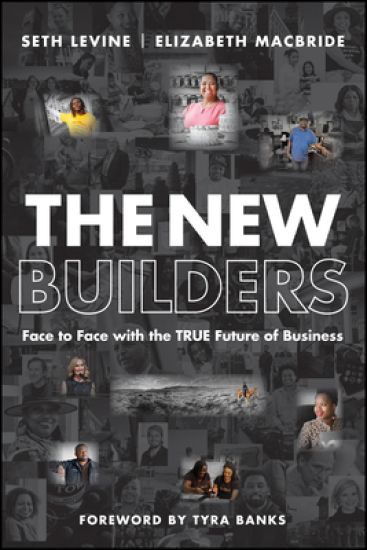
Despite popular belief to the contrary, entrepreneurship in the United States is dying. It has been since before the Great Recession of 2008, and the negative trend in American entrepreneurship has been accelerated by the Covid pandemic. New firms are being started at a slower rate, are employing fewer workers, and are being formed disproportionately in just a few major cities in the U.S. At the same time, large chains are opening more locations. Companies such as Amazon with their "deliver everything and anything" are rapidly displacing Main Street businesses. In The New Builders, we tell the stories of the next generation of entrepreneurs -- and argue for the future of American entrepreneurship. That future lies in surprising places -- and will in particular rely on the success of women, black and brown entrepreneurs. Our country hasn't yet even recognized the identities of the New Builders, let alone developed strategies to support them. Our misunderstanding is driven by a core misperception. Consider a "typical" American entrepreneur. Think about the entrepreneur who appears on TV, the business leader making headlines during the pandemic. Think of the type of businesses she or he is building, the college or business school they attended, the place they grew up. The image you probably conjured is that of a young, white male starting a technology business. He's likely in Silicon Valley. Possibly New York or Boston. He's self-confident, versed in the ins and outs of business funding and has an extensive (Ivy League?) network of peers and mentors eager to help his business thrive, grow and make millions, if not billions. You’d think entrepreneurship is thriving, and helping the United States maintain its economic power. You'd be almost completely wrong. The dominant image of an entrepreneur as a young white man starting a tech business on the coasts isn't correct at all. Today's American entrepreneurs, the people who drive critical parts of our economy, are more likely to be female and non-white. In fact, the number of women-owned businesses has increased 31 times between 1972 and 2018 according to the Kauffman Foundation (in 1972, women-owned businesses accounted for just 4.6% of all firms; in 2018 that figure was 40%). The fastest-growing group of female entrepreneurs are women of color, who are responsible for 64% of new women-owned businesses being created. In a few years, we believe women will make up more than half of the entrepreneurs in America. The age of the average American entrepreneur also belies conventional wisdom: It's 42. The average age of the most successful entrepreneurs -- those in the top .01% in terms of their company's growth in the first five years -- is 45. These are the New Builders. Women, people of color, immigrants and people over 40. We're failing them. And by doing so, we are failing ourselves. In this book, you'll learn: How the definition of business success in America today has grown corporate and around the concepts of growth, size, and consumption.Why and how our collective understanding of "entrepreneurship" has dangerously narrowed. Once a broad term including people starting businesses of all types, entrepreneurship has come to describe only the brash technology founders on the way to becoming big.Who are the fastest growing groups of entrepreneurs? What are they working on? What drives them?The real engine that drove Silicon Valley’s entrepreneurs. The government had a much bigger role than is widely knownThe extent to which entrepreneurs and small businesses are woven through our history, and the ways we have forgotten women and people of color who owned small businesses in the past.How we're increasingly afraid to failThe role small businesses are playing saving the wilderness, small towns and redlined communities What we can do to turn the decline in entrepreneurship around, especially be supporting the people who are courageously starting small companies today.
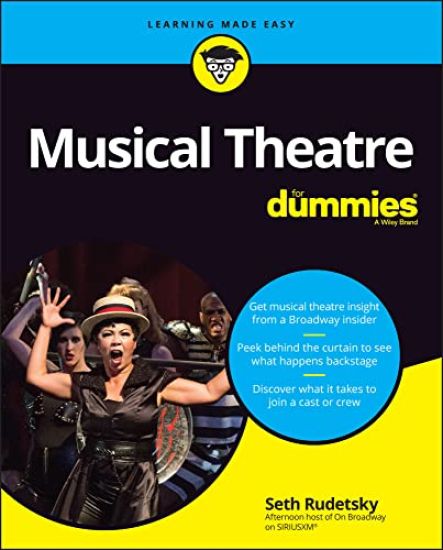
Discover what goes on behind the curtains of your favorite musical Do you want to know more about the fascinating history of Broadway musicals, the stars of yesterday and today, and what goes on behind the curtain of a musical production? In Musical Theatre For Dummies, Broadway insider and host of Sirus/XM Radio’s ON BROADWAY channel Seth Rudetsky takes you backstage and reveals everything you want to know (and what you didn't know you wanted to know) about life in the theatre. How did musical theatre begin? How did Broadway stars become stars? How can you launch your own musical theatre path, whether in a school musical, community theatre, or on a path toward Broadway? Get answers to all these questions along with tons more insight from the unofficial "mayor of Broadway." Learn the history of musical theater and discover the stories of shows that have run for years ... or closed before opening night!Trace the development of productions, from the initial idea all the way through opening night and beyondDiscover what it takes to make a musical come together, from pit musicans, stage managers, and swings to designers, casting directors, and more.Get insider advice on the skills you need to perform in professional or amateur musical theater productions Whether you're completely new to musical theatre or have a few Tony awards displayed over your fireplace, this is the book for you. Enjoy real-life anecdotes shared with the author by Broadway's biggest stars as you become a musical theater know-it-all.