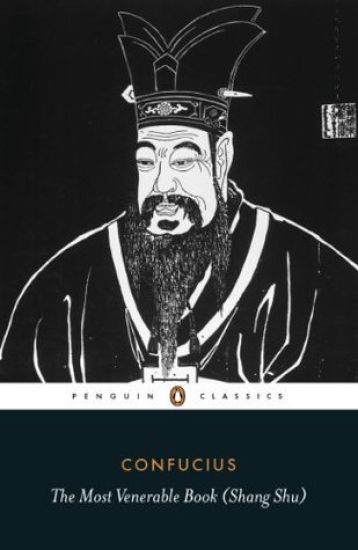
A wonderfully enjoyable storehouse of ancient Chinese history and legends, which also has an important role in understanding 21st-century China'And remember: Heaven's blessing will cease forever if there's despair and poverty in your lands'The Most Venerable Book (also known as The Book of History) is one of the Five Classics, a key work of Chinese literature which preserves some of the most ancient and dramatic chronicles of the history, both real and mythological, of the Chinese state. For many centuries it was a central work for anyone wishing to work for the Imperial administration, preserving as it does a fascinating mixture of key Confucian concepts as well as page after page of heroes, benevolent rulers, sagacious ministers, and struggles against flood, corruption and vicious, despotic rulers. The First Emperor tried in 213 BC to have all copies of the book destroyed because of its subversive implication that 'the Mandate of Heaven' could be withdrawn from rulers who failed their people. For similar reasons it was also banned by Chairman Mao. Extraordinarily, the values of The Most Venerable Book have been revived by the Chinese government of the 2010s.
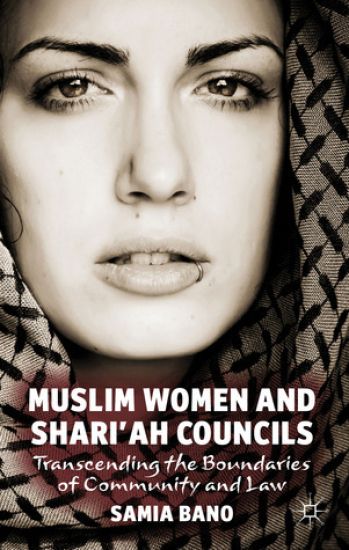
Using original empirical data and critiquing existing research, Samia Bano explores the experience of British Muslim woman who use Shari'ah councils to resolve marital disputes. She challenges the language of community rights and claims for legal autonomy in matters of family law showing how law and community can empower as well as restrict women.
The Fatigue of the Shari'a places on a continuum two kinds of debates: debates in the Islamic tradition about the end of access to divine guidance and debates in modern scholarship in Islamic legal studies about the end of the Shari'a. The resulting continuum covers what access to divine guidance means and how it relates to Shari'a.
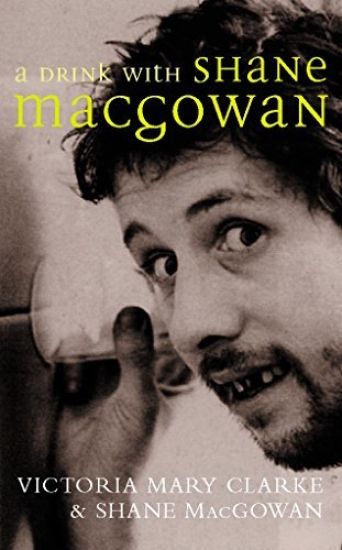
Funny, honest, brilliant and opinionated, A Drink with Shane MacGowan is the highly-acclaimed memoir of a true music icon.'One of the freshest, most original biographies I've ever read' - Lynne Barber, Observer'His candour, coupled with an acerbic wit, makes him an ideal guide through an unmistakably colourful life' - Time OutShane MacGowan was an intensely talented songwriter whose band, The Pogues, merged punk with Irish folk music to create a sound uniquely their own. An anarchic hellraiser with the soul of a poet, he is forever associated with Christmas after the chart-topping success of 'Fairytale of New York', his duet with Kirsty McColl.He grew up on a small farm in Tipperary, won a scholarship to Westminster, was rapidly expelled, became a rent boy, then a central figure of punk and the hugely influential star of The Pogues - until his bandmates got so fed up of his behaviour they kicked him out for a time. MacGowan's music, innovative and powerful, is as distinctive as his chaotic, breakdown-scarred, drug and alcohol-fuelled lifestyle.Written with his girlfriend (and later wife) Victoria Mary Clarke, A Drink With Shane MacGowan is a joyful celebration of a charming musician with a remarkable perspective on the world.'An enormously vivid and descriptive picture of his life and dramatic times' - Irish Times'This endearing memoir . . . is Irish rock distilled' - Sunday Times
This book examines Shanxi piaohao—private financiers from the Chinese hinterland—in the economic and business history of late imperial China, forming the original theory of Chinese hinterland capitalism.Deepening the existing understanding of capitalist dynamics at work in the families and financial institutions of late imperial China, the book foregrounds the expansionist role played by Shanxi piaohao in transforming China’s market and trade from an agrarian empire to a modern nation state. In a departure for economic history, it also focuses on the histories of the people and their lifeworlds behind financial institutions, which have previously been erased by universal capitalist narratives. Persistent binary oppositions between coastal areas and hinterland; state and market; and institutions and families are each transcended in recounting the local histories of global capital in the marginalized countryside and borderlands of China.Based on a wealth of archival material and correspondence with Shanxi piaohao offices and branches, Chinese Hinterland Capitalism and Shanxi Piaohao will appeal to students and scholars of Chinese and economic history, anthropology, and postcolonial studies more generally.
This book examines Shanxi piaohao—private financiers from the Chinese hinterland—in the economic and business history of late imperial China, forming the original theory of Chinese hinterland capitalism.Deepening the existing understanding of capitalist dynamics at work in the families and financial institutions of late imperial China, the book foregrounds the expansionist role played by Shanxi piaohao in transforming China’s market and trade from an agrarian empire to a modern nation state. In a departure for economic history, it also focuses on the histories of the people and their lifeworlds behind financial institutions, which have previously been erased by universal capitalist narratives. Persistent binary oppositions between coastal areas and hinterland; state and market; and institutions and families are each transcended in recounting the local histories of global capital in the marginalized countryside and borderlands of China.Based on a wealth of archival material and correspondence with Shanxi piaohao offices and branches, Chinese Hinterland Capitalism and Shanxi Piaohao will appeal to students and scholars of Chinese and economic history, anthropology, and postcolonial studies more generally.
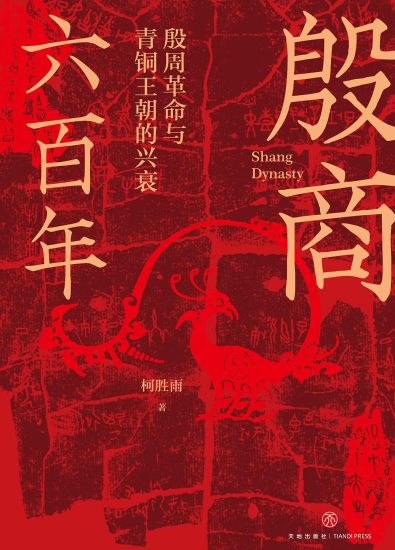
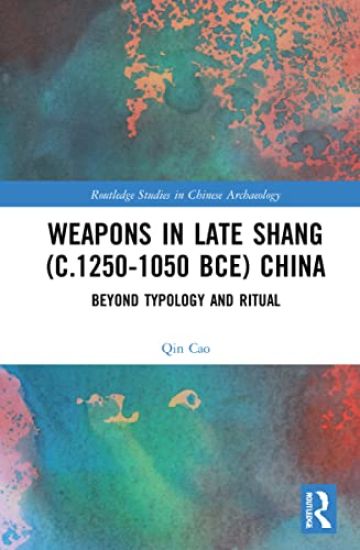
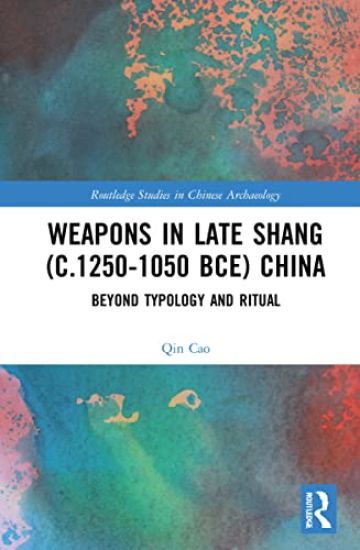
Weapons in Late Shang (c.1250-1050 BCE) China: Beyond Typology and Ritual explores the large quantities of bronze and jade weapons, such as dagger-axes, spears and arrows, found at the World Heritage site of Yinxu, the late Shang capital located near today’s Anyang city in central China.Qin Cao’s innovative research presents new insights into these weapons, moving beyond perceptions of them being primarily symbols of power and rank. Through the lens of weapons, this book argues for the significance of martial prowess and leadership within late Shang society. The author considers Shang weapons from an object biographical perspective, tracing their life histories for the first time. This book synthesises archaeological data, scientific analyses, and inscriptions on oracle bones and bronzes, uncovering a more nuanced understanding of the complex roles weapons played in society. What traces of evidence can be detected on weapons that demonstrate their ability to cause bodily harm? Why were tens of thousands of weapons placed in tombs? What led to certain individuals, including high-ranking royal females, being buried with weapons?This book will be of interest to academics, students (both undergraduates and postgraduates), and researchers in archaeology, particularly those focused on China, East Asia, or comparative studies, as well as a more general readership in Chinese archaeology.
Weapons in Late Shang (c.1250-1050 BCE) China: Beyond Typology and Ritual explores the large quantities of bronze and jade weapons, such as dagger-axes, spears and arrows, found at the World Heritage site of Yinxu, the late Shang capital located near today’s Anyang city in central China.Qin Cao’s innovative research presents new insights into these weapons, moving beyond perceptions of them being primarily symbols of power and rank. Through the lens of weapons, this book argues for the significance of martial prowess and leadership within late Shang society. The author considers Shang weapons from an object biographical perspective, tracing their life histories for the first time. This book synthesises archaeological data, scientific analyses, and inscriptions on oracle bones and bronzes, uncovering a more nuanced understanding of the complex roles weapons played in society. What traces of evidence can be detected on weapons that demonstrate their ability to cause bodily harm? Why were tens of thousands of weapons placed in tombs? What led to certain individuals, including high-ranking royal females, being buried with weapons?This book will be of interest to academics, students (both undergraduates and postgraduates), and researchers in archaeology, particularly those focused on China, East Asia, or comparative studies, as well as a more general readership in Chinese archaeology.
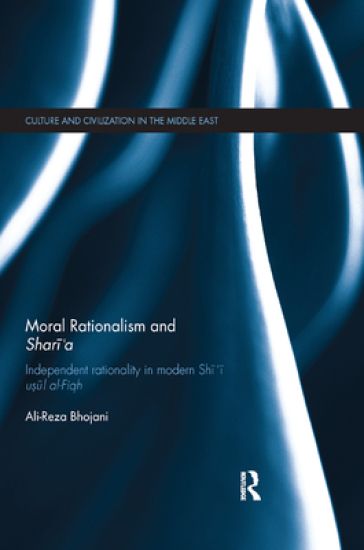
Moral Rationalism and Shari'a is the first attempt at outlining the scope for a theological reading of Shari'a, based on a critical examination of why 'Adliyya theological ethics have not significantly impacted Shi'i readings of Shari'a. Within Shi'i works of Shari 'a legal theory (usul al-fiqh) there is a theoretical space for reason as an independent source of normativity alongside the Qur’an and the Prophetic tradition. The position holds that humans are capable of understanding moral values independently of revelation. Describing themselves as 'Adliyya (literally the people of Justice), this allows the Shi 'a, who describe themselves as 'Adiliyya (literally, the People of Justice), to attribute a substantive rational conception of justice to God, both in terms of His actions and His regulative instructions. Despite the Shi'i adoption of this moral rationalism, independent judgments of rational morality play little or no role in the actual inference of Shari 'a norms within mainstream contemporary Shi'i thought. Through a close examination of the notion of independent rationality as a source in modern Shi'i usul al-fiqh, the obstacles preventing this moral rationalism from impacting the understanding of Shari 'a are shown to be purely epistemic. In line with the ‘emic’ (insider) approach adopted, these epistemic obstacles are revisited identifying the scope for allowing a reading of Shari'a that is consistent with the fundamental moral rationalism of Shi'i thought. It is argued that judgments of rational morality, even when not definitively certain, cannot be ignored in the face of the apparent meaning of texts that are themselves also not certain. An 'Adliyya reading of Shari'a demands that the strength of independent rational evidence be reconciled against the strength of any other apparently conflicting evidence, such that independent
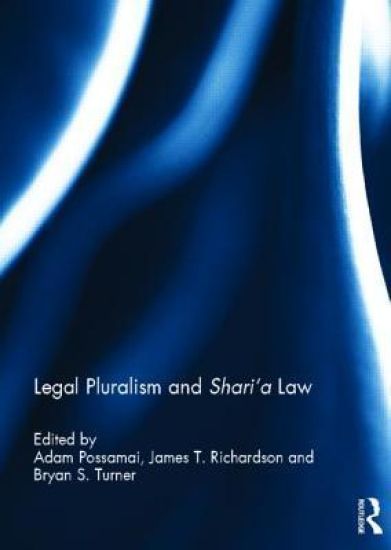
Legal pluralism has often been associated with post-colonial legal developments especially where common law survived alongside tribal and customary laws. Focusing on Shari‘a, this book examines the legal policies and experiences of various societies with different traditions of citizenship, secularism and common law. Where large diasporic communities of migrants develop, there will be some demand for the institutionalization of Shari‘a at least in the resolution of domestic disputes. This book tests the limits of multiculturalism by exploring the issue that any recognition of cultural differences might imply similar recognition of legal differences. It also explores the debate about post-secular societies specifically to the presentation and justification of beliefs and institutions by both religious and secular citizens.This book was published as a special issue of Democracy and Security.
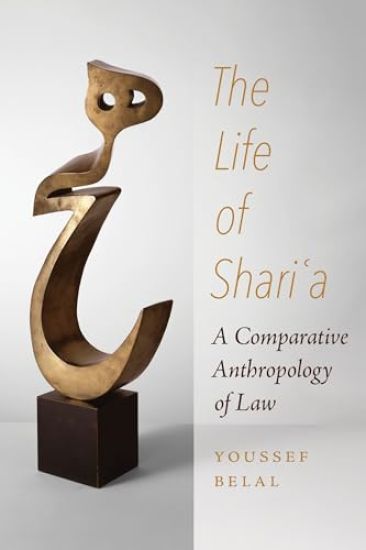
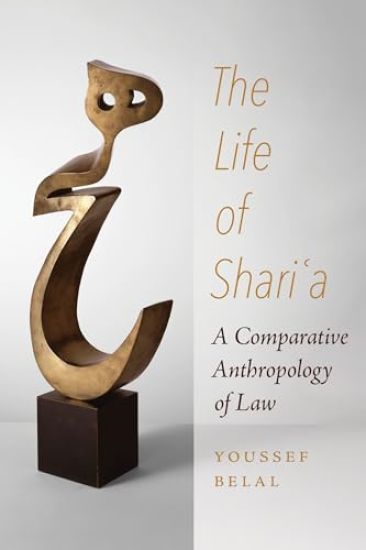
Is there a way to think about contemporary life with knowledge that is neither modern nor Western? Rather than confining Islam to a “religion” and shari?a to its “law,” Youssef Belal provocatively argues that Islamic shari?a is a mode of knowledge with its own concepts and scholarly categories through which the world and the self are grasped. The Life of Shari?a considers two intertwined lineages: how Islamic scholars have formulated knowledge from the classical period to today and how Westerners have understood the law and its origins. By melding these two traditions, Belal puts the formation of modern law under a new light and offers, through a compelling conceptualization of shari?a, a powerful argument for its continued relevance to the life of contemporary Muslims.
Is there a way to think about contemporary life with knowledge that is neither modern nor Western? Rather than confining Islam to a “religion” and shari?a to its “law,” Youssef Belal provocatively argues that Islamic shari?a is a mode of knowledge with its own concepts and scholarly categories through which the world and the self are grasped. The Life of Shari?a considers two intertwined lineages: how Islamic scholars have formulated knowledge from the classical period to today and how Westerners have understood the law and its origins. By melding these two traditions, Belal puts the formation of modern law under a new light and offers, through a compelling conceptualization of shari?a, a powerful argument for its continued relevance to the life of contemporary Muslims.