
Kirjahaku
Etsi kirjoja tekijän nimen, kirjan nimen tai ISBN:n perusteella.
1000 tulosta hakusanalla Simon Hopkinson

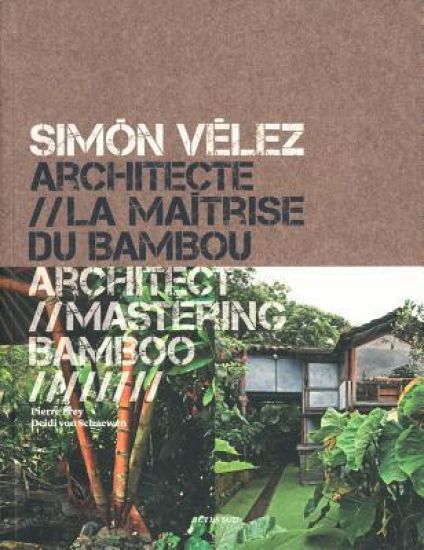
Simón Vélez was born in Manizales, Colombia, in 1949, and began his career forty years ago. Vélez is renowned for his joinery systems that brilliantly utilize bamboo as a permanent structural element in both residential and commercial structures. For four consecutive years he has been invited by the Vitra Design Museum and the George Pompidou Centre to conduct workshops in France in which structures of bamboo-guadua were built as an instructive exercise. In this monograph, illustrated by Deidi von Schaewen’s photographs, Pierre Frey offers us a rare insight into the works of this architect. Throughout the book, texts and images introduce us to a panorama of constructions as well as to the architect’s idiosyncratic construction techniques, which are part of a vernacular architecture that the author considers as ‘symptomatic of the state of the world and societies populating it’. Whether he is working with concrete, steel or other forms of wood, he works in the same way. He energetically defends his status as bambousero and is skilled at distinguishing materials and assigning them functions in accordance with their performances. He has persuaded his richest clients to build luxury residences from the material most used by simple peasants. He has also managed to convince many large public administrations, town council or businesses concerned about the environmental impact of their activities to adopt and promote guadua bamboo.
Simon Kimbangu Le Prophète de la Libératon de l'Homme noir Tome 2
Elikia M'Bokolo; Kivilu Sabakinu
Harmattan RDC
2022
nidottu

Simon Kimbangu Le Prophète de la Libération de l'Homme noir Tome 1
Elikia M'Bokolo; Kivilu Sabakinu
Harmattan RDC
2022
nidottu





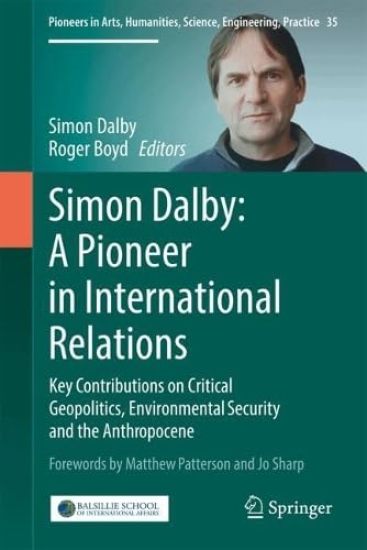
Simon Dalby: A Pioneer in International Relations
Springer International Publishing AG
2025
sidottu
This book profiles Simon Dalby’s academic contributions in the fields of critical geopolitics, environmental security and the intersection of international relations and the Anthropocene. It includes reprints of key essays that highlight innovations in critical thought at the intersections between geopolitics, environment and security. Starting with an analysis of American reconstructions of the Soviet threat in the 1970s, an early contribution to the emerging field of critical geopolitics, subsequent papers focus on the emergent formulations of environmental security in the aftermath of the Cold War and the environmental costs of globalization. Focusing on the implicit geographical framing in discourses of globalization offered a critique that extended the ambit of critical geopolitics to grapple with the issues of environmental security and the rising concern with climate change as well as the political identities invoked in that debate. In the aftermath of 9/11, similar arguments about contextualization applied to the American global war on terror and the revival of discussions of empire and its geographies, both in arguments for invading Iraq, as well as the wider discussions in policy discourse and popular culture. Simultaneously, the emergence of earth system science and the concept of the Anthropocene offered another way to highlight the dangers of fossil fueled economic activities. The necessity of fundamentally rethinking the premises of security policy in light of this recontextualization is emphasized in more recent contributions on climate security and the current ecological crisis. Critical geopoliticsEnvironmental securityGlobal war on terrorFirepower in the Anthropocene
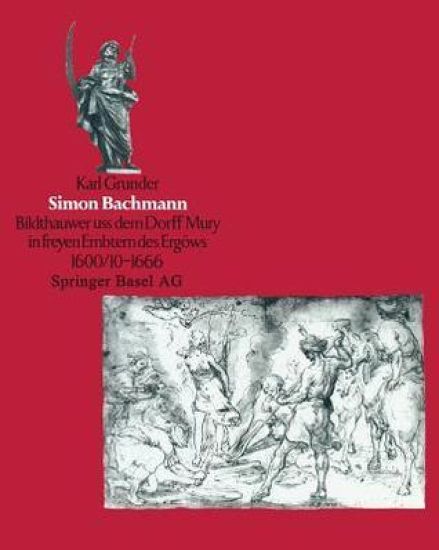

This latest comprehensive work on Simon Magus lends new impetus to the investigation of Early Christianity and questions surrounding the origin and nature of Gnosticism. Major contributions of this study include: (1), a departure from the traditional exegesis of Acts 8, 5-24 (the first narrative source of Simon), and the later following reports of ancient Christian writers; (2), an overview of the literature of Graeco-Roman antiquity to determine the contribution of "magic" and "the Magoi" in the development of perceptions and descriptions of Simon; and (3), the inclusion of social science explanation models and modern estimations of "identity", in a creative approach to questions surrounding the phenomenon of Simon.
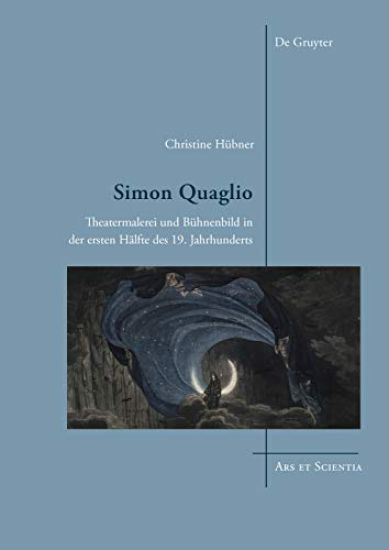
In der Außenwahrnehmung des 9. Jahrhunderts wurde die Theatermalerei, das Entwerfen und Ausführen von Bühnendekorationen, meist als Handwerk und unliebsamer Brotberuf für bildende Künstler verstanden die ausgeführten Bühnenbilder besaßen nur selten den Status eigenständiger Kunstwerke. Die Publikation diskutiert am Beispiel des Münchener Hoftheatermalers Simon Quaglio ( 795— 878) erstmals die Theatermalerei in ihrem Status als künstlerische Gattung. So wird sichtbar, wie die Kunstentwicklung und die kunsttheoretischen Diskurse der Zeit einen direkten Einfluss sowohl auf die Ästhetik der Bühnendekorationen als auch auf das Selbstverständnis der Theatermaler genommen haben. Zugleich entsteht dabei ein dichtes Bild der Münchener Theaterpraxis im 9. Jahrhundert.



Simon Marius and His Research
Springer
2019
sidottu
The margravial court astronomer Simon Marius, was involved in all of the new observations made with the recently invented telescope in the early part of the seventeenth century. He also discovered the Moons of Jupiter in January 1610, but lost the priority dispute with Galileo Galilei, because he missed to publish his findings in a timely manner.The history of astronomy neglected Marius for a long time, finding only the apologists for the Copernican system worthy of attention. In contrast the papers presented on the occasion of the Simon Marius Anniversary Conference 2014, and collected in this volume, demonstrate that it is just this struggle to find the correct astronomical system that makes him particularly interesting. His research into comets, sunspots, the Moons of Jupiter and the phases of Venus led him to abandon the Ptolemaic system and adopt the Tychonic one. He could not take the final step to heliocentricity but his rejection was based on empirical arguments of his time.This volume presents a translation of the main work of Marius and shows the current state of historical research on Marius.
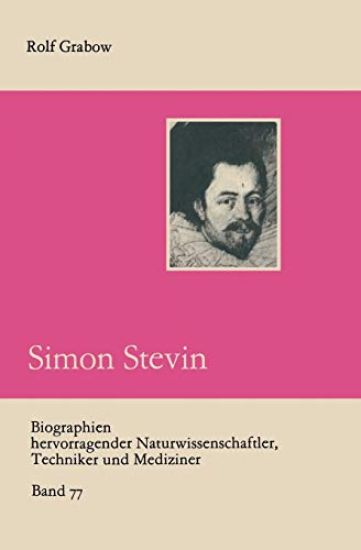
Simon Stevin
Springer Verlag, Singapore
1985
nidottu
Die Grundlagen der Physik wurden auf dem Gebiete der klassi- schen Mechanik im 17. Jahrhundert gelegt, vor aHem durch Galileo Galilei und Isaac Newton. Zwar reichen die Anfange der Mechanik bis in die Antike zuruck, aber erst in der Renaissance griff man diese Erkenntnisse wieder auf. Zu Vnrecht werden heute neben so1chen herausragenden Gelehrten wie Galilei und Newton diejenigen Wissenschaftler oft nicht genugend gewurdigt, die als Vorlaufer und teilweise sogar als Mitbegrunder der klas- sischen Naturwissenschaften angesehen werden konncn. Vnter ihnen sind besonders solche Personen von Interesse, die bestrebt waren, Praxis und Theorie zu verbinden und Probleme der Praxis auf wissenschaftlicher Grundlage zu lasen. Eine dieser Personlichkeiten ist der Niederlander Simon Stevin, der lange Zeit nicht die Beachtung fand, die seiner Person und seinem Werk zukommt. Mit seinem Namen sind z. B. solche wichtigen physikalischen Erkenntnisse verkniipft wie die Gleich- gewichtsbedingung auf der geneigten Ebene, das Kraftedreieck bzw. das Krafteparallelogramm und das hydrostatische Para- doxon. Bedeutend ist sein Anteil an der Einfuhrung der Dezimal- zahlen. Aber Stevin arbeitete nicht nur auf dem Gebiete der Mechanik und der Mathematik. Er war Ingenieur, Wasser- bautechniker, Miihlenkonstrukteur, Geometer, Finanzexperte und Generalquartiermeister, verOffentlichte Arbeiten tiber Schiffs- navigation, Festungsbau und staatspolitische Probleme und besaG ein universelles Wissen auf nahezu allen Gebieten der damaligen Wissenschaft und Technik.