Solid state physics is the branch of physics primarily devoted to the study of matter in its solid phase, especially at the atomic level. This prestigious serial presents timely and state-of-the-art reviews pertaining to all aspects of solid state physics.
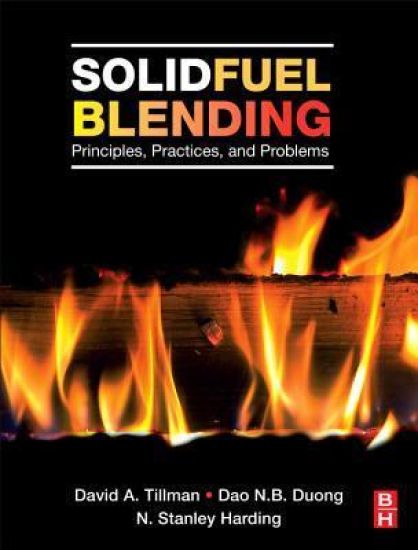
Create affordable solid fuel blends that will burn efficiently while reducing the carbon footprint. Solid Fuel Blending Handbook: Principles, Practices, and Problems describes a new generation of solid fuel blending processes. The book includes discussions on such topics as flame structure and combustion performance, boiler efficiency, capacity as influenced by flue gas volume and temperature, slagging and fouling, corrosion, and emissions. Attention is given to the major types of combustion systems including stokers, pulverized coal, cyclone, and fluidized bed boilers. Specific topics considered include chlorine in one or more coals, alkali metals (e.g., K, Na) and alkali earth elements, and related topics. Coals of consideration include Appalachian, Interior Province, and Western bituminous coals; Powder River Basin (PRB) and other subbituminous coals; Fort Union and Gulf Coast lignites, and many of the off-shore coals (e.g., Adaro coal, an Indonesian subbituminous coal with very low sulfur; other off-shore coals from Germany, Poland, Australia, South Africa, Columbia, and more). Interactions between fuels and the potential for blends to be different from the parent coals will be a critical focus of this of the book.
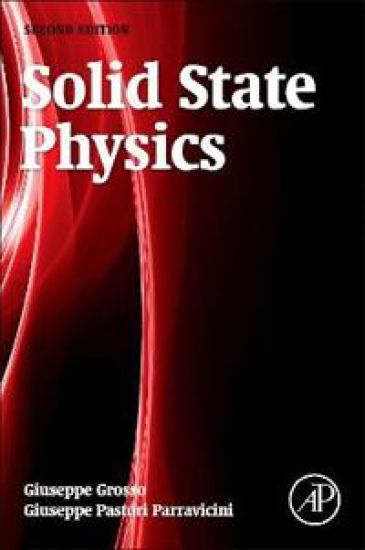
Solid State Physics is a textbook for students of physics, material science, chemistry, and engineering. It is the state-of-the-art presentation of the theoretical foundations and application of the quantum structure of matter and materials. This second edition provides timely coverage of the most important scientific breakthroughs of the last decade (especially in low-dimensional systems and quantum transport). It helps build readers' understanding of the newest advances in condensed matter physics with rigorous yet clear mathematics. Examples are an integral part of the text, carefully designed to apply the fundamental principles illustrated in the text to currently active topics of research. Basic concepts and recent advances in the field are explained in tutorial style and organized in an intuitive manner. The book is a basic reference work for students, researchers, and lecturers in any area of solid-state physics.
Solid state physics is the branch of physics primarily devoted to the study of matter in its solid phase, especially at the atomic level. This prestigious serial presents timely and state-of-the-art reviews pertaining to all aspects of solid state physics.
Solid state physics is the branch of physics that is primarily devoted to the study of matter in its solid phase, especially at the atomic level. This prestigious serial presents timely and state-of-the-art reviews pertaining to all aspects of solid state physics. This latest volume in the series is devoted to the science underpinning two cutting edge areas: protein crystallization and semiconductor nanostructures. The extended and very complete review by E. Runge was awarded this year's Karl-Scheel Prize for "the outstanding publication by a young physicist from Berlin".
The article by Fulde, Thalmeier and Zwicknagl traces many of the recent developments in the field of strongly correlated many electron systems. It is very useful both as a reference and a pedagogical exposition since it places these developments into a historical context beginning with early developments in the electron theory of solids. The second article in this volume, by Bréchet and Hutchinson, concerns pattern formation in metals and alloys. Spontaneous pattern formation is the development of a regularity, either in the spatial distribution of the material in a system or in its development in time, of a lower symmetry than that of its cause. These phenomena have been of considerable interest to the non-linear physics community, in particular in fluid dynamics and in chemical reactions.
Solid state physics is the branch of physics primarily devoted to the study of matter in its solid phase, especially at the atomic level. This prestigious serial presents timely and state-of-the-art reviews pertaining to all aspects of solid state physics.
Practical Guides in Chemical Engineering are a cluster of short texts that each provides a focused introductory view on a single subject. The full library spans the main topics in the chemical process industries that engineering professionals require a basic understanding of. They are ‘pocket publications’ that the professional engineer can easily carry with them or access electronically while working. Each text is highly practical and applied, and presents first principles for engineers who need to get up to speed in a new area fast. The focused facts provided in each guide will help you converse with experts in the field, attempt your own initial troubleshooting, check calculations, and solve rudimentary problems. Solid-Liquid Filtration covers the basic principles and mechanisms of filtration, filtration testing including filter aids and filter media, types of filtration systems, selection of filtration systems and typical operating and troubleshooting approaches. This guide also discusses general applications and tips for process filtration and can be utilized by process engineers as a framework for “idea-generation? when analyzing filtration for an operating bottleneck issue or a new process development problem.
Solid State Physics provides the latest information on the branch of physics that is primarily devoted to the study of matter in its solid phase, especially at the atomic level. This prestigious serial presents timely and state-of-the-art reviews pertaining to all aspects of solid state physics.
Solid State Physics provides the latest information on the branch of physics that is primarily devoted to the study of matter in its solid phase, especially at the atomic level. This prestigious serial presents timely and state-of-the-art reviews pertaining to all aspects of solid state physics.
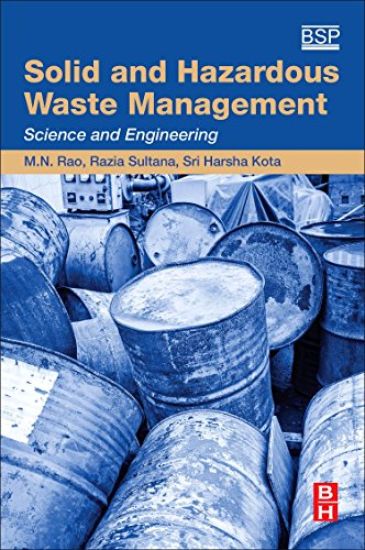
Solid and Hazardous Waste Management: Science and Engineering presents the latest on the rapid increase in volume and types of solid and hazardous wastes that have resulted from economic growth, urbanization, and industrialization and how they have challenged national and local governments to ensure effective and sustainable management of these waste products. The book offers universal coverage of the technologies used for the management and disposal of waste products, such as plastic waste, bio-medical wastes, hazardous wastes, and e-wastes.
Solid State Physics, Volume 68 provides the latest information on a branch of physics that is primarily devoted to the study of matter in its solid phase, especially at the atomic level. Chapters in this updated volume include new research in the use of phonon-polaritons in polar materials to do plasmonic like studies, but without the plasmons, along with a section on Polar oxide interfaces. This prestigious serial presents timely and state-of-the-art reviews pertaining to all aspects of solid state physics.
Soils and Landscape Restoration provides a multidisciplinary synthesis on the sustainable management and restoration of soils in various landscapes. The book presents applicable knowledge of above- and below-ground interactions and biome specific realizations along with in-depth investigations of particular soil degradation pathways. It focuses on severely degraded soils (e.g., eroded, salinized, mined) as well as the restoration of wetlands, grasslands and forests. The book addresses the need to bring together current perspectives on land degradation and restoration in soil science and restoration ecology to better incorporate soil-based information when restoration plans are formulated.
Solid State Physics, Volume 69, provides the latest information on the branch of physics that is primarily devoted to the study of matter in its solid phase, especially at the atomic level. This prestigious serial presents timely and state-of-the-art reviews pertaining to all aspects of solid state physics.
Solid Phase Extraction thoroughly presents both new and historic techniques for dealing with solid phase extraction. It provides all information laboratory scientists need for choosing and utilizing suitable sample preparation procedures for any kind of sample. In addition, the book showcases the contemporary uses of sample preparation techniques in the most important industrial and academic project environments, including solid-phase Microextraction, molecularly imprinted polymers, magnetic nanoparticles, and more. Written by recognized experts in their respective fields, this one-stop reference is ideal for those who need to know which technique to choose for solid phase extraction. Used in conjunction with a similar release, Liquid Phase Extraction, this book allows users to master this crucial aspect of sample preparation.
Solid State Physics: An Introduction to Theory presents an intermediate quantum approach to the properties of solids. Through this lens, the text explores different properties, such as lattice, electronic, elastic, thermal, dielectric, magnetic, semiconducting, superconducting and optical and transport properties, along with the structure of crystalline solids. The work presents the general theory for most of the properties of crystalline solids, along with the results for one-, two- and three-dimensional solids in particular cases. It also includes a brief description of emerging topics, such as the quantum hall effect and high superconductivity. Building from fundamental principles and requiring only a minimal mathematical background, the book includes illustrative images and solved problems in all chapters to support student understanding.
Solid Oxide-Based Electrochemical Devices: Advances, Smart Materials and Future Energy Applications provides a complete overview of the theoretical and applied aspects of energy-related solid oxide technologies. The book presents detailed thermodynamic and other basic requirements for fuel cells, electrolyzers, supercapacitors, batteries, sensors and air treatment devices. It delves into physical-chemical, electrochemical and mechanical properties of smart materials developed and offers insights into fundamental analysis and modeling. Detailed protocols for operation are suggested and discussed, including component development to optimize functionality, cost and upscaling. Practitioners in the fuel cell or power to gas industries, engineering researchers developing new technologies in those areas, and device and system designers can use the in-depth, structured information about the relationship between technologies and materials offered to make better-informed decisions during the planning and implementation of those technologies.
Solid Waste Landfilling: Concepts, Processes, Technology provides information on technologies that promote stabilization and minimize environmental impacts in landfills. As the main challenges in waste management are the reduction and proper treatment of waste and the appropriate use of waste streams, the book satisfies the needs of a modern landfill, covering waste pre-treatment, in situ treatment, long-term behavior, closure, aftercare, environmental impact and sustainability. It is written for practitioners who need specific information on landfill construction and operation, but is also ideal for those concerned about the possible return of these sites to landscapes and their subsequent uses for future generations.
Solid-Liquid Adsorption: How to Do Correct Batch Experiments and Analyze Data provides a critical review of available literature, showing the most frequently made interpretation errors and providing methodological guidance on the practical use of fundamental concepts in adsorption science and technology. Adsorption science and technology is a well-established field with a broad range of applications. Nevertheless, the handover of knowledge and experience from expert seniors is not always optimal. This means that incorrect results and relevant mistakes are not made public. This book shares both successes and failures, helping new researchers avoid past mistakes.
Solid State Physics, Volume 71 provides the latest volume in this long-running series. This latest volume highlights new advances in the field, with this new volume presenting interesting chapters written by an international board of authors.