Kirjojen hintavertailu. Mukana 11 342 296 kirjaa ja 12 kauppaa.

Kirjahaku

Etsi kirjoja tekijän nimen, kirjan nimen tai ISBN:n perusteella.

1000 tulosta hakusanalla Steven Bode

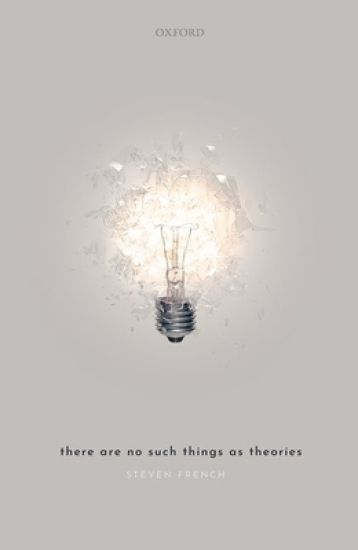
There Are No Such Things As Theories

There Are No Such Things As Theories

Steven French

Oxford University Press
2020
sidottu
There Are No Such Things as Theories considers the fundamental question: what is a scientific theory? It presents a range of options - from theories are sets of propositions, to theories are families of models, abstract artefacts, or fictions - and highlights the various problems they all face. In so doing it draws multiple comparisons between theories and artworks: on the one hand, theories are like certain kinds of paintings with regard to their representational capacity; on the other, they are like musical works in that they can be multiply presented. An alternative answer to the question is then offered, drawing on the metaphysics of musical works: there are no such things as theories. Nevertheless, we can still talk about them, since that talk is made true by the various practices that scientists engage in. The implications of this form of eliminativism for the realism debate is then discussed and it is concluded that this may offer a more flexible framework in which we can understand both the history and the philosophy of science in general.
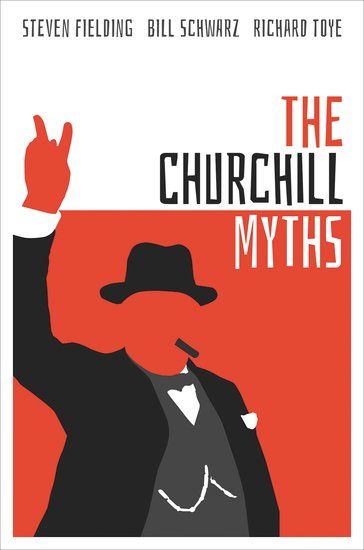
The Churchill Myths

The Churchill Myths

Steven Fielding; Bill Schwarz; Richard Toye

Oxford University Press
2020
sidottu
This is not a book about Winston Churchill. It is not principally about his politics, nor his rhetorical imagination, nor even about the man himself. Instead, it addresses the varied afterlives of the man and the persistent, deeply located compulsion to bring him back from the dead, capturing and explaining the significance of the various Churchill myths to Britain's history and current politics. The authors look at Churchill's portrayal in social memory. They demonstrate the ways in which politicians have often used the idea of Churchill as a means of self-validation - using him to show themselves as tough and honest players. They show the man dramatized in film and television - an onscreen persona that is often the product of a gratuitous mixing of fact and fantasy, one deliberately shaped to meet the preferences of the presumed audience. They discuss his legacy in light of the Brexit debate - showing how public figures on both sides of the Leave/Remain debate were able to use elements of Churchill's words and character to argue for their own point-of-view.
The English People at War in the Age of Henry VIII

The English People at War in the Age of Henry VIII

Steven Gunn

Oxford University Press
2020
nidottu
Henry VIII fought many wars, against the French and Scots, against rebels in England and the Gaelic lords of Ireland, even against his traditional allies in the Low Countries. But how much did these wars really affect his subjects? And what role did Henry's reign play in the long-term transformation of England's military capabilities? The English People at War in the Age of Henry VIII searches for the answers to these questions in parish and borough account books, wills and memoirs, buildings and paintings, letters from Henry's captains, and the notes readers wrote in their printed history books. It looks back from Henry's reign to that of his grandfather, Edward IV, who in 1475 invaded France in the afterglow of the Hundred Years War, and forwards to that of Henry's daughter Elizabeth, who was trying by the 1570s to shape a trained militia and a powerful navy to defend England in a Europe increasingly polarised by religion. War, it shows, marked Henry's England at every turn: in the news and prophecies people discussed, in the money towns and villages spent on armour, guns, fortifications, and warning beacons, in the way noblemen used their power. War disturbed economic life, made men buy weapons and learn how to use them, and shaped people's attitudes to the king and to national history. War mobilised a high proportion of the English population and conditioned their relationships with the French and Scots, the Welsh and the Irish. War should be recognised as one of the defining features of life in the England of Henry VIII.
The Unification of the Arts

The Unification of the Arts

Steven Brown

Oxford University Press
2021
sidottu
What are the arts? What functions do the arts serve in human life? There has been a surge of cognitive, biological, and evolutionary interest in the arts in recent years, most of it oriented towards individual artforms. However, there has been virtually no bridging work to integrate the arts under a single theoretical perspective. This book presents the first integrated cognitive account of the arts that unites visual art, theatre, literature, dance, and music into a single framework, with supporting discussions about creativity and aesthetics. Its comparative approach identifies both what is unique to each artform and what they share, shedding light on how the arts can combine with one another to form syntheses, such as choreographing dance movements to music, or setting lyrics to music to create a song. While studies in the psychology of the arts tend to focus on perceptual processes and aesthetic responses alone, this book offers a holistic sensorimotor account that examines the full gamut of processes from creation to perception. This allows for a broad discussion of the evolution of the arts, including the origins of rhythm, the co-evolution of music and language, the evolution of drawing, and cultural evolution of the arts. Finally, the book unifies a number of topics that have not previously been fully related to one another, including theatre and literature, music and language, creativity and aesthetics, dancing and acting, and visual art and music. A unique volume providing a bold new approach to the integration of the arts, for academics or general readers of the arts, psychology, cognitive neuroscience, anthropology, and evolutionary studies.
Ilias Latina

Ilias Latina

Steven J. Green

Oxford University Press
2025
sidottu
The Ilias Latina, the title coined by Emil Baehrens in his 1881 edition, is a condensed version of Homer's Iliad spanning 1,070 verses of Latin hexameter. It was likely composed during the latter part of the principate of Nero (c. AD 60–65). The poem has long suffered the scholarly status of second-order poetry, the sort of imitative, 'translation' work that a Roman might compose at the beginning of his literary career. The poem's chief legacy--as a medieval school text that acquainted a Greek-less audience with Homer--has done little to assist its literary reputation. More recent times, however, have seen a greater appreciation for the literary, cultural, and political significance of Latin translation of Greek works. More specifically, there is now a growing awareness that the Ilias Latina is a sophisticated enterprise in its own right: the poem is a Roman appropriation of Homer's Iliad, reinterpreted through Rome's own national epic, Virgil's Aeneid, and recalibrated to fit the artistic and political sensibilities of the early imperial age. This book includes introductory chapters, Latin text, English translation, and detailed verse-by-verse commentary on the poem. The translation is the first to appear in English in a major, mainstream press. The commentary, also the first to appear in English, takes on board the full range of international scholarship and provides new insights into the poem's intricacies and creative engagement with Homer and the Roman poets.
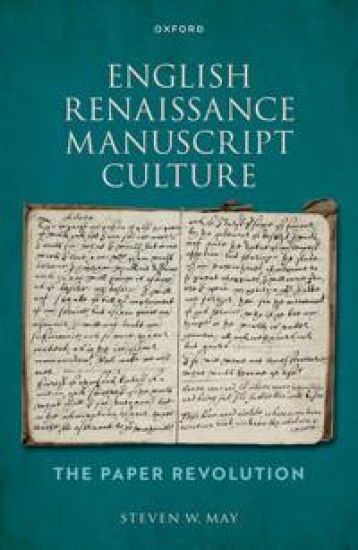
English Renaissance Manuscript Culture

English Renaissance Manuscript Culture

Steven W. May

Oxford University Press
2023
sidottu
English Renaissance Manuscript Culture: The Paper Revolution traces the development of a new type of scribal culture in England that emerged early in the fourteenth century. The main medieval writing surfaces of parchment and wax tablets were augmented by a writing medium that was both lasting and cheap enough to be expendable. Writing was transformed from a near monopoly of professional scribes employed by the upper class to a practice ordinary citizens could afford. Personal correspondence, business records, notebooks on all sorts of subjects, creative writing, and much more flourished at social levels where they had previously been excluded by the high cost of parchment. Steven W. May places literary manuscripts and in particular poetic anthologies in this larger scribal context, showing how its innovative features affected both authorship and readership. As this amateur scribal culture developed, the medieval professional culture expanded as well. Classes of documents formerly restricted to parchment often shifted over to paper, while entirely new classes of documents were added to the records of church and state as these institutions took advantage of relatively inexpensive paper. Paper stimulated original composition by making it possible to draft, revise, and rewrite works in this new, affordable medium. Amateur scribes were soon producing an enormous volume of manuscript works of all kinds--works they could afford to circulate in multiple copies. England's ever-increasing literate population developed an informal network that transmitted all kinds of texts from single sheets to book-length documents efficiently throughout the kingdom. The operation of restrictive coteries had little if any role in the mass circulation of manuscripts through this network. However, paper was cheap enough that manuscripts could also be readily disposed of (unlike expensive parchment). More than 90% of the output from this scribal tradition has been lost, a fact that tends to distort our understanding and interpretation of what has survived. May illustrates these conclusions with close analysis of representative manuscripts.
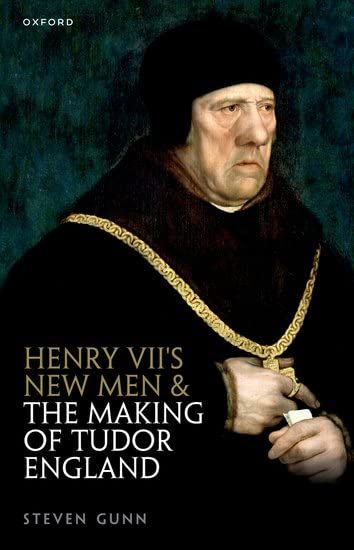
Henry VII's New Men and the Making of Tudor England

Henry VII's New Men and the Making of Tudor England

Steven Gunn

Oxford University Press
2023
nidottu
The reign of Henry VII is important but mysterious. He ended the Wars of the Roses and laid the foundations for the strong governments of Henry VIII and Elizabeth I. Yet his style of rule was unconventional and at times oppressive. At the heart of his regime stood his new men, low-born ministers with legal, financial, political, and military skills who enforced the king's will and in the process built their own careers and their families' fortunes. Some are well known, like Sir Edward Poynings, governor of Ireland, or Empson and Dudley, executed to buy popularity for the young Henry VIII. Others are less famous. Sir Robert Southwell was the king's chief auditor, Sir Andrew Windsor the keeper of the king's wardrobe, Sir Thomas Lovell, the Chancellor of the Exchequer so trusted by Henry that he was allowed to employ the former Yorkist pretender Lambert Simnel as his household falconer. Some paved the way to glory for their relatives. Sir Thomas Brandon, master of the horse, was the uncle of Henry VIII's favourite Charles Brandon, duke of Suffolk. Sir Henry Wyatt, keeper of the jewel house, was father to the poet Sir Thomas Wyatt. This volume, based on extensive archival research, presents a kaleidoscopic portrait of the new men. It analyses the offices and relationships through which they exercised power and the ways they gained their wealth and spent it to sustain their new-found status. It establishes their importance in the operation of Henry's government and, as their careers continued under his son, in the making of Tudor England.
Techniques in Light Microscopy

Techniques in Light Microscopy

Steven E. Ruzin

Oxford University Press
2024
sidottu
This textbook provides an accessible and pedagogical explanation of the way microscopes magnify images and covers all techniques to date in transmitted and fluorescent light microscopy. The first section covers basic optics as it relates to microscopy. The second section describes all the major optical techniques of transmitted light microscopy, starting with brightfield, through darkfield, polarized light, phase contrast, differential interference contrast, and Hoffman modulation contrast microscopy. The final third of the book covers all the techniques of fluorescence microscopy. It begins with a simple explanation of fluorescence and is followed by Widefield epifluorescence, confocal, and 2-photon microscopy. This is followed by computational imaging including restoration ('deconvolution') microscopy, and all the present super-resolution techniques. The book concludes by discussing attainable resolution using transmitted light microscopy, including a thorough discussion of the Rayleigh, Sparrow, and other criteria of resolution, ending with a short discussion of the common pitfalls that result in decreased microscope resolution. The final chapter in the book is a short history of the microscope, beginning with the ancients, then discussing three seminal natural philosophers: Leeuwenhoek, Swammerdam, and Hooke. The remaining sections of the history chapter cover mechanical and optical advancements in the history of transmitted light microscopy. Finally, it includes a short history of fluorescence microscopy starting with Köhler and Rohr's first use of fluorescence microscopy in 1905, and ending with a description of the Sarastro Phoibos 1000, the first commercial confocal microscope.
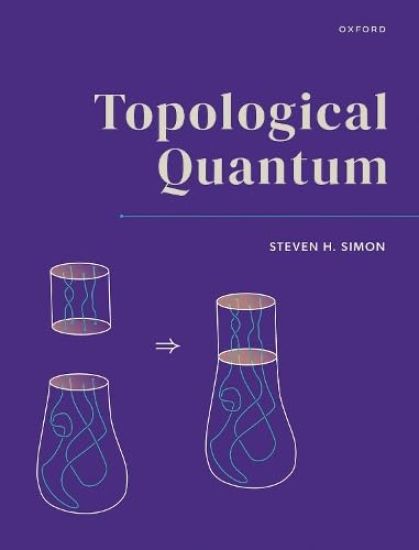
Topological Quantum

Topological Quantum

Steven H. Simon

Oxford University Press
2023
sidottu
At the intersection of physics, mathematics, and computer science, an exciting new field of study has formed, known as “Topological Quantum.” This research field examines the deep connections between the theory of knots, special types of subatomic particles known as anyons, certain phases of matter, and quantum computation. This book elucidates this nexus, drawing in topics ranging from quantum gravity to topology to experimental condensed matter physics. Topological quantum has increasingly been a focus point in the fields of condensed matter physics and quantum information over the last few decades, and the forefront of research now builds on the basic ideas presented in this book. The material is presented in a down-to-earth and entertaining way that is far less abstract than most of what is in the literature. While introducing the crucial concepts and placing them in context, the subject is presented without resort to the highly mathematical category theory that underlies the field. Requiring only an elementary background in quantum mechanics, this book is appropriate for all readers, from advanced undergraduates to the professional practitioner. This book will be of interest to mathematicians and computer scientists as well as physicists working on a wide range of topics. Those interested in working in these field will find this book to be an invaluable introduction as well as a crucial reference.
A Phenomenological Approach to Quantum Mechanics

A Phenomenological Approach to Quantum Mechanics

Steven French

Oxford University Press
2023
sidottu
Steven French suggests a radical new approach to the understanding of quantum physics, derived from Husserl's phenomenological philosophy. In 1939 two physicists, Fritz London and Edmund Bauer, published an account of measurement in quantum mechanics. Widely cited, their 'little book' featured centrally in an important debate over the role of consciousness in that process. However, it has been fundamentally misunderstood, both in that debate and beyond. Steven French argues that London, in particular, approached the measurement process from the perspective of Husserlian phenomenology, which he had studied as a student and which he retained an interest in throughout his career. This casts his work with Bauer in an entirely novel light and suggests a radical alternative understanding of quantum mechanics in which consciousness still plays a role but one that is fundamentally different than previously conceived. Most interpretations of the theory approach it on the basis of the so-called 'analytic' tradition in philosophy. However, there has recently been a surge of interest in 'continental' approaches and this book offers a significant new contribution to such developments. Intertwining history and philosophy, it presents London's background in physics and phenomenology, together with an outline of the latter as developed by Husserl, Gurwitsch, Merleau-Ponty, and others, as well as a detailed analysis of the work on measurement with Bauer. The book concludes by comparing the London and Bauer understanding with that afforded by Fuch's QBism, Everett's 'Many Worlds' interpretation, and Rovelli's Relational Quantum Mechanics. It is hoped that this exploratory work will open up new avenues of thought with regard to one of our most fundamental physical theories.
Geographic Information Systems and Science

Geographic Information Systems and Science

Steven A. Roberts; Colin Robertson

Oxford University Press, Canada
2016
nidottu
Geographic Information Systems helps students understand how GIS enables us to digitally represent the forms, patterns and processes of Earth. The text demonstrates how the special qualities of spatial geographic data require new methods and theories, and how these new methods and theories embody the field of GIScience that underlie the technology of GIS. Designed for users already familiar with GIS, it takes students beyond the surface of the technology by explaining methods and algorithms in enough detail for students to get an intuitive grasp of the underlying ideas while also demonstrating how those ideas are applied to geographical information. In order to help students become more effective users of GIS technology, the book highlights many of the common research challenges of GIS and invites the reader to think broadly about the assumptions embedded in GIS practice today. The authors stress a critical approach throughout by describing selected aspects of the field in sufficient depth to scrutinize the formalisms underlying the simple user-interfaces that greet new GIS users. Geographic Information Systems serves as an indispensable gateway to higher study in GIS by readers interested in the fundamental research challenges facing the field today.
War, State, and Society in England and the Netherlands 1477-1559

War, State, and Society in England and the Netherlands 1477-1559

Steven Gunn; David Grummitt; Hans Cools

Oxford University Press
2007
sidottu
Exploring the effects of war on state power in early modern Europe, this book asks if military competition increased rulers' power over their subjects and forged more modern states, or if the strains of war broke down political and administrative systems. Comparing England and the Netherlands in the age of warrior princes such as Henry VIII and Charles V, it examines the development of new military and fiscal institutions, and asks how mobilization for war changed political relationships throughout society. Towns in England, such as Norwich, York, Exeter, and Rye, are compared with towns in the Netherlands, such as Antwerp, Leiden, 's-Hertogenbosch and Valenciennes, to see how the magistrates' relations with central government and the urban populace were modified by war. Great noblemen from the Howard and Percy families are set alongside their equivalents from the houses of Cro and Egmond to examine the role of recruitment, army command, and heroic reputation in maintaining noble power. The wider interactions of subjects and rulers in wartime are reviewed to measure how effectively war extended princes' claims on their subjects' loyalty and service, their ambitions to control news and opinion and to promote national identity, and their ability to manage the economy and harness religious change to dynastic purposes. The result is a compelling but nuanced picture of societies and polities tested and shaped by the pressures of ever more demanding warfare.
Respiratory Biology of Animals

Respiratory Biology of Animals

Steven F. Perry; Markus Lambertz; Anke Schmitz

Oxford University Press
2019
sidottu
Oxygen uptake for metabolic energy demand and the elimination of the resulting carbon dioxide is one of the essential processes in all higher life forms; in the case of animals, everything from protozoans to insects and vertebrates including humans. Respiratory Biology of Animals provides a contemporary and truly integrative approach to the topic, adopting a strong evolutionary theme. It covers aerobic metabolism at all levels, from gas exchange organs such as skin, gills, and lungs to mitochondria - the site of cellular respiration. The book also describes the functional morphology and physiology of the circulatory system, which often contains gas-carrying pigments and is important for pH regulation in the organism. A final section describes the evolution of animal respiratory systems. Throughout the book, examples are selected from the entire breadth of the animal kingdom, identifying common themes that transcend taxonomy. Respiratory Biology of Animals is an accessible supplementary text suitable for both senior undergraduate and graduate students taking courses in respiratory biology, comparative animal physiology, and environmental physiology. It is also of relevance and use to the many professional academics requiring a concise but authoritative overview of the topic.
Respiratory Biology of Animals

Respiratory Biology of Animals

Steven F. Perry; Markus Lambertz; Anke Schmitz

Oxford University Press
2019
nidottu
Oxygen uptake for metabolic energy demand and the elimination of the resulting carbon dioxide is one of the essential processes in all higher life forms; in the case of animals, everything from protozoans to insects and vertebrates including humans. Respiratory Biology of Animals provides a contemporary and truly integrative approach to the topic, adopting a strong evolutionary theme. It covers aerobic metabolism at all levels, from gas exchange organs such as skin, gills, and lungs to mitochondria - the site of cellular respiration. The book also describes the functional morphology and physiology of the circulatory system, which often contains gas-carrying pigments and is important for pH regulation in the organism. A final section describes the evolution of animal respiratory systems. Throughout the book, examples are selected from the entire breadth of the animal kingdom, identifying common themes that transcend taxonomy. Respiratory Biology of Animals is an accessible supplementary text suitable for both senior undergraduate and graduate students taking courses in respiratory biology, comparative animal physiology, and environmental physiology. It is also of relevance and use to the many professional academics requiring a concise but authoritative overview of the topic.
Spinoza's Heresy

Spinoza's Heresy

Steven Nadler

Clarendon Press
2001
sidottu
At the heart of Spinoza's Heresy is a mystery: why was Baruch Spinoza so harshly excommunicated from the Amsterdam Jewish community at the age of twenty-four? In this philosophical sequel to his acclaimed, award-winning biography of the seventeenth-century thinker, Steven Nadler argues that Spinoza's main offence was a denial of the immortality of the soul. But this only deepens the mystery. For there is no specific Jewish dogma regarding immortality: there is nothing that a Jew is required to believe about the soul and the afterlife. It was, however, for various religious, historical and political reasons, simply the wrong issue to pick on in Amsterdam in the 1650s. After considering the nature of the ban, or cherem, as a disciplinary tool in the Sephardic community, and a number of possible explanations for Spinoza's ban, Nadler turns to the variety of traditions in Jewish religious thought on the postmortem fate of a person's soul. This is followed by an examination of Spinoza's own views on the eternity of the mind and the role that that the denial of personal immortality plays in his overall philosophical project. Nadler argues that Spinoza's beliefs were not only an outgrowth of his own metaphysical principles, but also a culmination of an intellectualist trend in Jewish rationalism.
Spinoza's Heresy

Spinoza's Heresy

Steven Nadler

Clarendon Press
2004
nidottu
At the heart of Spinoza's Heresy is a mystery: why was Baruch Spinoza so harshly excommunicated from the Amsterdam Jewish community at the age of twenty-four? In this philosophical sequel to his acclaimed, award-winning biography of the seventeenth-century thinker, Steven Nadler argues that Spinoza's main offence was a denial of the immortality of the soul. But this only deepens the mystery. For there is no specific Jewish dogma regarding immortality: there is nothing that a Jew is required to believe about the soul and the afterlife. It was, however, for various religious, historical and political reasons, simply the wrong issue to pick on in Amsterdam in the 1650s. After considering the nature of the ban, or cherem, as a disciplinary tool in the Sephardic community, and a number of possible explanations for Spinoza's ban, Nadler turns to the variety of traditions in Jewish religious thought on the postmortem fate of a person's soul. This is followed by an examination of Spinoza's own views on the eternity of the mind and the role that that the denial of personal immortality plays in his overall philosophical project. Nadler argues that Spinoza's beliefs were not only an outgrowth of his own metaphysical principles, but also a culmination of an intellectualist trend in Jewish rationalism.
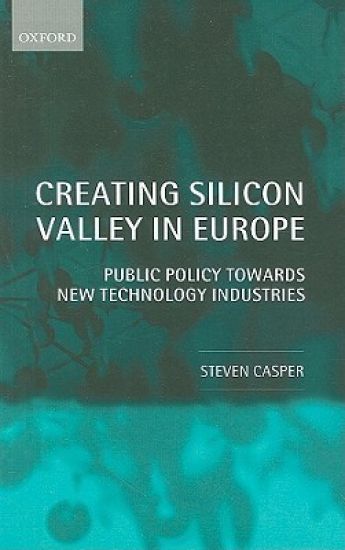
Creating Silicon Valley in Europe

Creating Silicon Valley in Europe

Steven Casper

Oxford University Press
2007
sidottu
Through the 1990s and early 2000s the strength of the United States economy has been linked to its ability to foster large numbers of small innovative technology companies, a few of which have grown to dominate new industries, such as Microsoft, Genentech, or Google. US technology clusters such as Silicon Valley have become tremendous engines of innovation and wealth creation, and the envy of governments around the world. Creating Silicon Valley in Europe examines trajectories by which new technology industries emerge and become sustainable across different types of economies. Governments around the world have poured vast sums of money into policies designed to foster clusters of similar start-up firms in their economies. This book employs careful empirical studies of the biotechnology and software industries in the United States and several European economies, to examine the relative success of policies aimed at cultivating the 'Silicon Valley model' of organizing and financing companies in Europe. Influential research associated with the 'varieties of capitalism' literature has argued that countries with liberal market orientations, such as the United States and the United Kingdom, can more easily design policies to cultivate success in new technology industries compared to countries associated with organized economies, such as Germany and Sweden. The book's empirical findings support the view that national institutional factors strongly condition the success of new technology policies. However, the study also identifies important cases in which radically innovative new technology firms have thrived within organized economies. Through examining case of both success and failure Creating Silicon Valley in Europe helps identify constellations of market and governmental activities that can lead to the emergence of sustainable clusters of new technology firms across both organized and liberal market economies.
Identity in Physics

Identity in Physics

Steven French; Décio Krause

Clarendon Press
2006
sidottu
Can quantum particles be regarded as individuals, just like books, tables and people? According to the 'received' view - articulated by several physicists in the immediate aftermath of the quantum revolution - quantum physics itself tells us they cannot: quantum particles, unlike their classical counterparts, must be regarded as 'non-individuals' in some sense. However, recent work has indicated that this is not the whole story and that the theory is also consistent with the position that such particles can be taken to be individuals, albeit at a metaphysical price. Drawing on philosophical accounts of identity and individuality, as well as the histories of both classical and quantum physics, the authors explore these two alternative metaphysical packages. In particular, they argue that if quantum particles are regarded as individuals, then Leibniz's famous Principle of the Identity of Indiscernibles is in fact violated. Recent discussions of this conclusion are analysed in detail and, again, the costs involved in saving the Principle are carefully considered. Taking the alternative package, the authors deploy recent work in non-standard logic and set theory to indicate how we can make sense of the idea that objects can be non-individuals. The concluding chapter suggests how these results might then be extended to quantum field theory. Identity in Physics brings together a range of work in this area and further develops the authors' own contributions to the debate. Uniquely, as the title indicates, it situates this work in the appropriate formal, historical, and philosophical contexts.
Language, Cognition, and Human Nature

Language, Cognition, and Human Nature

Steven Pinker

Oxford University Press Inc
2013
sidottu
Language, Cognition, and Human Nature collects together for the first time Steven Pinker's most influential scholarly work on language and cognition. Pinker is a highly eminent cognitive scientist, and his research emphasizes the importance of language and its connections to cognition, social relationships, child development, human evolution, and theories of human nature. The thirteen essays in this eclectic collection span Pinker's thirty-year career, ranging over topics such as language acquisitions, visual cognition, the meaning and syntax of verbs, regular and irregular phenomena in language and their implications for the mechanisms of cognition, and the social psychology of direct and indirect speech. Each outlines a major theory - such as evolution, or nature vs. nurture - or takes up an argument with other prominent scholars such as Stephen Jay Gould, Noam Chomsky, or Richard Dawkins. Featuring a new introduction by Pinker that discusses his books and scholarly work, this book represents a major contribution to the field of cognitive science, by one of the field's leading thinkers.
First Vision

First Vision

Steven C. Harper

Oxford University Press Inc
2019
sidottu
This is the biography of a contested memory, how it was born, grew, changed the world, and was changed by it. It's the story of the story of how the Church of Jesus Christ of Latter-day Saints began. Joseph Smith, the church's founder, remembered that his first audible prayer, uttered in spring of 1820 when he was about fourteen, was answered with a vision of heavenly beings. Appearing to the boy in the woods near his parents' home in western New York State, they told Smith that he was forgiven and warned him that Christianity had gone astray. Smith created a rich and controversial historical record by narrating and documenting this event repeatedly. In First Vision, Steven C. Harper shows how Latter-day Saints (beginning with Joseph Smith) and others have remembered this experience and rendered it meaningful. When and why and how did Joseph Smith's first vision, as saints know the event, become their seminal story? What challenges did it face along the way? What changes did it undergo as a result? Can it possibly hold its privileged position against the tides of doubt and disbelief, memory studies, and source criticism-all in the information age? Steven C. Harper tells the story of how Latter-day Saints forgot and then remembered accounts of Smith's experience and how Smith's 1838 account was redacted and canonized. He explores the dissonance many saints experienced after discovering multiple accounts of Smith's experience. He describes how, for many, the dissonance has been resolved by a reshaped collective memory.