Kirjahaku
Etsi kirjoja tekijän nimen, kirjan nimen tai ISBN:n perusteella.
1000 tulosta hakusanalla Steven C Harbert
The Seven Sisters of Sleep; Popular History of the Seven Prevailing Narcotics of the World
M C Cooke
Megali Verlag
2023
pokkari
Reproduction of the original. The publishing house Megali specialises in reproducing historical works in large print to make reading easier for people with impaired vision.
The Seven Sisters of Sleep; Popular History of the Seven Prevailing Narcotics of the World
M C Cooke
Megali Verlag
2023
sidottu
Reproduction of the original. The publishing house Megali specialises in reproducing historical works in large print to make reading easier for people with impaired vision.

KANBAN für C-Teile. Management, Funktionen und Vorteile für Unternehmen
Steve Mitchel
Grin Publishing
2016
pokkari

Er der intelligent liv derude i Universet? - et af de mest spændende, håbefulde og måske frygtindgydende spørgsmål, vi kan stille os selv. Denne bog hjælper dig til at finde dit eget svar.Det sker ud fra Drakes ligning, som Dr. Frank Drake opstillede i 1960 samt med forfatteren Malene Flaggas engagerede og spændende indføring i nødvendig viden om Universets oprindelse og fremtid.Læs om Jorden, Solsystemet og Mælkevejen, om supernovaer og stjernetåger, om kemi, fysik, geologi og biologi, og om hvordan du selv foretager praktiske observationer af stjernehimlen og benytter eksisterende stjernekataloger til at kortlægge vores fantastiske og for størstedelen uendeligt fjerne Univers.Astronomi C – er der liv derude? giver med medrivende formidling, eksempler, opgaver og henvisninger et grundlag for at forstå og undersøge Universet og det på en måde, så man samtidig kommer igennem pensum til astronomi C og lidt til på HTX og STX.Malene Steen Nielsen Flagga er uddannet cand. scient. i fysik fra Københavns Universitet. Hun arbejder med videnskabsformidling som foredragsholder, underviser, videnskabsjournalist og informationsmedarbejder.
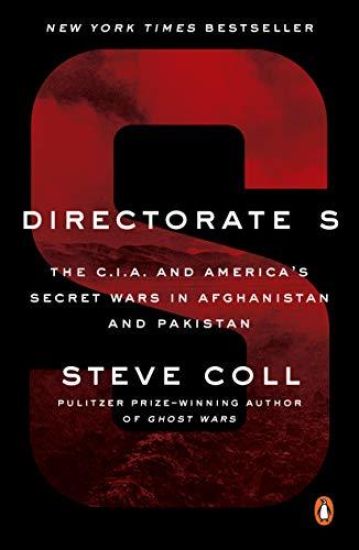
Directorate S: The C.I.A. and America's Secret Wars in Afghanistan and Pakistan
Steve Coll
PENGUIN BOOKS
2019
nidottu
Winner of the National Book Critics Circle Award for Nonfiction - Nominated for the National Book Award for Nonfiction From the Pulitzer Prize-winning author of Ghost Wars and The Achilles Trap, the epic and enthralling story of America's intelligence, military, and diplomatic efforts to defeat Al Qaeda and the Taliban in Afghanistan and Pakistan since 9/11 Prior to 9/11, the United States had been carrying out small-scale covert operations in Afghanistan, ostensibly in cooperation, although often in direct opposition, with I.S.I., the Pakistani intelligence agency. While the US was trying to quell extremists, a highly secretive and compartmentalized wing of I.S.I., known as "Directorate S," was covertly training, arming, and seeking to legitimize the Taliban, in order to enlarge Pakistan's sphere of influence. After 9/11, when fifty-nine countries, led by the U. S., deployed troops or provided aid to Afghanistan in an effort to flush out the Taliban and Al Qaeda, the U.S. was set on an invisible slow-motion collision course with Pakistan. Today we know that the war in Afghanistan would falter badly because of military hubris at the highest levels of the Pentagon, the drain on resources and provocation in the Muslim world caused by the U.S.-led invasion of Iraq, and corruption. But more than anything, as Coll makes painfully clear, the war in Afghanistan was doomed because of the failure of the United States to apprehend the motivations and intentions of I.S.I.'s "Directorate S". This was a swirling and shadowy struggle of historic proportions, which endured over a decade and across both the Bush and Obama administrations, involving multiple secret intelligence agencies, a litany of incongruous strategies and tactics, and dozens of players, including some of the most prominent military and political figures. A sprawling American tragedy, the war was an open clash of arms but also a covert melee of ideas, secrets, and subterranean violence. Coll excavates this grand battle, which took place away from the gaze of the American public. With unsurpassed expertise, original research, and attention to detail, he brings to life a narrative at once vast and intricate, local and global, propulsive and painstaking. This is the definitive explanation of how America came to be so badly ensnared in an elaborate, factional, and seemingly interminable conflict in South Asia. Nothing less than a forensic examination of the personal and political forces that shape world history, Directorate S is a complete masterpiece of both investigative and narrative journalism.
Wallace Stevens was not only one of America's outstanding modernist poets but also a successful insurance lawyer--a fact that continues to intrigue many readers. Though Stevens tried hard to separate his poetry from his profession, legal theorist Thomas Grey shows that he did not ultimately succeed. After stressing how little connection appears on the surface between the two parts of Stevens's life, Grey argues that in its pragmatic account of human reasoning, the poetry distinctively illuminates the workings of the law. In this important extension of the recent law-and-literature movement, Grey reveals Stevens as a philosophical poet and implicitly a pragmatist legal theorist, who illustrates how human thought proceeds through "assertion, qualification, and qualified reassertion," and how reason and passion fuse together in the act of interpretation. Above all, Stevens's poetry proves a liberating antidote to the binary logic that is characteristic of legal theory: one side of a case is right, the other wrong; conduct is either lawful or unlawful. At the same time as he discovers in Stevens a pragmatist philosopher of law, Grey offers a strikingly new perspective on the poetry itself. In the poems that develop Stevens's "reality-imagination complex"--poems often criticized as remote, apolitical, and hermetic--Grey finds a body of work that not only captivates the reader but also provides a unique instrument for scrutinizing the thought processes of lawyers and judges in their exercise of social power.
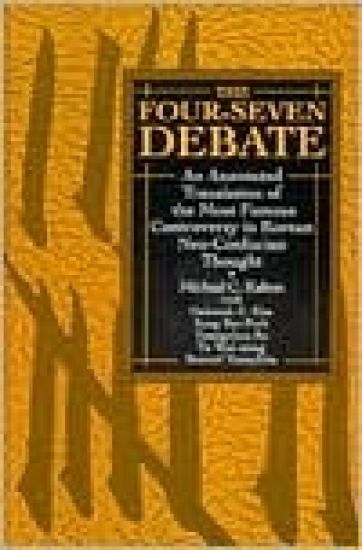
This book is an annotated translation, with introduction and commentary, of the correspondence between Yi Hwang (T'oegye, 1500-1570) and Ki Taesung (Kobong, 1527-1572) and between Yi I (Yulgok, 1536-1584) and Song Hon (Ugye, 1535-1598), known as the Four-Seven Debate, the most famous philosophical controversy in Korean Neo-Confucian thought. The most complex issues and difficult tensions in the great Neo-Confucian synthesis are at the juncture between the metaphysics of the cosmos and the human psyche. The Four-Seven Debate is perhaps the most searching examination of this tension ever carried out.
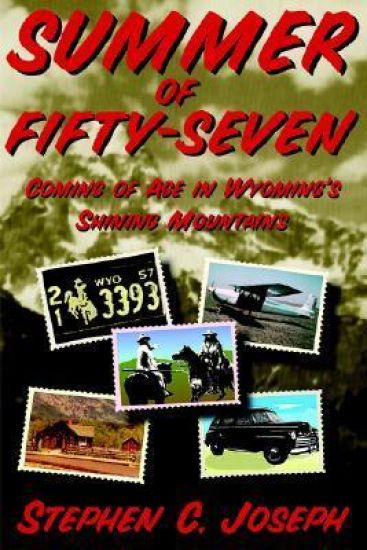
"Stop the car, I mean, slow down, please. Do you think there might be any work around here, Mister?" Steve Jonas is 19 years old in the summer of 1957, riding his thumb north and west. He hitches into the two-horse town of Jackson, Wyoming in a June snowstorm, and comes face to face with the Grand Teton Range, the "peaks that shine by night as by day." Jonas finds work in the National Park, building the mountain trail that is to shape the course of his coming-of-age. It is the late 1950s, a more innocent and sweeter time than the turbulent decades to come, but the realities and aspirations of a young man in summer are as always: work, adventure, romance, conflict.Characters larger than life fill his days and nights: Dick Robbins, the backcountry expert who can do absolutely anything, including fly; Nebraska cowboy Jim Burdock, with the trick of looking fast, but actually moving slow; the haunting, enigmatic Kitty, just out of reach. And towering above the others, Billy Jiggs from Driggs, Idaho, profane master of men, and timber, and (surprisingly) music. In the background are the ghosts of two free-trapping Mountain Men from the 1830s, still on the move.As Jonas finds (and occasionally loses) his way in this country of the heart, as the trail moves forward yard by yard, the seeds of his future life-trail take fire, root, and blossom.STEPHEN C. JOSEPH began his life in medicine as Peace Corps Physician in Nepal. Later, he spent three years in Central Africa with a team establishing a new medical school. He has been Chief of Pediatrics in a remote northern Canadian health zone, and a senior professional with both UNICEF and the Agency for International Development.Dr. Joseph was also Commissioner of Health of the City of New York (his book on the early years of the AIDS epidemic, "Dragon Within the Gates," was published by Carroll and Graf), Dean of the University of Minnesota School of Public Health, and Assistant Secretary of Defense for Health Affairs. He is an elected member of the National Academy of Science's Institute of Medicine, and a former Executive Board Chair of the American Public Health Association.An avid outdoorsman (though born in Brooklyn), Dr. Joseph resides in Santa Fe, New Mexico with his wife, Elizabeth Preble, and their dogs and llamas.
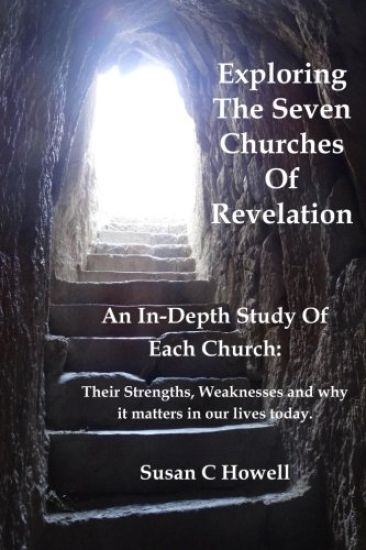
Exploring the Seven Churches of Revelation: An In-Depth Study of Each Church: Their Strengths, Weaknesses and Why It Matters in Our Lives Today.
Susan C. Howell
Susan C Howell
2015
nidottu
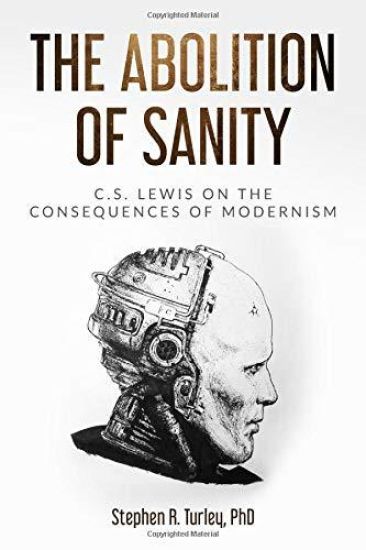
The Abolition of Sanity: C.S. Lewis on the Consequences of Modernism
Steve Turley
Independently Published
2019
nidottu
Why does it seem like the world is falling apart?Everywhere we look today, the world is changing, and not for the better. For many of us, such political and cultural changes have been so dramatic that we no longer recognize our societies anymore. So what's going on?This book has the answer In this masterful work, 'The Abolition of Man, ' C.S. Lewis observes how the modern world is in fact changing our conception of what it means to be human by sequestering humanity from the objective values that made us most human. Focusing on modern educational reforms, Lewis noted that instead of virtue formation, modern educational practices perpetuate a mechanistic vision of the world comprised of scientifically inspired control over nature and, as a necessary consequence, humans. HERE'S A PREVIEW OF WHAT YOU'LL LEARN ..........How modernist assumptions about the world differ drastically from classical and Christian onesHow modernism is radically reshaping a fundamentally different conception of humanityWhat role education plays in perpetuating modernist norms about the worldHow the role of virtue and wisdom formation can become a powerful antidote to these secularizing tendenciesAnd much, much more ....along with a whole BONUS SECTION of study questions and answers to group discussion In this insightful and thought provoking book, you will discover C.S. Lewis' invitation to challenge the modernist assumptions of our age by rediscovering the doctrine of objective values and, in so doing, you will rediscover a hope for truly human flourishing for generations to come.Get your copy today
Meteorological Results of Cruise Seven of the Carnegie, 1928-1929: Meteorology, Part 1
Woodrow C. Jacobs; Katherine B. Clarke
Literary Licensing, LLC
2013
nidottu
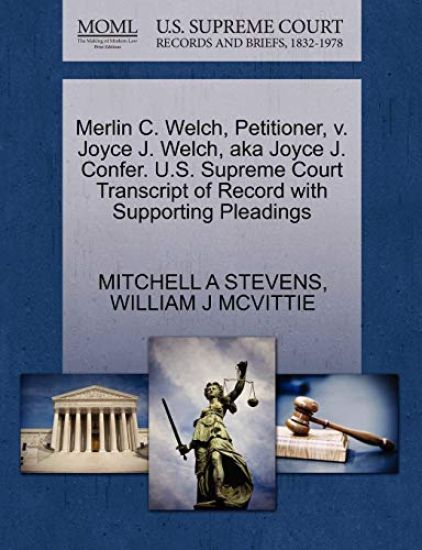
Merlin C. Welch, Petitioner, V. Joyce J. Welch, Aka Joyce J. Confer. U.S. Supreme Court Transcript of Record with Supporting Pleadings
Mitchell A Stevens; William J McVittie
Gale Ecco, U.S. Supreme Court Records
2011
pokkari