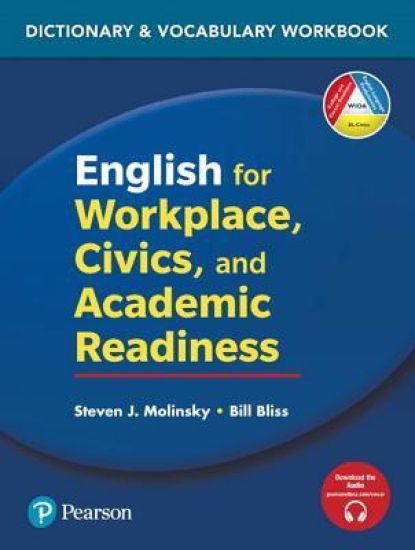
English for Workplace, Civics, and Academic Readiness is a combined picture dictionary and workbook that develops students' vocabulary to meet the new integrated English literacy and civics curriculum goals of the Workforce Innovation and Opportunity Act (WIOA). It contains all multilevel workplace, civics, and academic content in the Word by Word vocabulary development program, including communicative picture dictionary lessons, skill-building exercises, new standards-based activities, and a complete audio program. This easy-to-use text for beginning through low-intermediate learners can serve as a supplement to any English series, as a stand-alone course, or as a work-text for independent study at home, in a lab setting, or in distance learning. Features Vibrant illustrations and an active conversational approach make vocabulary learning come alive. Standards-based activities develop essential skills for success at work, in civic life, and in continuing education, including research tasks, surveys, charts and graphs, reading comprehension, and writing. Multilevel activities meet the needs of beginning and high-beginning/intermediate learners. Critical thinking and personalization questions promote problem-solving and sharing. Community tasks connect the classroom to civic life. Teamwork activities develop students' language abilities for working cooperatively in school and work settings. A comprehensive audio program and answer key allow students to use the text independently at their own pace.
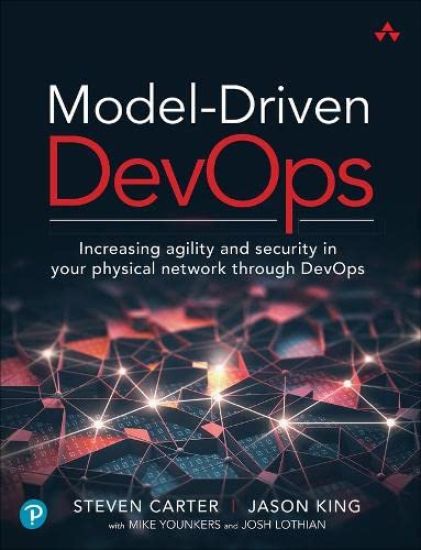
Develop Network Infrastructure More Rapidly, and Operate It More Effectively Using model-driven DevOps and the Infrastructure as Code (IaC) paradigm, teams can develop and operate network infrastructure more quickly, consistently, and securely--growing agility, getting to market sooner, and delivering more value. Now, two leading practitioners walk you step by step through successfully implementing model-driven DevOps for infrastructure. In this practical guide, they share lessons learned, help you avoid common pitfalls, and illuminate key differences between DevOps for infrastructure and conventional application-based DevOps. You'll learn why network infrastructure operations must change, what needs to change, and how to work together to change it. The authors guide you through creating consistent data models to manage massive numbers of network elements, organizing huge quantities of network data, and applying DevOps to infrastructure repeatably and consistently. Your journey includes a complete, hands-on reference implementation, detailed use cases, many examples based on open source tools, and sample code downloadable at GitHub.* Normalize and organize network infrastructure data consistently, to gain the same benefits from DevOps as cloud operators do * Replace legacy command lines with APIs, then leverage and scale them * Use configuration management, templates, and other tools to program infrastructure without coding * Safely implement Continuous Integration/Continuous Deployment for infrastructure Succeed with key human factors: break down silos, change culture, and address skills gaps Whether you're a network or cybersecurity engineer, architect, manager, or leader, this guide will help you suffuse all your network operations with greater efficiency, security, responsiveness, and resilience.
Public Speaking: An Audience-Centered Approach is the comprehensive guide to the speech-making process with an emphasis on keeping listeners at the heart of the approach. Focusing on diverse audiences, ethics, and communication apprehension, authors Steven and Susan Beebe prepare you to deliver speeches while keeping your listeners foremost in mind. The 12th Edition incorporates new examples, illustrations, and the latest research, plus updated coverage of sex and gender, ethnicity and race, and culture. In addition, new Technically Speaking feature boxes explore contemporary digital trends and potential technology roadblocks in public speaking. Topics include Zoom fatigue, deepfakes and preparing a podcast. Revel® empowers you to actively participate in learning. More than a digital textbook, Revel delivers an engaging blend of author content, media, and assessment. With Revel, you can read and practice in one continuous experience anytime, anywhere, on any device. NOTE: Revel is a fully digital delivery of Pearson content. This ISBN is for the Revel access code only. In addition to this access code, you will need a course invite link provided by your instructor to register for and use Revel.
"Skillfully guides us, with an engrossing and provocative tale, through the interplay of Congress and the White House, policy and politics. Must reading for students of American government." --Gary Orren, Harvard University "Full of genuinely juicy details, it is certain to replace Eric Redman's studies in the future." --Charles Peters, editor in chief, The Washington Monthy.
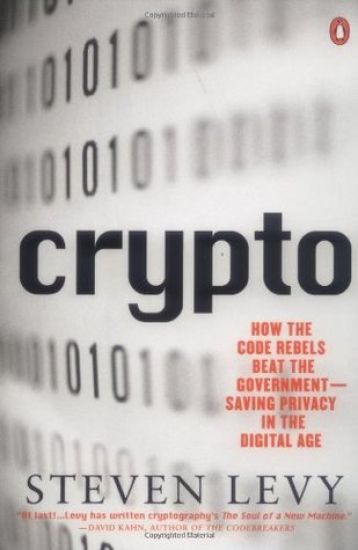
If you've ever made a secure purchase with your credit card over the Internet, then you have seen cryptography, or "crypto", in action. From Stephen Levy?the author who made "hackers" a household word?comes this account of a revolution that is already affecting every citizen in the twenty-first century. Crypto tells the inside story of how a group of "crypto rebels"—nerds and visionaries turned freedom fighters—teamed up with corporate interests to beat Big Brother and ensure our privacy on the Internet. Levy's history of one of the most controversial and important topics of the digital age reads like the best futuristic fiction.
Just looking at Katie Roskova, you'd think she had it all: she was pretty, popular, an A-student at an exclusive private school, and on her way to becoming a champion figure skater. But there was another Katie, the one she hid from the world, who was having trouble dealing with the mounting pressures of her young life. And it was this Katie who, with no other means of expression available to her, reacted to her overbearing mother, her absent father, her unforgiving schedule, and her oblivious classmates by turning her self-doubt into self-hatred. And into self-mutilation. In his previous novel, The Best Little Girl in the World, Steven Levenkron brought insight, expertise, and sensitivity to the painful subject of anorexia nervosa. Now he applies these same talents to demystifying a condition that is just as heartbreaking, and becoming more common everyday. Through his depiction of Katie's self-mutilating behavior, she is called "a cutter" by her peers, and her triumphant road to recovery, he offers a compelling profile of a young girl in trouble, and much-needed hope to the growing numbers who suffer from this shocking syndrome.
First published in 1966, THE CHEMISTRY OF LIFE has held its own as a clear and authoritative introduction to the world of biochemistry. This fourth edition has been fully updated and revised to include the latest developments in DNA and protein synthesis, cell regulation, and their social and medical implications.
'A passionate defence of the enduring power of human nature ... both life-affirming and deeply satisfying' Daily Telegraph Recently many people have assumed that we are blank slates shaped by our environment. But this denies the heart of our being: human nature. Violence is not just a product of society; male and female minds are different; the genes we give our children shape them more than our parenting practices. To acknowledge our innate abilities, Pinker shows, is not to condone inequality, but to understand the very foundations of humanity. 'Brilliant ... enjoyable, informative, clear, humane' New Scientist 'If you think the nature-nurture debate has been resolved, you are wrong ... this book is required reading' Literary Review 'An original and vital contribution to science and also a rattling good read' Matt Ridley, Sunday Telegraph 'Startling ... This is a breath of air for a topic that has been politicized for too long' Economist
Steven Johnson's Emergence: The Connected Lives of Ants, Brains, Cities and Software is a fascinating look at how self-organising systems are changing the world. Why do people cluster together in neighborhoods? How do internet communities spring up from nowhere? Why is a brain conscious even though no single neuron is? What causes a media frenzy?The answer, as Steven Johnson's groundbreaking book shows, is emergence: change that occurs from the bottom up. When enough individual elements interact and organize themselves, the result is collective intelligence - even though no-one is in charge. It is a phenomenon that exists at every level of experience, and will revolutionize the way we see the world. 'Exhilarating' J.G. Ballard 'A dizzying, dazzling romp through fields as disparate as urban planning, computer-game design, neurology and control theory' Economist 'Mind-expanding ... intelligent, witty and tremendously thought-provoking ... Popular science books interesting enough to read twice don't come along all that often' Guardian 'Not just a fascinating quirk of science: it's the future' The New York Times
The creation of the Mac in 1984 catapulted America into the digital millennium, captured a fanatic cult audience, and transformed the computer industry into an unprecedented mix of technology, economics, and show business. Now veteran technology writer and Newsweek senior editor Steven Levy zooms in on the great machine and the fortunes of the unique company responsible for its evolution. Loaded with anecdote and insight, and peppered with sharp commentary, Insanely Great is the definitive book on the most important computer ever made. It is a must-have for anyone curious about how we got to the interactive age.
When Jenny and her mice friends journey to an island in hopes of finding it a peaceful place to live, they discover that they must battle the monstrous Skog
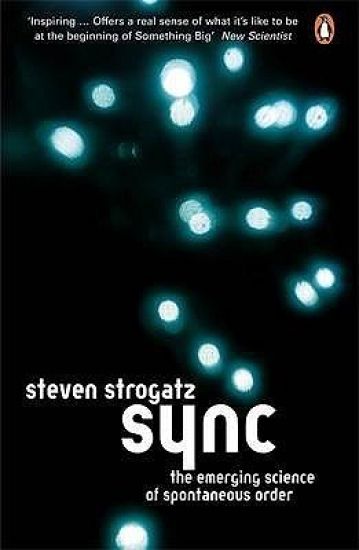
'SYNC' IS A STORY OF A DAZZLING KIND OF ORDER IN THE UNIVERSE, THE HARMONY THAT COMES FROM CYCLES IN SYNC. THE TENDENCY TO SYCHRONIZE IS ONE OF THE MOST FAR- REACHING DRIVES IN ALL OF NATURE. IT EXTENDS FROM PEOPLE TO PLANETS, FROM ANIMALS TO ATOMS. IN 'SYNC' PROFESSOR STEVEN STROGATZ CONSIDERS A RANGE OF APPLICATIONS - HUMAN SLEEP AND CIRCADIAN RHYTHMS, MENSTRUAL SYNCHRONY, INSECT OUTBREAKS, SUPERCONDUCTORS, LASERS, SECRET CODES, HEART ARRHYTHMIAS AND FADS - CONNECTING ALL TRHOUGH AN EXPLORATION OF THE SAME MATHEMATICAL THEME: SELF- ORGANISATION, OR THE SPONTANEOUS EMERGENCE OF ORDER OUT OF CHAOS. FOCUSED ENOUGH TO PRESENT A COHERENT WORLD UNTO THEMSELVES, STROGATZ'S CHOSEN TOPICS TOUCH ON SEVERAL OF THE HOTTEST DIRECTIONS IN CONTEMPORARY SCIENCE.
In The Stuff of Thought: Language as a Window into Human Nature, Steven Pinker looks at how the relationship between words and thoughts can help us understand who we are. Why do so many swear words involve topics like sex, bodily functions or the divine? Why do some children's names thrive while others fall out of favour? Why do we threaten and bribe and seduce in such elaborate, often comical ways? How can a choice of metaphor damn a politician or start a war? And why do we rarely say what we actually mean? Language, as Steven Pinker shows, is at the heart of our lives, and through the way we use it - whether to inform, persuade, entertain or manipulate - we can glimpse the very essence of what makes us human. 'Awesome' Daily Mail 'Highly entertaining ... funny and thought-provoking' The Times 'Anyone interested in language should read The Stuff of Thought ... moments of genuine revelation and some very good jokes' Mark Haddon, Sunday Telegraph Books of the Year 'No one writes about language as clearly as Steven Pinker, and this is his best book yet' David Crystal, Financial Times Steven Pinker is the Johnstone Family Professor in the Department of Psychology at Harvard University. Until 2003, he taught in the Department of Brain and Cognitive Sciences at MIT. He conducts research on language and cognition, writes for publications such as The New York Times, Time and Slate, and is the author of six books, including The Language Instinct, How the Mind Works and The Blank Slate.
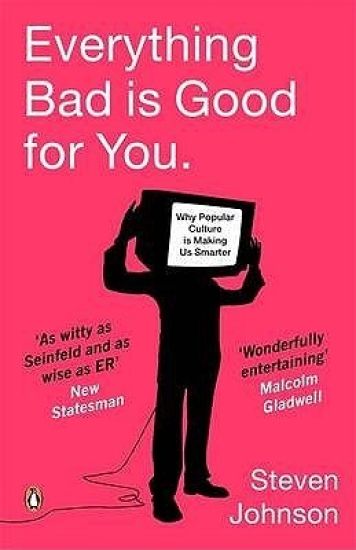
We're constantly being told that popular culture is just mindless entertainment - but, as Steven Johnson shows in Everything Bad is Good for You, it's actually making us more intelligent. Steven Johnson puts forward a radical alternative to the endless complaints about reality TV, throwaway movies and violent video games. He shows that mass culture - The Simpsons, Desperate Housewives, The Apprentice, The Sopranos, Grand Theft Auto - is actually more sophisticated and challenging than ever before. When we focus on what our minds have to do to process its complex, multilayered messages, it becomes clear that it's not dumbing us down - but smartening us up. 'As witty as Seinfeld and as wise as ER' New Statesman 'Wonderfully entertaining' Malcolm Gladwell 'A vital, lucid exploration of the contemporary mediascape' Time Out 'A guru for Generation Xbox' Financial Times 'A must-read' Mark Thompson, former Director-General of the BBC Steven Johnson is the bestselling author of Mind Wide Open, Where Good Ideas Come From, and Emergence: The Connected Lives Of Ants, Brains, Cities and Software, named as one of the best books of 2001 by Esquire, The Village Voice, Amazon.com, and Discover Magazine, and a finalist for the Helen Bernstein Award for Excellence in Journalism.
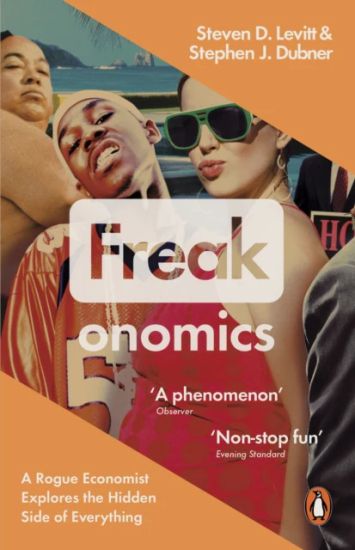
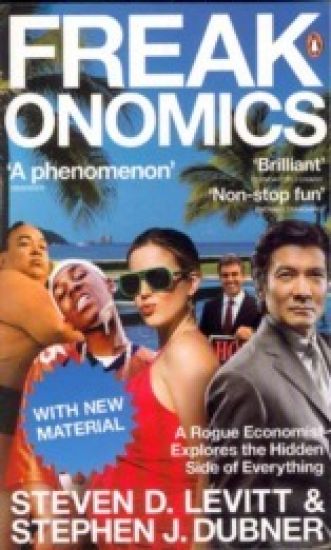
Cult bestseller, new buzz word... Freakonomics is at the heart of everything we see and do and the subjects that bedevil us daily: from parenting to crime, sport to politics, fat to cheating, fear to traffic jams. Asking provocative and profound questions about human motivation and contemporary living and reaching some astonishing conclusions, Freakonomics will make you see the familiar world through a completely original lens. Keep up-to-date with the Freakonomists by reading their regular blog: www.freakonomics.com/blog
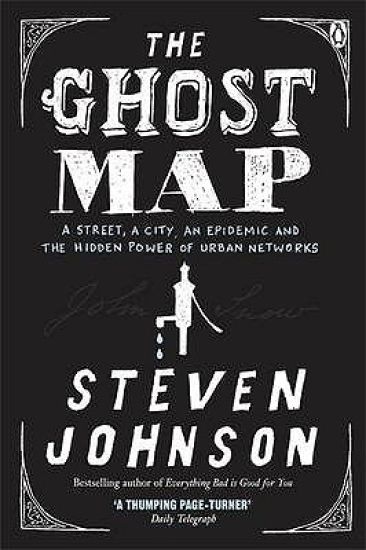
From the bestselling author of Everything Bad is Good For You, Steven Johnson's The Ghost Map vividly recreates Victorian London to show how huge populations live together, how cities can kill - and how they can save us. Steven Johnson is one of today's most exciting writers about popular culture, urban living and new technology. In The Ghost Map he tells the story of the terrifying cholera epidemic that engulfed London in 1854, and the two unlikely heroes - anesthetist Doctor John Snow and affable clergyman Reverend Henry Whitehead - who defeated the disease through a combination of local knowledge, scientific research and map-making. In telling their extraordinary story, Steven Johnson also explores a whole world of ideas and connections, from urban terror to microbes, ecosystems to the Great Stink, cultural phenomena to street life. 'A wonderful book' Mail on Sunday 'A thumping page-turner' Daily Telegraph 'Enthralling ... vivid and gripping' New Statesman 'Exhilarating' Spectator 'It is a rattling scientific mystery, but in the hands of Steven Johnson it becomes something much richer ... a vast, interconnected picture about urban and bacterial life ... it is difficult to do justice to the exuberance of Johnson's ideas' Scotland on Sunday Steven Johnson is the author of the acclaimed books Everything Bad is Good for You, Mind Wide Open, Where Good Ideas Come From, Emergence and Interface Culture. His writing appeared in the Guardian, the New Yorker, Nation and Harper's, as well as the op-ed pages of The New York Times and the Wall Street Journal. He is a Distinguished Writer In Residence at NYU's School Of Journalism, and a Contributing Editor to Wired.
Modern life can be baffling and chaotic. Is there any way of making sense of it? The answer, explains groundbreaking thinker Steven Levitt, lies in economics. Not ordinary economics, but freakonomics. It is at the heart of everything we see and do and the subjects that bedevil us daily: from parenting to crime, sport to politics, fat to cheating, fear to traffic jams. In Freakonomics Levitt turns conventional economics on its head, stripping away the jargon and calculations of the experts' to explore the riddles of everyday life and examine topics such as: how chips are more likely to kill you than murder or a terrorist attack; why sportsmen cheat and how fraud can be spotted; why violent crime can be linked not to gun laws, policing or poverty, but to abortion; why a road is more efficient when everyone travels at 20mph; how the name you give your child can give them an advantage in later life; and what really causes obesity epidemics. Ultimately, he shows us that economics is all about how people get what they want, and what makes them do it. Asking provocative and profound questions about human motivation and contemporary living and reaching some astonishing conclusions, Freakonomics will make you see the familiar world through a completely original lens.