Kirjojen hintavertailu. Mukana 11 627 362 kirjaa ja 12 kauppaa.

Kirjahaku

Etsi kirjoja tekijän nimen, kirjan nimen tai ISBN:n perusteella.

1000 tulosta hakusanalla Steven Scaffidi

Topological Quantum

Topological Quantum

Steven H. Simon

Oxford University Press
2023
sidottu
At the intersection of physics, mathematics, and computer science, an exciting new field of study has formed, known as “Topological Quantum.” This research field examines the deep connections between the theory of knots, special types of subatomic particles known as anyons, certain phases of matter, and quantum computation. This book elucidates this nexus, drawing in topics ranging from quantum gravity to topology to experimental condensed matter physics. Topological quantum has increasingly been a focus point in the fields of condensed matter physics and quantum information over the last few decades, and the forefront of research now builds on the basic ideas presented in this book. The material is presented in a down-to-earth and entertaining way that is far less abstract than most of what is in the literature. While introducing the crucial concepts and placing them in context, the subject is presented without resort to the highly mathematical category theory that underlies the field. Requiring only an elementary background in quantum mechanics, this book is appropriate for all readers, from advanced undergraduates to the professional practitioner. This book will be of interest to mathematicians and computer scientists as well as physicists working on a wide range of topics. Those interested in working in these field will find this book to be an invaluable introduction as well as a crucial reference.
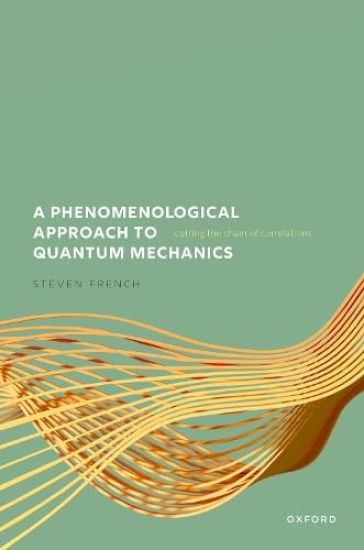
A Phenomenological Approach to Quantum Mechanics

A Phenomenological Approach to Quantum Mechanics

Steven French

Oxford University Press
2023
sidottu
Steven French suggests a radical new approach to the understanding of quantum physics, derived from Husserl's phenomenological philosophy. In 1939 two physicists, Fritz London and Edmund Bauer, published an account of measurement in quantum mechanics. Widely cited, their 'little book' featured centrally in an important debate over the role of consciousness in that process. However, it has been fundamentally misunderstood, both in that debate and beyond. Steven French argues that London, in particular, approached the measurement process from the perspective of Husserlian phenomenology, which he had studied as a student and which he retained an interest in throughout his career. This casts his work with Bauer in an entirely novel light and suggests a radical alternative understanding of quantum mechanics in which consciousness still plays a role but one that is fundamentally different than previously conceived. Most interpretations of the theory approach it on the basis of the so-called 'analytic' tradition in philosophy. However, there has recently been a surge of interest in 'continental' approaches and this book offers a significant new contribution to such developments. Intertwining history and philosophy, it presents London's background in physics and phenomenology, together with an outline of the latter as developed by Husserl, Gurwitsch, Merleau-Ponty, and others, as well as a detailed analysis of the work on measurement with Bauer. The book concludes by comparing the London and Bauer understanding with that afforded by Fuch's QBism, Everett's 'Many Worlds' interpretation, and Rovelli's Relational Quantum Mechanics. It is hoped that this exploratory work will open up new avenues of thought with regard to one of our most fundamental physical theories.
Geographic Information Systems and Science

Geographic Information Systems and Science

Steven A. Roberts; Colin Robertson

Oxford University Press, Canada
2016
nidottu
Geographic Information Systems helps students understand how GIS enables us to digitally represent the forms, patterns and processes of Earth. The text demonstrates how the special qualities of spatial geographic data require new methods and theories, and how these new methods and theories embody the field of GIScience that underlie the technology of GIS. Designed for users already familiar with GIS, it takes students beyond the surface of the technology by explaining methods and algorithms in enough detail for students to get an intuitive grasp of the underlying ideas while also demonstrating how those ideas are applied to geographical information. In order to help students become more effective users of GIS technology, the book highlights many of the common research challenges of GIS and invites the reader to think broadly about the assumptions embedded in GIS practice today. The authors stress a critical approach throughout by describing selected aspects of the field in sufficient depth to scrutinize the formalisms underlying the simple user-interfaces that greet new GIS users. Geographic Information Systems serves as an indispensable gateway to higher study in GIS by readers interested in the fundamental research challenges facing the field today.
War, State, and Society in England and the Netherlands 1477-1559

War, State, and Society in England and the Netherlands 1477-1559

Steven Gunn; David Grummitt; Hans Cools

Oxford University Press
2007
sidottu
Exploring the effects of war on state power in early modern Europe, this book asks if military competition increased rulers' power over their subjects and forged more modern states, or if the strains of war broke down political and administrative systems. Comparing England and the Netherlands in the age of warrior princes such as Henry VIII and Charles V, it examines the development of new military and fiscal institutions, and asks how mobilization for war changed political relationships throughout society. Towns in England, such as Norwich, York, Exeter, and Rye, are compared with towns in the Netherlands, such as Antwerp, Leiden, 's-Hertogenbosch and Valenciennes, to see how the magistrates' relations with central government and the urban populace were modified by war. Great noblemen from the Howard and Percy families are set alongside their equivalents from the houses of Cro and Egmond to examine the role of recruitment, army command, and heroic reputation in maintaining noble power. The wider interactions of subjects and rulers in wartime are reviewed to measure how effectively war extended princes' claims on their subjects' loyalty and service, their ambitions to control news and opinion and to promote national identity, and their ability to manage the economy and harness religious change to dynastic purposes. The result is a compelling but nuanced picture of societies and polities tested and shaped by the pressures of ever more demanding warfare.
Respiratory Biology of Animals

Respiratory Biology of Animals

Steven F. Perry; Markus Lambertz; Anke Schmitz

Oxford University Press
2019
sidottu
Oxygen uptake for metabolic energy demand and the elimination of the resulting carbon dioxide is one of the essential processes in all higher life forms; in the case of animals, everything from protozoans to insects and vertebrates including humans. Respiratory Biology of Animals provides a contemporary and truly integrative approach to the topic, adopting a strong evolutionary theme. It covers aerobic metabolism at all levels, from gas exchange organs such as skin, gills, and lungs to mitochondria - the site of cellular respiration. The book also describes the functional morphology and physiology of the circulatory system, which often contains gas-carrying pigments and is important for pH regulation in the organism. A final section describes the evolution of animal respiratory systems. Throughout the book, examples are selected from the entire breadth of the animal kingdom, identifying common themes that transcend taxonomy. Respiratory Biology of Animals is an accessible supplementary text suitable for both senior undergraduate and graduate students taking courses in respiratory biology, comparative animal physiology, and environmental physiology. It is also of relevance and use to the many professional academics requiring a concise but authoritative overview of the topic.
Respiratory Biology of Animals

Respiratory Biology of Animals

Steven F. Perry; Markus Lambertz; Anke Schmitz

Oxford University Press
2019
nidottu
Oxygen uptake for metabolic energy demand and the elimination of the resulting carbon dioxide is one of the essential processes in all higher life forms; in the case of animals, everything from protozoans to insects and vertebrates including humans. Respiratory Biology of Animals provides a contemporary and truly integrative approach to the topic, adopting a strong evolutionary theme. It covers aerobic metabolism at all levels, from gas exchange organs such as skin, gills, and lungs to mitochondria - the site of cellular respiration. The book also describes the functional morphology and physiology of the circulatory system, which often contains gas-carrying pigments and is important for pH regulation in the organism. A final section describes the evolution of animal respiratory systems. Throughout the book, examples are selected from the entire breadth of the animal kingdom, identifying common themes that transcend taxonomy. Respiratory Biology of Animals is an accessible supplementary text suitable for both senior undergraduate and graduate students taking courses in respiratory biology, comparative animal physiology, and environmental physiology. It is also of relevance and use to the many professional academics requiring a concise but authoritative overview of the topic.
Spinoza's Heresy

Spinoza's Heresy

Steven Nadler

Clarendon Press
2001
sidottu
At the heart of Spinoza's Heresy is a mystery: why was Baruch Spinoza so harshly excommunicated from the Amsterdam Jewish community at the age of twenty-four? In this philosophical sequel to his acclaimed, award-winning biography of the seventeenth-century thinker, Steven Nadler argues that Spinoza's main offence was a denial of the immortality of the soul. But this only deepens the mystery. For there is no specific Jewish dogma regarding immortality: there is nothing that a Jew is required to believe about the soul and the afterlife. It was, however, for various religious, historical and political reasons, simply the wrong issue to pick on in Amsterdam in the 1650s. After considering the nature of the ban, or cherem, as a disciplinary tool in the Sephardic community, and a number of possible explanations for Spinoza's ban, Nadler turns to the variety of traditions in Jewish religious thought on the postmortem fate of a person's soul. This is followed by an examination of Spinoza's own views on the eternity of the mind and the role that that the denial of personal immortality plays in his overall philosophical project. Nadler argues that Spinoza's beliefs were not only an outgrowth of his own metaphysical principles, but also a culmination of an intellectualist trend in Jewish rationalism.
Spinoza's Heresy

Spinoza's Heresy

Steven Nadler

Clarendon Press
2004
nidottu
At the heart of Spinoza's Heresy is a mystery: why was Baruch Spinoza so harshly excommunicated from the Amsterdam Jewish community at the age of twenty-four? In this philosophical sequel to his acclaimed, award-winning biography of the seventeenth-century thinker, Steven Nadler argues that Spinoza's main offence was a denial of the immortality of the soul. But this only deepens the mystery. For there is no specific Jewish dogma regarding immortality: there is nothing that a Jew is required to believe about the soul and the afterlife. It was, however, for various religious, historical and political reasons, simply the wrong issue to pick on in Amsterdam in the 1650s. After considering the nature of the ban, or cherem, as a disciplinary tool in the Sephardic community, and a number of possible explanations for Spinoza's ban, Nadler turns to the variety of traditions in Jewish religious thought on the postmortem fate of a person's soul. This is followed by an examination of Spinoza's own views on the eternity of the mind and the role that that the denial of personal immortality plays in his overall philosophical project. Nadler argues that Spinoza's beliefs were not only an outgrowth of his own metaphysical principles, but also a culmination of an intellectualist trend in Jewish rationalism.
Creating Silicon Valley in Europe

Creating Silicon Valley in Europe

Steven Casper

Oxford University Press
2007
sidottu
Through the 1990s and early 2000s the strength of the United States economy has been linked to its ability to foster large numbers of small innovative technology companies, a few of which have grown to dominate new industries, such as Microsoft, Genentech, or Google. US technology clusters such as Silicon Valley have become tremendous engines of innovation and wealth creation, and the envy of governments around the world. Creating Silicon Valley in Europe examines trajectories by which new technology industries emerge and become sustainable across different types of economies. Governments around the world have poured vast sums of money into policies designed to foster clusters of similar start-up firms in their economies. This book employs careful empirical studies of the biotechnology and software industries in the United States and several European economies, to examine the relative success of policies aimed at cultivating the 'Silicon Valley model' of organizing and financing companies in Europe. Influential research associated with the 'varieties of capitalism' literature has argued that countries with liberal market orientations, such as the United States and the United Kingdom, can more easily design policies to cultivate success in new technology industries compared to countries associated with organized economies, such as Germany and Sweden. The book's empirical findings support the view that national institutional factors strongly condition the success of new technology policies. However, the study also identifies important cases in which radically innovative new technology firms have thrived within organized economies. Through examining case of both success and failure Creating Silicon Valley in Europe helps identify constellations of market and governmental activities that can lead to the emergence of sustainable clusters of new technology firms across both organized and liberal market economies.
Identity in Physics

Identity in Physics

Steven French; Décio Krause

Clarendon Press
2006
sidottu
Can quantum particles be regarded as individuals, just like books, tables and people? According to the 'received' view - articulated by several physicists in the immediate aftermath of the quantum revolution - quantum physics itself tells us they cannot: quantum particles, unlike their classical counterparts, must be regarded as 'non-individuals' in some sense. However, recent work has indicated that this is not the whole story and that the theory is also consistent with the position that such particles can be taken to be individuals, albeit at a metaphysical price. Drawing on philosophical accounts of identity and individuality, as well as the histories of both classical and quantum physics, the authors explore these two alternative metaphysical packages. In particular, they argue that if quantum particles are regarded as individuals, then Leibniz's famous Principle of the Identity of Indiscernibles is in fact violated. Recent discussions of this conclusion are analysed in detail and, again, the costs involved in saving the Principle are carefully considered. Taking the alternative package, the authors deploy recent work in non-standard logic and set theory to indicate how we can make sense of the idea that objects can be non-individuals. The concluding chapter suggests how these results might then be extended to quantum field theory. Identity in Physics brings together a range of work in this area and further develops the authors' own contributions to the debate. Uniquely, as the title indicates, it situates this work in the appropriate formal, historical, and philosophical contexts.
Language, Cognition, and Human Nature

Language, Cognition, and Human Nature

Steven Pinker

Oxford University Press Inc
2013
sidottu
Language, Cognition, and Human Nature collects together for the first time Steven Pinker's most influential scholarly work on language and cognition. Pinker is a highly eminent cognitive scientist, and his research emphasizes the importance of language and its connections to cognition, social relationships, child development, human evolution, and theories of human nature. The thirteen essays in this eclectic collection span Pinker's thirty-year career, ranging over topics such as language acquisitions, visual cognition, the meaning and syntax of verbs, regular and irregular phenomena in language and their implications for the mechanisms of cognition, and the social psychology of direct and indirect speech. Each outlines a major theory - such as evolution, or nature vs. nurture - or takes up an argument with other prominent scholars such as Stephen Jay Gould, Noam Chomsky, or Richard Dawkins. Featuring a new introduction by Pinker that discusses his books and scholarly work, this book represents a major contribution to the field of cognitive science, by one of the field's leading thinkers.
First Vision

First Vision

Steven C. Harper

Oxford University Press Inc
2019
sidottu
This is the biography of a contested memory, how it was born, grew, changed the world, and was changed by it. It's the story of the story of how the Church of Jesus Christ of Latter-day Saints began. Joseph Smith, the church's founder, remembered that his first audible prayer, uttered in spring of 1820 when he was about fourteen, was answered with a vision of heavenly beings. Appearing to the boy in the woods near his parents' home in western New York State, they told Smith that he was forgiven and warned him that Christianity had gone astray. Smith created a rich and controversial historical record by narrating and documenting this event repeatedly. In First Vision, Steven C. Harper shows how Latter-day Saints (beginning with Joseph Smith) and others have remembered this experience and rendered it meaningful. When and why and how did Joseph Smith's first vision, as saints know the event, become their seminal story? What challenges did it face along the way? What changes did it undergo as a result? Can it possibly hold its privileged position against the tides of doubt and disbelief, memory studies, and source criticism-all in the information age? Steven C. Harper tells the story of how Latter-day Saints forgot and then remembered accounts of Smith's experience and how Smith's 1838 account was redacted and canonized. He explores the dissonance many saints experienced after discovering multiple accounts of Smith's experience. He describes how, for many, the dissonance has been resolved by a reshaped collective memory.
Organized Innovation

Organized Innovation

Steven C. Currall; Ed Frauenheim; Sara Jansen Perry; Emily M. Hunter

Oxford University Press Inc
2014
sidottu
An innovation gap has emerged as American universities have focused on basic research and industry has concentrated on incremental product development. This gap has widened in recent decades, and the country has failed to close the gap in large part because of three myths-that innovation is about lone geniuses, the free market, and serendipity. It is time to embrace a new solution. In Organized Innovation: How Universities Can Join Forces with Business and Government to Renew America's Prosperity, Currall, Frauenheim, Perry, and Hunter provide a framework for optimizing the way America creates, develops, and commercializes technology breakthroughs. A blueprint for leaders in universities, business, and government, Organized Innovation addresses the innovation gap before us, builds upon the collaborative, brokered way that innovation happens best, and explains how these new discoveries can be most effectively put into practice today to the benefit of both our country and the world. The Organized Innovation framework is grounded in the authors' nearly decade-long study of lessons from a little-known but highly successful federal research program. Over the past quarter-century, the Engineering Research Center program has returned to the U.S. economy 10 times the funding invested in it. Detailed cases from the ERCs are used to bring to life the elements of the Organized Innovation framework.
No Accident, Comrade

No Accident, Comrade

Steven Belletto

Oxford University Press Inc
2014
nidottu
No Accident, Comrade argues that chance became a complex yet conflicted cultural signifier during the Cold War, when a range of thinkers--politicians, novelists, historians, biologists, sociologists, and others--contended that totalitarianism denied the very existence and operation of chance in the world. They claimed that the USSR perpetrated a vast fiction on its population, a fiction amplified by the Soviet view that there is no such thing as chance or accident, only manifestations of historical law (hence the popular American refrain used to refer to Marxism: "It was no accident, Comrade"). By reading an expansive range of American novels published between 1947-2005, alongside nonfiction texts by the likes of Jerzy Kosinski, Daniel Bell, Ian Hacking, and mid-century game theorists, No Accident, Comrade explains how associations of chance with democratic freedom and the denial of chance with totalitarianism circulated in Cold War America. Chance became tied to the liberties of U.S. democracy, whereas its eradication or denial became symptomatic of Soviet tyranny. With works by Nabokov, Ellison, Pynchon, Didion, DeLillo, Colson Whitehead, and many others, Steven Belletto shows how writers developed innovative strategies for dealing with and incorporating these ever-present beliefs about chance and its role in their culture. These newly developed narrative techniques allowed them to theorize, satirize, and make sense of the constantly changing relationship between the individual and the state during a largely rhetorical conflict.
Score Anthology to Accompany The Complete Musician

Score Anthology to Accompany The Complete Musician

Steven G. Laitz

Oxford University Press Inc
2016
kierre
Covering works from the common practice and contemporary periods, the Score Anthology to Accompany The Complete Musician includes eighty-four complete scores for key works that are discussed in The Complete Musician: An Integrated Approach to Theory, Analysis, and Listening, Fourth Edition. The anthology also includes several dozen additional pieceschosen to complement the works discussed in the text and its accompanying workbooks. Brief introductory notes and study questions set the scores in context and direct student learning.
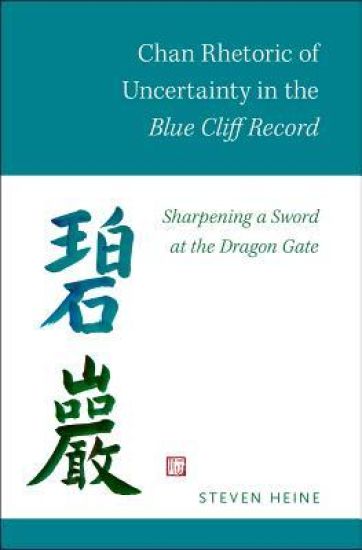
Chan Rhetoric of Uncertainty in the Blue Cliff Record

Chan Rhetoric of Uncertainty in the Blue Cliff Record

Steven Heine

Oxford University Press Inc
2016
sidottu
This book provides an in-depth textual and literary analysis of the Blue Cliff Record (Chinese Biyanlu, Japanese Hekiganroku), a seminal Chan/Zen Buddhist collection of commentaries on one hundred gongan/koan cases, considered in light of historical, cultural, and intellectual trends from the Song dynasty (960-1279). Compiled by Yuanwu Keqin in 1128, the Blue Cliff Record is considered a classic of East Asian literature for its creative integration of prose and verse as well as hybrid or capping-phrase interpretations of perplexing cases. The collection employs a variety of rhetorical devices culled from both classic and vernacular literary sources and styles and is particularly notable for its use of indirection, allusiveness, irony, paradox, and wordplay, all characteristic of the approach of literary or lettered Chan. However, as instrumental and influential as it is considered to be, the Blue Cliff Record has long been shrouded in controversy. The collection is probably best known today for having been destroyed in the 1130s at the dawn of the Southern Song dynasty (1127-1279) by Dahui Zonggao, Yuanwu's main disciple and harshest critic. It was out of circulation for nearly two centuries before being revived and partially reconstructed in the early 1300s. In this book, Steven Heine examines the diverse ideological connections and disconnections behind subsequent commentaries and translations of the Blue Cliff Record, thereby shedding light on the broad range of gongan literature produced in the eleventh to thirteenth centuries and beyond.
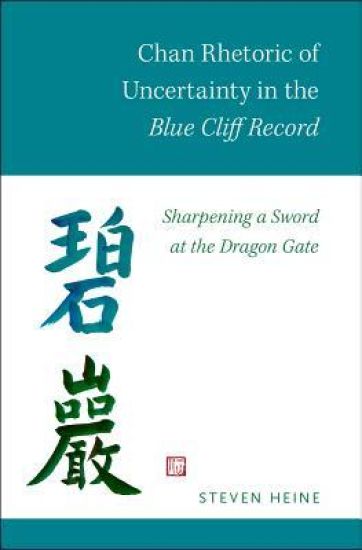
Chan Rhetoric of Uncertainty in the Blue Cliff Record

Chan Rhetoric of Uncertainty in the Blue Cliff Record

Steven Heine

Oxford University Press Inc
2016
nidottu
This book provides an in-depth textual and literary analysis of the Blue Cliff Record (Chinese Biyanlu, Japanese Hekiganroku), a seminal Chan/Zen Buddhist collection of commentaries on one hundred gongan/koan cases, considered in light of historical, cultural, and intellectual trends from the Song dynasty (960-1279). Compiled by Yuanwu Keqin in 1128, the Blue Cliff Record is considered a classic of East Asian literature for its creative integration of prose and verse as well as hybrid or capping-phrase interpretations of perplexing cases. The collection employs a variety of rhetorical devices culled from both classic and vernacular literary sources and styles and is particularly notable for its use of indirection, allusiveness, irony, paradox, and wordplay, all characteristic of the approach of literary or lettered Chan. However, as instrumental and influential as it is considered to be, the Blue Cliff Record has long been shrouded in controversy. The collection is probably best known today for having been destroyed in the 1130s at the dawn of the Southern Song dynasty (1127-1279) by Dahui Zonggao, Yuanwu's main disciple and harshest critic. It was out of circulation for nearly two centuries before being revived and partially reconstructed in the early 1300s. In this book, Steven Heine examines the diverse ideological connections and disconnections behind subsequent commentaries and translations of the Blue Cliff Record, thereby shedding light on the broad range of gongan literature produced in the eleventh to thirteenth centuries and beyond.
A History of the Spanish Lexicon

A History of the Spanish Lexicon

Steven N. Dworkin

Oxford University Press
2012
sidottu
This history of the Spanish lexicon is written from the interacting perspectives of linguistic and cultural change and in the light of advances in the study of language contact and lexical change. The author describes the language inherited from spoken Latin in the Iberian Peninsula during six centuries of Roman occupation and examines the degree to which it imported words from the languages - of which only Basque survives - of pre-Roman Spain. He then shows how Germanic words were imported either indirectly through Latin or Old French or directly by contact with the Visigoths. He describes the importation of Arabisms following the eighth-century Arab conquest of Spain, distinguishing those documented in medieval sources from those adopted for everyday use, many of which survive in modern Spanish. He considers the influence of Old French and Old Provençal and identifies late direct and indirect borrowings from Latin, including the Italian elements taken up during the Renaissance. After outlining minor influences from languages such as Flemish, Portuguese, and Catalan, Professor Dworkin examines the effects on the lexicon of contact between Spanish and the indigenous languages of South and Central America, and the impact of contact with English. The book is aimed at advanced students and scholars of Spanish linguistics and will interest specialists in Hispanic literary and cultural studies.
Accountability for Human Rights Atrocities in International Law

Accountability for Human Rights Atrocities in International Law

Steven R. Ratner; Jason S. Abrams; James L. Bischoff

Oxford University Press
2009
sidottu
This book explores the promises and limitations of holding individuals accountable for violations of international human rights and humanitarian law. It analyses the principal crimes under international law, such as genocide, crimes against humanity, and war crimes, and appraises both prosecutorial and other key mechanisms developed to bring individuals to justice. After applying their conclusions in a detailed case study, the authors offer a series of compelling conclusions on the prospects for accountability. This fully updated new edition contains expanded coverage of national trials under universal jurisdiction, international criminal tribunals including the International Criminal Court, new hybrid tribunals in Cambodia and elsewhere, truth commissions, and lustration. It also explores individual accountability for terrorist acts and for abuses committed in the name of counter-terrorism policy.
Accountability for Human Rights Atrocities in International Law

Accountability for Human Rights Atrocities in International Law

Steven R. Ratner; Jason S. Abrams; James L. Bischoff

Oxford University Press
2009
nidottu
This book explores the promises and limitations of holding individuals accountable for violations of international human rights and humanitarian law. It analyses the principal crimes under international law, such as genocide, crimes against humanity, and war crimes, and appraises both prosecutorial and other key mechanisms developed to bring individuals to justice. After applying their conclusions in a detailed case study, the authors offer a series of compelling conclusions on the prospects for accountability. This fully updated new edition contains expanded coverage of national trials under universal jurisdiction, international criminal tribunals including the International Criminal Court, new hybrid tribunals in Cambodia and elsewhere, truth commissions, and lustration. It also explores individual accountability for terrorist acts and for abuses committed in the name of counter-terrorism policy.