Kirjojen hintavertailu. Mukana 12 016 292 kirjaa ja 12 kauppaa.

Kirjahaku

Etsi kirjoja tekijän nimen, kirjan nimen tai ISBN:n perusteella.

1000 tulosta hakusanalla Stuart A. Marks

The Parousia: A Critical Inquiry into the New Testament Doctrine of Our Lord Christ's Second Coming
The Parousia is a New Testament commentary by James Stuart Russell, wherein the authority attempts to clarify and explain aspects of prophecy explained in the Gospels and elsewhere in the NT.The term `Parousia' is derived from a Greek word meaning simply, `a coming' or `a presence'. In the context of the Bible and Christianity, it refers to the return of Jesus Christ as a core prophecy of the New Testament scripture. It is by investigating all of this material that James Russell seeks to make clear what exactly the Bible predicts and what specifically believers may expect in the future, and what aspects of the prophecy have already occurred in the distant past.Exhaustively researched and painstakingly compiled, Russell's thesis is lengthy and split into three parts: firstly, he analyses the four Gospels of Christ, secondly, he examines the Acts of the Apostles, and lastly, he looks at the Book of Revelation and the visions therein. No detail is spared from the author's learned gaze.
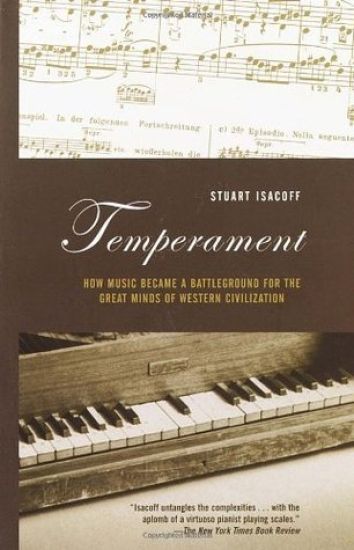
Temperament: How Music Became a Battleground for the Great Minds of Western Civilization
Few music lovers realize that the arrangement of notes on today's pianos was once regarded as a crime against God and nature, or that such legendary thinkers as Pythagoras, Plato, da Vinci, Galileo, Kepler, Descartes, Newton and Rousseau played a role in the controversy. Indeed, from the time of the Ancient Greeks through the eras of Renaissance scientists and Enlightenment philosophers, the relationship between the notes of the musical scale was seen as a key to the very nature of the universe. In this engaging and accessible account, Stuart Isacoff leads us through the battles over that scale, placing them in the context of quarrels in the worlds of art, philosophy, religion, politics and science. The contentious adoption of the modern tuning system known as equal temperament called into question beliefs that had lasted nearly two millenia-and also made possible the music of Beethoven, Schubert, Chopin, Debussy, and all who followed. Filled with original insights, fascinating anecdotes, and portraits of some of the greatest geniuses of all time, Temperament is that rare book that will delight the novice and expert alike.
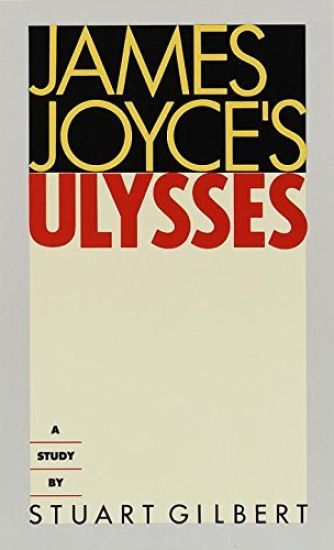
James Joyce's Ulysses: A Study

James Joyce's Ulysses: A Study

Stuart Gilbert

VINTAGE
1955
pokkari
With the passing of each year, Ulysses receives wider recognition and greater acclaim as a modern literary classic. To comprehend Joyce's masterpiece fully, to gain insight into its significance and structure, the serious reader will find this analytical and systematic guide invaluable. In this exegesis, written under Joyce's supervision, Stuart Gilbert presents a work that is at once scholarly, authoritative and stimulating. "Of the many efforts made to interpret Joyce's magnum opus, the best by far is that by Stuart Gilbert."-- Chicago Sunday Tribune"Most serious Joyce readers owe to Stuart Gilbert their first introduction to the richness and complexity of Ulysses. His monumental pioneer analysis remains an essential Baedeker."-- Saturday Review
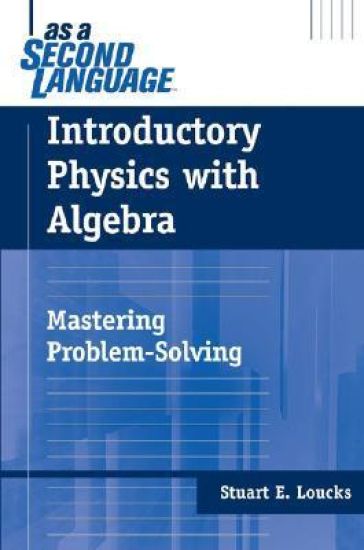
Introductory Physics with Algebra as a Second Language
Many students find it difficult to master the fundamental skills that are essential to succeeding in physics. Now with this helpful book, they'll quickly learn how to break physics down into basic steps. Author Stuart Loucks presents the material in a way that will motivate and empower them. He offers clear explanations of key concepts while examining the fundamental topics and approaches needed to solve algebra-based physics problems. Understand the basic language of physics Introductory Physics with Algebra as a Second Language™ will help you make sense of your textbook and class notes so that you can use them more effectively. The text explains key topics in algebra-based physics in clear, easy-to-understand language. Break problems down into simple steps Introductory Physics with Algebra as a Second Language™ teaches you to recognize details that tell you how to begin new problems. You will learn how to effectively organize the information, decide on the correct equations, and ultimately solve the problem. Learn how to tackle unfamiliar physics problems Stuart Loucks coaches you in the fundamental concepts and approaches needed to set up and solve the major problem types. As you learn how to deal with these kinds of problems, you will be better equipped to tackle problems you have never seen before. Improve your problem-solving skills You’ll learn timesaving problem-solving strategies that will help you focus your efforts and avoid potential pitfalls.
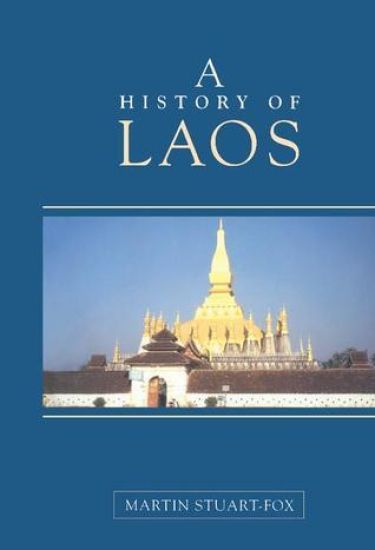
A History of Laos

A History of Laos

Martin Stuart-Fox

Cambridge University Press
1997
sidottu
This authoritative and wide-ranging history traces events in this little-known country from ancient monarchy, through its establishment as a French colony, to independence in 1953, the People’s Democratic Republic, and the present one-party authoritarianism. The book highlights Laos’ complex and shifting political alliances. The struggle for independence from France was followed by a struggle for unity and neutrality in the face of persistent foreign intervention, as the country was drawn into the war in Vietnam. Only with the end of the Cold War and the withdrawal of Vietnamese troops has Laos been able to reassert its neutral foreign policy and develop a market economy. This book is an impressive political, social, cultural and economic history. It will be essential for anyone wanting to understand Laos as it joins ASEAN, faces great economic challenges and struggles to maintain its cultural identity.
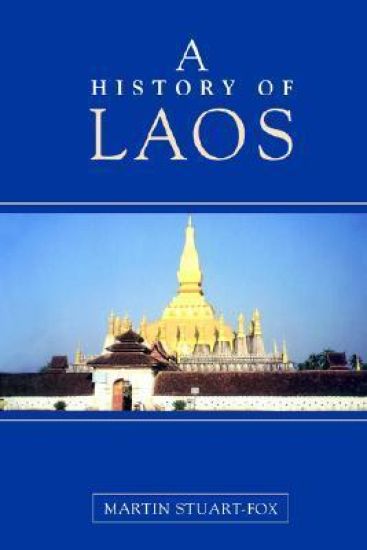
A History of Laos

A History of Laos

Martin Stuart-Fox

Cambridge University Press
1997
pokkari
This authoritative and wide-ranging history traces events in this little-known country from ancient monarchy, through its establishment as a French colony, to independence in 1953, the People’s Democratic Republic, and the present one-party authoritarianism. The book highlights Laos’ complex and shifting political alliances. The struggle for independence from France was followed by a struggle for unity and neutrality in the face of persistent foreign intervention, as the country was drawn into the war in Vietnam. Only with the end of the Cold War and the withdrawal of Vietnamese troops has Laos been able to reassert its neutral foreign policy and develop a market economy. This book is an impressive political, social, cultural and economic history. It will be essential for anyone wanting to understand Laos as it joins ASEAN, faces great economic challenges and struggles to maintain its cultural identity.
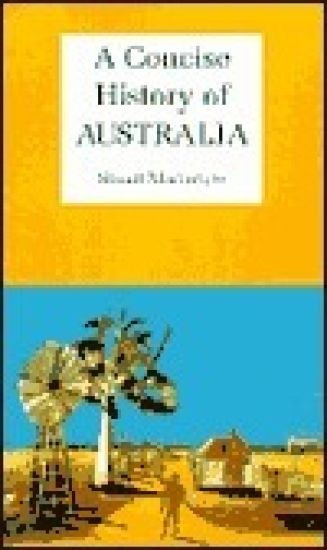
A Concise History of Australia

A Concise History of Australia

Macintyre Stuart

Cambridge University Press
2000
pokkari
Australia is the last continent to be settled by Europeans, but it also sustains a people and a culture tens of thousands of years old. For much of the past 200 years the newcomers have sought to replace the old with the new. This book tells how they imposed themselves on the land, and describes how they brought technology, institutions and ideas to make it their own. It relates the advance from penal colony to a prosperous free nation and illustrates how, in a nation created by waves of newcomers, the search for binding traditions has long been frustrated by the feeling of rootlessness. Now, with the realisation that colonisation began with invasion, present-day Australians are - more than ever before - coming to terms with their past and recognising the need to redefine and reposition Australia in a changing world. This is the most up-to-date single-volume Australian history available.
No End of a Lesson

No End of a Lesson

Stuart Macintyre; Andre Brett; Gwilym Croucher

Melbourne University Press
2017
nidottu
A revolution swept through universities three decades ago, transforming them from elite institutions into a mass system of higher education.Teaching was aligned with occupational outcomes, research was directed to practical results. Campuses grew and universities became more entrepreneurial. Students had to juggle their study requirements with paid work, and were required to pay back part of the cost of their degrees. The federal government directed this transformation through the creation of a Unified National System.How did this happen? What were the gains and the losses? No End of a Lesson explores this radical reconstruction and assesses its consequences.