
Kirjahaku
Etsi kirjoja tekijän nimen, kirjan nimen tai ISBN:n perusteella.
1000 tulosta hakusanalla Tracy Chevalier
The proposed levels theory presented in this book concerns some developmental changes in the capacity to selectively encode information and provide rational solutions to problems. These changes are measured by the behavior exhibited in simple discrimination-learning problems that allow both for information to be encoded either selectively or nonselectively and for solutions to be produced by associative learning or by hypothesis-testing. The simplicity of these problems permits comparisons between infrahuman and human performance and also between a wide range of ages among humans. Human adults presented with these problems typically encode the relevant information selectively and solve the problems in a rational mode. Infrahuman animals, however, typically process the information nonselectively and solve the problems in an automatic, associative mode. How human children encode the information and solve the problems depends on their age. The youngest children -- like the infrahuman animals -- mostly encode the information nonselectively and solve the problems in the associative mode. But between early childhood and young adulthood there is a gradual, long-term, quantifiable increase in the tendency to encode the information selectively and to solve the problem by testing plausible hypotheses. The theory explains in some detail the structure, function, development, and operation of the psychological system that produces both the ontogenetic and phylogenetic differences. This system is assumed to be differentiated into an information-processing system and an executive system analogous to the differentiation of the nervous system into afferent and efferent systems. Each of these systems is further differentiated into structural levels, with the higher level, in part, duplicating the function of the lower level, but in a more plastic, voluntary, and efficient manner. The differentiation of the information-processing and executive systems into different functional levels is presumed to have occurred sometime during the evolution of mankind with the higher level evolving later than the lower one as the central nervous system became increasing encephalized. As for human ontogeny, the higher levels are assumed to develop later and more slowly than their lower-level counterparts. In addition to accounting for a substantial body of empirical data, the theory resolves some recurrent controversies that have bedeviled psychology since its inception as a science. It accomplishes this by showing how information can be both nonselectively and selectively encoded, how automatic associative learning and rational problem-solving can operate in harmony, and how cognitive development can be both qualitative and quantitative.

In “Cotton County,” the first of the dual memoirs in The Land and the Days, acclaimed author Tracy Daugherty describes the forces that shape us: the “rituals of our regions” and the family and friends who animate our lives and memories. Combining reminiscence, history, and meditation, Daugherty retraces his childhood in Texas and Oklahoma, where he first encountered the realities of politics, race, and class. As a child in the early 1960s, Daugherty lived with his parents and sister in West Texas. And yet from a young age, in the author’s recounting, he was just as much at home in the small town of Walters, Oklahoma, where his grandparents lived and where he and his family often visited. A cattle and oil town just a few miles north of the Red River, Walters seemingly belonged to another realm. In sensory detail, Daugherty evokes the old-fashioned atmosphere of his grandparents’ home, the “tastes, smells, and textures: fried okra, mothballs, cotton batting—radiators and ancient typewriters.” These were things, he explains, that he experienced only in Oklahoma. The “Unearthly Archives,” the second of Daugherty’s memoirs, expands the realistic accounts of the first narrative, providing a meditation on the meaning of grief. Daugherty demonstrates his curiosity and indefatigable quest for understanding and closure by examining his life-long store of literary readings, as well as the music he loves, to discover the true value of a life dedicated to art. Whereas the first narrative explores daily family life, setting up what will be the huge loss of his parents, the second examines questions of death, grief, creativity, and the meaning of memory. As he mourns the loss of his parents, Daugherty reckons with his own mortality and finds himself confronting such fundamental questions as, How does individual consciousness develop? What can music, art, and literature teach us about life’s experiences? And finally, Is there a soul? The Land and the Days addresses these eternal questions with uncommon honesty and grace.

George Harrison met Muhammad Ali in 1964, when both men were on the cusp of worldwide fame. Ten years later, the two men simultaneously staged comebacks, demonstrating just how much they embodied the promises and perils of their era. In doing so, Tracy Daugherty suggests, they revealed the scope and the limits of political courage and commitment to faith in the modern world. We Shook Up the World is the story of these two larger-than-life figures at a momentous time. A unique blend of biography and cultural history, this book goes to the very heart of the zeitgeist that each man inhabited and reinvented in profound and enduring ways. In 1974, deep in the Pennsylvania woods, thirty-two-year-old Muhammad Ali was seeking renewal, training to regain his heavyweight boxing title in a fight with George Foreman, and exploring questions about his politics, his career, and his life. Meanwhile, George Harrison was thirty-one years old. With the Beatles disbanded, his marriage ending, and the loss of his mother still fresh, he traveled to India to revitalize his faith, energy, and musical spirit, seeking renewal at the Hindu holy city of Varanasi. In contemplating how these two complex figures managed to carry the cultural rebelliousness and spiritual yearning of the 1960s into a new era of cataclysmic political, economic, and social change, We Shook Up the World offers an intimate perspective on two outsize figures in the nation’s and the world’s cultural history, and a new understanding of their unique contributions to the consciousness of their time and ours.

The candles are lit, the seder plate filled, and the matzo stacked high. Join in to read, sing, eat, and observe the holiday. The many steps of a Passover seder are portrayed in this rhyming story.

Jonah loves Shabbat. But this week, as he helps his family set the table for dinner, something unexpected happens: he gets the hiccups His sister, grandma, mom, cousin, and dad all suggest remedies, but no matter what Jonah does--eat sugar, hold his breath, have someone shout, "Boo "--those hiccups simply won't go away. Will his uncontrollable hiccups disrupt the festivities?
A luxury sedan, a church pew, a cafeteria table, a favorite TV show, and visits to a nursing home form the comfortable cycles of the dull daily life of middle-aged insurance salesman Ken Carpenter. Then one night, he awakens to find that he no longer believes in God. To the surprise of his very understanding (to a point) wife and his two grown daughters who think he has lost his mind, Ken decides to find himself and his faith by flying to London, where he was stationed while in the Air Force. He navigates through the new and somewhat dangerous realm of British counter-culture and ultimately finds his way back home. Tracy Letts's moving, funny, and spiritually complex play dares to ask the big questions, and by doing so, reveals the hidden yearning and emotion that spur the eccentric behavior of seemingly ordinary people.

This dark comedy takes place in a seedy motel room outside Oklahoma City, where Agnes, a drug-addled cocktail waitress, is hiding from her ex-con ex-husband. Her lesbian biker friend R.C. introduces her to Peter, a handsome drifter who might be an AWOL Gulf War veteran. They soon begin a relationship that takes place almost entirely within the increasingly claustrophobic confines of her motel room. Peter begins to rant about the war in Iraq, UFOs, the Oklahoma City bombings, cult suicides, and then secret government experiments on soldiers, of which he believes he is a victim. His delusions infect Agnes and the tension mounts as mysterious strangers appear at their door, past events haunt them at every turn, and they are attacked by real bugs. Tracy Letts's tale of love, paranoia, and government conspiracy is a thought-provoking psycho-thriller that mixes terror and laughter at a fever pitch.

Modeled on the brilliant approach first formulated by distinguished professor music and master clarinetist Michele Gingras in her Clarinet Secrets and More Clarinet Secrets (both available from Scarecrow Press), Tracy Heavner’s Saxophone Secrets provides advanced saxophonists with 60 performance secrets that will assist in their musical development. This work is the result of 30 years of personal teaching and performance experience. Heavner offers both intermediate players and advanced professionals a wide variety of techniques, which will greatly improve any saxophonist’s performance ability. Designed to be the go-to hands-on guide for practitioners, Heavner’s strategies consider a vast array of issues for the saxophonist who needs to take that next big step up. Beginning chapters consider various brands of saxophones, mouthpieces, ligatures, reeds, and maintenance techniques that reflect the standard practices and expectations of the advanced performer. The secrets that follow develop and improve embouchure, tone, articulation, and finger technique, allowing saxophonists to analyze their own playing and adjust accordingly. Heavner pulls back the curtain further to introduce those secrets for developing the altissimo register and extended saxophone techniques, from circular breathing and multiphonics to slap and flutter tonguing—all absolute necessities for saxophonists seeking to play contemporary classical, jazz, or commercial music. Finally, Heavner concludes by letting musicians in on those little-revealed secrets for taking their saxophones on the road. Saxophone Secrets is the ideal work for saxophonists, saxophone instructors, band teachers, and anyone looking to improve their saxophone performance skills or those of their students.


Learn to use traditional fabric techniques in modern ways Fiber artists are experimenting with and combining techniques like never before, and this book gives detailed instructions on the rediscovered techniques of folding, shirring, gathering, bundling, quilling, and more. These techniques can be used to create rugs, wall hangings, clothing, bags, and even jewelry. The techniques are explained and illustrated, and patterns and instructions are given for 7 projects.
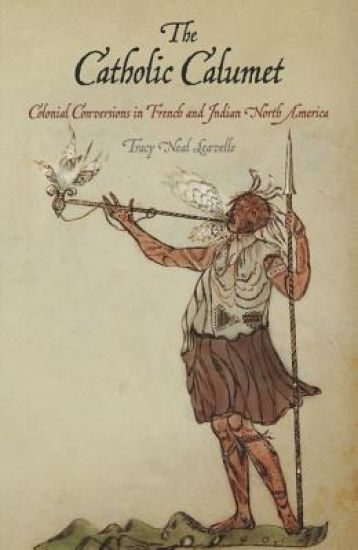
In 1730 a delegation of Illinois Indians arrived in the French colonial capital of New Orleans. An Illinois leader presented two ceremonial pipes, or calumets, to the governor. One calumet represented the diplomatic alliance between the two men and the other symbolized their shared attachment to Catholicism. The priest who documented this exchange also reported with excitement how the Illinois recited prayers and sang hymns in their Native language, a display that astonished the residents of New Orleans. The "Catholic" calumet and the Native-language prayers and hymns were the product of long encounters between the Illinois and Jesuit missionaries, men who were themselves transformed by these sometimes intense spiritual experiences. The conversions of people, communities, and cultural practices that led to this dramatic episode all occurred in a rapidly evolving and always contested colonial context. In The Catholic Calumet, historian Tracy Neal Leavelle examines interactions between Jesuits and Algonquian-speaking peoples of the upper Great Lakes and Illinois country, including the Illinois and Ottawas, in the seventeenth and eighteenth centuries. Leavelle abandons singular definitions of conversion that depend on the idealized elevation of colonial subjects from "savages" to "Christians" for more dynamic concepts that explain the changes that all participants experienced. A series of thematic chapters on topics such as myth and historical memory, understandings of human nature, the creation of colonial landscapes, translation of religious texts into Native languages, and the influence of gender and generational differences demonstrates that these encounters resulted in the emergence of complicated and unstable cross-cultural religious practices that opened new spaces for cultural creativity and mutual adaptation.
Cities in the North Atlantic coal and steel belt embodied industrial power in the early twentieth century, but by the 1970s, their economic and political might had been significantly diminished by newly industrializing regions in the Global South. This was not simply a North American phenomenon-the precipitous decline of mature steel centers like Pittsburgh, Pennsylvania, and Hamilton, Ontario, was a bellwether for similar cities around the world. Contemporary narratives of the decline of basic industry on both sides of the Atlantic make the postindustrial transformation of old manufacturing centers seem inevitable, the product of natural business cycles and neutral market forces. In Remaking the Rust Belt, Tracy Neumann tells a different story, one in which local political and business elites, drawing on a limited set of internationally circulating redevelopment models, pursued postindustrial urban visions. They hired the same consulting firms; shared ideas about urban revitalization on study tours, at conferences, and in the pages of professional journals; and began to plan cities oriented around services rather than manufacturing-all well in advance of the economic malaise of the 1970s. While postindustrialism remade cities, it came with high costs. In following this strategy, public officials sacrificed the well-being of large portions of their populations. Remaking the Rust Belt recounts how local leaders throughout the Rust Belt created the jobs, services, leisure activities, and cultural institutions that they believed would attract younger, educated, middle-class professionals. In the process, they abandoned social democratic goals and widened and deepened economic inequality among urban residents.
Cities in the North Atlantic coal and steel belt embodied industrial power in the early twentieth century, but by the 1970s, their economic and political might had been significantly diminished by newly industrializing regions in the Global South. This was not simply a North American phenomenon-the precipitous decline of mature steel centers like Pittsburgh, Pennsylvania, and Hamilton, Ontario, was a bellwether for similar cities around the world. Contemporary narratives of the decline of basic industry on both sides of the Atlantic make the postindustrial transformation of old manufacturing centers seem inevitable, the product of natural business cycles and neutral market forces. In Remaking the Rust Belt, Tracy Neumann tells a different story, one in which local political and business elites, drawing on a limited set of internationally circulating redevelopment models, pursued postindustrial urban visions. They hired the same consulting firms; shared ideas about urban revitalization on study tours, at conferences, and in the pages of professional journals; and began to plan cities oriented around services rather than manufacturing-all well in advance of the economic malaise of the 1970s. While postindustrialism remade cities, it came with high costs. In following this strategy, public officials sacrificed the well-being of large portions of their populations. Remaking the Rust Belt recounts how local leaders throughout the Rust Belt created the jobs, services, leisure activities, and cultural institutions that they believed would attract younger, educated, middle-class professionals. In the process, they abandoned social democratic goals and widened and deepened economic inequality among urban residents.

A portrait of infectious disease expert Dr. Paul Farmer follows the efforts of this unconventional Harvard genius to understand the world's great health, economic, and social problems and to bring healing to humankind.

My Detachment is a war story like none you have ever read before, an unromanticized portrait of a young man coming of age in the controversial war that defined a generation. In an astonishingly honest, comic, and moving account of his tour of duty in Vietnam, master storyteller Tracy Kidder writes for the first time about himself. This extraordinary memoir is destined to become a classic. Kidder was an ROTC intelligence officer, just months out of college and expecting a stateside assignment, when his orders arrived for Vietnam. There, lovesick, anxious, and melancholic, he tried to assume command of his detachment, a ragtag band of eight more-or-less ungovernable men charged with reporting on enemy radio locations. He eventually learned not only to lead them but to laugh and drink with them as they shared the boredom, pointlessness, and fear of war. Together, they sought a ghostly enemy, homing in on radio transmissions and funneling intelligence gathered by others. Kidder realized that he would spend his time in Vietnam listening in on battle but never actually experiencing it. With remarkable clarity and with great detachment, Kidder looks back at himself from across three and a half decades, confessing how, as a young lieutenant, he sought to borrow from the tragedy around him and to imagine himself a romantic hero. Unrelentingly honest, rueful, and revealing, My Detachment gives us war without heroism, while preserving those rare moments of redeeming grace in the midst of lunacy and danger. The officers and men of My Detachment are not the sort of people who appear in war movies-they are the ones who appear only in war, and they are unforgettable.

Mountains Beyond Mountains: The Quest of Dr. Paul Farmer, a Man Who Would Cure the World
Tracy Kidder
Random House Trade
2009
nidottu
NEW YORK TIMES BESTSELLER - " A] masterpiece . . . an astonishing book that will leave you questioning your own life and political views."--USA Today "If any one person can be given credit for transforming the medical establishment's thinking about health care for the destitute, it is Paul Farmer. . . . Mountains Beyond Mountains] inspires, discomforts, and provokes."--The New York Times (Best Books of the Year) In medical school, Paul Farmer found his life's calling: to cure infectious diseases and to bring the lifesaving tools of modern medicine to those who need them most. Tracy Kidder's magnificent account shows how one person can make a difference in solving global health problems through a clear-eyed understanding of the interaction of politics, wealth, social systems, and disease. Profound and powerful, Mountains Beyond Mountains takes us from Harvard to Haiti, Peru, Cuba, and Russia as Farmer changes people's minds through his dedication to the philosophy that "the only real nation is humanity." WINNER OF THE LETTRE ULYSSES AWARD FOR THE ART OF REPORTAGE This deluxe paperback edition includes a new Epilogue by the author

NAMED ONE OF THE BEST BOOKS OF THE YEAR BY KIRKUS REVIEWS Good Prose is an inspiring book about writing--about the creation of good prose--and the record of a warm and productive literary friendship. The story begins in 1973, in the offices of The Atlantic Monthly, in Boston, where a young freelance writer named Tracy Kidder came looking for an assignment. Richard Todd was the editor who encouraged him. From that article grew a lifelong association. Before long, Kidder's The Soul of a New Machine, the first book the two worked on together, had won the Pulitzer Prize. It was a heady moment, but for Kidder and Todd it was only the beginning of an education in the art of nonfiction. Good Prose explores three major nonfiction forms: narratives, essays, and memoirs. Kidder and Todd draw candidly, sometimes comically, on their own experience--their mistakes as well as accomplishments--to demonstrate the pragmatic ways in which creative problems get solved. They also turn to the works of a wide range of writers, novelists as well as nonfiction writers, for models and instruction. They talk about narrative strategies (and about how to find a story, sometimes in surprising places), about the ethical challenges of nonfiction, and about the realities of making a living as a writer. They offer some tart and emphatic opinions on the current state of language. And they take a clear stand against playing loose with the facts. Their advice is always grounded in the practical world of writing and publishing. Good Prose--like Strunk and White's The Elements of Style--is a succinct, authoritative, and entertaining arbiter of standards in contemporary writing, offering guidance for the professional writer and the beginner alike. This wise and useful book is the perfect companion for anyone who loves to read good books and longs to write one. Praise for Good Prose "Smart, lucid, and entertaining."--The Boston Globe "You are in such good company--congenial, ironic, a bit old-school--that you're happy to follow Kidder and Todd] where they lead you."--The Wall Street Journal " A] well-structured, to-the-point, genuinely useful, and fun-to-read guide to writing narrative nonfiction, essays, and memoir . . . Crisp, informative, and mind-expanding."--Booklist "A gem . . . The finer points of creative nonfiction are molded into an inspiring read that will affect the would-be writer as much as Anne Lamott's Bird by Bird or Stephen King's On Writing. . . . This is a must read for nonfiction writers."--Library Journal "As approachable and applicable as any writing manual available."--Associated Press

Drawing comparisons between two literary movements for social justice, this text explores the link between the Irish Renaissance that began in the 1880s and the African-American movement of the 1920s known as the Harlem Renaissance.