
Kirjahaku
Etsi kirjoja tekijän nimen, kirjan nimen tai ISBN:n perusteella.
1000 tulosta hakusanalla Tracy Wainwright
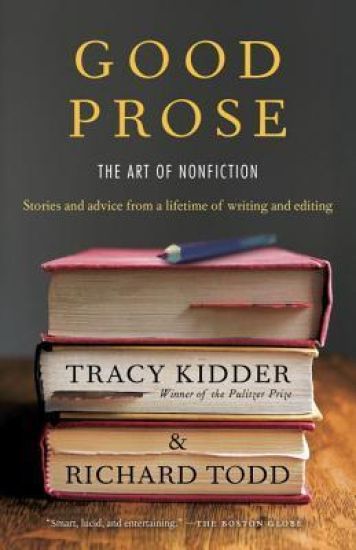
NAMED ONE OF THE BEST BOOKS OF THE YEAR BY KIRKUS REVIEWS Good Prose is an inspiring book about writing--about the creation of good prose--and the record of a warm and productive literary friendship. The story begins in 1973, in the offices of The Atlantic Monthly, in Boston, where a young freelance writer named Tracy Kidder came looking for an assignment. Richard Todd was the editor who encouraged him. From that article grew a lifelong association. Before long, Kidder's The Soul of a New Machine, the first book the two worked on together, had won the Pulitzer Prize. It was a heady moment, but for Kidder and Todd it was only the beginning of an education in the art of nonfiction. Good Prose explores three major nonfiction forms: narratives, essays, and memoirs. Kidder and Todd draw candidly, sometimes comically, on their own experience--their mistakes as well as accomplishments--to demonstrate the pragmatic ways in which creative problems get solved. They also turn to the works of a wide range of writers, novelists as well as nonfiction writers, for models and instruction. They talk about narrative strategies (and about how to find a story, sometimes in surprising places), about the ethical challenges of nonfiction, and about the realities of making a living as a writer. They offer some tart and emphatic opinions on the current state of language. And they take a clear stand against playing loose with the facts. Their advice is always grounded in the practical world of writing and publishing. Good Prose--like Strunk and White's The Elements of Style--is a succinct, authoritative, and entertaining arbiter of standards in contemporary writing, offering guidance for the professional writer and the beginner alike. This wise and useful book is the perfect companion for anyone who loves to read good books and longs to write one. Praise for Good Prose "Smart, lucid, and entertaining."--The Boston Globe "You are in such good company--congenial, ironic, a bit old-school--that you're happy to follow Kidder and Todd] where they lead you."--The Wall Street Journal " A] well-structured, to-the-point, genuinely useful, and fun-to-read guide to writing narrative nonfiction, essays, and memoir . . . Crisp, informative, and mind-expanding."--Booklist "A gem . . . The finer points of creative nonfiction are molded into an inspiring read that will affect the would-be writer as much as Anne Lamott's Bird by Bird or Stephen King's On Writing. . . . This is a must read for nonfiction writers."--Library Journal "As approachable and applicable as any writing manual available."--Associated Press

Drawing comparisons between two literary movements for social justice, this text explores the link between the Irish Renaissance that began in the 1880s and the African-American movement of the 1920s known as the Harlem Renaissance.

How tourism shaped the Sunshine State.For nearly two hundred years, Floridians have eagerly exploited tourism as the key to economic prosperity. As a result, the state has constantly reshaped and remodeled itself as different types of tourist heavens, and many aspects of its history have become inseparable from the fantastic images created by the tourism industry. From spa retreats to nature preserves, from riverboat rides to roller coasters, and from railroads to theme parks, the state's dependence on tourism has greatly shaped its identity.Sunshine Paradise is the first book to focus exclusively on how - and why - tourism came to define Florida. Offering a concise look at the subject from the 1820s to the present, Tracy Revels demonstrates tourism's relevance to all other major aspects of Florida history, including the Civil War, the land boom, and civil rights.In this enjoyable and well-written history, Revels shows how Florida's tourism industry has remained adaptive and expansive, ready to sell the next version of paradise to northerners hungry for sunshine. She also explains why the state’s business and political leaders must consider the history of tourism development as they plan for the state's future.

In the summer of 1960, director C. Douglas Ramey took his Carriage House Players theater company down the street from their Old Louisville venue to Central Park, where the actors performed scenes from the Shakespeare classic Much Ado about Nothing. Buoyed by the enthusiastic audience response, Ramey's company returned to the park the next year for the first full season of the Kentucky Shakespeare Festival. More than sixty years later, Kentucky Shakespeare is now the oldest free, non-ticketed Shakespeare in the Park festival in the country. To commemorate the sixtieth anniversary of the festival, in spring 2020 Kentucky Shakespeare cooperated with students in the University of Louisville's Department of History to record twenty entertaining and enlightening oral interviews with longtime members of the company. In Under the Greenwood Tree, author Tracy K'Meyer captures the history of Kentucky Shakespeare in a series of carefully selected and edited transcripts of these interviews. In these pages, past and present cast and crew share their memories of the company's history, performances in the park, and the positive impact of its many outreach programs, from its inception in the 1960s, to its slump in the early 2000s, and on to its recent renaissance. An illuminating record of the collaborative artistry that brings Shakespeare's works to life, Under the Greenwood Tree offers readers a peek behind the curtain at the group's steadfast stewardship of the most important literature in the English language.
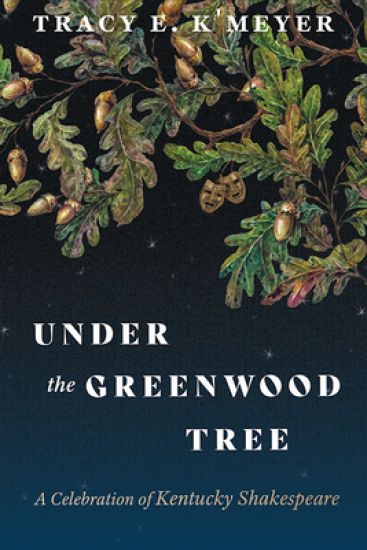
In the summer of 1960, director C. Douglas Ramey took his Carriage House Players theater company down the street from their Old Louisville venue to Central Park, where the actors performed scenes from the Shakespeare classic Much Ado about Nothing. Buoyed by the enthusiastic audience response, Ramey's company returned to the park the next year for the first full season of the Kentucky Shakespeare Festival. More than sixty years later, Kentucky Shakespeare is now the oldest free, non-ticketed Shakespeare in the Park festival in the country. To commemorate the sixtieth anniversary of the festival, in spring 2020 Kentucky Shakespeare cooperated with students in the University of Louisville's Department of History to record twenty entertaining and enlightening oral interviews with longtime members of the company. In Under the Greenwood Tree, author Tracy K'Meyer captures the history of Kentucky Shakespeare in a series of carefully selected and edited transcripts of these interviews. In these pages, past and present cast and crew share their memories of the company's history, performances in the park, and the positive impact of its many outreach programs, from its inception in the 1960s, to its slump in the early 2000s, and on to its recent renaissance. An illuminating record of the collaborative artistry that brings Shakespeare's works to life, Under the Greenwood Tree offers readers a peek behind the curtain at the group's steadfast stewardship of the most important literature in the English language.
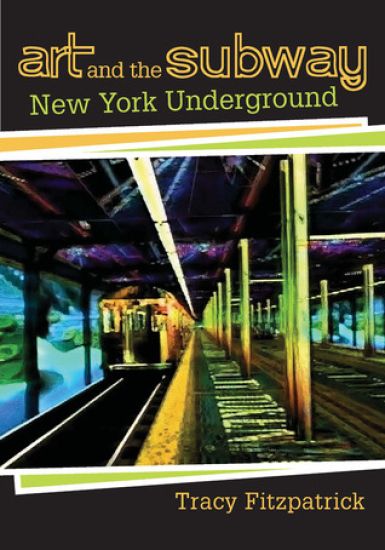
The New York City subway, considered an engineering feat and a work of art, has kindled the imagination of millions. Art and the Subway explores artistic production surrounding the world's most famous public transportation system, from just before its opening in 1904 to the present day. Using a stunning array of images, Tracy Fitzpatrick offers perspectives on ways in which the subway has been used as a subject about which to make art, as a site within which to make art, and as a canvas upon which to make art.Fitzpatrick captures the emotions of artists and riders alike, as she explores paintings, photographs, performance art, graffiti, and public art by artists such as Walker Evans, Bruce Davidson, DONDI, Keith Haring, Yayoi Kusama, Jacob Lawrence, Reginald Marsh, Elizabeth Murray, and many others. She also considers representations of the subway in film, on song sheet covers, and in illustration. By examining the cultural, technological, and social contexts for these creative interpretations, Fitzpatrick illuminates in fresh ways the contradictions and harmonies between public and private space.Featuring 17 color plates and 80 black-and-white images, Art and the Subway takes readers on a fascinating ride through the visual history of one of the twentieth century's greatest urban planning endeavors as it grew, changed form, and reinvented itself with passion and vitality.
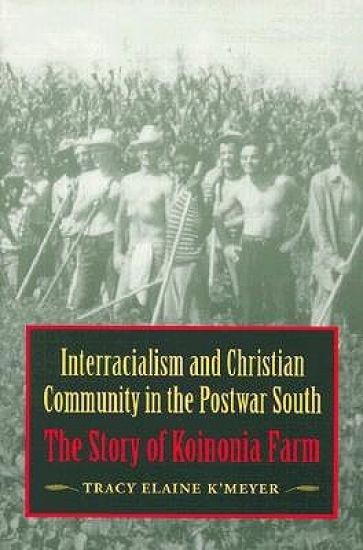
Interracialism and Christian Community in the Postwar South
Tracy Elaine K'Meyer
University of Virginia Press
1997
nidottu
A portrait of Koinonia Farm, an interracial Christian co-operative founded in 1942 by two white Baptist ministers in southwest Georgia. Based on over 50 interviews with current and former Koinonia members, it provides a history of the farm during the time of its greatest influence.

From the immemorial humans have lived together in groups. What it means to be a human being has no other basis than the interactions that take place in these groups. Politics then is the shaping of the necessary fact of social interaction. This volume concerns itself with the role of the individual in this social and political order. Including selections from both classical writers such as Plato, and contemporary scholars such as George Kareb, Michael Sandel, and Donna Haraway, the work examines one of the most fundemental questions of human society: what part do individual desires and concerns play, and what part should they play, in political society? How can we negotiate the relation between individuals and society, between the will of one and the mandate of the multitude? Strong's lengthy introduction provides an excellent framework that serves to unify these semial writings.

Elizabeth Cady Stanton and the Feminist Foundations of Family Law
Tracy A. Thomas
New York University Press
2016
sidottu
Thomas Byers Memorial Outstanding Publication Award from the University of Akron Law Alumni Association Much has been written about women's rights pioneer Elizabeth Cady Stanton. Historians have written her biography, detailed her campaign for woman's suffrage, documented her partnership with Susan B. Anthony, and compiled all of her extensive writings and papers. Stanton herself was a prolific author; her autobiography, History of Woman Suffrage, and Woman's Bible are classics. Despite this body of work, scholars and feminists continue to find new and insightful ways to re-examine Stanton and her impact on women's rights and history. Law scholar Tracy A. Thomas extends this discussion of Stanton's impact on modern-day feminism by analyzing her intellectual contributions to—and personal experiences with—family law. Stanton's work on family issues has been overshadowed by her work (especially with Susan B. Anthony) on woman's suffrage. But throughout her fifty-year career, Stanton emphasized reform of the private sphere of the family as central to achieving women's equality. By weaving together law, feminist theory, and history, Thomas explores Stanton's little-examined philosophies on and proposals for women's equality in marriage, divorce, and family, and reveals that the campaigns for equal gender roles in the family that came to the fore in the 1960s and '70s had nineteenth-century roots. Using feminist legal theory as a lens to interpret Stanton's political, legal, and personal work on the family, Thomas argues that Stanton's positions on divorce, working mothers, domestic violence, childcare, and many other topics were strikingly progressive for her time, providing significant parallels from which to gauge the social and legal policy issues confronting women in marriage and the family today.

First published in 2000. Beyond the Barricades explores how a transition to democracy affects civil society by tracing the levels and arenas of organized participation both before and after democratization. The group hardest hit by this transition to democracy is women who are often surprise to discover that democracies do not necessarily yield more gender equality or more opportunities for participation than dictatorships.

We are frequently confronted with arguments. Arguments are attempts to persuade us – to influence our beliefs and actions – by giving us reasons to believe this or that. Critical Thinking: A Concise Guide will equip students with the concepts and techniques used in the identification, analysis and assessment of arguments whatever the subject matter or context. Through precise and accessible discussion, this book provides the tools to become a successful critical thinker, one who can act and believe in accordance with good reasons, and who can articulate and make explicit those reasons.Key topics discussed include: Core concepts in argumentationHow language can serve to obscure or conceal the real content of arguments How to distinguish argumentation from rhetoricHow to avoid common confusions surrounding words such as ‘truth’, ‘knowledge’ and ‘opinion’How to identify and evaluate the most common types of argumentHow to distinguish good reasoning from bad in terms of deductive validity and induction.This fifth edition has been revised and extensively updated throughout, including a significantly expanded range of ‘complete examples’, the introduction of Venn diagrams and the discussion of fake news and related phenomena arising in the contemporary scene. The dynamic Routledge Critical Thinking companion website provides thoroughly updated resources for both instructors and students, including new examples and case studies, flashcards, sample questions, practice questions and answers, student activities and a testbank of questions for use in the classroom. Visit www.routledge.com/cw/bowell.
We are frequently confronted with arguments. Arguments are attempts to persuade us – to influence our beliefs and actions – by giving us reasons to believe this or that. Critical Thinking: A Concise Guide will equip students with the concepts and techniques used in the identification, analysis and assessment of arguments whatever the subject matter or context. Through precise and accessible discussion, this book provides the tools to become a successful critical thinker, one who can act and believe in accordance with good reasons, and who can articulate and make explicit those reasons.Key topics discussed include: Core concepts in argumentationHow language can serve to obscure or conceal the real content of arguments How to distinguish argumentation from rhetoricHow to avoid common confusions surrounding words such as ‘truth’, ‘knowledge’ and ‘opinion’How to identify and evaluate the most common types of argumentHow to distinguish good reasoning from bad in terms of deductive validity and induction.This fifth edition has been revised and extensively updated throughout, including a significantly expanded range of ‘complete examples’, the introduction of Venn diagrams and the discussion of fake news and related phenomena arising in the contemporary scene. The dynamic Routledge Critical Thinking companion website provides thoroughly updated resources for both instructors and students, including new examples and case studies, flashcards, sample questions, practice questions and answers, student activities and a testbank of questions for use in the classroom. Visit www.routledge.com/cw/bowell.
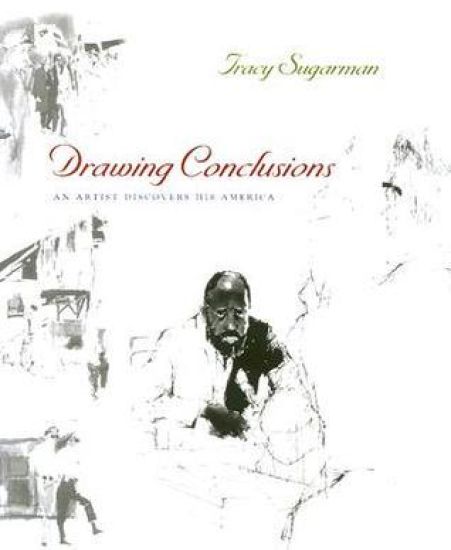
At the apex of World War II, Tracy Sugarman documented naval life before, during, and after D-Day. In an age often dependent on photography and motion pictures, this artist used paints, ink, and pencil to forge his own distinctive brand of artistic journalism. His entire on-site reportage of those historic moments has now been acquired by the U.S. Library of Congress. After the war, Sugarman continued to record the triumphs and contradictions of the American experience in vivid pictures and words. The result is a powerful pictorial trove of historic, cultural, and societal events of his time: from the civil rights challenge and transformation in the south to labor demonstrations in the north; from Alvin Ailey dancers to NASA space exploration. Filled with wisdom and humor yet punctuated with outrage over injustice, Sugarman's singular artistry and thoughtful prose provide insights into our American psyche and into the artist's life. ""Drawing Conclusions"" shows that an artist's personal imagery can eclipse the graphic potency of a camera in telling a human story.

No one experienced the 1964 Freedom Summer quite like Tracy Sugarman. As an illustrator and journalist, Sugarman covered the nearly one thousand student volunteers who traveled to the Mississippi Delta to assist black citizens in the South in registering to vote. He interviewed these activists, along with local civil rights leaders and black and white residents not directly involved in the movement, and drew the people and events that made the summer one of the most heroic chapters in American's long march toward racial justice. In ""We Had Sneakers, They Had Guns"", Sugarman chronicles the sacrifices, tragedies, and triumphs of that unprecedented moment in our nation's history. Two white students and one black student were slain in the struggle, many were beaten and hundreds arrested, and churches and homes were burned to the ground by the opponents of equality. Yet the example of Freedom Summer - whites united with heroic black Mississippians to challenge apartheid - resonated across the nation. The United States Congress was finally moved to pass the civil rights legislation that enfranchised the millions of black Americans who had been waiting for equal rights for a century. Blending oral history with memoir, ""We Had Sneakers, They Had Guns"" draws the reader into the lives of Sugarman's subjects, showing the passion and naivete of the volunteers, the bravery of the civil rights leaders, and the candid, sometimes troubling reactions of the black and white Delta residents. Sugarman's unique reportorial art, in word and image, makes this book a vital record of our nation's past.

Sylvia Porter (1913–1991) was the nation’s first personal finance columnist and one of the most admired women of the twentieth century. Lucht traces Porter’s professional trajectory, identifying her career strategies and exploring the role of gender in her creation of a once-unique, now-ubiquitous form of journalism. A pioneer for both male and female journalists, Porter established a genre of newspaper writing that would last into the twenty-first century while carving a space for women in what had been an almost exclusively male field.
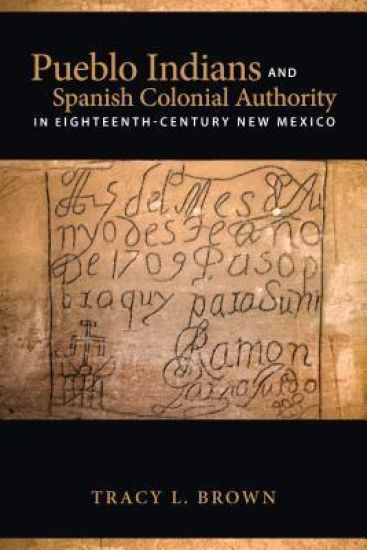
Pueblo Indians and Spanish Colonial Authority in Eighteenth-Century New Mexico
Tracy L. Brown
University of Arizona Press
2013
sidottu
Pueblo people reacted to Spanish colonialism in many different ways. While some resisted change and struggled to keep to their long-standing traditions, others reworked old practices or even adopted Spanish ones. Pueblo Indians and Spanish Colonial Authority in Eighteenth-Century New Mexico examines the multiple approaches Pueblo individuals and villages adopted to mitigate and manage the demands that Spanish colonial authorities made upon them. In doing so, author Tracy L. Brown counters the prevailing argument that Pueblo individuals and communities’ only response to Spanish colonialism was to compartmentalise—and thus freeze in time and space—their traditions behind a cultural “iron curtain.” Brown addresses an understudied period of Pueblo Indian/Spanish colonial history of New Mexico with a work that paints a portrait of pre-contact times through the colonial period with a special emphasis on the eighteenth century. The Pueblo communities that the Spaniards encountered were divided by language, religion, and political and kinship organisation. Brown highlights the changes to, but also the maintenance of, social practices and beliefs in the economic, political, spiritual and familial and intimate realms of life that resulted from Pueblo attempts to negotiate Spanish colonial power. The author combines an analysis of eighteenth century Spanish documentation with archaeological findings concerning Pueblo beliefs and practices that spans the pre-contact period to the eighteenth century in the Southwest. Brown presents a nonlinear view of Pueblo life that examines politics, economics, ritual, and personal relationships. The book paints a portrait of the Pueblo peoples and their complex responses to Spanish colonialism by making sense of little-researched archival documents and archaeological findings that cast light on the daily life of Pueblo peoples.
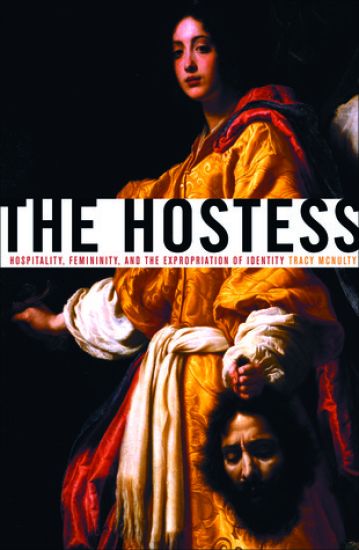
The evolution of the idea of hospitality can be traced alongside the development of Western civilization. Etymologically, the host is the "master," but this identity is established through expropriation and loss—the best host is the one who gives the most, ultimately relinquishing what defines him as master.In The Hostess, Tracy McNulty asks, What are the implications for personhood of sharing a person—a wife or daughter—as an act of hospitality? In many traditions, the hostess is viewed not as a subject but as the master's property. A foreign presence that both sustains and undercuts him, the hostess embodies the interplay of self and other within the host's own identity.Here McNulty combines critical readings of the Bible and Pierre Klossowski's trilogy The Laws of Hospitality with analyses of exogamous marital exchange, theological works from the Talmud to Aquinas, the writings of Kant and Nietzsche, and the theory of femininity in the work of Freud and Lacan. Ultimately, she contends, hospitality involves the boundary between the proper and the improper, affecting the subject as well as interpersonal relations.Tracy McNulty is assistant professor of romance studies at Cornell University.

The Birchwood Cafe Cookbook
Tracy Singleton; Marshall Paulsen; Beth Dooley
University of Minnesota Press
2015
nidottu
Creating a better world starts at home-in the kitchen-and for twenty years the Birchwood Cafe has guided diners to live and eat sustainably and joyfully. Now you can sample Birchwood’s recipes-adapted for home cooks-and fill your own table with some of the irresistible fare that has made the cafe one of the region’s best-loved restaurants. In these pages, find Birchwood’s light-hearted, innovative menu: hearty hand pies and multigrain salads, decadent pastries, and award-winning desserts. Organized by eight seasons, these dishes are inspired by the way weather affects our appetites and determines what comes from our land. With Spring, we celebrate beginnings, tossing up fragrant herbs, tender greens, and tart rhubarb. Come Summer, we fire up the grill and get outside; when Scorch hits and those dog days dampen appetites, we whip up cool soups and refreshing salads. Then Autumn, with its collision of apples, pears, pumpkins, and kale; and as Dusk falls, we get cozy with bowls of savory soup. Frost tempts us back to the stove with nourishing roots. Ready for Winter, we gather close with friends near the hearth, ladling up warming stews. Come Thaw, look to the first food of the season as the maple syrup runs and we anticipate a new year. The pantry chapter features Chef Marshall Paulsen’s condiments-chutney, jam, preserves, and vinaigrettes-which can transform the simplest dish into a spectacular plate. Owner Tracy Singleton and Chef Marshall share Birchwood stories and memories, plus practical tips and insights. Just as Birchwood Cafe is more than a restaurant, this is more than a cookbook. The Birchwood Cafe Cookbook shows you what it takes to make a sustainable kitchen and a joyful table, to prepare “good real food” that really does more than a little good.
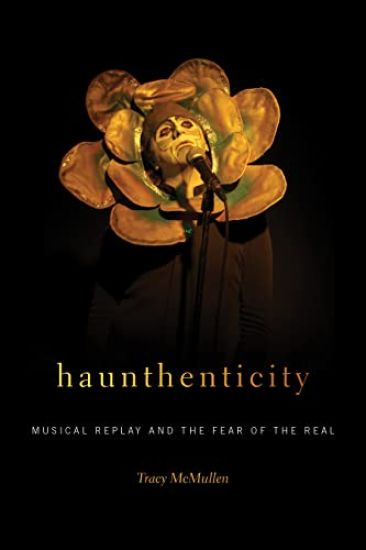
In this persuasive study, Tracy McMullen draws on philosophy, psychology, musicology, performance studies, and popular music studies in order to analyze the rise of obsessively precise live musical reenactments in the United States at the turn of the millennium. She investigates this practice, what she terms, Replay, in popular music, jazz, and performance art arguing that it is a symptom of deep-seated fears of the fleeting nature of identity. Musical Replay claims a type of authenticity that is grounded in the exact material details of the original (instruments, props, costumes, people, etc.), and attempts to make up for the loss of identity: cloning the past and using it as a replacement. The scholarship is wide-ranging and ties theory and evidence from diverse fields and experiences together seamlessly and convincingly. Haunthenticity ultimately argues for a new way of conceiving subjectivity and identity within critical and cultural studies, moving beyond Western epistemologies.