There is an understandable tendency or desire to attribute blame when patients are harmed by their own healthcare. However, many cases of iatrogenic harm involve little or no moral culpability. Even when blame is justified, an undue focus on one individual often deflects attention from other important factors within the inherent complexity of modern healthcare. This revised second edition advocates a rethinking of accountability in healthcare based on science, the principles of a just culture, and novel therapeutic legal processes. Updated to include many recent relevant events, including the Keystone Project in the USA and the Mid Staffordshire scandal in the UK, this book considers how the concepts of a just culture have been successfully implemented so far, and makes recommendations for best practice. This book will be of interest to anyone concerned with patient safety, medical law and the regulation of healthcare.
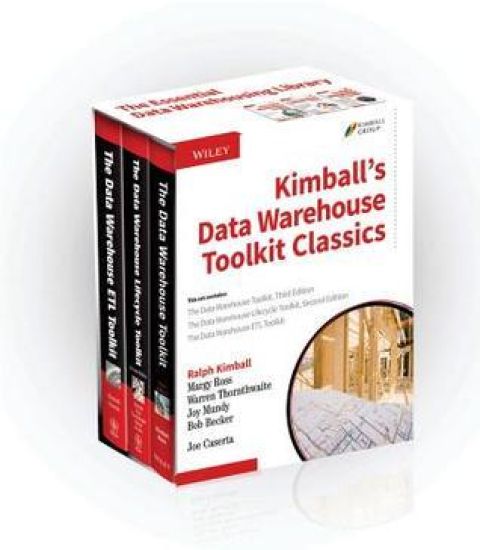
Three books by the bestselling authors on Data Warehousing! The most authoritative guides from the inventor of the technique all for a value price. The Data Warehouse Toolkit, 3rd Edition (9781118530801) Ralph Kimball invented a data warehousing technique called "dimensional modeling" and popularized it in his first Wiley book, The Data Warehouse Toolkit. Since this book was first published in 1996, dimensional modeling has become the most widely accepted technique for data warehouse design. Over the past 10 years, Kimball has improved on his earlier techniques and created many new ones. In this 3rd edition, he will provide a comprehensive collection of all of these techniques, from basic to advanced. The Data Warehouse Lifecycle Toolkit, 2nd Edition (9780470149775) Complete coverage of best practices from data warehouse project inception through on-going program management. Updates industry best practices to be in sync with current recommendations of Kimball Group. Streamlines the lifecycle methodology to be more efficient and user-friendly The Data Warehouse ETL Toolkit (9780764567575) shows data warehouse developers how to effectively manage the ETL (Extract, Transform, Load) phase of the data warehouse development lifecycle. The authors show developers the best methods for extracting data from scattered sources throughout the enterprise, removing obsolete, redundant, and inaccurate data, transforming the remaining data into correctly formatted data structures, and then physically loading them into the data warehouse. This book provides complete coverage of proven, time-saving ETL techniques. It begins with a quick overview of ETL fundamentals and the role of the ETL development team. It then quickly moves into an overview of the ETL data structures, both relational and dimensional. The authors show how to build useful dimensional structures, providing practical examples of beginning through advanced techniques.
There is an understandable tendency or desire to attribute blame when patients are harmed by their own healthcare. However, many cases of iatrogenic harm involve little or no moral culpability. Even when blame is justified, an undue focus on one individual often deflects attention from other important factors within the inherent complexity of modern healthcare. This revised second edition advocates a rethinking of accountability in healthcare based on science, the principles of a just culture, and novel therapeutic legal processes. Updated to include many recent relevant events, including the Keystone Project in the USA and the Mid Staffordshire scandal in the UK, this book considers how the concepts of a just culture have been successfully implemented so far, and makes recommendations for best practice. This book will be of interest to anyone concerned with patient safety, medical law and the regulation of healthcare.
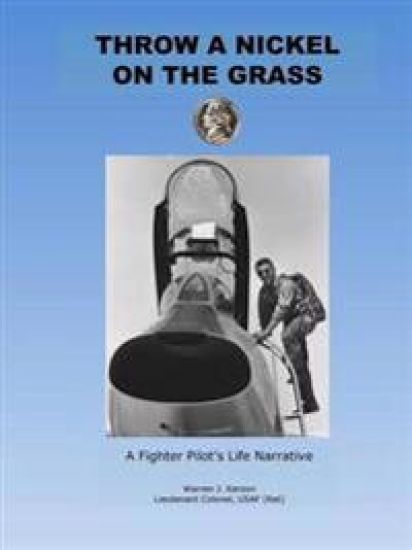
Personal history of my 22+ years as an Air Force fighter pilot starting when I first dreamed about my future career, through flight school, operational experience in France, Germany, then Test Pilot School, flight test projects, combat experience in Southeast Asia, and other assignments. Short summary of follow-on 15-year career in the aerospace industry.
Personal history of my 22+ years as an Air Force fighter pilot starting when I first dreamed about my future career, through flight school, operational experience in France, Germany, then Test Pilot School, flight test projects, combat experience in Southeast Asia, and other assignments; short summary of follow-on 15-year career in the aerospace industry.
Here's to brewing your first craft beer. Cheers You love craft beer--now imagine brewing it in your own home. With complete, step-by-step instructions, Beer Brewing 101 makes it easy to begin crafting fresh, homemade beer. Jump right in by using a beer kit to brew up your first delicious batch--everything you need to know is here. This guide's simple approach to beer brewing uses malt extract, a perfect entryway for first-time home brewers because it requires less equipment and a shorter brew time. Once you've learned the basics, you can dive into the wide assortment of favorite beer recipes. After a little more practice, you'll even get a helping hand designing your own signature brew Beer Brewing 101 includes: Quick reference--A detailed supplies list, glossary of beer brewing terms, and at-a-glance charts of hop varieties, yeast strains, and malt extracts help set you up for success. 30 beer recipes--Try your hand at Czech Pilsner, West Coast Style IPA, and German Hefeweizen, along with formulas for recreating popular branded craft beers. To the rescue--Is your beer not fermenting? Does it have an off aroma or too much foam? Find the answers to common problems you might encounter while beer brewing. Discover the joys of homebrewing your own delicious craft beer with Beer Brewing 101.
If you were on a jury, how much evidence would you require to convict or acquit? Would you convict on circumstantial evidence only or would you want as much evidence as you can get? Would you want from only one source or many sources? What if you thought something was true, and you found out it was wrong, when would you want to know it? Ron Warren was a good atheist. He applied five major battlegrounds that an atheist would use. These battlegrounds asks the questions: -Does God Exist? -Is the Bible True? -Is there a Resurrection? -Is Jesus God? -Is Jesus the only way to God? In these battlegrounds his weapons was questions, gently attacking the believers through the "WHY" of their belief. He understood that the "WHAT" of their faith was the doctrines and traditions. The "HOW" of their faith was the process of their actions, but the "WHY" was their purpose. By applying doubt to the believer's "WHY," the same doubt would move into the "HOW" and the "WHAT" of their faith. When Ron realized he was wrong, he began to use stronger facts to change the battlegrounds. What does this mean to you? As an atheist, you have your answers, but are you sure you have all the facts? What are the consequences if you are wrong? Do you know that the existence of God can be proven through Physics, Biology, Biochemistry, Genetics, Mathematics, and Paeontology? Did you know that He can also be proven to exist through Archaeology, Astronomy, Cosmology, and Revolution? Did you know there are ten evidences to prove that the Bible is true? As an atheist, can you explain all ten? What would you do with the Resurrection? Did you know there are six major facts you must prove to be wrong? How will you deal with the question, "Is Jesus God?" You can deny it, but you are still faced with a human being creating something out of nothing, and the giving of life. You are also faced with the evidence of history, the impact of history, and the evidence of the facts of Messianic Prophecy, miracles, and the virgin birth. The highlight will be trying to explain the divine attributes of God operating through Jesus. Can these evidences be placed on another human being? This is the lifestyle of an atheist: -No meaning in life -No value in life -No significance in life -No purpose in life -No hope in life, and the last one -Some may think there are no restraints against evil impulses. As an atheist, this was my life. "Is it yours?" As a believer, have you ever doubted your faith and wished you had answers to fight your battlegrounds? How do you counterattack what the atheist is giving you? This book opens the door to both the atheist and the believer. It can change or destroy the atheist's foundation and strengthen and consolidate the believer's trust and faith in God. Here is the final point to consider: If you can believe Genesis 1:1, you will have NO PROBLEM with the rest of the Bible. Jonah and the whale, an ax head that floats, Jesus walking on water, the Reed Sea parting, the Resurrection, and miracles will seem commonplace. Genesis 1:1 reads, "In the beginning God created the heaven and the earth." If you cannot believe that, you will question the rest; but this is the final crossroad. After answering all the questions, answer the question: "What If I'm Wrong?"
From a celebrated military historian, a powerful, "highly recommended" (Library Journal, starred review) account of the most pivotal year of the Vietnam War--the cataclysm that "continues to haunt American politics and culture" (Publishers Weekly). The Vietnam War was the greatest disaster in the history of American foreign policy. The conflict shook the nation to its foundations, exacerbating already deep cleavages in American society, and left the country baffled and ambivalent about its role in the world. Year of the Hawk is a military and political history of the war in Vietnam during 1965--the pivotal first year of the American conflict, when the United States decided to intervene directly with combat units in a struggle between communist and pro-Western forces in South Vietnam that had raged on and off for twenty years. By December 1965, a powerful communist offensive had been turned back, and the US Army had prevailed in one of the most dramatic battles in American military history, but nonetheless there were many signs and portents that US involvement would soon slide toward the tipping point of tragedy. Vividly interweaving events in the US capital with action in Southeast Asia, historian James A. Warren explores the mindsets and strategies of the adversaries and concludes that, in the end, Washington was not so much outfought in Vietnam as outthought by revolutionaries pursuing a brilliant, protracted war strategy. Based on new research, Year of the Hawk offers fresh insight into how a nationalist movement led by communists in a small country defeated the most powerful nation on earth and is "a well-researched overview of how America got into Vietnam--and why it shouldn't have" (Kirkus Reviews).