Kirjojen hintavertailu. Mukana 11 717 486 kirjaa ja 12 kauppaa.

Kirjahaku

Etsi kirjoja tekijän nimen, kirjan nimen tai ISBN:n perusteella.

1000 tulosta hakusanalla Wauter Mannaert

Water Tossing Boulders

Water Tossing Boulders

Adrienne Berard

Beacon Press
2017
pokkari
A generation before Brown v. Board of Education struck down America's "separate but equal" doctrine, one Chinese family and an eccentric Mississippi lawyer fought for desegregation in one of the greatest legal battles never told. On September 15, 1924, Martha Lum and her older sister Berda were barred from attending middle school in Rosedale, Mississippi. The girls were Chinese American and considered by the school to be "colored"; the school was for whites. This event would lead to the first US Supreme Court case to challenge the constitutionality of racial segregation in Southern public schools, an astonishing thirty years before the landmark Brown v. Board of Education decision. Unearthing one of the greatest stories never told, journalist Adrienne Berard recounts how three unlikely heroes sought to shape a new South. A poor immigrant from southern China, Jeu Gong Lum came to America with the hope of a better future for his family. Unassuming yet boldly determined, his daughter Martha would inhabit that future and become the face of the fight to integrate schools. Earl Brewer, their lawyer and staunch ally, was once a millionaire and governor of Mississippi. When he took the family's case, Brewer was both bankrupt and a political pariah--a man with nothing left to lose. By confronting the "separate but equal" doctrine, the Lum family fought for the right to educate Chinese Americans in the white schools of the Jim Crow South. Using their groundbreaking lawsuit as a compass, Berard depicts the complicated condition of racial otherness in rural Southern society. In a sweeping narrative that is both epic and intimate, Water Tossing Boulders evokes a time and place previously defined by black and white, a time and place that, until now, has never been viewed through the eyes of a forgotten third race. In vivid prose, the Mississippi Delta, an empire of cotton and a bastion of slavery, is reimagined to reveal the experiences of a lost immigrant community. Through extensive research in historical documents and family correspondence, Berard illuminates a vital, forgotten chapter of America's past and uncovers the powerful journey of an oppressed people in their struggle for equality.
Water

Water

Carol Lawrence

Albert Whitman Company
2018
pahvisivuinen
Why is water important? How does water change to ice and steam? Where does the water in rain come from? Baby Explorer is a series of board books for little ones that encourages them to explore the world around them. The books are based on things in their world they can see, touch, hear, smell, or taste--things they can relate to and understand.
Water

Water

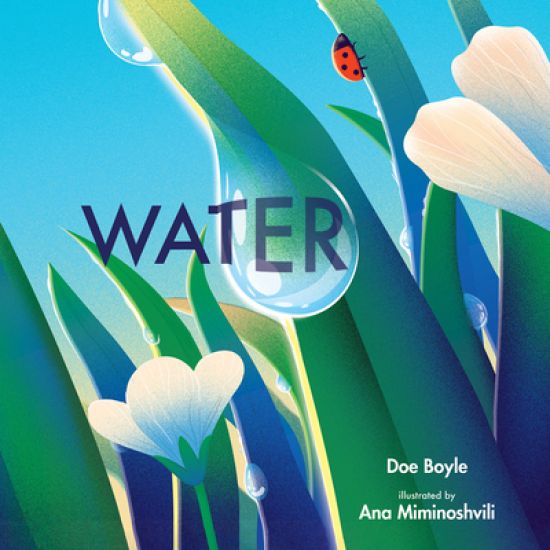
Doe Boyle

Albert Whitman Company
2022
sidottu
2023 Green Earth Book Award Children's Nonfiction Recommended ReadingAll life is connected to water. It's our most precious resource.Water. It is crucial for life on Earth, and it is everywhere. It is also the only substance on Earth that naturally has three forms: it can be a liquid, a solid, or a gas. Why is water so important for life?
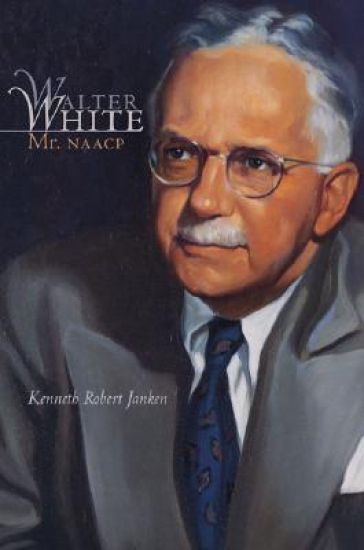
Walter White

Walter White

The University of North Carolina Press
2006
nidottu
Walter White (1893-1955) was among the nation's preeminent champions of civil rights. With blond hair and blue eyes, he could ""pass"" as white even though he identified as African American, and his physical appearance allowed him to go undercover to investigate more than 40 lynchings and race riots in the years following World War I. As executive secretary of the NAACP from 1931 until his death in 1955, White promoted the Harlem Renaissance and led influential national campaigns against lynching, segregation in the military, and racism in Hollywood movies. In this first scholarly biography, Kenneth Robert Janken considers the man who embodied many contradictions. Walter White gained access to white elite culture, establishing friendships with Eleanor Roosevelt and numerous congressmen and Supreme Court justices, but he ultimately considered himself - and was considered by many - an organization man, ""Mr. NAACP.
Walter Hines Page

Walter Hines Page

The University of North Carolina Press
2011
nidottu
The varied career of Walter Hines Page affected many facets of the American political and social milieu from the end of Reconstruction through World War I. A North Carolinian, Page was one of the first southerners after Reconstruction to argue that sectional hostility was needless, and he constantly worked to restore national union and frequently acted as an interpreter for the North and the South. As a journalist, publisher, reformer, president-maker, and ambassador, he strove to assure both North and South that the southerner was basically an American, that southern problems were national ones, and that education and hard work could recreate the Union.As a young man, Page found the South too stifling to give scope to his ambitions. He left it for good at the age of twenty-nine to make a brilliant career as editor and book publisher in the North. He served as editor of Forum, Atlantic Monthly, and World's Work. Later he founded the publishing firm Doubleday, Page & Company. As a magazine editor he wrote about the problems of the South; as a book publisher he introduced many southern writers to the nation; as a member of several of the most powerful philanthropic boards he sought funds to improve education and public health in the South. As a result of his early support of Woodrow Wilson for the presidency, Page was appointed ambassador to the Court of St. James's from which he fervently advocated the Allied cause.Throughly researching both American and British government documents and private papers, and using interviews with Page's contemporaries, Cooper reinterprets and establishes the significance of Page's career.A UNC Press Enduring Edition -- UNC Press Enduring Editions use the latest in digital technology to make available again books from our distinguished backlist that were previously out of print. These editions are published unaltered from the original, and are presented in affordable paperback formats, bringing readers both historical and cultural value.
Walter Clark

Walter Clark

Brooks Aubrey Lee

The University of North Carolina Press
2011
nidottu
In this life of Walter Clark, the author tells of an antebellum boyhood on a Carolina plantation and a long career of involvement in the bitterest sociopolitical battles the state of North Carolina has known, which won Clark a national reputation as a liberal noted for his straight thinking and his clear speaking.A UNC Press Enduring Edition -- UNC Press Enduring Editions use the latest in digital technology to make available again books from our distinguished backlist that were previously out of print. These editions are published unaltered from the original, and are presented in affordable paperback formats, bringing readers both historical and cultural value.
Water Drops from Women Writers

Water Drops from Women Writers

Carol Mattingly

Southern Illinois University Press
2001
sidottu
The temperance movement was the largest single organizing force for women in American history, uniting and empowering women seeking to enact social change. By the end of the century, more than two hundred thousand women had become members of the Woman's Christian Temperance Union (WCTU), and numerous others belonged to smaller temperance organizations. Despite the impact of the movement, its literature has been largely neglected. In this collection of nineteen temperance tales, Carol Mattingly has recovered and revalued previously unavailable writing by women. Mattingly's introduction provides a context for these stories, locating the pieces within the temperance movement as well as within larger issues in women's studies. The temperance movement was essential to women's awareness of and efforts to change gender inequalities in the United States during the nineteenth and early twentieth centuries. In their fiction, temperance writers protested physical and emotional abuse at the hands of men, argued for women's rights, addressed legal concerns, such as divorce and child custody, and denounced gender-biased decisions affecting the care and rights of children. Temperance fiction by women broadens our understanding of the connections between women's rights and temperance, while shedding light on women's thinking and behavior in the nineteenth century. Temperance writers featured in this reader include Louisa May Alcott, Mary Dwinell Chellis, Elizabeth Fries Lummis Ellet, Frances Dana Gage, Frances Ellen Watkins Harper, Caroline Lee Whiting Hentz, Marietta Holley, Elizabeth Stuart Phelps (Ward), Lydia Howard Huntley Sigourney, Elizabeth Cady Stanton, and Harriet Beecher Stowe. Water Drops from Women Writers features biographical sketches of each writer as well as thirteen illustrations.
Walter's Perspective

Walter's Perspective

Walter Jacobson; Bill Kurtis

Southern Illinois University Press
2012
sidottu
Walter Jacobson's highly readable book Walter's Perspective: A Memoir of Fifty Years in Chicago TV News provides a unique glimpse into the rough-and-tumble Chicago news business as seen through the eyes of one of its legendary players. From his first news job working as a legman for Daily News columnist Jack Mabley in the 1950s to his later role as a news anchor and political commentator at CBS-owned WBBM, Jacobson battled along the front lines of an industry undergoing dramatic changes. While it is ultimately Jacobson's story, a memoir of a long and distinguished (and sometimes highly controversial) career, it is also an insider's account of the inner workings of Chicago television news, including the ratings games, the process of defining news and choosing stories, the media's power and its failures, and the meddling by corporate and network executives. As a reporter, Jacobson was regularly contentious and confrontational. He was fired on a number of occasions and was convicted of libeling tobacco company Brown and Williamson, resulting in a multimillion-dollar federal court judgment against him and CBS. Yet it was this gutsy attitude that put him at the top of the news game, enabling him to get inside information on Chicago government and politics, and helped him become the first local television reporter to be granted a visa to visit Communist China. With an engaging writing style, Jacobson relates these experiences and much more. He recollects his interactions with Chicago mayors Richard J. and Richard M. Daley, Jane Byrne, Harold Washington, and Rahm Emanuel; recounts his coverage of such fascinating news stories as the violent 1968 Democratic National Convention and the execution of convicted mass murderer John Wayne Gacy; and recalls his reporting on and interviews with Louis Farrakhan, governors George Ryan and Rod Blagojevich, and Barack Obama. More than a memoir, Walter's Perspective is the extraordinary journey of one reporter whose distinctive career followed the changing face of Chicago's local news.
Walter's Perspective

Walter's Perspective

Walter Jacobson; Bill Kurtis

Southern Illinois University Press
2017
nidottu
Walter Jacobson’s highly readable book Walter’s Perspective: A Memoir of Fifty Years in Chicago TV News provides a unique glimpse into the rough-and-tumble Chicago news business as seen through the eyes of one of its legendary players. From his first news job working as a legman for Daily News columnist Jack Mabley in the 1950s to his later role as a news anchor and political commentator at CBS-owned WBBM, Jacobson battled along the front lines of an industry undergoing dramatic changes. While it is ultimately Jacobson’s story, a memoir of a long and distinguished (and sometimes highly controversial) career, it is also an insider’s account of the inner workings of Chicago television news, including the ratings games, the process of defining news and choosing stories, the media’s power and its failures, and the meddling by corporate and network executives.
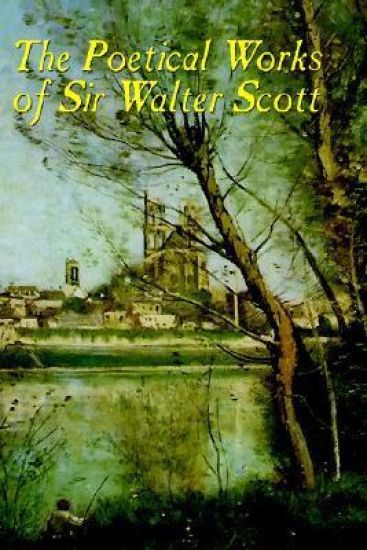
The Poetical Works of Sir Walter Scott

The Poetical Works of Sir Walter Scott

Walter Scott

Wildside Press
2025
pokkari
The aim in this edition of SCOTT'S POEMS has been to give a correct text, with such portions of Scott's notes as are likely to be useful or interesting to the general reader, and with fuller and better pictorial illustrations than are to be found in any former edition. The volume contains all the poems (not the plays, which are seldom, if ever, read nowadays, unless as mere literary curiosities), with the exception of a few bits of personal or occasional verse which Scott himself would never have printed, and which are not worth preserving. The original contributions to the Border Minstrelsy are included, except Scott's portion of Thomas the Rhymer (the Third Part only), which could not well be separated from the rest Of the Songs scattered through the novels and plays, the best of such as are comparatively independent of the context are given, together with all the poetical mottoes written by Scott himself for the heading of chapters.
The Poetical Works of  Sir Walter Scott

The Poetical Works of Sir Walter Scott

Walter Scott

Wildside Press
2025
sidottu
The aim in this edition of SCOTT'S POEMS has been to give a correct text, with such portions of Scott's notes as are likely to be useful or interesting to the general reader, and with fuller and better pictorial illustrations than are to be found in any former edition. The volume contains all the poems (not the plays, which are seldom, if ever, read nowadays, unless as mere literary curiosities), with the exception of a few bits of personal or occasional verse which Scott himself would never have printed, and which are not worth preserving. The original contributions to the Border Minstrelsy are included, except Scott's portion of Thomas the Rhymer (the Third Part only), which could not well be separated from the rest Of the Songs scattered through the novels and plays, the best of such as are comparatively independent of the context are given, together with all the poetical mottoes written by Scott himself for the heading of chapters.
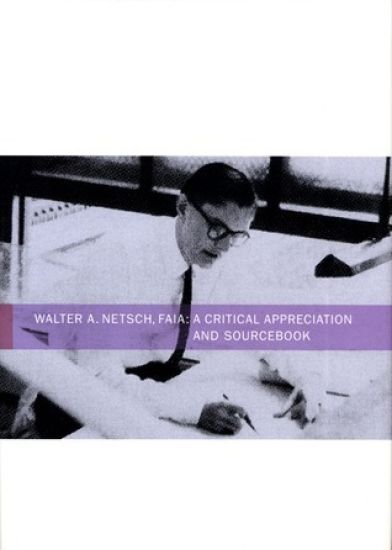
Walter Netsch

Walter Netsch

Northwestern University Library

Northwestern University Press
2008
sidottu
Northwestern University Library presents the first monograph devoted to the architect Walter Netsch, an early partner in Skidmore, Owings and Merrill and chief designer of the U.S.Air Force Academy and Cadet Chapel. This illustrated book includes a detailed chronology, biography, essays about his work and field theory design aesthetics, and statements by Netsch from 1954 to 2006.
Water's Edge

Water's Edge

NORTHWESTERN UNIVERSITY PRESS
2022
nidottu
A wide-ranging consideration of water’s plenitude and paucity—and of our relationship to its many forms Water is quotidian, ubiquitous, precious, and precarious. With their roots in this element, the authors of Water’s Edge reflect on our natural environment: its forms, textures, and stewardship. Born from a colloquium organized by the editors at the Institute at Brown for Environment and Society, the anthology features a diverse group of writers and artists from half a dozen countries, from different fields of scholarship and practice: artists, biologists, geologists, poets, ecocritics, actors, and anthropologists. The contributors explore and celebrate water while reflecting on its disturbances and pollution, and their texts and art play with the boundaries by which we differentiate literary forms. In the creative nonfiction, poetry, and visual art collected here, water moves from backdrop to subject. Ashley Dawson examines the effects of industrial farming on the health of local ecosystems and economies. Painter Kulvinder Kaur Dhew captures water’s brilliance and multifaceted reflections through a series of charcoal pieces that interlace the collection. Poet Arthur Sze describes the responsibility involved in the careful management of irrigation ditches in New Mexico. Rather than concentrating their thoughts into a singular, overwhelming argument, the authors circulate moments of apprehension, intimation, and felt experience. They are like tributaries, each carrying, in a distinctive style, exigent and often intimate reports concerning a substance upon which all living organisms depend. Contributions by Coral Bracho, Akiko Busch, Ashley Dawson, Kulvinder Kaur Dhew, Brenda Hillman, Maya Khosla, Will McGrath, José-Luis Moctezuma, Zoe Nyssa, Ailsa Piper, Elizabeth Rush, Cole Swensen, Arthur Sze, Wendy Woodson, Atul Bhalla, Samuel Gregoire and Colin Channer.
Walter C. Mycroft

Walter C. Mycroft

Walter C. Mycroft

Scarecrow Press
2006
nidottu
Walter Charles Mycroft (1890-1959) was the film critic of the Evening Standard from 1922-1927, and also a founding member of London's Film Society. In 1928, he was appointed Head of the Scenario Department—and then Director of Production—at British International Pictures (later Associated British Pictures). In 1941 Mycroft was sacked following the death of the company's Managing Director and the requisition of Elstree studios by the British Government for war purposes. After that his career went into steady decline, although after the Second World War he worked for nearly a decade as Scenario Adviser to Robert Clark, who ran the rebuilt Elstree studios. This long-lost memoir, which Mycroft wrote mainly in the 1940s, offers a detailed account of the vagaries and complex economic vicissitudes of British film production in the 1930s. Mycroft also recalls how he selected film stories for directors Harry Lachman, E. A. Dupont and Alfred Hitchcock, and he reveals, for the first time, the true story behind Hitchcock's departure from British International Pictures. Mycroft also provides incisive portraits of British film industry captains: the charismatic Alexander Korda, C. M. Woolf, the rising J. Arthur Rank, and above all John Maxwell, the shrewd iconoclastic Scots lawyer who built Associated British into the largest and most financially successful film corporation in pre-war Britain. The memoirs conclude with the death of Maxwell and Mycroft's fall from grace at Elstree. The volume is supplemented by four appendixes consisting of Mycroft's earlier writings on the aesthetics and business of film production, along with a filmography of over 200 films on which he worked. This memoir provides both scholars and the general reader with new and fascinating insights into the worlds of British journalism during the first two decades of the twentieth century and of British film production during the 1930s. Walter Mycroft: The Time of My Life will be of interest not only to scholars of British journalism a
Walter Map and the Matter of Britain

Walter Map and the Matter of Britain

Joshua Byron Smith

University of Pennsylvania Press
2017
sidottu
Why would the sprawling thirteenth-century French prose Lancelot-Grail Cycle have been attributed to Walter Map, a twelfth-century writer from the Anglo-Welsh borderlands known for his stinging satire, religious skepticism, ghost stories, and irrepressible wit? And why, though the attribution is spurious, is it not, in some ways, implausible? Joshua Byron Smith sets out to answer these and other questions in the first English-language monograph on Walter Map-and in so doing, he offers a new explanation for how narratives about the pre-Saxon inhabitants of Britain, including King Arthur and his knights, first circulated in England. Smith contends that it was inventive clerics like Walter, and not traveling minstrels or professional translators, who popularized these stories. Smith examines Walter's only surviving work, the De nugis curialium, to demonstrate that it is not the disheveled text that scholars have imagined but rather five separate works in various stages of completion. This in turn provides new evidence to support his larger contention, that ecclesiastical networks of textual exchange played a major role in exporting Welsh literary material into England. Medieval readers incorrectly envisioned Walter withdrawing ancient Latin documents about the Holy Grail from a monastery and compiling them in order to compose the Lancelot-Grail Cycle. In this detail they were wrong, Smith acknowledges, but a model of literary transmission that is not vernacular and popular but Latinate and ecclesiastical demands our serious consideration.