Kirjojen hintavertailu. Mukana 12 045 172 kirjaa ja 12 kauppaa.

Kirjahaku

Etsi kirjoja tekijän nimen, kirjan nimen tai ISBN:n perusteella.

1000 tulosta hakusanalla William D. Howells

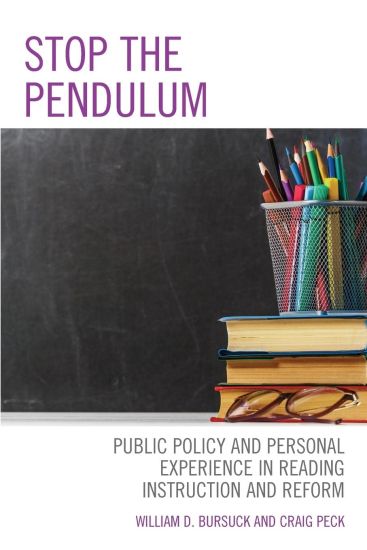
Stop the Pendulum

Stop the Pendulum

William D. Bursuck; Craig Peck

BLOOMSBURY PUBLISHING PLC
2021
sidottu
This is a book about the struggles over reforming reading instruction and the corresponding effort to improve reading achievement in the United States over the last seven decades.
Stop the Pendulum

Stop the Pendulum

William D. Bursuck; Craig Peck

BLOOMSBURY PUBLISHING PLC
2021
nidottu
This is a book about the struggles over reforming reading instruction and the corresponding effort to improve reading achievement in the United States over the last seven decades.
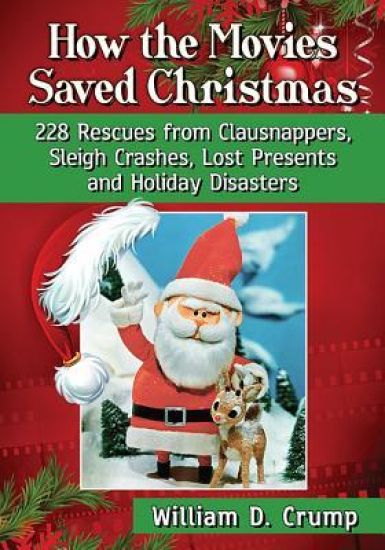
How the Movies Saved Christmas

How the Movies Saved Christmas

William D. Crump

McFarland Co Inc
2017
pokkari
Santa Claus is in trouble! Who will save Christmas? This A-to-Z guide to holiday films, television movies and series specials provides cast, credits, production information and commentary for 228 cinema Christmases that were almost ruined by villains, monsters, spirits, secularism, greed, misanthropy or elf error--but were saved by helpful animals, magic snowmen, selfless children or compassionate understanding. Reviews and references are included.
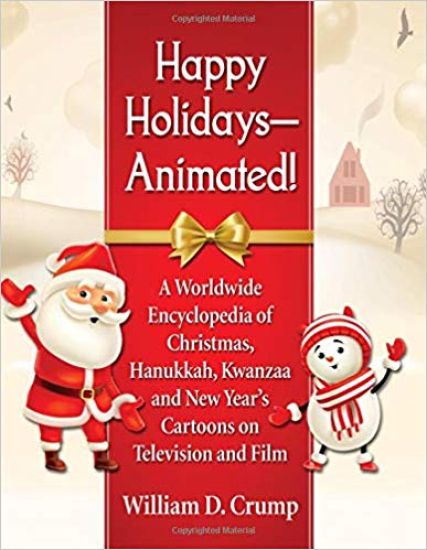
Happy Holidays--Animated!

Happy Holidays--Animated!

William D. Crump

McFarland Co Inc
2019
pokkari
Since the early 20th century, animated Christmas cartoons have brightened the holiday season around the world--first in theaters, then on television. From devotional portrayals of the Nativity to Santa battling villains and monsters, this encyclopedia catalogs more than 1,800 international Christmas-themed cartoons and others with year-end themes of Hanukkah, Kwanzaa and the New Year. Explore beloved television specials such as A Charlie Brown Christmas, theatrical shorts such as Santa's Workshop, holiday episodes from animated television series like American Dad! and The Simpsons, feature films like The Nutcracker Prince and obscure productions such as The Insects' Christmas, along with numerous adaptations and parodies of such classics as A Christmas Carol and Twas the Night before Christmas.
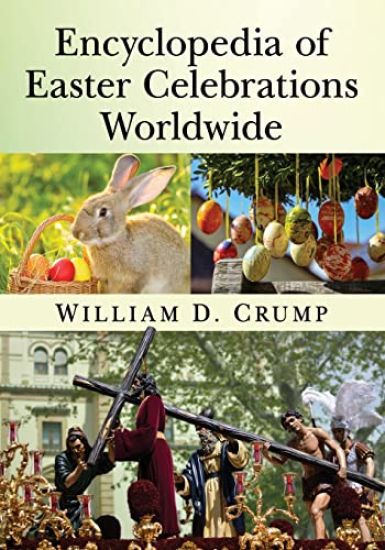
Encyclopedia of Easter Celebrations Worldwide

Encyclopedia of Easter Celebrations Worldwide

William D. Crump

McFarland Co Inc
2021
pokkari
At Eastertime, the most important holiday in the Christian world, religious processions in many Latin American countries pass over ornate street "carpets" fashioned from colored sawdust, flowers and fruit. Children in Finland and Sweden dress as "Easter witches." In the Caribbean, those who swim on Good Friday risk bad luck. In the Philippines, some penitents volunteer to be crucified. In some European countries, Easter Monday is the day for dousing women with water. With 240 entries, this book explores these and scores of other unusual and sometimes bizarre international Holy Week customs, both sacred and secular, from pilgrimages to Jerusalem to classic seasonal films and television specials.
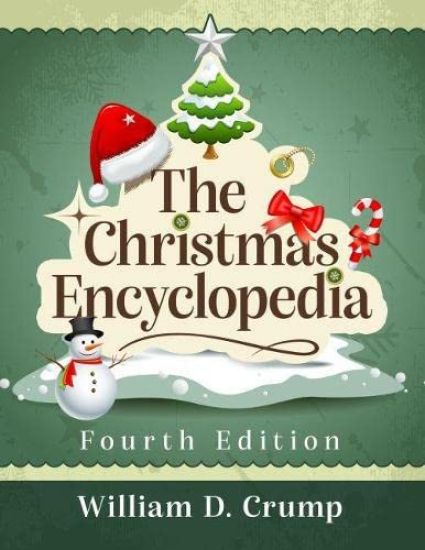
The Christmas Encyclopedia, 4th ed.

The Christmas Encyclopedia, 4th ed.

William D. Crump

MCFARLAND CO INC
2022
pokkari
From the manger of Jesus Christ to the 21st century, this encyclopedia explores more than 2,000 years of Christmas past and present through 966 entries packed with a wide variety of historical and pop-culture subjects. Entries detail customs and traditions from around the world as well as classic Christmas movies, TV series/specials and animated cartoons. Arranged alphabetically by entry name, the book includes the historical background of popular sacred and secular songs as well as accounts of beloved literary works with Christmas themes from such noted authors as Charles Dickens, Louisa May Alcott, Hans Christian Andersen, Pearl Buck, Henry Van Dyke and others. All things Christmas are available here in one comprehensive volume.
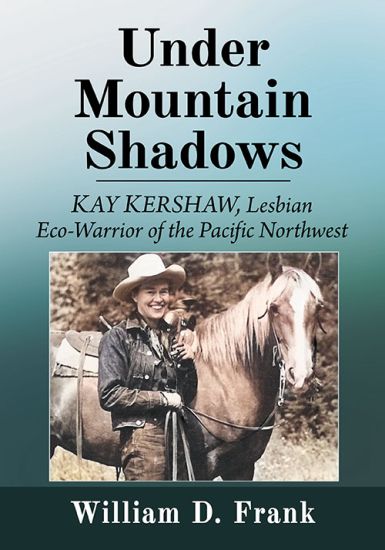
Under Mountain Shadows

Under Mountain Shadows

William D. Frank

MCFARLAND CO INC
2024
pokkari
From her world-famous dude ranch in Washington state's Yakima County, Kay Kershaw exerted tremendous influence on conservation efforts in the Pacific Northwest and, tangentially, on LGBTQ+ rights in the United States. After gaining local renown in sports and aviation, she established the ranch at Goose Prairie with her first partner, Pat Kane--a fraught undertaking in a region closely associated with the John Birch Society. Operating under the guise of two "spinsters," Kershaw and her later life-partner Isabelle Lynn guarded their privacy closely, but local encroachment by the U.S. Forest Service and the timber industry forced them into the public arena as environmentalists. In partnership with Supreme Court Justice William O. Douglas, Kershaw and Lynn spearheaded a decades-long campaign to save the ancient forests and ecosystem of Washington's Cascade Range. In the process, Kay and Isabelle's devoted relationship proved a marked contrast to Justice Douglas' own turbulent love life, perhaps affecting his perception of the law and his precedent-setting judicial opinion in Griswold v. Connecticut (1965), which provided the basis for major LGBTQ+ Supreme Court decisions in the twenty-first century as well as Roe v. Wade in 1973.
Beef U: How Big Business Ruined Your Dinner

Beef U: How Big Business Ruined Your Dinner

William D. Carlton

Createspace Independent Publishing Platform
2012
nidottu
The story of a young man and his journey to becoming a beef boner, the most highly skilled trade in the beef industry, chronicles the last years of an era before independant packers were eliminated all across America by big business tactics. Now a ghost town, Detroit's packinghouse district was a dynamic colorful community crushed out of existence by large corporations destroying hard won careers and negatively affecting us all. Today's profit before quality and dollars before fairness mentality has increased the cost of the beef we eat as much as it has reduced the quality, in the most insidious ways.Filled with funny and dramatic stories of a salty old working man and well seasoned with fascinating characters, BEEF U brings to life the packinghouse district where it was an adventure to work. Broader than just the beef industry, it serves as an example of what has happened in virtually all business and industry taking the joy out of our jobs and lowering our standard of living. BEEF U is the first true insider's look into the beef business and a reminder of how good life was for the American worker back before corporations acheived "wage slavery"
Rebuilding Expertise

Rebuilding Expertise

William D. Araiza

NEW YORK UNIVERSITY PRESS
2022
sidottu
Why the public has lost faith in government and how it can be restored In 1964, over three-quarters of Americans trusted the federal government to do the right thing all or most of the time. By 1980, that number had plummeted to 26 percent, and Ronald Reagan won a sweeping victory for the presidency while proclaiming that government was not the solution to our problems but was itself the problem. Today, Americans’ trust in public institutions is at near historic lows and “bureaucracy” and “big government” are pejorative terms. In Rebuilding Expertise, William D. Araiza investigates the sources of this phenomenon and explains how we might rebuild trust in our public institutions. Written in accessible and engaging language, the author examines the history of this deterioration of trust and reveals how politicians from Clinton to Trump have allowed that deterioration to continue, and, in some cases, actively encouraged it. Using an interdisciplinary approach, with insights from history, political science, law, and public administration, Araiza explores our current bureaucratic malaise and presents a roadmap to finding our way out of it, toward a regime marked by effective, expert regulation that remains democratically accountable and politically legitimate. A timely and indispensable read, Rebuilding Expertise makes clear what steps must be taken to regain public trust in our government.
Animus

Animus

William D. Araiza

New York University Press
2017
sidottu
An introduction to the legal concept of unconstitutional bias. If a town council denies a zoning permit for a group home for intellectually disabled persons because residents don't want "those kinds of people" in the neighborhood, the town's decision is motivated by the public's dislike of a particular group. Constitutional law calls this rationale "animus." Over the last two decades, the Supreme Court has increasingly turned to the concept of animus to explain why some instances of discrimination are unconstitutional. However, the Court's condemnation of animus fails to address some serious questions. How can animus on the part of people and institutions be uncovered? Does mere opposition to a particular group's equality claims constitute animus? Does the concept of animus have roots in the Constitution? Animus engages these important questions, offering an original and provocative introduction to this type of unconstitutional bias. William Araiza analyzes some of the modern Supreme Court's most important discrimination cases through the lens of animus, tracing the concept from nineteenth century legal doctrine to today's landmark cases, including Obergefell vs. Hodges and United States v. Windsor, both related to the legal rights of same-sex couples. Animus humanizes what might otherwise be an abstract legal question, illustrating what constitutes animus, and why the prohibition against it matters more today than ever in our pluralistic society.
Enforcing the Equal Protection Clause

Enforcing the Equal Protection Clause

William D. Araiza

New York University Press
2016
sidottu
For over a century, Congress's power to enforce the Fourteenth Amendment's guarantee of "the equal protection of the laws" has presented judges and scholars with a puzzle. What does it mean for Congress to "enforce" such a wide-ranging, open-ended provision when the Supreme Court has insisted on its own superiority in interpreting the Fourteenth Amendment? In Enforcing the Equal Protection Clause, William D. Araiza offers a unique understanding of Congress's enforcement power and its relationship to the Court's claim to supremacy when interpreting the Constitution. Drawing on the history of American thinking about equality in the decades before and after the Civil War, Araiza argues that congressional enforcement and judicial supremacy can co-exist, but only if the Court limits its role to ensuring that enforcement legislation reasonably promotes the core meaning of the Equal Protection Clause. Much of the Court's equal protection jurisprudence stops short of stating such core meaning, thus leaving Congress free (subject to appropriate judicial checks) to enforce the full scope of the constitutional guarantee. Araiza's thesis reconciles the Supreme Court's ultimate role in interpreting the Constitution with Congress's superior capacity to transform the Fourteenth Amendment's majestic principles into living reality. The Fourteenth Amendment's Enforcement Clause raises difficult issues of separation of powers, federalism, and constitutional rights. Araiza illuminates each of these in this scholarly, timely work that is both intellectually rigorous but also accessible to non-specialist readers.
An Inspired Book of Poems

An Inspired Book of Poems

William D. Waites

Rosedog Books
2016
nidottu
Author William D. Waites says that during the time of revival in the middle and late seventies, the Lord in His way chose to bestow upon him this gift of writing Christian poetry. He simply writes down what the Holy Spirit tells him and that the Holy Spirit is the author. They are given to him anytime and in detail. These poems have been given to him for people, to reflect on in the choir loft or even riding down the road after hearing a sermon. Waites hopes that as An Inspired Book of Poems is read, the readers will get the message that God is sending. About the Author William D. Waites was born on September 5, 1938 in Alexander City, Alabama. His parents were William and Eloise Funderburk Waites. He had an older sister, Hilda, who died when she was fourteen. He attended school locally and graduated in 1956, playing many sports but excelling in football. His greatest disappointment was losing his scholarship to Alabama because they found out he wore contact lenses. He lied and joined the National Guard when he was sixteen in 1954, which led to him joining the Navy in 1956. He served in California, Washington D.C., and Morocco in North Africa. He had an eight year obligation which he served and was discharged in 1962. Waites said he was proud to have served his country. The next six years were spent working here and there, moving a lot, and were thought of by Waites as a total waste. In 1968 he started working at a local furniture store, which was part of Skinner Corp, a chain in Georgia, Alabama, and Florida. This is where Waites was able to find his niche. In 1970, Waites met his future wife, Joan Blanks. He had gone to school with her for three years but did not know her. On the second date he knew he was going to marry her. In two weeks it was settled, and four weeks later on Dec. 26, they married. They had two children, Ray and Dee Dee. He had been moved into management, and they were living in Carrollton Georgia. Both had been saved when they were young by experiencing a spiritual revival in their lives which continued until she died December 1, 2012. Waites says it will continue as long as he lives.
The Plan That Broke the World: The "Schlieffen Plan" and World War I

The Plan That Broke the World: The "Schlieffen Plan" and World War I

William D. O'Neil

Createspace Independent Publishing Platform
2014
nidottu
"Will O'Neil has written a truly superb account of the events that led to the German defeat in World War I. His superb research, analysis, and insights make this work a must read for all those who study history or wish to learn from the critical mistakes of the past. This is the best writing on this subject I have read." -- General Anthony C. Zinni USMC (Retired) "A superb read, even for those who think themselves already well-versed in this topic." -- John T. Kuehn, Ph.D., William A. Stofft Professor, U.S. Army Command and General Staff College. Author of Agents of Innovation. As July turned to August in 1914, all the Great Powers of Europe mobilized their armies and then went to war with one another. It would take more than 50 months for peace to return, and the better part of a century to heal many of the wounds. Germany acted only near the end of a chain of actions by other nations, but German troops moved first and set the pattern for the war. They smashed through neutral Belgium before thrusting deeply into France, coming close to knocking France out of the war, and soon were making huge inroads in Russia as well. It was a remarkable performance for an army outnumbered by its foes. Yet four years later the German Empire was swept away, its army a shell, its people starving, its government in chaos. How did the leaders of Imperial Germany come to make the decisions that committed their nation to an all-or-nothing war based on a highly risky strategy? This book explores the background of the decisions, what those who made them knew and thought, what they failed to look at and why. It explains the Prussian Great General Staff (Gro er Generalstab) and the part it played in planning and preparing for war. It follows the action of August and the first part of September 1914 to show where they went wrong and how other options could have achieved Germany's aims with far lower risk and cost. These options were realistically available and the book probes why the nation's leaders failed to consider or rejected them. The German leaders in 1914 weren't Hitler. They valued security over conquest and didn't go to war to expand their empire. They weren't the first to light the fuze that led to war. They thought and acted as leaders very often do. We can understand them in terms of patterns we see all around us, patterns we even see in ourselves. Their decisions had results that were uniquely catastrophic, but the way they were reached was quite ordinary. The Plan That Broke the World explains it all briefly and crisply, in non-technical terms, drawing on the latest research. There are 35 images, many unique to this book, to illustrate specific aspects of the story. Four charts and thirteen high-quality maps, all but one drawn especially for this book, present complex information in forms that are immediately understandable. There's no other book like it. The book Web site is whatweretheythinking.williamdoneil.com/theplanthatbroketheworld This difference between the first and second editions comes in the Introduction. A PDF copy of the revised Introduction may be downloaded from the Web site. The Plan That Broke the World is a case study in the What Were They Thinking? series. The series Web site is whatweretheythinking.williamdoneil.com/