

Kirjahaku
Etsi kirjoja tekijän nimen, kirjan nimen tai ISBN:n perusteella.
1000 tulosta hakusanalla Wilson Muoha Maina
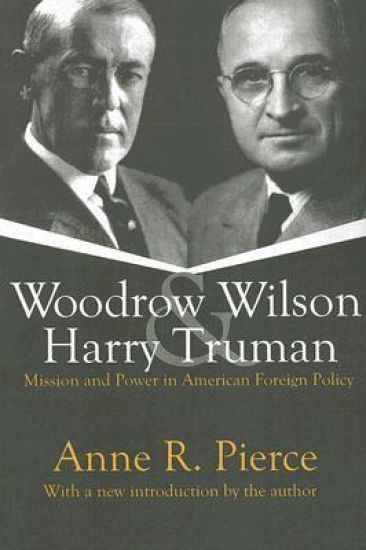
The modern world derives part of its meaning and definition from the foreign policy formulations of Woodrow Wilson and Harry Truman. These presidents viewed the enhancement of American power and the invigoration of American principles as the only response to modem problems such as imperialism, bolshevism, fascism and "total war." The fact that Europe and Asia had submitted to the disastrous consequences of their ideas meant that we had to project and promote our democratic alternative. If we were to live up to our mission and our character, we had to accept radically new responsibilities. This work reveals the important relationship between these presidents and explores the reverential, yet revolutionary relationship each had with broader American traditions.Wilson came to power at a time when both need and the means for change were apparent. In the face of looming war and global turmoil, Wilson took full advantage of America's emerging world-power status. While he held to the traditional American ideal of setting a democratic example, he reconceived it as an obligation to actively promote democracy and self-determination abroad. Indeed, he construed our increased involvement in the world as the logical fulfillment of our democratic purpose. In the heated aftermath of World War II, Truman echoed Wilson's assertion that only the fortification of democracy and the "influence" of America could ease European tensions and prevent future wars.While Truman's early foreign policy is often said to exhibit Wilsonian internationalism, his later "power politics," Pierce shows that all of his foreign policy was underlain by his determination never to let what had happened during and between two world wars happen again. Pierce demonstrates that even Truman's most avid departure from Wilsonianism, his plunge into geopolitics and his build-up of the military power of the free world, was saturated with Wilsonian ideals. "Containment" was underlain by the conviction that, even though it faced fascism and bolshevism, freedom was on the march, and by the surety that democracy is lasting, peaceful and beneficial.As Pierce studies these presidents within the synergistic interplay of ideas and policies, she compels us toward a fruitful dialogue with the American past. Truman's brilliantly construed version of Wilsonianism, this book argues, holds great promise for us today.
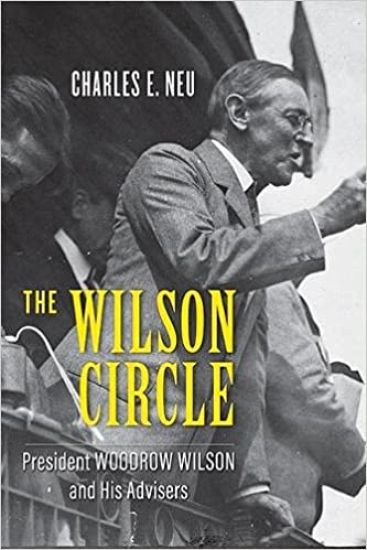
An in-depth look at the key advisers to Woodrow Wilson during the course of his tumultuous presidency.Nearly 100 years after Woodrow Wilson's death, historians continue to be divided over the impact of his presidency and his political leadership. The collapse of Wilson's health in 1919 and his failure to win Senate approval of the Versailles Treaty have tainted his legacy, as have the racism of his administration and its disregard for civil liberties after American entry into World War I. In The Wilson Circle, Charles E. Neu takes a new look at the Wilson presidency through the lens of his inner circle, a group of ten advisers. Some of these advisers, like his wife Ellen, were by his side at the start of his term, while others joined him as the challenges facing Wilson's presidency mounted. All of these advisers believed that, whatever Wilson's flaws as a leader, they had served a great man whose legacy would endure. Struck by his magnetism, his oratorical gifts, and the power and precision of his mind, they each became, to one extent or another, friends of the president. Looking back, they acknowledged that their relationship with Woodrow Wilson had transformed their lives.Challenging the publicly held assumption that Wilson was a remote, harsh president by exploring the intense emotional connection he developed with this tight-knit group, Neu argues that we can partially credit Wilson's remarkable journey in American politics to his ability to bring together such an impressive group of advisers. Wilson realized that, given his limited energy and experience, he had to rely on advisers to help him maintain his physical and emotional equilibrium and to achieve his far-reaching political goals. And as the demands on his presidency changed, changes also occurred in his group of presidential confidants. Informing vivid biographical sketches with a wide range of recent scholarship, The Wilson Circle shines a light on the exceptional people whose advice impacted the course of a presidency.
Christopher North, ' a Memoir of John Wilson, Late Professor of Moral Philosophy in the University of Edinburgh, Comp. from Family Papers and Other So
Mary Wilson Gordon
University of Michigan Library
2006
pokkari
Noetes Ambrosianu, by the Late John Wilson and Wm. Maginn, L.L.D., J. G. Lockhard, James Hogg, Andc; With Memoirs and Notes by R. Shelton MacKenzie.
John Wilson
University of Michigan Library
2006
pokkari


Noetes Ambrosianae. by Christopher North. (Prof. John Wilson.) Selected, Edited and Arranged by John Skelton.
John Wilson
University of Michigan Library
2006
pokkari
A complete collection of RICHARD WILSON MOSS's poetry over a span of fourty years. Richard began writing poetry at the age of twelve. His journey as a poet is documented in an autobiographical journal, Northspur.