

Kirjahaku
Etsi kirjoja tekijän nimen, kirjan nimen tai ISBN:n perusteella.
1000 tulosta hakusanalla "Civilization"



Civilization in the United States; First and Last Impressions of America
Matthew Arnold
Trieste Publishing
2018
nidottu


Civilization in the United States; First and Last Impressions of America
Matthew Arnold
Trieste Publishing
2018
nidottu

Civilization in the United States; First and Last Impressions of America
Matthew Arnold
Trieste Publishing
2018
nidottu
Trieste Publishing has a massive catalogue of classic book titles. Our aim is to provide readers with the highest quality reproductions of fiction and non-fiction literature that has stood the test of time. The many thousands of books in our collection have been sourced from libraries and private collections around the world.The titles that Trieste Publishing has chosen to be part of the collection have been scanned to simulate the original. Our readers see the books the same way that their first readers did decades or a hundred or more years ago. Books from that period are often spoiled by imperfections that did not exist in the original. Imperfections could be in the form of blurred text, photographs, or missing pages. It is highly unlikely that this would occur with one of our books. Our extensive quality control ensures that the readers of Trieste Publishing's books will be delighted with their purchase. Our staff has thoroughly reviewed every page of all the books in the collection, repairing, or if necessary, rejecting titles that are not of the highest quality. This process ensures that the reader of one of Trieste Publishing's titles receives a volume that faithfully reproduces the original, and to the maximum degree possible, gives them the experience of owning the original work.We pride ourselves on not only creating a pathway to an extensive reservoir of books of the finest quality, but also providing value to every one of our readers. Generally, Trieste books are purchased singly - on demand, however they may also be purchased in bulk. Readers interested in bulk purchases are invited to contact us directly to enquire about our tailored bulk rates.
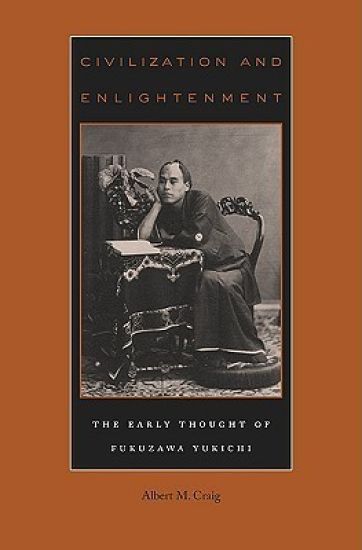
The idea that society progresses through stages of development, from savagery to civilization, arose in eighteenth-century Europe. Albert Craig traces how Fukuzawa Yukichi, deeply influenced by the Scottish Enlightenment, “translated” the idea for Japanese society, both enriching and challenging the concept.Fukuzawa, an official in the Tokugawa government, saw his career collapse when the shogunate ended in 1867. Reinventing himself as a thinker and writer, he made his life work the translation and interpretation of the Western idea of the stages of civilization. He interpreted key Scottish intellectuals— Adam Smith, Adam Ferguson, William Robertson, John Millar; relied on American geographies to help explain how societies progress; and focused on invention as a key to civilization.By defining the role of “less developed” nations in the world order, Fukuzawa added a new dimension to the stage theory. But by the end of the 1880s, he had come to dismiss the philosophy of natural rights as “the fatuous idealism of Christian ministers.” Though civilization—as represented by Britain—was still his goal for Japan, he no longer saw the West as a uniformly beneficial moral force.This engaging history offers an illuminating look at an important figure and the world of ideas in nineteenth-century Japan.

Written during a long sea voyage from England through the Mediterranean, Civilization and the Limpet unveils many fascinating phenomena of undersea life. Wells captures with exquisite detail how limpets, like bees, navigate by the stars how the brainless sea urchin makes a myriad of critical survival decisions every day how deserted islands" teem with an incredible abundance of animal life and why deep-diving whales never get the bends. Elegant and finely crafted, Civilization and the Limpet will enlighten, amuse, and awe anyone interested in the natural world.

Civilization and Self-Government is the first systematic attempt to explicitly articulate the key elements of Carlo Cattaneo's pioneering attempt to advance freedom and self-government in nineteenth-century Europe. His public science combined two elements that constitute the two parts of this book: the study of incivilimento, and the art and science of self-governance. Cattaneo argued that people have to learn the arts of incivilimento before they can practice self-governance. Though a distinguishing feature of Italian political thought has been to stress the multiform nature of political rule, it was Cattaneo who first showed that it was possible, through a federal commercial republic, to harmonize and foster liberty, equality, and heterogeneity. Characteristically, he envisioned a federal commercial republic for Europe as well. Cattaneo's ideas recast, enrich, and broaden knowledge of the history of European thought beyond that generally available in English and French.This book reveals a strong affinity between Cattaneo's and Tocqueville's spirit and vision.

Civilization and Self-Government is the first systematic attempt to explicitly articulate the key elements of Carlo Cattaneo's pioneering attempt to advance freedom and self-government in nineteenth-century Europe. His public science combined two elements that constitute the two parts of this book: the study of incivilimento, and the art and science of self-governance. Cattaneo argued that people have to learn the arts of incivilimento before they can practice self-governance. Though a distinguishing feature of Italian political thought has been to stress the multiform nature of political rule, it was Cattaneo who first showed that it was possible, through a federal commercial republic, to harmonize and foster liberty, equality, and heterogeneity. Characteristically, he envisioned a federal commercial republic for Europe as well. Cattaneo's ideas recast, enrich, and broaden knowledge of the history of European thought beyond that generally available in English and French.This book reveals a strong affinity between Cattaneo's and Tocqueville's spirit and vision.

Nineteenth-century Italy is a vast, unexplored territory in the history of modern political thought and liberal democratic theory. Apart from Mazzini, Pareto, and Mosca, the authors of this period are little read, even though their central concerns – the riddle of human liberation, progress, and liberty – are as important today as ever. This volume presents a selection of the writings of Carlo Cattaneo (1801-1869), one of the period's most important thinkers, as selected by an equally important personage of a subsequent time, the anti-Fascist intellectual Gaetano Salvemini. Cattaneo had a profound sense of the historical contingencies underlying the quest both to understand human affairs and to realize a self-governing society. Cattaneo's ideas and framework of analysis – like those of John Stuart Mill and Alexis de Tocqueville – were not shaped by a narrow intra-academic agenda but by the great social, economic, and political transformations of his time. The issues he addressed included problems of revolution, reform, and change in the passage to modernity, which extended far beyond the confines of nineteenth-century Italy. The selection of original pieces presented in this translation is preceded by an introduction by the editors, Carlo G. Lacaita and Filippo Sabetti, which guides the reader through Cattaneo's thinking and puts it in a comparative context. Ultimately, however, it is the editors' goal to let this profound Italian thinker speak for himself.

Nineteenth-century Italy is a vast, unexplored territory in the history of modern political thought and liberal democratic theory. Apart from Mazzini, Pareto, and Mosca, the authors of this period are little read, even though their central concerns – the riddle of human liberation, progress, and liberty – are as important today as ever. This volume presents a selection of the writings of Carlo Cattaneo (1801-1869), one of the period's most important thinkers, as selected by an equally important personage of a subsequent time, the anti-Fascist intellectual Gaetano Salvemini. Cattaneo had a profound sense of the historical contingencies underlying the quest both to understand human affairs and to realize a self-governing society. Cattaneo's ideas and framework of analysis – like those of John Stuart Mill and Alexis de Tocqueville – were not shaped by a narrow intra-academic agenda but by the great social, economic, and political transformations of his time. The issues he addressed included problems of revolution, reform, and change in the passage to modernity, which extended far beyond the confines of nineteenth-century Italy. The selection of original pieces presented in this translation is preceded by an introduction by the editors, Carlo G. Lacaita and Filippo Sabetti, which guides the reader through Cattaneo's thinking and puts it in a comparative context. Ultimately, however, it is the editors' goal to let this profound Italian thinker speak for himself.
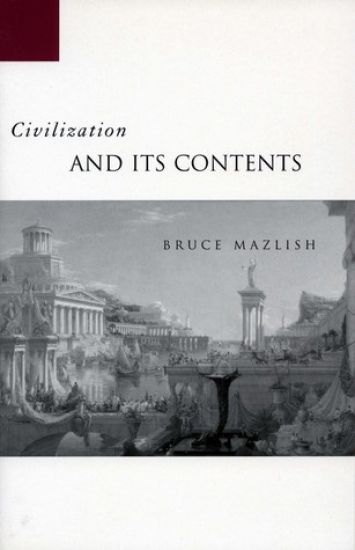
"Civilization" is a constantly invoked term. It is used by both politicians and scholars. How useful, in fact, is this term? Civilization and Its Contents traces the origins of the concept in the eighteenth century. It shows its use as a colonial ideology, and then as a support for racism. The term was extended to a dead society, Egyptian civilization, and was appropriated by Japan, China, and Islamic countries. This latter development lays the groundwork for the contemporary call for a "dialogue of civilizations." The author proposes instead that today the use of the term "civilization" has a global meaning, with local variants recognized as cultures. It may be more appropriate, however, to abandon the name "civilization" and to focus on a new understanding of the civilizing process.
"Civilization" is a constantly invoked term. It is used by both politicians and scholars. How useful, in fact, is this term? Civilization and Its Contents traces the origins of the concept in the eighteenth century. It shows its use as a colonial ideology, and then as a support for racism. The term was extended to a dead society, Egyptian civilization, and was appropriated by Japan, China, and Islamic countries. This latter development lays the groundwork for the contemporary call for a "dialogue of civilizations." The author proposes instead that today the use of the term "civilization" has a global meaning, with local variants recognized as cultures. It may be more appropriate, however, to abandon the name "civilization" and to focus on a new understanding of the civilizing process.
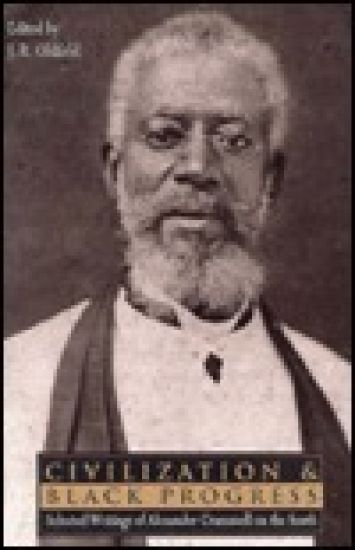
Alexander Crummell played a pivotal role in later 19th-century debates over race and black intellect. This is a collection of Crummell's most significant writings on the South. It includes a biography in the introduction, and detailed annotations in the text.