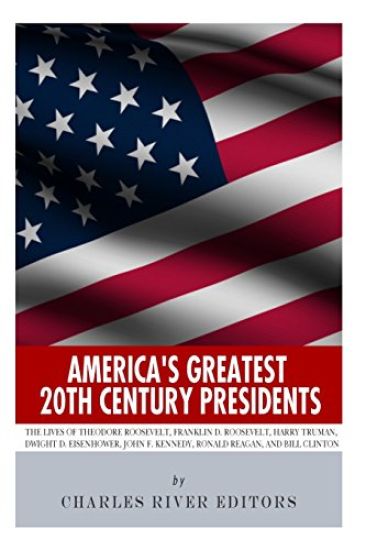
*Includes dozens of pictures of the presidents and important people, places, and events in their lives. *Includes an original introduction for each president. *Includes bibliographies for further reading. If the 19th century was about America overcoming its own divisions to takes its place at the forefront of global affairs, the 20th century was about fulfilling those visions and goals. To get there, the nation needed the leadership of presidents of different stripes and ideologies to guide the United States toward its destiny. When McKinley was assassinated in 1901, young Theodore Roosevelt was thrust into the presidency, one that would earn him a place on Mount Rushmore, Roosevelt's "Square Deal" domestic policies favored average citizens while busting trusts and monopolies. Roosevelt also promoted conservation as an environmental stance, while his "speak softly and carry a big stick" foreign policy is still an oft used phrase today. Roosevelt even earned a Nobel Prize during his presidency. By the time Roosevelt died in 1919, he was an American icon. Franklin Delano Roosevelt might be America's greatest 20th century president, but there's no question that he was the most unique. A well-connected relative of Theodore Roosevelt, FDR was groomed for greatness until he was struck down by polio. Nevertheless, he persevered, rising through New York politics to reach the White House just as the country faced its greatest challenge since the Civil War. When President Franklin Roosevelt died in April 1945, Vice President Truman had to usher America through victory in Europe in his first month and decide to drop atomic bombs on Hiroshima and Nagasaki a few months later, but the end of World War II produced only the first of many consequential decisions Truman would face during his nearly 8 years in office. As president, Truman would lay the groundwork for the next 50 years of American foreign policy, as the architect of Cold War containment, the man who signed off on the Marshall Plan, and the commander-in-chief during much of the Korean War. During the middle of the 20th century, the United States completed its transformation into one of the world's superpowers, and few were as instrumental in this development as Dwight D. Eisenhower (1890-1969), renowned for being the nation's principal commanding general during World War II and the president who served during the early, tumultuous Cold War years. Despite being one of America's oldest presidents, Eisenhower redefined the public relations nature of the office, in addition to positioning America during the Cold War standoff with the Soviet Union. In many ways, John Fitzgerald Kennedy and his young family were the perfect embodiment of the '60s. In 1961, Kennedy made it seem like anything was possible, and Americans were eager to believe him. The Kennedy years were fondly and famously labeled "Camelot," by Jackie herself, suggesting an almost mythical quality about the young President and his family. In the famous movie Back to the Future, Marty McFly travels back to 1955, and, in an attempt to convince his friend Doc Brown that he is from 1985, tells the 1955 version of Doc Brown that Ronald Reagan is president. Doc looks at him incredulously and laughs, chortling, "Ronald Reagan? The actor?" In a story that could have come straight out of Hollywood, the golden actor rose through California politics to become California governor and eventually the 40th President. Widely hailed as the greatest politician of his era, Bill Clinton proved to be his own worst enemy, creating unnecessary scandals through his womanizing. Long considered the Democratic Party's greatest spokesman and surrogate, Clinton's presidency was defined by centrist "triangulation". And though he is still publicly popular and considered a great president, Clinton became just the second president to be impeached.
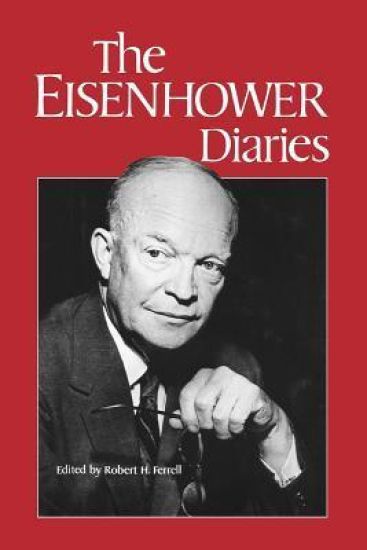
In his books—the memoir of the Second World War, the two large volumes on the presidency, the incomplete autobiography written near the end of his life—Eisenhower related the course of events over the years, with descriptive detail and frequently with humor, but he usually stayed away from analysis. In his many private letters to friends and acquaintances, some of which have been published, he was more frank, but he still held back. And the public record of his military career and of his presidency does not reflect many open, frank statements, proofs that the soldier-president thought long and deeply about issues, personal or public; it has given substance to the speculation by many of his contemporaries and by some later students of Eisenhower that he was essentially a public relations man and that his life was all outward—an expression of assent and agreement or at least of forebearance, of a man who never had an idea or, if he did, would quickly chase it out of sight.
Eisenhower's Own Story Of The War: The Complete Report By The Supreme Commander On The War In Europe is a comprehensive account of the Second World War in Europe, written by Dwight D. Eisenhower, who served as the Supreme Commander of the Allied Forces during the war. The book covers the period from the invasion of Normandy in June 1944 to the end of the war in May 1945. Eisenhower provides a detailed and insightful analysis of the military strategy and tactics employed by the Allies, as well as the challenges they faced in their efforts to defeat the Axis powers. He also shares his personal experiences and observations from the front lines, offering a unique perspective on the war.The book is divided into several chapters, each focusing on a specific aspect of the war, such as the Battle of the Bulge, the liberation of Paris, and the final push into Germany. Eisenhower provides a wealth of information on the key players and events of the war, including the roles played by other Allied leaders such as Winston Churchill and Franklin D. Roosevelt.Overall, Eisenhower's Own Story Of The War is an essential read for anyone interested in the history of the Second World War, offering a firsthand account of one of the most pivotal periods in modern history.The Complete Report By The Supreme Commander On The War In Europe From The Day Of Invasion To The Day Of Victory.This scarce antiquarian book is a facsimile reprint of the old original and may contain some imperfections such as library marks and notations. Because we believe this work is culturally important, we have made it available as part of our commitment for protecting, preserving, and promoting the world's literature in affordable, high quality, modern editions, that are true to their original work.
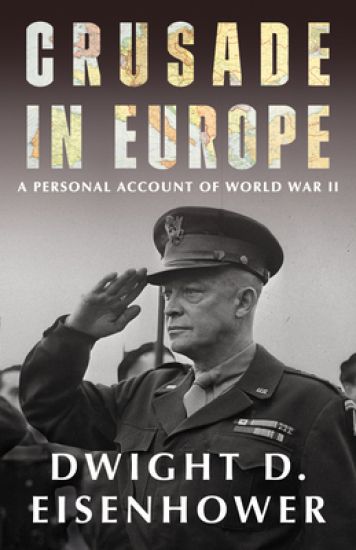
A classic of World War II literature, an incredibly revealing work that provides a near comprehensive account of the war and brings to life the legendary general and eventual president of the United States. Five-star General Dwight D. Eisenhower was arguably the single most important military figure of World War II. Crusade in Europe tells the complete story of the war as he planned and executed it. Through Eisenhower's eyes the enormous scope and drama of the war--strategy, battles, moments of great decision--become fully illuminated in all their fateful glory. Penned before his Presidency, this account is deeply human and helped propel him to the highest office. His personal record of the tense first hours after he had issued the order to attack leaves no doubt of his travails and reveals how this great leader handled the ultimate pressure. For historians, his memoir of this world historic period has become an indispensable record of the war and timeless classic.
This work has been selected by scholars as being culturally important and is part of the knowledge base of civilization as we know it.This work is in the public domain in the United States of America, and possibly other nations. Within the United States, you may freely copy and distribute this work, as no entity (individual or corporate) has a copyright on the body of the work.Scholars believe, and we concur, that this work is important enough to be preserved, reproduced, and made generally available to the public. To ensure a quality reading experience, this work has been proofread and republished using a format that seamlessly blends the original graphical elements with text in an easy-to-read typeface.We appreciate your support of the preservation process, and thank you for being an important part of keeping this knowledge alive and relevant.
"The Communist Threat in the Taiwan Area," authored by John Foster Dulles and Dwight D. Eisenhower, offers a crucial historical perspective on the Cold War tensions surrounding Taiwan. This meticulously prepared print edition examines the island's defense strategies and the foreign policy considerations of the era. Delving into the heart of geopolitical strategy, the book analyzes the perceived communist threat and its impact on the region. Explore the historical context of Taiwan's relationship with China through the lens of international relations and Cold War politics. A vital resource for understanding the complex dynamics of this critical period in Asian history, this book is essential for anyone interested in political science, foreign policy, and the historical defense of Taiwan.This work has been selected by scholars as being culturally important, and is part of the knowledge base of civilization as we know it.This work is in the public domain in the United States of America, and possibly other nations. Within the United States, you may freely copy and distribute this work, as no entity (individual or corporate) has a copyright on the body of the work.Scholars believe, and we concur, that this work is important enough to be preserved, reproduced, and made generally available to the public. We appreciate your support of the preservation process, and thank you for being an important part of keeping this knowledge alive and relevant.
The History Of The Third Infantry Division In World War II by Donald Gilbert Taggart is a comprehensive account of the Third Infantry Division's role in World War II. The book covers the division's formation, training, and deployment to North Africa, Sicily, Italy, France, and Germany. The author provides a detailed description of the division's battles, including the landing at Anzio, the liberation of Rome, the Battle of the Bulge, and the capture of Munich. The book also includes personal accounts from soldiers who served in the division, as well as maps and photographs that help illustrate the division's movements and actions. This book is a valuable resource for anyone interested in the history of the Third Infantry Division or World War II in general.Additional Contributors Are Jonathan W. Anderson, Lucian K. Truscott, Jr., And John W. O'Daniel. Preface By Frederick C. Spreyer. Illustrations By Richard Gaige And Henry McAlear.This scarce antiquarian book is a facsimile reprint of the old original and may contain some imperfections such as library marks and notations. Because we believe this work is culturally important, we have made it available as part of our commitment for protecting, preserving, and promoting the world's literature in affordable, high quality, modern editions, that are true to their original work.
""Guam: Operations of the 77th Division, July 21 to August 10, 1944"" is a historical account of the military operations that took place in Guam during the Second World War. The book is written by James M. Burns, who was a member of the 77th Infantry Division, which was one of the units that participated in the liberation of Guam from the Japanese forces. The book provides a detailed description of the events that took place during the 21-day campaign, including the battles and the strategies used by both sides. The author also provides a personal account of his experiences during the campaign, which adds a human element to the story. The book is well-researched and provides a comprehensive overview of the military operations that took place in Guam during the Second World War. It is an essential read for anyone interested in military history or the Pacific Theater of the Second World War.This scarce antiquarian book is a facsimile reprint of the old original and may contain some imperfections such as library marks and notations. Because we believe this work is culturally important, we have made it available as part of our commitment for protecting, preserving, and promoting the world's literature in affordable, high quality, modern editions, that are true to their original work.