Kirjojen hintavertailu. Mukana 12 390 323 kirjaa ja 12 kauppaa.

Kirjahaku

Etsi kirjoja tekijän nimen, kirjan nimen tai ISBN:n perusteella.

102 tulosta hakusanalla "Edvard Munch"

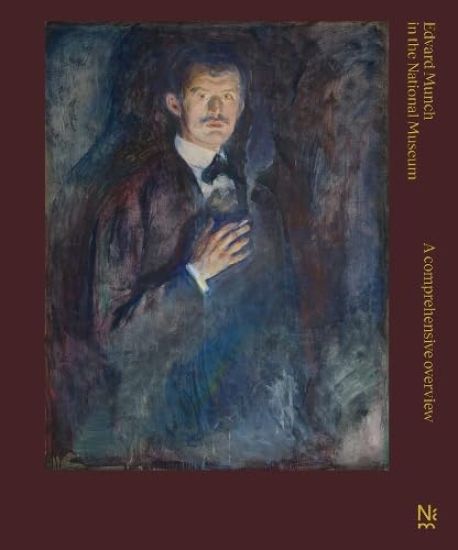
Edvard Munch in The National Museum
The close relationship between Edvard Munch and the National Gallery of Oslo, today part of the National Museum, is a subject well worthy of a detailed publication. The first Munch painting acquired by the museum was Night in Nice, purchased in 1891. Today the collection encompasses 57 paintings and 186 works on paper. The paintings include masterpieces such as The Sick Child, The Scream, Madonna, The Girls on the Bridge, and Man in the Cabbage Field. How did the museum come by all these works? And what is the story behind the famous 'Munch Room'? Answers to these and many other questions can be found in this book, which contains reproductions of all the works in the collection. The book contains texts by Karin Hindsbo, Nils Messel, Sidsel Helliesen, Gerd Woll, Thierry Ford, Mai Britt Guleng, Øystein Ustvedt, Wenche Volle and Vibeke Waallann Hansen. Text in English and Norwegian.
Edvard Munch: The Scream

Edvard Munch: The Scream

Patricia G. Berman; Joanna Iranowska; Øyvind Vågnes

Munch Museum
2024
sidottu
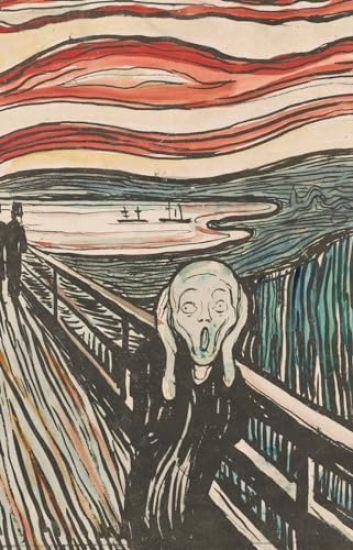
Ever since Munch first came up with the Scream motif at the end of the 19th century, countless artists, including Andy Warhol and Marina Abramovic, have modified it within their own work. In addition, the open-mouthed figure has cropped up in popular cultural productions such as Wes Craven’s Scream film franchise, the poster for the kids’ movie Home Alone, and in scores of satirical cartoons – on everything from Brexit to Donald Trump’s presidency and tax rises – as well as on innumerable political banners and placards, most recently in protests about the climate emergency. In recent years, the Scream image has also taken a prominent place on digital screens in the form of its own emoji and as the basis of countless memes. At the same time, the quantity of souvenirs and other objects decorated with or shaped like Munch’s figure of desperation has increased immeasurably. In short: these days The Scream haunts pretty much every layer of culture. It is without doubt one of the most frequently reproduced images in the history of art, equalled only perhaps by Leonardo da Vinci’s Mona Lisa, and is the originator of a constantly expanding network of analogue and digital mutations. Via these three texts, and a rich selection of illustrations – including all known Scream images ever made by the artist himself, a selection of his Scream texts and countless so-called Scream mutations – this book embraces Munch’s best-known image as a cultural phenomenon.
Edvard Munch Pop-Ups

Edvard Munch Pop-Ups

Bjørn Arild Ersland

Munch Museum
2024
sidottu
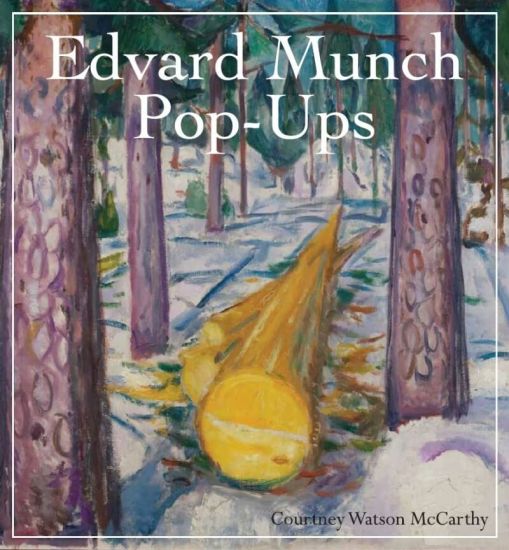
Edvard Munch was one of Modernism's most significant artists. He was active throughout more than sixty years; from the time he made his debut in the 1880s, right up until his death in 1944. Munch was part of the Symbolist movement in the 1890s, and a pioneer of expressionist art from the beginning of the 1900s onward. His tenacious experimentation within painting, graphic art, drawing, sculpture, photo and film has given him a unique position in Norwegian as well as international art history. For the first time you can experience Munch's most famous works of art as 3D pop-ups. The book showcases The Women on the Bridge, Woman with Poppies, The Building of the Winter Studio, Children in the Forest, The Yellow Log and the iconic Scream accompanied by explanatory texts and sketches by Munch. "The sheer effortlessness of Ersland's prose allows his words to move wherever they like - through images, into Munch's life and out into the world." Karl Ove Knausgaard
Edvard Munch: Life Expressions

Edvard Munch: Life Expressions

Nikita Mathias

Munch Museum
2024
nidottu
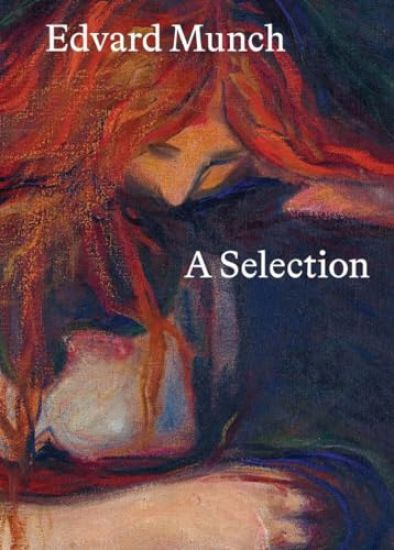
Edvard Munch (1863-1944) was a visionary and obsessive artist who would not rest until he had captured human existence in its entirety, both in its beauty and in its inner conflicts and contradictions. Today, paintings such as Madonna, The Scream, and Vampire are known worldwide and shared online and on social media in the millions. Munch has become a part of popular culture. This book gives a concise, accessible and illuminating introduction to Munch’s life and art. It is generously illustrated, including a large selection of images from all stages of Munch’s career.
Edvard Munch: Infinite
One sole truth about Edvard Munch’s art does not exist. The answers depend on the questions we pose. Twenty-two Munch experts have written 150 texts about well-known and lesser-known works from Munchmuseet’s collection. Through these multiple ways of seeing, Munch’s lifework emerges as infinite. And this book, as an exercise in the art of seeing. The book invites the reader to explore the world of Edvard Munch — his ideas, processes, and the profoundly human topics that occupied him and that still affect us today. Through a wide selection from the museum’s collection, you can experience the richness of Munch’s artistic career and his unrelenting drive to experiment and innovate.
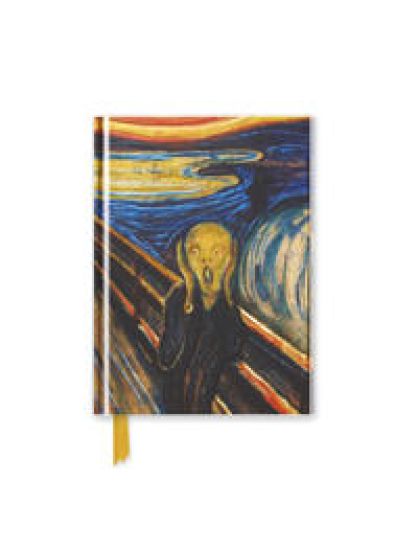
Edvard Munch: The Scream (Foiled Pocket Journal)
Part of a series of exciting and luxurious Flame Tree Notebooks. Combining high-quality production with magnificent fine art, the covers are printed on foil in five colours, embossed, then foil stamped. And they're powerfully practical: a pocket at the back for receipts and scraps, two bookmarks and a solid magnetic side flap. These are perfect for personal use and make a dazzling gift. This example features Munch's The Scream. Munch's most famous painting exemplifies Norwegian Expressionism. The angst-ridden human condition has never been so superbly and unassailably conveyed as by the figure emitting a cry from the heart. Life, love and death are the themes which Munch endlessly explored in his paintings.
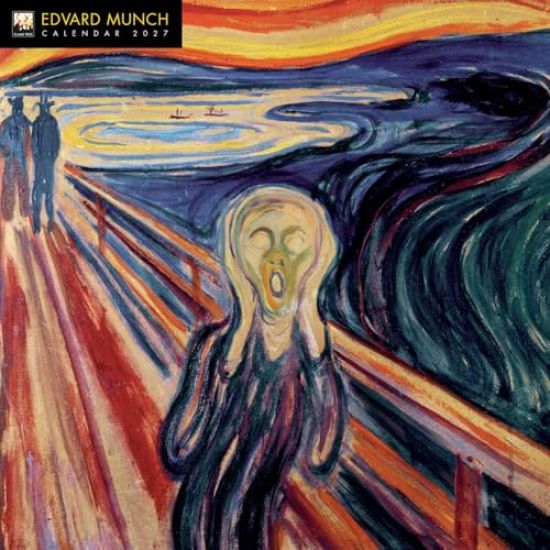
Edvard Munch Wall Calendar 2027 (Art Calendar)
This beautiful art calendar brings together 12 amazing paintings by Edvard Munch, the Norwegian artist behind the first truly Expressionist picture The Scream. Absorbed by such motifs as love, life, death and anguish, Munch’s paintings captured the psychological feelings evoked by man. Informative text accompanies each work and the datepad features previous and next month’s views. Printed on FSC-certified paper, with plastic-free packaging.
Edvard Munch (Film)

Edvard Munch (Film)

VDM Publishing House
2010
nidottu
Observera att förlaget som ger ut denna produkt baserar innehållet i sina produkter på fria källor som Wikipedia. Boken är med stor sannolikhet endast ett utdrag ur dessa informationskällor, alltså inte en vanlig bok i den bemärkelsen.
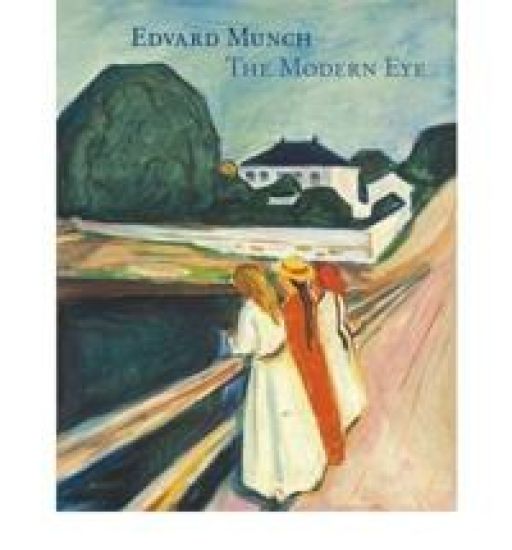
Edvard Munch: The Modern Eye

Edvard Munch: The Modern Eye

Angela Lampe

Tate Publishing
2012
nidottu
Norwegian painter Edvard Munch (1863-1944) is best known for his painting "The Scream", painted in 1893, which has become one of the most iconic images in the modern world. Munch was clear about his own mission in exploring the portrayal of extreme human emotion. "Just as Leonardo da Vinci studied anatomy and dissected corpses", he wrote, "so I try to dissect souls". Perhaps because of the subsequent notoriety of "The Scream" and other works from his intensely productive early period, Munch is often presented as a 19th century figure, an inspiration for and precursor of the modern artists who succeeded him. In contrast, this important new survey, accompanying a major, touring exhibition, shows him to have been fully engaged with modernity, particularly by tracing his involvement with its key methods of representation: photography, cinematography and the theatrical mise-en-scene. In addition to a large number of instantly recognisable masterpieces, this lavishly illustrated book reproduces many lesser-known works, as well as a wide selection of Munch's photographs and sketches. Munch's photographs in particular will be a revelation to many; his moody and atmospheric self-portraits and the studio shots of models that are placed alongside finished paintings reveal the way one medium fed into another. With essays by an international selection of authorities, extracts of previously untranslated writings by the artist, a chronology and bibliography, this is the most comprehensive and revealing survey of Munch's work yet published.
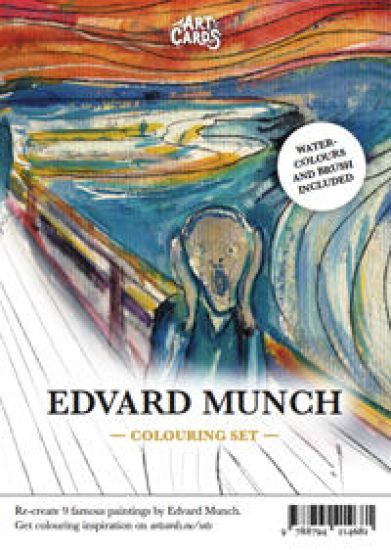
ArtCards: Edvard Munch
Har du någonsin drömt om att återskapa stora konstverk, men inte vetat hur du ska börja?Detta färgläggningsset innehåller allt du behöver för att återskapa9 berömda målningar av Edvard Munch. Så kan du hitta ditt inre kreativa geni och imponera alla med dina färdigheter.Med den här produkten får du:Pensel i storlek 19 skisser, tryckta på elfenbenspapper av hög kvalitetMinipalett med 6 färger, livliga, giftfria och biologiskt nedbrytbaraRäcker det med 6 färger?Ja, absolut! De 6 färgerna är utvalda för att ge dig en bred färgskala när du kombinerar dem. Faktiskt gjordes det visade exemplet med samma 6 färger som du kommer att få!Så fukta penseln, snurra din favoritfärg och skapa akvarellmagi!
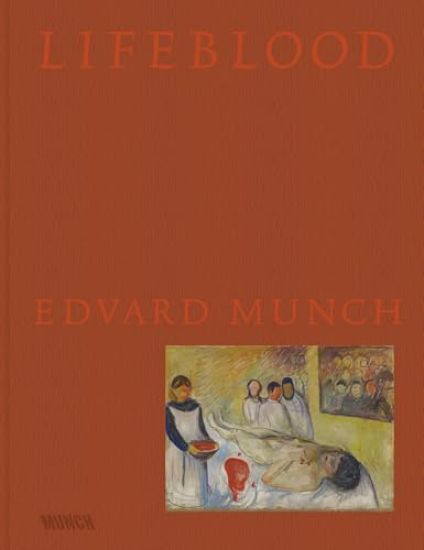
Lifeblood – Edvard Munch
Over the course of Edvard Munch’s lifetime, discoveries such as X-rays, germ theory, antibiotics and contraception transformed our understanding of the body forever. The exhibition Lifeblood – Edvard Munch places the Norwegian artist at the heart of this dramatic development, juxtaposing his works with skeletons, scalpels, sputum bottles and a range of other objects from the history of modern healthcare. In this book, these objects are given voice and presence through a diverse selection of texts written by art and medical historians, healthcare workers, activists, museum professionals, artists and writers. Each contribution takes works or objects from the exhibition as its point of departure, using them as an entryway into the complex terrain of care. The maps they draw are not the same – and that is precisely the point: medical experience is never uniform, but shaped by each individual’s circumstances and identities. Richly illustrated, with contributions by exhibition curator Allison Morehead and by Fatema Abdoolcarim, Patricia G. Berman, Gemma Blackshaw, Alice Butler, Alison W. Chang, Hege Duckert, Jacalyn Duffin, Signe Endresen, Ute Kuhlemann Falck, Jan Grue, Johanna Hedva, Nora Heidorn, Aurora Hoel, Mary Hunter, Cathrine Knudsen, Cathrine Krøger, Olivia Laing, Ageliki Lefkaditou, Phil Loring, Olaug Nilssen, Kaveh Rashidi, Natasha Ruiz-Gómez, Thorvald Steen, Sara Stridsberg, Espen Stueland and Ingvard Wilhelmsen.
Livsblod - Edvard Munch
I løpet av Edvard Munchs liv endret oppdagelser som røntgen, kimteorien, antibiotika og prevensjon vår forståelse av kroppen for alltid. Utstillingen Livsblod – Edvard Munch plasserer den norske kunstneren midt i denne dramatiske utviklingen, ved å sammenstille verkene hans med skjeletter, skalpeller, spytteflasker og en rekke andre gjenstander fra det moderne helsevesenets historie. I boken får disse objektene stemmer og nærvær i et mangfoldig utvalg tekster skrevet av kunstog medisinhistorikere, helsefagarbeidere, aktivister, museumsansatte, kunstnere og forfattere. Hver av tekstene tar utgangspunkt i verk eller gjenstander fra utstillingen, og bruker dem som inngang til omsorgens komplekse landskap. Kartene de tegner er ikke like, og nettopp dét er poenget: Den medisinske erfaringen er aldri den samme, men formet av den enkeltes livsforhold og identiteter. Rikt illustrert, med tekster av utstillingskurator Allison Morehead og av Fatema Abdoolcarim, Patricia G. Berman, Gemma Blackshaw, Alice Butler, Alison W. Chang, Hege Duckert, Jacalyn Duffin, Signe Endresen, Ute Kuhlemann Falck, Jan Grue, Johanna Hedva, Nora Heidorn, Aurora Hoel, Mary Hunter, Cathrine Knudsen, Cathrine Krøger, Olivia Laing, Ageliki Lefkaditou, Phil Loring, Olaug Nilssen, Kaveh Rashidi, Natasha Ruiz-Gomez, Thorvald Steen, Sara Stridsberg, Espen Stueland og Ingvard Wilhelmsen.
Le Cri d'Edvard Munch: un cas paradigmatique de mise en scène des codes iconiques propres à une époque
Contextualisation du th me et du motif du Cri dans l'historiographie iconographique depuis la Renaissance et les livres d'embl mes jusqu' Courbet en passant par la litt rature romantique, parcours qui montre que l'oeuvre d'Edvard Munch, plus que l'illustration d'un pathos int rieur, comme il a t cru jusqu'ici, est la mise en sc ne ext rioriste d'une repr sentation marqu e par des codes clairement pr tablis.