Kirjojen hintavertailu. Mukana 11 244 527 kirjaa ja 12 kauppaa.

Kirjahaku

Etsi kirjoja tekijän nimen, kirjan nimen tai ISBN:n perusteella.

74 tulosta hakusanalla "Informality"

Lessons of Informality
Informal settlements made up of corrugated iron shacks and other materials are a ubiquitous feature in the megacities of Africa, Asia and Latin America. In response to the enormous influx of migrants from the countryside, the informal city experienced a phenomenal growth. While rightly criticized for their lack of hygiene and for their low-level living conditions, these shelters nevertheless provide planning strategies and possibly even a roadmap to a resilient city in an emerging territory. The unregistered economic activities associated with them proliferate in a similar way and basic urban services are increasingly provided informally. Examples of these economic phenomena are microloans, bottom-up insurance or professions such as the "Kuré-Yalew" (refuse collector), who acts as an "urban miner" and thus contributes a valuable service to the community by recycling materials.

Sociologies of Formality and Informality
The way sociology frames the relation between formality and informality is not only complex and multifaceted, but has also evolved over time. This volume offers contributions by international authors that illustrate distinct types of theoretical framings and present various sites of inquiry. It proposes a typology comprising: the sociology of informally embedded formality, the sociology of formally embedded informality, the sociology of the interaction between formality and informality and the sociology of the emergence and transformation of formality and informality.
Understanding the Determinants of Economic Informality in Paraguay

Understanding the Determinants of Economic Informality in Paraguay

Michael J. Pisani; Fernando G. Ovando Rivarola

Springer Nature Switzerland AG
2019
sidottu
For several years, the government of Paraguay has sought to address the issue of informality, both as a response to poverty reduction and a means to expand its tax base. While effort has been undertaken to describe informality, the government lacks the capacity and perhaps the will to analyze the phenomenon through a robust empirical lens. Hence, little is known about the informal economy beyond anecdotes, personal interactions, and description. This book is the first to comprehensively, rigorously, and empirically study the determinants of informality in Paraguay. This book is of vital interest to those studying the Paraguayan economy, development economics, Latin American economics, and informality.
African Politics of Survival Extraversion and Informality in the Contemporary World
This volume addresses two primary research concerns: first, considering extraversion (or extroversion) as a term for characterizing a region that is "mobilizing resources from their (possibly unequal) relationship with the external environment", a dynamic that constitutes a possible African potential; and, second, a survey of competing systems and strategies with a focus on relationships between formal and informal institutions in terms of their collaborations and conflicts. In addition, this volume contains three chapters examining very recent African responses to the ongoing COVID-19 pandemic from a variety of perspectives. The final part of this volume contains an important contribution to the conceptualization of 'African Potentials'. This has proven to be a significant conceptual innovation, that allows intellectual access to alternative ways of thinking about latent ideas of universality.
Social Insurance, Informality, and Labor Markets
Most countries implement social protection programs to help individuals manage risks such as unemployment, disability, illness, longevity or death. In many middle income countries, these are often based on a 'Bismarckian model' (named after Otto von Bismarck), where benefits are financed by contributions levied on salaried employment. In countries with a large informal sector, however, only a fraction of the population is covered by this system and non-contributory programs have been added or are planned to increase coverage. This can create distortions in the labor market, and the book is about policies to expand the coverage of social insurance programs to all workers, without reducing incentives to job creation and formal work. While few would argue against the need and social merits of social insurance and social assistance programs there are growing concerns about their unintended consequences on labor markets because of poor design. The programs can distort incentives and individual behaviors in ways that either reduce employment levels and/or promote informality, ultimately affecting productivity and economic performance. For instance, high social security contribution rates can reduce formal employment; badly designed unemployment benefits can reduce incentives to keep, search, and take jobs; and fragmented social assistance programs can become a tax on formal labor and encourage informality. The book reviews the evidence regarding the effects of social insurance and social assistance programs on labor market outcomes and discusses options to improve their design and implementation. The book focuses particularly on middle income countries in Latin America and Asia with a large informal sector and suggests ways to reduce these distortions and better manage and finance the subsidies to make coverage universal, while creating good jobs. The book compiles expert papers from the joint conferences of the World Bank (WB), the Institute for the Study of Labor (IZA) and the Inter-American Development Bank (IDB) on Employment and Development.
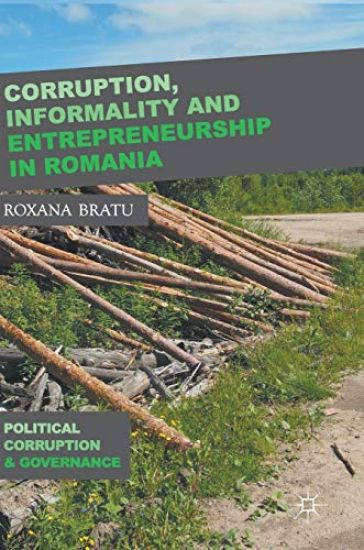
Corruption, Informality and Entrepreneurship in Romania

Corruption, Informality and Entrepreneurship in Romania

Roxana Bratu

Springer International Publishing AG
2018
sidottu
This book examines the meaning, structure, practices and symbolism of corruption in relationship to European Union structural funding in Romania. It offers a unique account of the complex transformations faced by post-communist societies. Despite the new legislation that effectively re-branded typical economic practices in Romanian society as ‘corruption’, entrepreneurs continue to use them in everyday interactions. The entrepreneurial culture described in the chapters is an ordinary trait of the local work routines. Rather than pursuing the singular logic of corruption, the author explores the concept of informality by focusing on the socio-historical context and the meanings embedded in the society that provides solutions to the problems. The book will appeal to students, scholars and practitioners in the areas of corruption, public policy and EU policy and politics.
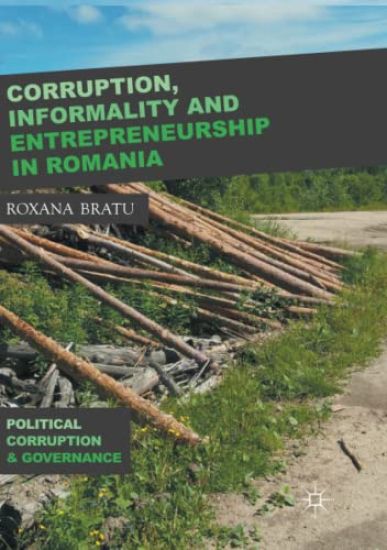
Corruption, Informality and Entrepreneurship in Romania

Corruption, Informality and Entrepreneurship in Romania

Roxana Bratu

Springer International Publishing AG
2019
nidottu
This book examines the meaning, structure, practices and symbolism of corruption in relationship to European Union structural funding in Romania. It offers a unique account of the complex transformations faced by post-communist societies. Despite the new legislation that effectively re-branded typical economic practices in Romanian society as ‘corruption’, entrepreneurs continue to use them in everyday interactions. The entrepreneurial culture described in the chapters is an ordinary trait of the local work routines. Rather than pursuing the singular logic of corruption, the author explores the concept of informality by focusing on the socio-historical context and the meanings embedded in the society that provides solutions to the problems. The book will appeal to students, scholars and practitioners in the areas of corruption, public policy and EU policy and politics.