Kirjojen hintavertailu. Mukana 11 342 296 kirjaa ja 12 kauppaa.

Kirjahaku

Etsi kirjoja tekijän nimen, kirjan nimen tai ISBN:n perusteella.

532 tulosta hakusanalla "Matthieu"

Montreal After Dark

Montreal After Dark

Matthieu Caron

MCGILL-QUEEN'S UNIVERSITY PRESS
2025
nidottu
Sex and jazz, liquor and gambling: Montreal in the early twentieth century was a city that offered an exceptional nighttime scene in North America. By mid-century that scene came under scrutiny, and Montreal's influential mayor Jean Drapeau would be elected for the first time on a reformist platform that promised to end corruption. Over more than three decades, Drapeau would endeavour to transform Montreal into a world-class global city by regulating its nightlife. Montreal After Dark chronicles the spaces where nighttime regulations were enforced and contested. City authorities understood the night as enabling disorder, and they reorganized policing and crafted bylaws to gain control over it. Police and politicians mutually reinforced each other's drive to morally cleanse the urban landscape, especially for international events like Expo 67 and the 1976 Olympics. But in an era of social unrest Drapeau's administration also found itself responding to the protective services' discontent. The political culture of the city was quickly transformed following terrifying nights without their services. Matthieu Caron shows how, in an effort to incorporate the night into the expansionary tendencies of consumer capitalism, municipal authorities took sides in a debate over who had the right to public space at night, what constituted acceptable behaviour or expression, whose sexual activity sustained the social order – and whose threatened to destroy it. In terms that are strikingly familiar today, Montreal After Dark elucidates how the desires of politicians would come to reorganize how consumption and leisure, labour and dissent, noise, sex, and art were lived in Montreal after the sun went down.
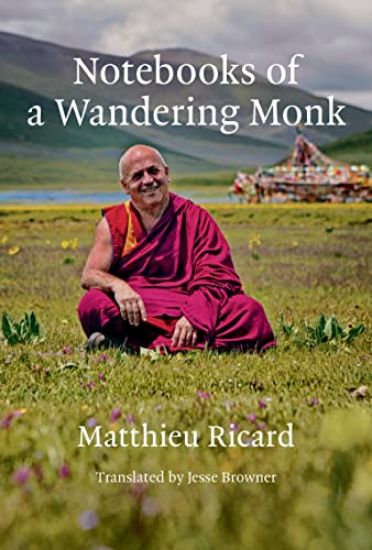
Notebooks of a Wandering Monk

Notebooks of a Wandering Monk

Matthieu Ricard

MIT PRESS LTD
2023
sidottu
The memoirs of renowned Buddhist monk Matthieu Ricard and his extraordinary journey toward inner freedom and compassion in action.Matthieu Ricard began his spiritual transformation at the age of twenty-one, in Darjeeling, India, when he met Tibetan teacher Kangyur Rinpoche, who deeply impressed the young man with his extraordinary quality of being. In Notebooks of a Wandering Monk, Ricard tells the simple yet extraordinary story of his journey and the remarkable men and women who inspired him along the way, including Kangyur Rinpoche, Dilgo Khyentse Rinpoche, and the fourteenth Dalai Lama, as well as great luminaries such as Desmond Tutu, Jane Goodall, and a number of leading scientists.Growing up, Ricard, the son of philosopher Jean-François Revel and artist Yahne Le Toumelin, regularly found himself in the company of intellectuals and artists such as Luis Buñuel, Henri Cartier-Bresson, and Igor Stravinsky. Young Ricard loved nature, classical music, and science and dreamed of unlocking the mysteries of molecular biology. But, six years after meeting Kangyur Rinpoche, Ricard gave up a promising career in genetics to pursue a meditative life in the remote Himalayas. While spending half a century in India, Bhutan, and Nepal, he visited Tibet more than twenty times and spent years publishing rare Tibetan texts and photographing his spiritual teachers and the world in which they lived. Elegantly translated by Jesse Browner and accompanied by more than fifty full-color photographs, some of which are Ricard’s own, Notebooks of a Wandering Monk charts Ricard’s lifelong path to wisdom and compassion. This candid and reflective memoir will inspire all readers, wherever they may be on their own journey to a meaningful and well-lived life.
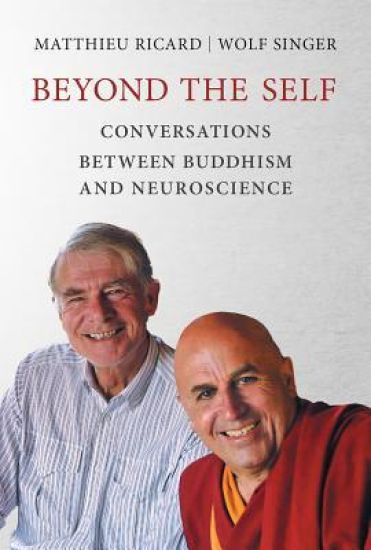
Beyond the Self

Beyond the Self

Matthieu Ricard; Wolf Singer

MIT Press
2018
pokkari
Converging and diverging views on the mind, the self, consciousness, the unconscious, free will, perception, meditation, and other topics.Buddhism shares with science the task of examining the mind empirically; it has pursued, for two millennia, direct investigation of the mind through penetrating introspection. Neuroscience, on the other hand, relies on third-person knowledge in the form of scientific observation. In this book, Matthieu Ricard, a Buddhist monk trained as a molecular biologist, and Wolf Singer, a distinguished neuroscientist—close friends, continuing an ongoing dialogue—offer their perspectives on the mind, the self, consciousness, the unconscious, free will, epistemology, meditation, and neuroplasticity. Ricard and Singer's wide-ranging conversation stages an enlightening and engaging encounter between Buddhism's wealth of experiential findings and neuroscience's abundance of experimental results. They discuss, among many other things, the difference between rumination and meditation (rumination is the scourge of meditation, but psychotherapy depends on it); the distinction between pure awareness and its contents; the Buddhist idea (or lack of one) of the unconscious and neuroscience's precise criteria for conscious and unconscious processes; and the commonalities between cognitive behavioral therapy and meditation. Their views diverge (Ricard asserts that the third-person approach will never encounter consciousness as a primary experience) and converge (Singer points out that the neuroscientific understanding of perception as reconstruction is very like the Buddhist all-discriminating wisdom) but both keep their vision trained on understanding fundamental aspects of human life.
Happiness: A Guide to Developing Life's Most Important Skill
In this groundbreaking book, Matthieu Ricard makes a passionate case for happiness as a goal that deserves as least as much energy as any other in our lives. Wealth? Fitness? Career success? How can we possibly place these above true and lasting well-being? Drawing from works of fiction and poetry, Western philosophy, Buddhist beliefs, scientific research, and personal experience, Ricard weaves an inspirational and forward-looking account of how we can begin to rethink our realities in a fast-moving modern world. With its revelatory lessons and exercises, Happiness is an eloquent and stimulating guide to a happier life.
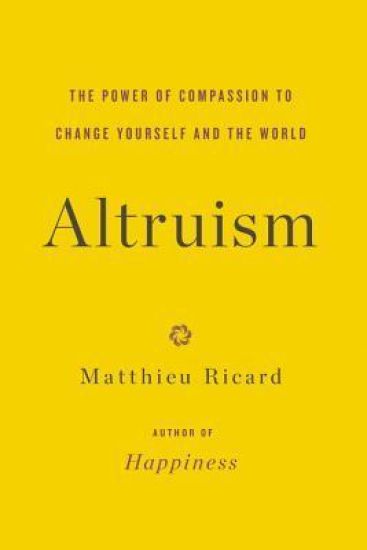
Altruism: The Power of Compassion to Change Yourself and the World
The author of the international bestseller Happiness makes a passionate case for altruism -- and why we need it now more than ever. In Happiness, Matthieu Ricard demonstrated that true happiness is not tied to fleeting moments or sensations, but is an enduring state of soul rooted in mindfulness and compassion for others. Now he turns his lens from the personal to the global, with a rousing argument that altruism -- genuine concern for the well-being of others -- could be the saving grace of the 21st century. It is, he believes, the vital thread that can answer the main challenges of our time: the economy in the short term, life satisfaction in the mid-term, and environment in the long term. Ricard's message has been taken up by major economists and thinkers, including Dennis Snower, Amartya Sen, Joseph Stiglitz, and George Soros. Matthieu Ricard makes a robust and passionate case for cultivating altruistic love and compassion as the best means for simultaneously benefitting ourselves and our society. It's a fresh outlook on an ardent struggle -- and one that just might make the world a better place.
Altruism: The Power of Compassion to Change Yourself and the World
The author of the international bestseller Happiness makes a passionate case for altruism -- and why we need it now more than ever. In Happiness, Matthieu Ricard demonstrated that true happiness is not tied to fleeting moments or sensations, but is an enduring state of soul rooted in mindfulness and compassion for others. Now he turns his lens from the personal to the global, with a rousing argument that altruism -- genuine concern for the well-being of others -- could be the saving grace of the 21st century. It is, he believes, the vital thread that can answer the main challenges of our time: the economy in the short term, life satisfaction in the mid-term, and environment in the long term. Ricard's message has been taken up by major economists and thinkers, including Dennis Snower, Amartya Sen, Joseph Stiglitz, and George Soros. Matthieu Ricard makes a robust and passionate case for cultivating altruistic love and compassion as the best means for simultaneously benefitting ourselves and our society. It's a fresh outlook on an ardent struggle -- and one that just might make the world a better place.
Anti-Black Racism in Early Modern English Drama
This is the first book to deploy the methods and ensemble of questions from Afro-pessimism to engage and interrogate the methods of Early Modern English studies. Using contemporary Afro-pessimist theories to provide a foundation for structural analyses of race in the Early Modern Period, it engages the arguments for race as a fluid construction of human identity by addressing how race in Early Modern England functioned not only as a marker of human identity, but also as an a priori constituent of human subjectivity. Chapman argues that Blackness is the marker of social death that allows for constructions of human identity to become transmutable based on the impossibility of recognition and incorporation for Blackness into humanity. Using dramatic texts such as Othello, Titus Andronicus, and other Early Modern English plays both popular and lesser known, the book shifts the binary away from the currently accepted standard of white/non-white that defines "otherness" in the period and examines race in Early Modern England from the prospective of a non-black/black antagonism. The volume corrects the Afro-pessimist assumption that the Triangle Slave Trade caused a rupture between Blackness and humanity. By locating notions of Black inhumanity in England prior to chattel slavery, the book positions the Triangle Trade as a result of, rather than the cause of, Black inhumanity. It also challenges the common scholarly assumption that all varying types of human identity in Early Modern England were equally fluid by arguing that Blackness functioned as an immutable constant. Through the use of structural analysis, this volume works to simplify and demystify notions of race in Renaissance England by arguing that race is not only a marker of human identity, but a structural antagonism between those engaged in human civil society opposed to those who are socially dead. It will be an essential volume for those with interest in Renaissance Literature and Culture, Shakespeare, Contemporary Performance Theory, Black Studies, and Ethnic Studies.
Physical-Layer Security

Physical-Layer Security

Matthieu Bloch; João Barros

Cambridge University Press
2011
sidottu
This complete guide to physical-layer security presents the theoretical foundations, practical implementation, challenges and benefits of a groundbreaking new model for secure communication. Using a bottom-up approach from the link level all the way to end-to-end architectures, it provides essential practical tools that enable graduate students, industry professionals and researchers to build more secure systems by exploiting the noise inherent to communications channels. The book begins with a self-contained explanation of the information-theoretic limits of secure communications at the physical layer. It then goes on to develop practical coding schemes, building on the theoretical insights and enabling readers to understand the challenges and opportunities related to the design of physical layer security schemes. Finally, applications to multi-user communications and network coding are also included.
Solidarity without the State?

Solidarity without the State?

Matthieu Leimgruber

Cambridge University Press
2008
sidottu
This book presents the first comprehensive history of the interplay of public and private provision that made the Swiss 'three-pillar' pension system into a model for the World Bank and other pension reformers during the last two decades of the twentieth century. Through a study of business federations', private pension lobbyists' and insurance companies' archives, Matthieu Leimgruber charts the century-long battle waged over the boundaries of state and private pensions. He shows how a distinctive path towards social provision has laid the foundation for a pension fund industry rivalling that of the United States and the United Kingdom. Through this comparative approach Matthieu Leimgruber is also able to question current assumptions about the strict dichotomy between 'Anglo-Saxon' and 'continental' models of welfare provision. This study will appeal to scholars of twentieth-century European history, economic history, political economy and welfare economics.
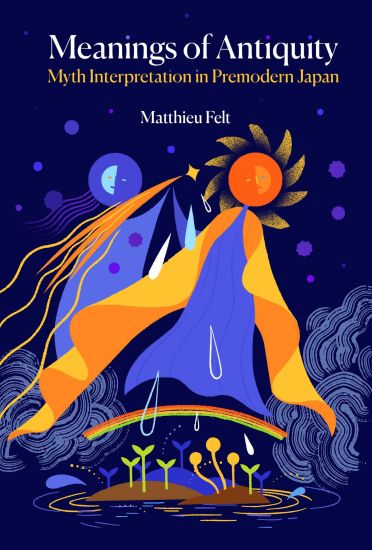
Meanings of Antiquity

Meanings of Antiquity

Matthieu Felt

HARVARD UNIVERSITY PRESS
2023
sidottu
Meanings of Antiquity is the first dedicated study of how the oldest Japanese myths, recorded in the eighth-century texts Kojiki and Nihon shoki, changed in meaning and significance between 800 and 1800 CE. Generations of Japanese scholars and students have turned to these two texts and their creation myths to understand what it means to be Japanese and where Japan fits into the world order.As the shape and scale of the world explained by these myths changed, these myths evolved in turn. Over the course of the millennium covered in this study, Japan transforms from the center of a proud empire to a millet seed at the edge of the Buddhist world, from the last vestige of China’s glorious Zhou Dynasty to an archipelago on a spherical globe. Analyzing historical records, poetry, fiction, religious writings, military epics, political treatises, and textual commentary, Matthieu Felt identifies the geographical, cosmological, epistemological, and semiotic changes that led to new adaptations of Japanese myths. Felt demonstrates that the meanings of Japanese antiquity and of Japan’s most ancient texts were—and are—a work in progress, a collective effort of writers and thinkers over the past 1,300 years.
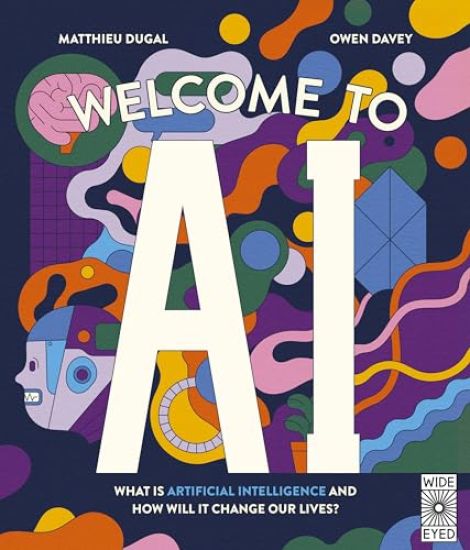
Welcome to AI

Welcome to AI

Matthieu Dugal

Quarto Publishing Plc
2024
sidottu
The most complete guide to AI for youngsters, covering everything from Ancient Greece to ChatGPT. In this fun, simple and vibrant non-fiction book, technoscience expert Matthieu Dugal, creator of documentary AI: To be or not to be, shares the epic history of artificial intelligence and gives answers to the biggest head-scratchers: How does AI already help us, at home and at school? Which robots from your favourite movies may soon be in the real world? What are avatars? Which inventors are creating new technologies? How do algorithms work? …and why can’t AI cook pasta and drain it at the right time? We can’t see it and yet this technology is everywhere: it’s in computers, cars and virtual assistants like Siri and Alexa. And it’s already making decisions for us, for better and sometimes for worse… This fascinating guide delves deep into how these decisions are made behind the scenes, putting tricky ideas into easy-to-understand terms. Keep kids’ attention with colourful illustrations and easy-to-understand, well-researched facts to prepare them for an exciting AI-centric future.
Welcome to AI: What Is Artificial Intelligence and How Will It Change Our Lives?
The most complete guide to AI for youngsters, covering everything from Ancient Greece to ChatGPT. In this fun, simple, and vibrant non-fiction book, technoscience expert Matthieu Dugal, creator of documentary AI: To be or not to be, shares the epic history of artificial intelligence and gives answers to the biggest head-scratchers: How does AI already help us, at home and at school? Which robots from your favorite movies may soon be in the real world? What are avatars? Which inventors are creating new technologies? How do algorithms work? ...and why can't AI cook pasta and drain it at the right time? We can't see it, and yet this technology is everywhere: it's in computers, cars, and virtual assistants like Siri and Alexa. And it's already making decisions for us, for better, and sometimes for worse... This fascinating guide delves deep into how these decisions are made behind the scenes, putting tricky ideas into easy-to-understand terms. Keep kids' attention with colorful illustrations and easy-to-understand, well-researched facts to prepare them for an exciting AI-centric future.
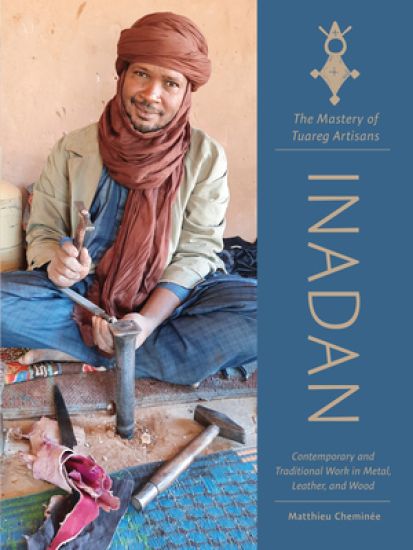
Inadan, the Mastery of Tuareg Artisans

Inadan, the Mastery of Tuareg Artisans

Matthieu Cheminée

SCHIFFER PUBLISHING LTD
2023
sidottu
A rare look at the Inadan, the artist and craftspeople of the Tuareg, an indigenous culture of the Sahara. Take a rare look at the artisans of the Tuareg people, who have made their home in North and West Africa for untold generations. An essential part of their hierarchical society is the group known as "Inadan"—the artists and craftspeople who make and adorn day-to-day objects, tools, crosses, jewelry, cutlery, swords, bags, musical instruments, and saddles. The artisans use local materials in traditional ways to make objects of utility and beauty. These pieces and the skills required to make them are passed from parent to child, often within closely knit family structures in which fathers, sons, mothers, and daughters work together. Through his unprecedented access to the Inadan, the author captures the fragile Inadan culture as revealed through their rituals and artifacts. To help keep Inadan skills alive, the crafters share them with you through step-by-step photos and instructions. Never-before-captured photographs by Tuareg craftsmen illustrate the materials and techniques used to create 40 objects. These objects—both functional and decorative—teach traditional techniques to modern crafters, capturing the culture and folk craft of the Inadan.
Altruism

Altruism

Matthieu Ricard

Atlantic Books
2018
nidottu
The concern for the well-being of others could be the saving grace of the 21st century. Matthieu Ricard's Altruism, an erudite, brilliantly ranging synthesis of philosophy, psychology and ages old wisdom, is a radical call to kindness, which has the potential as a new global movement to answer the biggest problems of our time: the economy in the short term, life satisfaction in the mid-term, and the environment in the long term. As the faultlines of inequality and nationalism leave us ever more divided, Ricard challenges us to be better people - and in the process, make the world a better place.