Kirjojen hintavertailu. Mukana 12 390 323 kirjaa ja 12 kauppaa.

Kirjahaku

Etsi kirjoja tekijän nimen, kirjan nimen tai ISBN:n perusteella.

207 tulosta hakusanalla "Simone Weil"

The Literary Afterlives of Simone Weil

The Literary Afterlives of Simone Weil

Cynthia R. Wallace

Columbia University Press
2024
pokkari
The French philosopher-mystic-activist Simone Weil (1909–1943) has drawn both passionate admiration and scornful dismissal since her early death and the posthumous publication of her writings. She has also provoked an extraordinary range of literary writing focused on not only her ideas but also her person: novels, nonfiction, and especially poetry. Given the challenges of Weil’s ethic of self-emptying attention, what accounts for her appeal, especially among women writers?This book tells the story of some of Weil’s most dedicated—and at points surprising—literary conversation partners, exploring why writers with varied political and religious commitments have found her thought and life so resonant. Cynthia R. Wallace considers authors who have devoted decades of attention to Weil, such as Adrienne Rich, Annie Dillard, and Mary Gordon, and who have written poetic sequences or book-length verse biographies of Weil, including Maggie Helwig, Stephanie Strickland, Kate Daniels, Sarah Klassen, Anne Carson, and Lorri Neilsen Glenn. She illuminates how writing to, of, and in the tradition of Weil has helped these writers grapple with the linked harms and possibilities of religious belief, self-giving attention, and the kind of moral seriousness required by the ethical and political crises of late modernity. The first book to trace Weil’s influence on Anglophone literature, The Literary Afterlives of Simone Weil provides new ways to understand Weil’s legacy and why her provocative wisdom continues to challenge and inspire writers and readers.
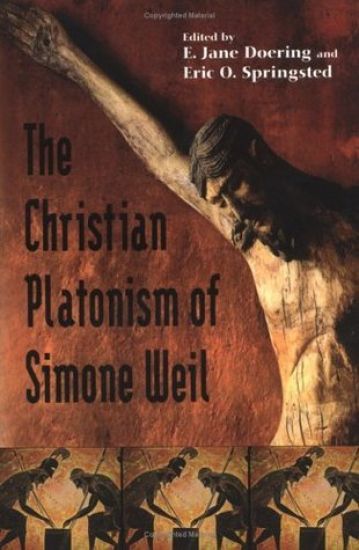
Christian Platonism of Simone Weil

Christian Platonism of Simone Weil

University of Notre Dame Press
2004
sidottu
In this book a group of renowned international scholars seek to discern the ways in which Simone Weil was indebted to Plato, and how her provocative readings of his work offer challenges to contemporary philosophy, theology, and spirituality. This is the first book in twenty years to systematically investigate Weil's Christian Platonism. The opening essays explore what actually constitutes Weil's Platonism. Louis Dupré addresses the Platonic and Gnostic elements of her thought with respect to her negative theology, and the Christian Platonism of her positive theology as found in her reflections on beauty and the Good. Michel Narcy provides a close historical reading of Weil and discusses the degree to which her teacher Alain influenced her Platonism. Michael Ross contends that Weil's interest in Plato is in "ethical Platonism." Essays by Robert Chenavier and by Patrick Patterson and Lawrence E. Schmidt consider the importance of matter and materialism in Weil's Platonism and argue that it is key to understanding her political thought. A middle group of essays addresses more classically metaphysical themes in Weil's thought. Vance G. Morgan examines her use of Greek mathematics. Florence de Lussy analyzes Weil's distinctive, mystical Platonic reflections on Being in the last notebooks from Marseilles. Emmauel Gabellieri discusses Weil's "metaxology," that is, the mediation and relatedness of Being, shown in her speculative thought. Martin Andic underlines the importance of her notion of attention. The final set of essays considers Weil's relevance for contemporary spirituality and moral theology. Cyril O'Regan examines her thinking on violence and evil. Eric Springsted looks at the conceptual links that exist between Weil and Augustine. Finally, David Tracy contends that Weil is the foremost predecessor of recent attempts to reunite the mystical and prophetic. Drawing together some of the top Weil scholars in the world, this collection offers important new insights into her thought, and will be appreciated by philosophers and theologians.
Christian Platonism of Simone Weil

Christian Platonism of Simone Weil

University of Notre Dame Press
2004
nidottu
In this book a group of renowned international scholars seek to discern the ways in which Simone Weil was indebted to Plato, and how her provocative readings of his work offer challenges to contemporary philosophy, theology, and spirituality. This is the first book in twenty years to systematically investigate Weil's Christian Platonism. The opening essays explore what actually constitutes Weil's Platonism. Louis Dupré addresses the Platonic and Gnostic elements of her thought with respect to her negative theology, and the Christian Platonism of her positive theology as found in her reflections on beauty and the Good. Michel Narcy provides a close historical reading of Weil and discusses the degree to which her teacher Alain influenced her Platonism. Michael Ross contends that Weil's interest in Plato is in "ethical Platonism." Essays by Robert Chenavier and by Patrick Patterson and Lawrence E. Schmidt consider the importance of matter and materialism in Weil's Platonism and argue that it is key to understanding her political thought. A middle group of essays addresses more classically metaphysical themes in Weil's thought. Vance G. Morgan examines her use of Greek mathematics. Florence de Lussy analyzes Weil's distinctive, mystical Platonic reflections on Being in the last notebooks from Marseilles. Emmauel Gabellieri discusses Weil's "metaxology," that is, the mediation and relatedness of Being, shown in her speculative thought. Martin Andic underlines the importance of her notion of attention. The final set of essays considers Weil's relevance for contemporary spirituality and moral theology. Cyril O'Regan examines her thinking on violence and evil. Eric Springsted looks at the conceptual links that exist between Weil and Augustine. Finally, David Tracy contends that Weil is the foremost predecessor of recent attempts to reunite the mystical and prophetic. Drawing together some of the top Weil scholars in the world, this collection offers important new insights into her thought, and will be appreciated by philosophers and theologians.
SPCK Introduction to Simone Weil

SPCK Introduction to Simone Weil

Stephen Plant

SPCK Publishing
2007
nidottu
Simone Weil was one of the most original philosophers and political thinkers of the twentieth century. During her life her writings were almost unknown beyond a few close friends, only after her death at the age of thirty four did her work reach a wider audience, including Pope John XXIII, Pope Paul VI, Simone de Beauvoir, Leon Trotsky and Iris Murdoch. Weil was born in 1909 to non-practicing Jewish parents and was an agnostic until her late twenties when she became a Christian. She had a refreshing creativity and a rare ability to confront theological complacencies. As well as writing on suffering she also wrote about the nature of God, the nature of work and the importance of improving conditions for factory workers, and about our duty towards our community. She could get to the heart of some key philosophical, theological and ethical issues, many of which are as important today as they were in her own time. Here, Stephen Plant makes Weil's often complex and challenging thought accessible to a wide audience. He sketches a few of the central themes of Weil's thought, gives the reader a feeling for the breadth of her work and provides short extracts from her writings. This revised and expanded edition is an ideal introduction to Weil for both students and the general reader.
The Continuing Legacy of Simone Weil

The Continuing Legacy of Simone Weil

David Pollard

Hamilton Books
2015
nidottu
The Continuing Legacy of Simone Weil analyzes the core work of Simone Weil and her views on the nature of the human condition, humanity’s relationship with God, and the objective state of our world. David Pollard argues that though much of Weil’s work was focused on particular conditions operating in Europe prior to and including the period of the Second World War, much of it is as relevant today as it was then.
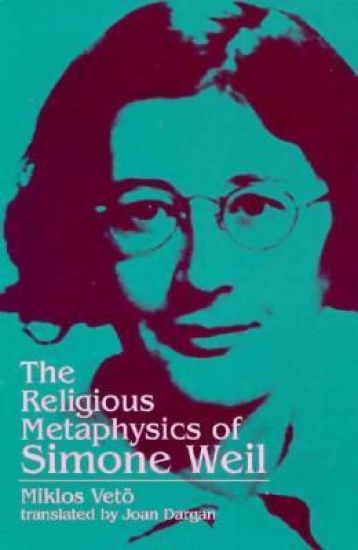
The Religious Metaphysics of Simone Weil

The Religious Metaphysics of Simone Weil

Miklos Veto

State University of New York Press
1994
pokkari
Simone Weil is one of the major religious writers of the twentieth century. Hers is a unique blend of spiritual experience, social concern, and philosophical theory. She had marvelous command of the Western philosophical tradition, yet she also had profound insights into Oriental philosophies.Since its publication in France, Veto's book has been considered by most scholars as the standard work on Simone Weil. Now this important book is available in English. It is the only available reconstruction of the entire philosophy of Simone Weil. It operates out of the perspective of the spiritual concerns of her maturity, yet it never fails to return to the issues and the positions of the early texts. It carries out the reconstruction according to some major philosophical themes, but gives its due share to the French thinkers' social and political preoccupations as well. The book is erudite, yet simple, written in a clear, concise and yet often eloquent language.
The Bloomsbury Handbook of Simone Weil
Exploring the philosophical writings of Simone Weil, this unparalleled reference work documents the key thinkers who influenced her political, philosophical and religious outlook. It also offers a critical analysis of her wide-ranging philosophical concepts through short, accessible essays, showing how they connect throughout her writings to form an organic whole. After outlining her biography, Part I explores Weil’s boundary-crossing interests in radical politics, science, mathematics, history, and religious phenomena. Part II traces the intellectual history of Weil’s own writings by mapping her most important philosophical influences including Plato, Descartes, Spinoza, Rousseau, Kant, and Marx. The rich landscape of Weil’s philosophy receives critical consideration in Part III through the distinctive defining terms that tie her body of thinking together: terms such as amor fati, attention, beauty, force, gravity and grace, receive full explication alongside important themes of justice, obedience, compassion, and method as they figure in her work. A reliable scholarly framework guides readers through Weil’s expansive oeuvre, including bibliographic help with locating Weil’s writings in French and English, alongside an overview of the critical literature. For students, scholars, and lay readers who seek clarifying and comprehensive coverage of Weil’s ideas and writings, this text is an indispensable research tool.
Hannah Arendt and Simone Weil

Hannah Arendt and Simone Weil

BLOOMSBURY PUBLISHING PLC
2025
nidottu
Hannah Arendt and Simone Weil were two of the most compelling political thinkers of the 20th century who, despite having similar life-experiences, developed radically distinct political philosophies. This unique dialogue between the writings of Arendt and Weil highlights Arendt’s secular humanism, her emphasis on heroic action, and her rejection of the moral approach to politics, contrasted starkly with Weil’s religious approach, her faith in the power of divine Goodness, and her other-centric ethic of suffering and affliction. The writings here respect the profound differences between Arendt and Weil whilst pulling out the shared preoccupations of power, violence, freedom, resistance, responsibility, attention, aesthetics, and vulnerability. Without shying away from exploring the more difficult concepts in these philosophers' works, Hannah Arendt and Simone Weil also aims to pull out the relevance of their writings for contemporary issues.
Hannah Arendt and Simone Weil

Hannah Arendt and Simone Weil

BLOOMSBURY PUBLISHING PLC
2024
sidottu
Hannah Arendt and Simone Weil were two of the most compelling political thinkers of the 20th century who, despite having similar life-experiences, developed radically distinct political philosophies. This unique dialogue between the writings of Arendt and Weil highlights Arendt’s secular humanism, her emphasis on heroic action, and her rejection of the moral approach to politics, contrasted starkly with Weil’s religious approach, her faith in the power of divine Goodness, and her other-centric ethic of suffering and affliction. The writings here respect the profound differences between Arendt and Weil whilst pulling out the shared preoccupations of power, violence, freedom, resistance, responsibility, attention, aesthetics, and vulnerability. Without shying away from exploring the more difficult concepts in these philosophers' works, Hannah Arendt and Simone Weil also aims to pull out the relevance of their writings for contemporary issues.
From Ecclesiastes to Simone Weil

From Ecclesiastes to Simone Weil

Ernest Rubinstein

Fairleigh Dickinson University Press
2014
sidottu
From Ecclesiastes to Simone Weil: Varieties of Philosophical Spirituality reads major philosophers from the Western philosophical canon and beyond for the spirituality implicit in their metaphysics, epistemology, ethics, aesthetics, and logic. Its aim is to revive for the modern reader the spiritual import of philosophy as an area of inquiry and study. Spirituality is understood as a lived orientation towards the sacred. The sacred is characterized as the source of all being and human wellbeing. Philosophy is presented as an avenue of approach to the sacred alternative to the western religious traditions. Philosophers treated include Plato, Descartes, Spinoza, Kant, Hegel, Kierkegaard, Emerson, William James, Bertrand Russell, and Simone Weil.
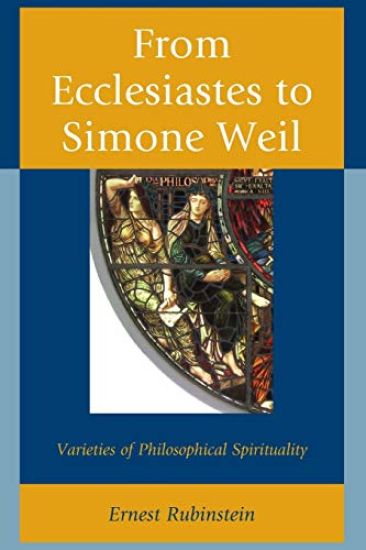
From Ecclesiastes to Simone Weil

From Ecclesiastes to Simone Weil

Ernest Rubinstein

Fairleigh Dickinson University Press
2016
nidottu
From Ecclesiastes to Simone Weil: Varieties of Philosophical Spirituality reads major philosophers from the Western philosophical canon and beyond for the spirituality implicit in their metaphysics, epistemology, ethics, aesthetics, and logic. Ernest Rubinstein revives for the modern reader the spiritual import of philosophy as an area of inquiry and study. Spirituality is understood as a lived orientation towards the sacred. The sacred is characterized as the source of all being and human wellbeing. Philosophy is presented as an avenue of approach to the sacred alternative to the western religious traditions. Philosophers treated include Plato, Descartes, Spinoza, Kant, Hegel, Kierkegaard, Emerson, William James, Bertrand Russell, and Simone Weil.
The Religious Philosophy of Simone Weil

The Religious Philosophy of Simone Weil

McCullough Lissa

I.B. Tauris
2014
sidottu
The French philosopher Simone Weil (1909-1943), a contemporary of Simone de Beauvoir and Jean-Paul Sartre, remains in every way a thinker for our times. She was an outsider, in multiple senses, defying the usual religious categories: at once atheistic and religious; mystic and realist; sceptic and believer. She speaks therefore to the complex sensibilities of a rationalist age. Yet despite her continuing relevance, and the attention she attracts from philosophy, cultural studies, feminist studies, spirituality and beyond, Weil's reflections can still be difficult to grasp, since they were expressed in often inscrutable and fragmentary form. Lissa McCullough here offers a reliable guide to the key concepts of Weil's religious philosophy: good and evil, the void, gravity, grace, beauty, suffering and waiting for God. In addressing such distinctively contemporary concerns as depression, loneliness and isolation, and in writing hauntingly of God's voluntary 'nothingness', Weil's existential paradoxes continue to challenge and provoke. This is the first introductory book to show the essential coherence of her enigmatic but remarkable ideas about religion.
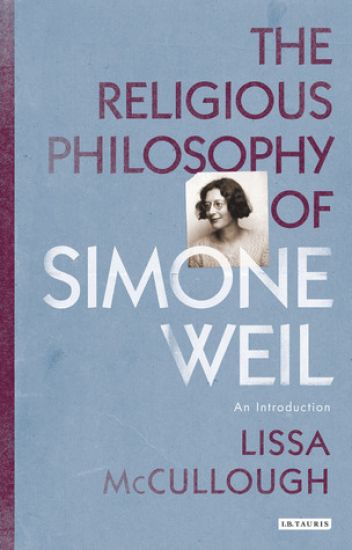
The Religious Philosophy of Simone Weil

The Religious Philosophy of Simone Weil

McCullough Lissa

I.B. Tauris
2014
nidottu
The French philosopher Simone Weil (1909-1943), a contemporary of Simone de Beauvoir and Jean-Paul Sartre, remains in every way a thinker for our times. She was an outsider, in multiple senses, defying the usual religious categories: at once atheistic and religious; mystic and realist; sceptic and believer. She speaks therefore to the complex sensibilities of a rationalist age. Yet despite her continuing relevance, and the attention she attracts from philosophy, cultural studies, feminist studies, spirituality and beyond, Weil's reflections can still be difficult to grasp, since they were expressed in often inscrutable and fragmentary form. Lissa McCullough here offers a reliable guide to the key concepts of Weil's religious philosophy: good and evil, the void, gravity, grace, beauty, suffering and waiting for God. In addressing such distinctively contemporary concerns as depression, loneliness and isolation, and in writing hauntingly of God's voluntary 'nothingness', Weil's existential paradoxes continue to challenge and provoke. This is the first introductory book to show the essential coherence of her enigmatic but remarkable ideas about religion.
Dietrich Bonhoeffer and Simone Weil: A Study in Christian Responsiveness
The book is the first major study to bring together the two early twentieth-century theologians Dietrich Bonhoeffer, German Lutheran pastor, and Simone Weil, French philosopher and convert to Christianity. Both were victims of Nazi oppression, and neither survived the war. The book explores the two theologians' reflections on Christian responsiveness to God and neighbour, being the interdependence of the two great commandments of the Jewish Law reiterated by Jesus. It sets out the common ground and the differing emphases in their interpretations. For Bonhoeffer, responsiveness was the transformation of the whole person effected by faith (Gestaltung), and the responsibility (Verantwortung) for one's actions which it implies. For Weil, responsiveness was the hope and expectation of grace (attente) reflected in attention, the capacity to listen to, understand and help others. Both Bonhoeffer and Weil faced a world dominated by aggression and horrendous suffering. Both endeavoured to articulate their responses, as Christians, to that world. The relevance of their thought to the twenty-first century is explored, in relation to perspectives on grace and freedom, on aggression, suffering, and forgiveness, and on the role of the church in society. Conclusions are illustrated by reference to contemporary theologians including Rowan Williams, Daniel Hardy, Frances Young and David Tracy.