Kirjojen hintavertailu. Mukana 12 390 323 kirjaa ja 12 kauppaa.

Kirjahaku

Etsi kirjoja tekijän nimen, kirjan nimen tai ISBN:n perusteella.

1000 tulosta hakusanalla Aaron D. Neale

Academic Archives

Academic Archives

Aaron D. Purcell

Neal-Schuman Publishers Inc
2012
nidottu
Today, the field of academic archives is more expansive and complex than ever before. In addition to college and university archives, academic archives encompass records management programs, special collections departments, and other campus archival repositories. This new definition of academic archives programs has redefined the role, and training, of academic archivists. This book gives you the tools to fill that role, including collection strategies, a management plan for electronic records, and development strategies for starting a campus records management program, and an understanding of the emerging trends affecting all archivists. Academic Archives is designed to appeal to archivists of all ranks and experience, archivists working both inside and outside of academic libraries, archivists in training, other information professionals, library directors, and members of the academic community. If you want to start an archives program, update an existing archives program, begin a career in academic archives, or remain current on recent developments, you’ll find valuable advice in this timely addition to the Archivist’s and Records Manager’s Bookshelf Series.
German POWs, Der Ruf, and the Genesis of Group 47

German POWs, Der Ruf, and the Genesis of Group 47

Aaron D. Horton

Fairleigh Dickinson University Press
2013
sidottu
This work explores the experiences of Hans Werner Richter and Alfred Andersch, authors who served in the German army during World War II, were captured by U.S. forces, and enlisted into a secret program to promote American democracy to their fellow POWs while imprisoned in the United States. Upon repatriation, they brought their experiences with the POW publication Der Ruf back to Germany, where they founded a periodical of the same name. Having grown disillusioned with the American occupation, the authors’ stark criticisms of U.S. policies led to their dismissal from the second Der Ruf after only fifteen issues. This study attempts to understand their journey from acceptance and endorsement of American democratic ideals to disappointment and opposition to U.S. occupation policies. This transition played a crucial role in the foundation of the most influential West German literary circle: Group 47, organized a few months after the authors’ dismissal.
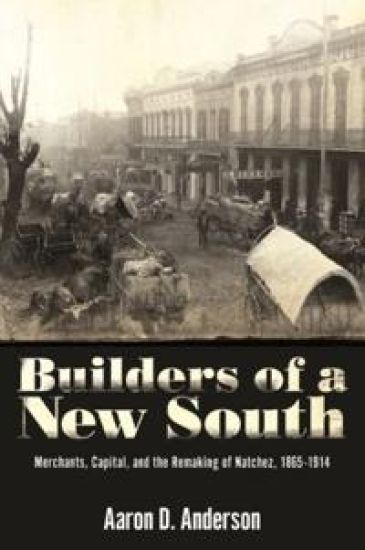
Builders of a New South

Builders of a New South

Aaron D. Anderson

University Press of Mississippi
2013
sidottu
Builders of a New South describes how, between 1865 and 1914, ten Natchez mercantile families emerged as leading purveyors in the wholesale plantation supply and cotton handling business, and soon became a dominant force in the social and economic Reconstruction of the Natchez District. They were able to take advantage of postwar conditions in Natchez to gain mercantile prominence by supplying planters and black sharecroppers in the plantation supply and cotton buying business. They parlayed this initial success into cotton plantation ownership and became important local businessmen in Natchez, participating in many civic improvements and politics that shaped the district into the twentieth century.This book digs deep in countless records (including census, tax, property, and probate, as well as thousands of chattel mortgage contracts) to explore how these traders functioned as entrepreneurs in the aftermath of the Civil War, examining closely their role as furnishing merchants and land speculators, as well as their relations with the area's planters and freed black population. Their use of favorable laws protecting them as creditors, along with a solid community base that was civic-minded and culturally intact, greatly assisted them in their success. These families prospered partly because of their good business practices, and partly because local whites and blacks embraced them as useful agents in the emerging new marketplace. The situation created by the aftermath of the war and emancipation provided an ideal circumstance for the merchant families, and in the end, they played a key role in the district's economic survival and were the prime modernizers of Natchez.
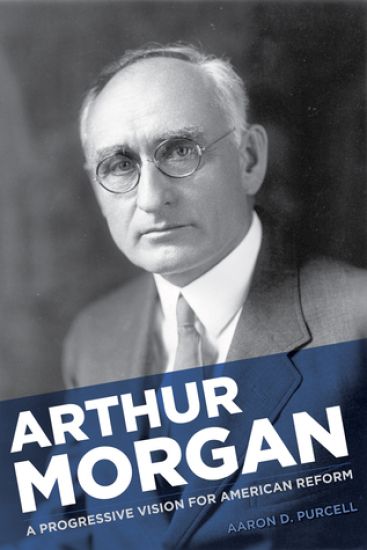
Arthur Morgan

Arthur Morgan

Aaron D. Purcell

University of Tennessee Press
2014
sidottu
On May 19, 1933, President Franklin D. Roosevelt announced the appointment of Arthur Morgan (1878–1975), a water-control engineer and college president from Ohio, as the chairman of the newly created Tennessee Valley Authority (TVA). With the eyes of the nation focused on the reform and recovery promised by the New Deal, Morgan remained in the national spotlight for much of the 1930s, as his visionary plans for the TVA drew both support and criticism. In this thoughtful biography, Aaron D. Purcell reassesses Morgan’s long life and career and provides the first detailed account of his post-TVA activities and fascination with utopian writer Edward Bellamy. As Purcell demonstrates, Morgan embraced an alternative type of Progressive Era reform throughout his life, one that was rooted in nineteenth-century socialism, an overlooked, but important, strain in American political thought.Purcell pinpoints Morgan’s reading of Edward Bellamy’s Looking Backward while a teenager as a watershed moment in the development of his vision for building modern American society. He recounts Morgan’s early successes as an engineer, budding Progressive leader, and educational reformer; his presidency of Antioch College; and his revolutionary but contentious tenure at the TVA. After his dismissal from the TVA, Morgan wrote extensively, eventually publishing over a dozen books, including a biography of Edward Bellamy, and countless articles. He also raised money to support an experimental community in Kerala, India, sharing Mahatma Gandhi’s belief in small, self-sustaining communities cooperatively supported by persons of strong moral character. At the same time, however, Morgan retained many of his late-nineteenth-century beliefs, including eugenics, as part of his societal vision. His authoritarian administrative style and moral rigidity limited his ability to attract large numbers to his community-based vision.As Purcell demonstrates, Morgan remained an active reformer well into the second half of the twentieth century, carrying forward a vision for American reform decades after his Progressive Era contemporaries had faded into obscurity. By presenting Morgan’s life and career within the context of the larger social and cultural events of his day, this revealing biographical study offers new insight into the achievements and motivations of an important but historically neglected American reformer.
Lost in Transition

Lost in Transition

Aaron D. Purcell

University of Tennessee Press
2021
sidottu
In Lost in Transition: Removing, Resettling, and Renewing Appalachia, Aaron D. Purcell presents a thematic and chronological exploration of twentieth-century removal and resettlement projects across southern Appalachia. The book shares complex stories of loss and recollection that have grown and evolved over time.This edited volume contains seven case studies of public land removal actions in Virginia, Kentucky, the Carolinas, and Tennessee from the 1930s through the 1960s. Some of the removals include the Tennessee Valley Authority and the Norris Basin, Shenandoah National Park and the New River, the Great Smoky Mountains National Park, and the Keowee-Toxaway Project in northwestern South Carolina. Each essay asks key questions: How did governmental entities throughout the twentieth century deal with land acquisition and removal of families and communities? What do the oral histories of the families and communities, particularly from different generations, tell us about the legacies of these removals? This collection reveals confrontations between past and present, federal agencies and citizens, and the original accounts of removal and resettlement and contemporary interpretations. The result is a blending of practical historical concerns with contemporary nostalgia and romanticism, which often deepen the complexity of Appalachian cultural life.Lost in Transition provides a nuanced and insightful study of removal and resettlement projects that applies critical analysis of fact, mythology, and storytelling. It illustrates the important role of place in southern Appalachian history. This collection is a helpful resource to anthropologists, folklorists, and Appalachian studies scholars, and a powerful volume of stories for all readers who reflect upon the importance of place and home.
Exponential Theory

Exponential Theory

Aaron D. Bare

MORGAN JAMES PUBLISHING LLC
2022
pokkari
?"A Blueprint for Future Entrepreneurs"-Daymond John, Shark Tank Investor"Innovating Through Extreme Uncertainty"-Ash Maurya, Lean Canvas Creator?According to Steve Jobs, “Innovation distinguishes between a leader and a follower.” The rise of digital technology in business has made this statement truer now more than ever. Today, businesses can be created, marketed, and ready to interact with customers in the blink of an eye, with nothing more than an internet connection! This accelerated pace of business is wreaking havoc on companies that are “too big to fail,” sometimes in a matter of months. Any company or leader that doesn't move at an exponential pace will be crushed by new, massively transformative organizations that are invading new industries every day. Thankfully, guides like Bill Gates, Jeff Bezos, and Elon Musk continue to provide us a roadmap for navigating this exponential horizon.Exponential Theory provides ten keys of exponential leadership in order to solve climate change, social imbalances, and other wicked problems. It is time for a new generation of leadership—one that is purposeful, conscious, digital, and above all, exponential.
Witchmarked

Witchmarked

Aaron D Schneider; Michael Anderle

Lmbpn Publishing
2020
pokkari
At what cost victory?Milo Volkohne, orphan, criminal, conscript, and unwilling warlock could tell you but you might not like the answer.It is 1936 and the Great War still rages on, with no armistice in 1918 when the Russian Empire crumbled in the fire and blood of stillborn revolution.The hellish no man's land has spread like a blight over Europe as grim, unyielding leaders promise a resolve of iron and no mercy, no peace, no hope.It would take a miracle to save humanity, but as Milo would tell you: be careful what you wish for.Plunging into a world of sorcery, treachery, and madness the world's first wizard will bargain with monsters, human or otherwise, fight for his life, and dare to hope that he's selling his soul for something worthwhile.But is any price too high to end the War to end all Wars?Go up and Click 'Buy Now' or 'Read for Free' and enter the darkened world where so far, no one has won World War I and now dark monsters are choosing sides.
Voice on the Wind

Voice on the Wind

Aaron D Schneider; Michael Anderle

Lmbpn Publishing
2021
pokkari
After Axe-Wed's adventures in Jehadim the intrepid exile had hoped that she'd found a chance for some easy coin among good people. A little guarding of a caravan as they go to barbarian infested steppes, what could be easier... well, perhaps she hadn't thought that one through.So now our slayer finds herself in a land where monsters are pets and tribal warfare is life, and wouldn't you know it there is a prophecy... why is there always a prophecy?
War-Born

War-Born

Aaron D Schneider

Intellectually Promiscuous Press
2018
pokkari
Two-thousand years of war just met its match.For Lieutenant Lucius "Luce" Bollham, things have been going from bad to worse since the caves of Afghanistan. First, ostracized by his brothers in arms, now the possibility of being tried as a war criminal. You'd think getting away from it all would be a relief, but where you escape to matters.Luce's "escape" takes him to the magical Twilit Kingdom of Other-Realm where he finds himself thrust into the midst of a war nearly two thousand years old.And he thought Afghanistan was tough...Caught between mind-bending sorcery, ancient grudges, and intrigues among aeon-old beings, Luce must gather the forces of the kingdom and revolutionize their idea of combat before enemy legions march across the land. Witchery and swordplay pair with assault rifles and asymmetrical warfare to stop an adversary who seeks nothing less than utter conquest.Oh, and there is a woman--when is there not? Except she's a centuries-old warrior-sorceress with blood under her nails and fire on her lips. Bryth is just the kind of gal you want around in a world where curses can kill and dark things stir.In the midst of all the madness, Luce has to decide what it is he is actually fighting for.Out of the frying pan and into the inferno, as they say. "Aaron's writing reminds us that we read for the journey, not the destination. Shades of Tolkien can be glimpsed in this beautifully written, beautifully imagined epic war-story. It's Call of Duty meets Lord of the Rings. If you love military fantasy, don't miss this trilogy." -USA Today Bestselling Author, AL Knorr.
The Historical Depth of the Tiberian Reading Tradition of Biblical Hebrew
This volume explores an underappreciated feature of the standard Tiberian Masoretic tradition of the Hebrew Bible, namely its composite nature. Focusing on cases of dissonance between the tradition's written (consonantal) and reading (vocalic) components, the study shows that, though related, interdependent, and largely in harmony, the Tiberian spelling and pronunciation traditions at numerous points reflect distinct oral realisations of the biblical text. Where the extant vocalisation differs from the apparently pre-exilic pronunciation presupposed by the written tradition, the former often exhibits conspicuous affinity with post-exilic linguistic conventions as seen in representative Second Temple material, such as the core Late Biblical Hebrew books, the Dead Sea Scrolls, Ben Sira, rabbinic literature, the Samaritan Pentateuch, and contemporary Aramaic and Syriac material. On the one hand, such instances of written-reading disharmony clearly entail a degree of anachronism in the vocalisation of Classical Biblical Hebrew compositions. On the other, since many of the innovative and secondary features in the Tiberian vocalisation tradition are typical of sources from the Second Temple Period and, in some cases, are documented as minority alternatives in even earlier material, the Masoretic reading tradition is justifiably characterised as a linguistic artefact of profound historical depth.