Kirjojen hintavertailu. Mukana 11 472 746 kirjaa ja 12 kauppaa.

Kirjahaku

Etsi kirjoja tekijän nimen, kirjan nimen tai ISBN:n perusteella.

1000 tulosta hakusanalla Achim Feldmeier

State-Society Relations in Ba'thist Iraq
Scholarship on Iraq under the Ba’th regime has traditionally focused on the rule of Saddam Hussein and his narrow inner circle. The centrality of the former president in Iraqi politics until spring 2003 and the tyranny of his regime were evident, and available sources concerning developments inside Iraqi society during that period were scarce.This book explores whether traditional paradigms of totalitarian rule can be applied to Ba’thist Iraq, closely examining state-society relations and uncovering the nature of the regime and how Iraqis lived with it. The study creates a conceptual framework for understanding the inner dynamics of a dictatorship that encompasses a variety of disciplines - comparative historiography, political science, literary and art criticism, and gender studies. Drawing on a comparative reading of the historiography of other regimes commonly perceived as totalitarian dictatorships, particularly Nazi Germany, the author looks beyond the spheres of state politics, economy and jurisdiction to also include the so called ‘soft issues’ of social norms, cultural and ideological production. By interpreting recent Iraqi history along such lines, the author demonstrates how cross-regional comparative perspectives and an interdisciplinary approach can contribute to the study of Iraq.
The Political Economy of Peacemaking
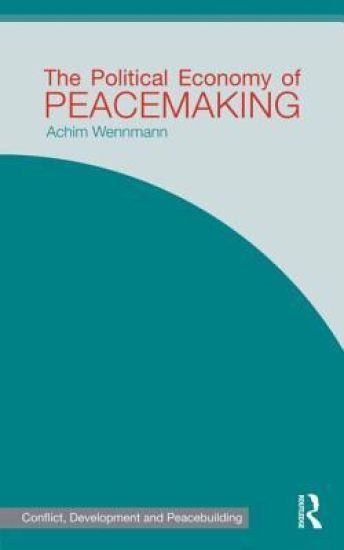
This book focuses on the economic dimensions of peace processes and examines the opportunities and constraints for assisting negotiated exits out of conflict.Various works have addressed the economic characteristics and consequences of armed conflicts over the past two decades, including issues such as ‘blood diamonds’, natural resource wars, economically motivated armed violence, self-financing conflict, or the complicity of companies and state elites in conflict economies. However, rather than treating these issues as obstacles for peace, this book explores whether they can be opportunities for peacemaking by adopting a political-economy perspective. The book looks at income sharing from natural resources as an opportunity for forward-looking peacemaking strategies, and the implications of deal-making in situations in which war economies and insecurity provide strongmen with disproportionate political and economic power. The book also highlights that peace processes are not necessarily about the rectification of a conflict’s ‘root causes’, but rather about what matters most to the main stakeholders at the moment when a peace process starts taking shape. Finally, efforts to establish a lasting peace need to go beyond the traditional set of actors associated with peace processes. The strategic involvement of donor agencies, companies, and diaspora communities can strengthen forward-looking peace processes.The book will help both student and practitioner audiences to better understand armed conflicts and their belligerents, optimize the planning and management of peace initiatives, and shape expectations in peace agreements. It will be of much interest to students of peacebuilding, conflict studies, development studies, International Political Economy and International Relations in general.
The Political Economy of Peacemaking
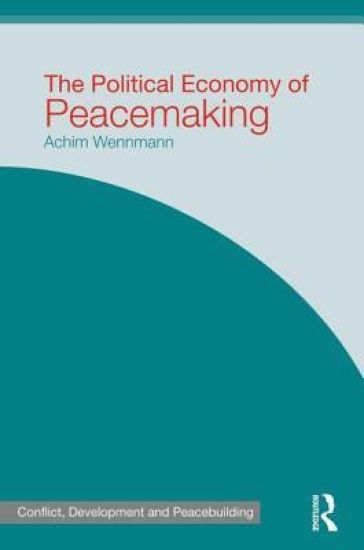
This book focuses on the economic dimensions of peace processes and examines the opportunities and constraints for assisting negotiated exits out of conflict.Various works have addressed the economic characteristics and consequences of armed conflicts over the past two decades, including issues such as ‘blood diamonds’, natural resource wars, economically motivated armed violence, self-financing conflict, or the complicity of companies and state elites in conflict economies. However, rather than treating these issues as obstacles for peace, this book explores whether they can be opportunities for peacemaking by adopting a political-economy perspective. The book looks at income sharing from natural resources as an opportunity for forward-looking peacemaking strategies, and the implications of deal-making in situations in which war economies and insecurity provide strongmen with disproportionate political and economic power. The book also highlights that peace processes are not necessarily about the rectification of a conflict’s ‘root causes’, but rather about what matters most to the main stakeholders at the moment when a peace process starts taking shape. Finally, efforts to establish a lasting peace need to go beyond the traditional set of actors associated with peace processes. The strategic involvement of donor agencies, companies, and diaspora communities can strengthen forward-looking peace processes.The book will help both student and practitioner audiences to better understand armed conflicts and their belligerents, optimize the planning and management of peace initiatives, and shape expectations in peace agreements. It will be of much interest to students of peacebuilding, conflict studies, development studies, International Political Economy and International Relations in general.
Computational Design Thinking

Computational Design Thinking

Achim Menges; Sean Ahlquist

John Wiley Sons Inc
2011
nidottu
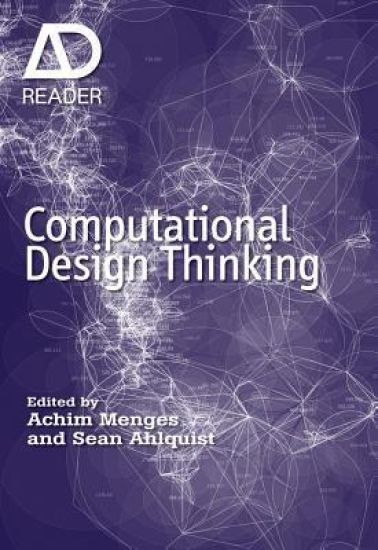
The current transition from Computer Aided Design (CAD) to Computational Design in architecture represents a profound shift in design thinking and methods. Representation is being replaced by simulation, and the crafting of objects is moving towards the generation of integrated systems through designer-authored computational processes. While there is a particular history of such an approach in architecture, its relative newness requires the continued progression of novel modes of design thinking for the architect of the 21st century. This AD Reader establishes a foundation for such thinking. It includes multifaceted reflections and speculations on the profound influence of computational paradigms on architecture. It presents relevant principles from the domains of mathematics and computer science, developmental and evolutionary biology, system science and philosophy, establishing a discourse for computational design thinking in architecture. Rather than a merely technical approach, the book will discuss essential intellectual concepts that are fundamental not only for a discourse on computational design but also for its practice. This anthology provides a unique collection of seminal texts by authors, who have either provided a significant starting point through which a computational approach to design has been pursued or have played a considerable role in shaping the field. An important aspect of this book is the manner in which adjacent fields and historical texts are connected. Both the source of original inspiration and scientific thought are presented alongside contemporary writings on the continually evolving computational design discourse. Emerging from the field of science, principally the subjects of morphogenesis, evolution and mathematics, selected texts provide a historical basis for a reconfigured mindset of processes that generate, arrange and describe form. Juxtaposed against more contemporary statements regarding the influence of computation on design thinking, the book offers advancements of fundamental texts to the particular purpose of establishing novel thought processes for architecture, theoretically and practically. The first reader to provide an effective framework for computational thinking in design. Includes classic texts by Johan W. von Goethe, D’Arcy Thompson, Ernst Mayr, Ludwig von Bertalanffy, Gordan Pask, Christopher Alexander, John H. Holland, Nicholas Negroponte, William Mitchell, Peter J. Bentley & David W. Corne, Sanford Kwinter, John Frazer, Kostis Terzidis, Michael Weinstock and Achim Menges Features new writing by: Mark Burry, Jane Burry, Manuel DeLanda and Peter Trummer.
Computational Design Thinking

Computational Design Thinking

Achim Menges; Sean Ahlquist

John Wiley Sons Inc
2011
sidottu
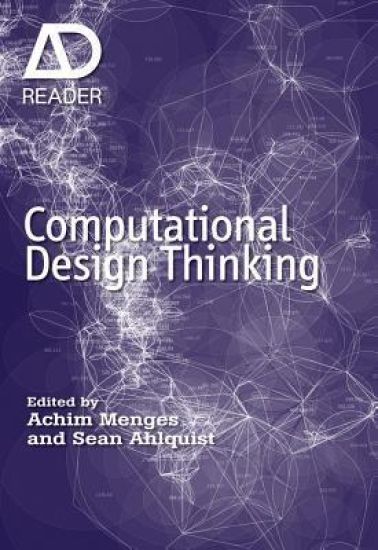
The current transition from Computer Aided Design (CAD) to Computational Design in architecture represents a profound shift in design thinking and methods. Representation is being replaced by simulation, and the crafting of objects is moving towards the generation of integrated systems through designer-authored computational processes. While there is a particular history of such an approach in architecture, its relative newness requires the continued progression of novel modes of design thinking for the architect of the 21st century. This AD Reader establishes a foundation for such thinking. It includes multifaceted reflections and speculations on the profound influence of computational paradigms on architecture. It presents relevant principles from the domains of mathematics and computer science, developmental and evolutionary biology, system science and philosophy, establishing a discourse for computational design thinking in architecture. Rather than a merely technical approach, the book will discuss essential intellectual concepts that are fundamental not only for a discourse on computational design but also for its practice. This anthology provides a unique collection of seminal texts by authors, who have either provided a significant starting point through which a computational approach to design has been pursued or have played a considerable role in shaping the field. An important aspect of this book is the manner in which adjacent fields and historical texts are connected. Both the source of original inspiration and scientific thought are presented alongside contemporary writings on the continually evolving computational design discourse. Emerging from the field of science, principally the subjects of morphogenesis, evolution and mathematics, selected texts provide a historical basis for a reconfigured mindset of processes that generate, arrange and describe form. Juxtaposed against more contemporary statements regarding the influence of computation on design thinking, the book offers advancements of fundamental texts to the particular purpose of establishing novel thought processes for architecture, theoretically and practically. The first reader to provide an effective framework for computational thinking in design. Includes classic texts by Johan W. von Goethe, D’Arcy Thompson, Ernst Mayr, Ludwig von Bertalanffy, Gordan Pask, Christopher Alexander, John H. Holland, Nicholas Negroponte, William Mitchell, Peter J. Bentley & David W. Corne, Sanford Kwinter, John Frazer, Kostis Terzidis, Michael Weinstock and Achim Menges Features new writing by: Mark Burry, Jane Burry, Manuel DeLanda and Peter Trummer.
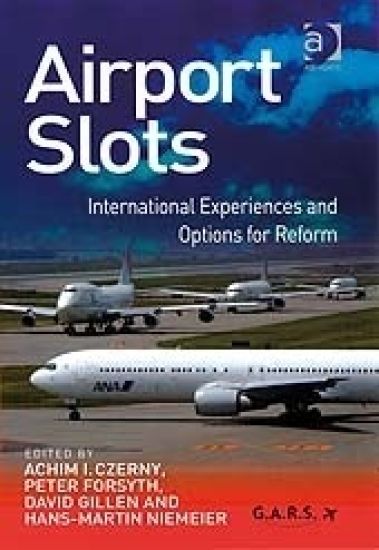
Airport Slots

Airport Slots

Achim I. Czerny; Peter Forsyth

Ashgate Publishing Limited
2008
sidottu
Over the past several decades, commercial air traffic has been growing at a far greater rate than airport capacity, causing airports to become increasingly congested. How can we accommodate this increased traffic and at the same time alleviate traffic delays resulting from congestion? The response outside the US has been to set a maximum number of slots and use administrative procedures to allocate these among competing airlines, with the most important consideration being 'grandfather rights' to existing carriers. The United States, on the other hand, has used administrative procedures to allocate slots at only four airports. In all other cases, flights have been handled on a first-come, first-served basis, with aircraft queuing for the privilege of landing or taking off from a congested airport. While recognizing the advantages of slot systems in lessening delays, economists have criticized both approaches as being sub-optimal, and have advocated procedures such as slot auctions, peak-load pricing and slot trading to better utilize congested airports. Edited by an international team of air transport economists and drawing on an impressive list of contributors, Airport Slots provides an extremely comprehensive treatment of the subject. It considers the methods currently used to allocate slots and applies economic analysis to each. The book then explains various schemes to increase public welfare by taxing or pricing congestion, and describes alternate slot-allocation schemes, most notably slot auctions. In addition, Airport Slots outlines the complexities involved in slot-allocation methods, including the requirement for multiple slots - a take-off slot at London Heathrow is useless unless there is a landing slot available at Frankfurt for a London Frankfurt flight. Finally, the book explores the economic pitfalls of slot-allocation schemes; for example, controls may not be required if external delay costs are internalized by a dominant carrier at its hub. Airport Slots provides a valuable contribution to the debate on how best to limit airport congestion. The book's comprehensive treatment of the subject matter provides the reader with a 'one-stop' volume to explore airport congestion and slot-allocation schemes, offering valuable insights to academics and practitioners alike.
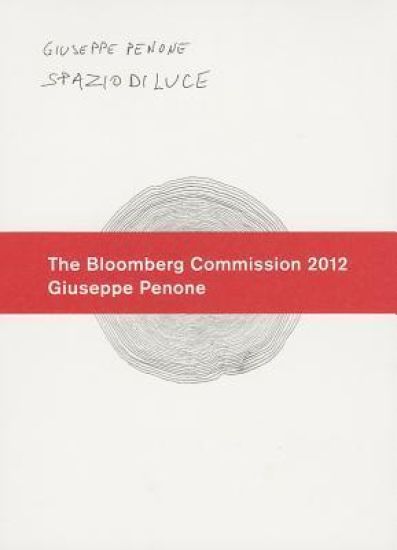
Giuseppe Penone: Spazio di Luce

Giuseppe Penone: Spazio di Luce

Achim Borchardt-Hume

Whitechapel Gallery
2012
nidottu
For the latest Bloomberg Commission at the Whitechapel Gallery, Italian artist Giuseppe Penone continues his career-long reflection on the passing of time and the contact between man and nature. Spazio di Luce (Space of Light) is a bronze cast of the thick layer of wax surrounding a 12 metre-tall larch, with a radiant gold-leaf interior. Born in 1947 in Garessio, Italy, Giuseppe Penone studied at the Accademia di Belle Arte before leaving formal education to pursue his artistic practice in the woods surrounding his home. Aged 22, he was the youngest member to be admitted to the legendary group Arte Povera, which called for a radical rethink of society through making works directly appealing to the senses and challenging common conventions of art making. Penone has exhibited widely in Europe and America and his work is held in important international collections including Tate Modern, London and the Museum of Modern Art, New York. His large-scale sculpture Idee di Pietra inaugurated dOCUMENTA 13 in 2010 and he was recently selected as 2013 artist for Versailles. He currently lives and works in Turin, Italy. This publication has been created in close collaboration with the artist and gives a unique insight into the universe of ideas that underpins his works. It brings together previously unpublished drawings, photographs of historic actions and recent sculptures, and a selection of the artist’s own writings. The publication also includes an interview between Achim Borchardt-Hume and the artist, an essay by art critic and scholar Douglas Fogle focusing on Penone’s work with trees alongside full page colour installation images of the exhibition at the Whitechapel Gallery.
Think Twice: Twenty Years of Contemporary Art from Collection Sandretto Re Rebaudengo

Think Twice: Twenty Years of Contemporary Art from Collection Sandretto Re Rebaudengo

Achim Borchardt-Hume; Francesco Bonami; Patrizia Sandretto

Whitechapel Gallery
2012
nidottu
Collection Sandretto Re Rebaudengo is a Turin-based collection owned by arts patron Patrizia Sandretto Re Rebaudengo. Founded in 1995, it has become one of the foremost collections of international contemporary art in Italy today, consisting of over 1000 works dating from the 1970s to the present day. The Foundation Sandretto Re Rebaudengo, set up by the collector in 1997, is a not-for-profit organization that supports and promotes the development and understanding of contemporary art, and was created in partnership with Italian curator and scholar Francesco Bonami, who was appointed Artistic Director of the Foundation and Collection. This publication documents four consecutive displays of works from the collection at the Whitechapel Gallery. Each display has been curated by Achim Borchardt-Hume (Chief Curator, Whitechapel Gallery) in collaboration with Francesco Bonami (Artistic Director, FSRR). It includes an in-depth interview between Achim Borchardt-Hume and Patrizia Sandretto, an essay on the act of collecting by Francesco Bonami alongside images and texts on all artworks displayed as part of the collection series. Artists featured include Thomas Demand, Fischli & Weiss, Felix Gonzalez-Torres, Anish Kapoor, Cindy Sherman, Rosemarie Trockel and Cerith Wyn Evans
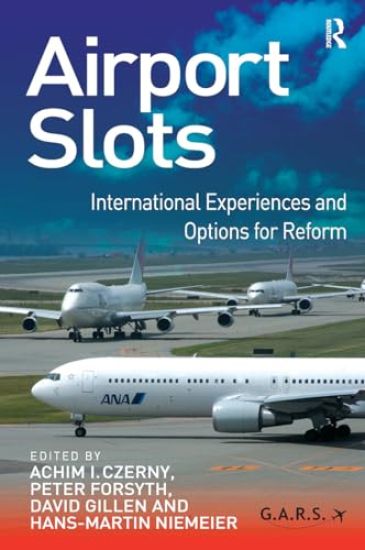
Airport Slots

Airport Slots

Achim I. Czerny; Peter Forsyth

TAYLOR FRANCIS LTD
2024
nidottu
Over the past several decades, commercial air traffic has been growing at a far greater rate than airport capacity, causing airports to become increasingly congested. How can we accommodate this increased traffic and at the same time alleviate traffic delays resulting from congestion? The response outside the US has been to set a maximum number of slots and use administrative procedures to allocate these among competing airlines, with the most important consideration being 'grandfather rights' to existing carriers. The United States, on the other hand, has used administrative procedures to allocate slots at only four airports. In all other cases, flights have been handled on a first-come, first-served basis, with aircraft queuing for the privilege of landing or taking off from a congested airport. While recognizing the advantages of slot systems in lessening delays, economists have criticized both approaches as being sub-optimal, and have advocated procedures such as slot auctions, peak-load pricing and slot trading to better utilize congested airports. Edited by an international team of air transport economists and drawing on an impressive list of contributors, Airport Slots provides an extremely comprehensive treatment of the subject. It considers the methods currently used to allocate slots and applies economic analysis to each. The book then explains various schemes to increase public welfare by taxing or pricing congestion, and describes alternate slot-allocation schemes, most notably slot auctions. In addition, Airport Slots outlines the complexities involved in slot-allocation methods, including the requirement for multiple slots - a take-off slot at London Heathrow is useless unless there is a landing slot available at Frankfurt for a London Frankfurt flight. Finally, the book explores the economic pitfalls of slot-allocation schemes; for example, controls may not be required if external delay costs are internalized by a dominant carrier at its hub. Airport Slots provides a valuable contribution to the debate on how best to limit airport congestion. The book's comprehensive treatment of the subject matter provides the reader with a 'one-stop' volume to explore airport congestion and slot-allocation schemes, offering valuable insights to academics and practitioners alike.
GED Social Studies For Dummies

GED Social Studies For Dummies

Achim K. Krull; Murray Shukyn

John Wiley Sons Inc
2015
nidottu
Gear up to crush the GED Social Studies Test Does the thought of taking the GED Social Studies Test send shivers down your spine? Fear not! With the help of GED Social Studies Test For Dummies, you'll get up to speed on the new structure and computer-based format of the GED and gain the confidence and know-how to pass the Social Studies Test like a pro. Packed with helpful guidance and instruction, this hands-on test-prep guide covers the concepts covered on the GED Social Studies Test and gives you ample practice opportunities to assess your understanding of Civics and Government, History, Economics, and Geography. Designed to test your understanding of the fundamentals of social studies reasoning and the ability to apply those fundamentals in realistic situations, the GED Social Studies Test can be tough for the uninitiated. Luckily, this fun and accessible guide breaks down each section of the exam into easily digestible parts, making everything you'll encounter on exam day feel like a breeze! Inside, you'll find methods to sharpen your vocabulary and writing skills, tips on how to approach GED Social Studies Test question types and formats, practice questions and study exercises, and a full-length practice test to help you pinpoint where you need more study help. Presents reviews of the GED Social Studies test question types and basic computer skillsOffers practice questions to assess your knowledge of each subject areaIncludes one full-length GED Social Studies practice testProvides scoring guidelines and detailed answer explanations Even if Social Studies is something that's always made you wince, GED Social Studies Test For Dummies makes it easy to pass this crucial exam and obtain your hard-earned graduate equivalency diploma.
GED RLA For Dummies

GED RLA For Dummies

Achim K. Krull; Murray Shukyn

John Wiley Sons Inc
2015
nidottu
Read and write your way to excellence on the GED RLA Test Does the thought of taking the GED RLA Test make you red in the face? Fear not! With the help of GED RLA Test For Dummies, you'll get up to speed on the new structure and computer-based format of the GED and gain the confidence and know-how to pass the RLA Test like a pro. Packed with helpful guidance and instruction, this hands-on test-prep guide covers the concepts covered onthe GED RLA Test and gives you ample practice opportunities to assess your understanding of the Language Arts, Writing, and Language Arts Reading sections of the exam. Designed to test your understanding of reading, writing, and editing skills, the GED RLA Test can be tough for the uninitiated. Luckily, this fun and accessible guide breaks down each section of the exam into easily digestible parts, making everything you'll encounter on exam day feel like a breeze! Inside, you'll find methods to sharpen your reading and language arts test skills, tips on how to approach GED RLA question types and formats, practice questions and study exercises, and a full-length practice test to help you pinpoint where you need more study help. Presents reviews of the GED RLA test question types and basic computer skillsOffers passages and questions that assess reading comprehension, language conventions, and usageIncludes one full-length GED RLA practice testProvides scoring guidelines and detailed answer explanations Even if reading, writing, and editing have never been your strong suit, GED RLA Test For Dummies makes it easy to pass this crucial exam and obtain your hard-earned graduate equivalency diploma.
State-Society Relations in Ba'thist Iraq
Scholarship on Iraq under the Ba’th regime has traditionally focused on the rule of Saddam Hussein and his narrow inner circle. The centrality of the former president in Iraqi politics until spring 2003 and the tyranny of his regime were evident, and available sources concerning developments inside Iraqi society during that period were scarce.This book explores whether traditional paradigms of totalitarian rule can be applied to Ba’thist Iraq, closely examining state-society relations and uncovering the nature of the regime and how Iraqis lived with it. The study creates a conceptual framework for understanding the inner dynamics of a dictatorship that encompasses a variety of disciplines - comparative historiography, political science, literary and art criticism, and gender studies. Drawing on a comparative reading of the historiography of other regimes commonly perceived as totalitarian dictatorships, particularly Nazi Germany, the author looks beyond the spheres of state politics, economy and jurisdiction to also include the so called ‘soft issues’ of social norms, cultural and ideological production. By interpreting recent Iraqi history along such lines, the author demonstrates how cross-regional comparative perspectives and an interdisciplinary approach can contribute to the study of Iraq.