

Kirjahaku
Etsi kirjoja tekijän nimen, kirjan nimen tai ISBN:n perusteella.
1000 tulosta hakusanalla Ad Murphye
Ad Martialem Quaestiones Criticae, written in Latin, is a critical examination of the works of Martial, the renowned Roman poet known for his epigrams. Authored by Walther Gilbert and originally published in 1883, this work delves into the intricacies of Martial's poetry, offering insights and analyses relevant to scholars and enthusiasts of classical literature. This book provides a deep dive into the nuances of Martial's style, themes, and historical context, making it an invaluable resource for understanding Roman society and literature during the first century AD. Gilbert's critical questions invite readers to reconsider traditional interpretations, fostering a deeper appreciation for Martial's enduring influence on subsequent literary traditions. This edition preserves the original Latin text, allowing for direct engagement with the author's scholarly insights. This work has been selected by scholars as being culturally important, and is part of the knowledge base of civilization as we know it. This work was reproduced from the original artifact, and remains as true to the original work as possible. Therefore, you will see the original copyright references, library stamps (as most of these works have been housed in our most important libraries around the world), and other notations in the work. This work is in the public domain in the United States of America, and possibly other nations. Within the United States, you may freely copy and distribute this work, as no entity (individual or corporate) has a copyright on the body of the work. As a reproduction of a historical artifact, this work may contain missing or blurred pages, poor pictures, errant marks, etc. Scholars believe, and we concur, that this work is important enough to be preserved, reproduced, and made generally available to the public. We appreciate your support of the preservation process, and thank you for being an important part of keeping this knowledge alive and relevant.
Ad Martialem Quaestiones Criticae, written in Latin, is a critical examination of the works of Martial, the renowned Roman poet known for his epigrams. Authored by Walther Gilbert and originally published in 1883, this work delves into the intricacies of Martial's poetry, offering insights and analyses relevant to scholars and enthusiasts of classical literature. This book provides a deep dive into the nuances of Martial's style, themes, and historical context, making it an invaluable resource for understanding Roman society and literature during the first century AD. Gilbert's critical questions invite readers to reconsider traditional interpretations, fostering a deeper appreciation for Martial's enduring influence on subsequent literary traditions. This edition preserves the original Latin text, allowing for direct engagement with the author's scholarly insights. This work has been selected by scholars as being culturally important, and is part of the knowledge base of civilization as we know it. This work was reproduced from the original artifact, and remains as true to the original work as possible. Therefore, you will see the original copyright references, library stamps (as most of these works have been housed in our most important libraries around the world), and other notations in the work. This work is in the public domain in the United States of America, and possibly other nations. Within the United States, you may freely copy and distribute this work, as no entity (individual or corporate) has a copyright on the body of the work. As a reproduction of a historical artifact, this work may contain missing or blurred pages, poor pictures, errant marks, etc. Scholars believe, and we concur, that this work is important enough to be preserved, reproduced, and made generally available to the public. We appreciate your support of the preservation process, and thank you for being an important part of keeping this knowledge alive and relevant.
Ad Philocratem epistula; cum ceteris de origine versionis 70 interpretum testimoniis. Ludovici Mendelssohn schedis usus edidit Paulus Wendland
Wendland Paul; Mendelssohn Ludwig 1852-1896
Hutson Street Press
2025
sidottu
Ad Philocratem epistula; cum ceteris de origine versionis 70 interpretum testimoniis. Ludovici Mendelssohn schedis usus edidit Paulus Wendland
Wendland Paul; Mendelssohn Ludwig 1852-1896
Hutson Street Press
2025
pokkari
Ad Theologiam Christianam Dogmatico-moralem Apparatus
Daniele Concina
Hutson Street Press
2025
sidottu
Ad Theologiam Christianam Dogmatico-moralem Apparatus
Daniele Concina
Hutson Street Press
2025
pokkari
Ad Theophilum Gallum Epistola De Cultu Sanctorum Ignotorum
Jean Mabillon
Hutson Street Press
2025
sidottu
Ad Theophilum Gallum Epistola De Cultu Sanctorum Ignotorum
Jean Mabillon
Hutson Street Press
2025
pokkari
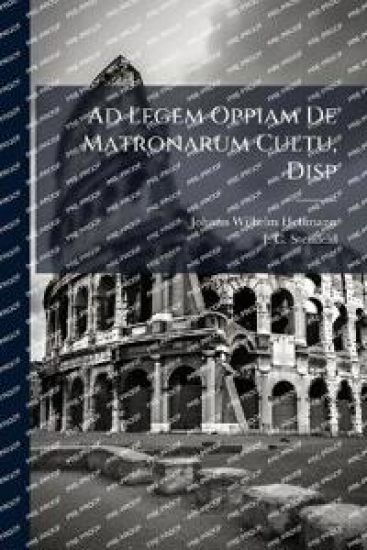
Ad Legem Oppiam De Matronarum Cultu, Disp
Johann Wilhelm Hoffmann; J C Steinfeld
Hutson Street Press
2025
nidottu
This book delves into the historical significance of the 'Lex Oppia, ' a Roman law enacted in 215 BCE that restricted women's access to luxury goods and elaborate fashion. Authored by Johann Wilhelm Hoffmann and J. C. Steinfeld, the work offers a detailed analysis of the law's origins, its social and economic impact on Roman society, and the debates surrounding its eventual repeal. Through careful examination of primary sources and historical context, the authors shed light on the motivations behind the 'Lex Oppia' and its implications for understanding gender roles and social hierarchies in ancient Rome. This book provides valuable insights into the complex interplay between law, culture, and society in the Roman Republic and its enduring relevance to discussions of sumptuary laws and gender equality. This work has been selected by scholars as being culturally important, and is part of the knowledge base of civilization as we know it. This work was reproduced from the original artifact, and remains as true to the original work as possible. Therefore, you will see the original copyright references, library stamps (as most of these works have been housed in our most important libraries around the world), and other notations in the work. This work is in the public domain in the United States of America, and possibly other nations. Within the United States, you may freely copy and distribute this work, as no entity (individual or corporate) has a copyright on the body of the work. As a reproduction of a historical artifact, this work may contain missing or blurred pages, poor pictures, errant marks, etc. Scholars believe, and we concur, that this work is important enough to be preserved, reproduced, and made generally available to the public. We appreciate your support of the preservation process, and thank you for being an important part of keeping this knowledge alive and relevant.
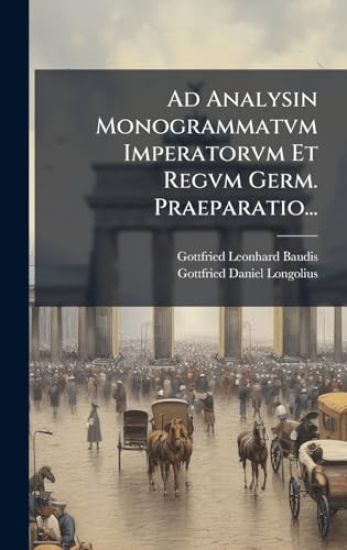
Ad Analysin Monogrammatvm Imperatorvm Et Regvm Germ. Praeparatio...
Gottfried Leonhard Baudis
Hutson Street Press
2025
sidottu
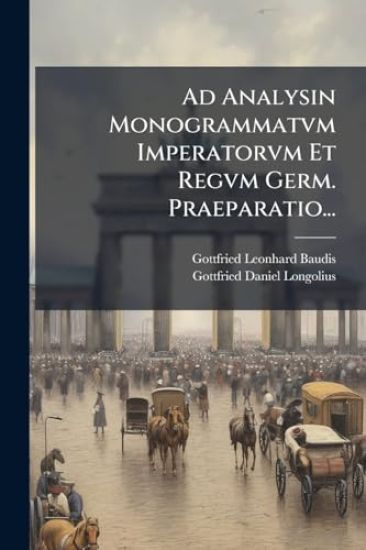
Ad Analysin Monogrammatvm Imperatorvm Et Regvm Germ. Praeparatio...
Gottfried Leonhard Baudis
Hutson Street Press
2025
pokkari