Kirjojen hintavertailu. Mukana 11 244 527 kirjaa ja 12 kauppaa.

Kirjahaku

Etsi kirjoja tekijän nimen, kirjan nimen tai ISBN:n perusteella.

1000 tulosta hakusanalla Adam J Pollack

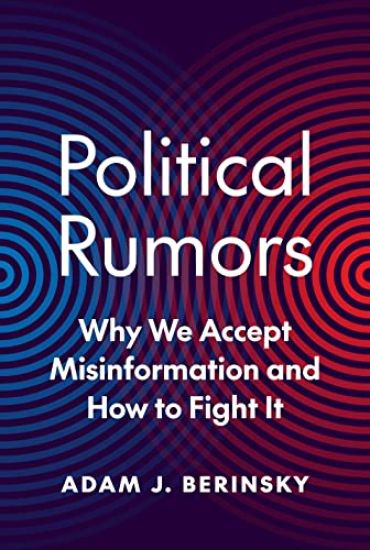
Political Rumors

Political Rumors

Adam J. Berinsky

PRINCETON UNIVERSITY PRESS
2025
pokkari
Why debunked political rumors persist and how to combat themPolitical rumors and misinformation pollute the political landscape. This is not a recent phenomenon; before the currently rampant and unfounded rumors about a stolen election and vote-rigging, there were other rumors that continued to spread even after they were thoroughly debunked, including doubts about 9/11 (an “inside job”) and the furor over President Obama’s birthplace and birth certificate. If misinformation crowds out the truth, how can Americans communicate with one another about important issues? In this book, Adam Berinsky examines why political rumors exist and persist despite their unsubstantiated and refuted claims, who is most likely to believe them, and how to combat them.Drawing on original survey and experimental data, Berinsky shows that a tendency toward conspiratorial thinking and vehement partisan attachment fuel belief in rumors. Yet the reach of rumors is wide, and Berinsky argues that in fighting misinformation, it is as important to target the undecided and the uncertain as it is the true believers. We’re all vulnerable to misinformation, and public skepticism about the veracity of political facts is damaging to democracy. Moreover, in a world where most people simply don’t pay attention to politics, political leaders are often guilty of disseminating false information—and failing to correct it when it is proven wrong. Berinsky suggests that we should focus on the messenger as much as the message of rumors. Just as important as how misinformation is debunked is who does the debunking.
Friday's: Bar for Supervillains

Friday's: Bar for Supervillains

Adam J. Brunner

Friday's Bar for Supervillains
2018
nidottu
In an unknown back alley on the outskirts of Titan City sits a bar where every rogue, psychopath, and would-be dictator is welcome. It's a place where supervillains unwind with a drink, away from the cops and the capes. This is Friday's Bar, owned by none other than the infamous James Joseph Friday. So, come on in and hear the stories of the bar that caters to every colorful miscreant and costumed criminal that the city has to offer. The staff is friendly, the drinks are cold, and-if you're lucky-no one will try to disintegrate you with a death ray.
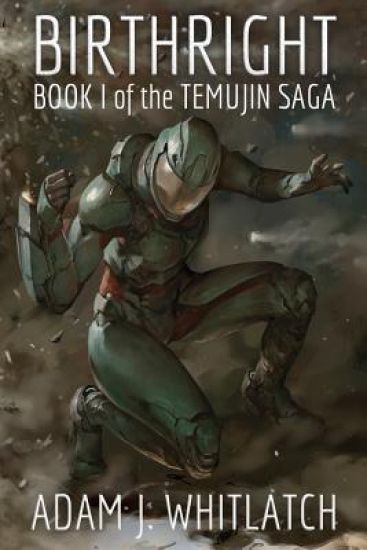
Birthright

Birthright

Adam J Whitlatch

Latchkey Press
2015
pokkari
Alien warmongers have cloned an ancient emperor to lead an unstoppable army. Gifted with superhuman powers and advanced technology, he sets his sights on his home planet, Earth, and then... the stars However, countermeasures have already been set in place. A young Iowa farm boy, oblivious to his powers or destiny, is thrust into a battle that will decide the fate of humanity against the new and improved Genghis Khan
Conditional Press Influence in Politics

Conditional Press Influence in Politics

Adam J. Schiffer

Lexington Books
2008
sidottu
Conditional Press Influence in Politics theorizes about and tests the conditions under which the press acts as an independent political institution, and when it cedes its power to other actors or phenomena. Using substantive case studies, Adam J. Schiffer reviews the most politically consequential press routines, and illustrates "true media influence"-the unique effect of press norms, constraints, and routines on the political world. By moving beyond news content to treat the organizations that produce the content as political actors, Conditional Press Influence in Politics gives a theoretical framework to aid scholars in understanding the news media's role in American politics.
Conditional Press Influence in Politics

Conditional Press Influence in Politics

Adam J. Schiffer

Lexington Books
2009
nidottu
Conditional Press Influence in Politics theorizes about and tests the conditions under which the press acts as an independent political institution, and when it cedes its power to other actors or phenomena. Using substantive case studies, Adam J. Schiffer reviews the most politically consequential press routines, and illustrates 'true media influence'-the unique effect of press norms, constraints, and routines on the political world. By moving beyond news content to treat the organizations that produce the content as political actors, Conditional Press Influence in Politics gives a theoretical framework to aid scholars in understanding the news media's role in American politics.
Making and Breaking Settler Space

Making and Breaking Settler Space

Adam J. Barker

University of British Columbia Press
2021
sidottu
Five hundred years. A vast geography. And an unfinished project to remake the world to match the desires of settler colonizers. How have settlers used violence and narrative to transform Turtle Island into "North America"? What does that say about our social systems, and what happens next?Drawing on multiple disciplines, archival sources, pop culture, and personal experience, Making and Breaking Settler Space creates a model that shows how settler spaces have evolved. From the colonization of Turtle Island in the 1500s to problematic activist practices by would-be settler allies today, Adam Barker traces the trajectory of settler colonialism, drawing out details of its operation and unflinchingly identifying its weaknesses. Making and Breaking Settler Space proposes an innovative, unified spatial theory of settler colonization in Canada and the United States. In doing so, it offers a framework within which settlers can pursue decolonial actions in solidarity with Indigenous communities.
Making and Breaking Settler Space

Making and Breaking Settler Space

Adam J. Barker

University of British Columbia Press
2022
pokkari
Five hundred years. A vast geography. And an unfinished project to remake the world to match the desires of settler colonizers. How have settlers used violence and narrative to transform Turtle Island into "North America"? What does that say about our social systems, and what happens next?Drawing on multiple disciplines, archival sources, pop culture, and personal experience, Making and Breaking Settler Space creates a model that shows how settler spaces have evolved. From the colonization of Turtle Island in the 1500s to problematic activist practices by would-be settler allies today, Adam Barker traces the trajectory of settler colonialism, drawing out details of its operation and unflinchingly identifying its weaknesses. Making and Breaking Settler Space proposes an innovative, unified spatial theory of settler colonization in Canada and the United States. In doing so, it offers a framework within which settlers can pursue decolonial actions in solidarity with Indigenous communities.
The Survival Hypothesis

The Survival Hypothesis

Adam J. Rock

McFarland Co Inc
2014
pokkari
Contemporary parapsychology tends to be preoccupied with ESP (telepathy, clairvoyance, precognition) and psychokinesis. In contrast, this cutting-edge anthology assembles an international team of experts from the fields of psychology, parapsychology, philosophy, anthropology and neuroscience to examine critically what is referred to as the survival hypothesis: the tentative statement or prediction that some aspect of our personhood (e.g., consciousness) persists subsequent to the death of the physical body. The appraisal of the survival hypothesis will be restricted to the phenomenon of mediumship; that is, humans who ostensibly communicate with the deceased. The book has been divided into four main sections: Explanation and Belief; Culture, Psychopathology and Psychotherapy; Empirical Approaches; The Present and Future. The issue of postmortem survival is supremely relevant to us all because the human encounter with death is, of course, a certainty.
The Holy Bureaucrat

The Holy Bureaucrat

Adam J. Davis

Cornell University Press
2006
sidottu
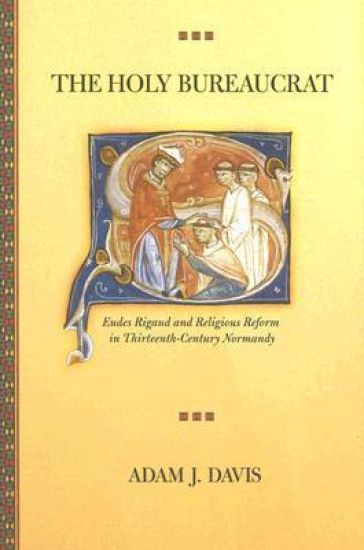
In a book that offers a fresh perspective on the complex relationship between thirteenth-century institutional power and evangelical devotion, Adam J. Davis explores the fascinating career of Eudes Rigaud, the Franciscan theologian at the University of Paris and archbishop of Rouen. Eudes's Register, a daybook that he kept for twenty-one years, paints a vivid picture of ecclesiastical life in thirteenth-century Normandy. It records the archbishop's visits to monasteries, convents, hospitals, and country parishes, where he sought to correct a wide range of problems, from clerics who were unchaste, who gambled, and who got drunk, to monasteries that were financially mismanaged and priests who did not know how to conjugate simple Latin verbs. Davis describes the collision between the world as it was and as Eudes Rigaud wished it to be, as well as the mechanisms that the archbishop used in trying to transform the world he found. The Holy Bureaucrat also reconstructs the multifaceted man behind the Register, reuniting Eudes Rigaud the intellectual, Franciscan preacher, church reformer, judge, financial manager, and trusted councillor to King Louis IX. The book traces the growth of a complex bureaucracy in Normandy that insisted on discipline and accountability and relied on new kinds of written administrative records. The result is an absorbing study of the interplay between religious values and practices, institutions and individuals during the age of Saint Louis.
Race, Rhetoric, and Technology

Race, Rhetoric, and Technology

Adam J. Banks

Routledge Member of the Taylor and Francis Group
2005
sidottu
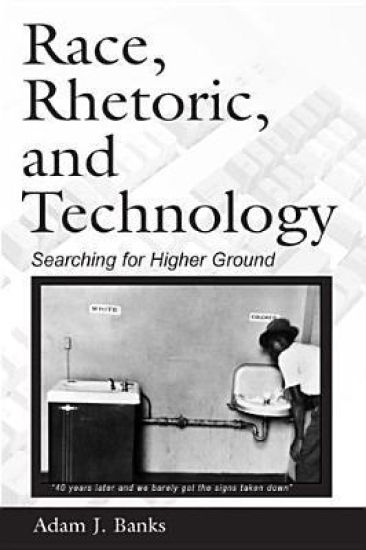
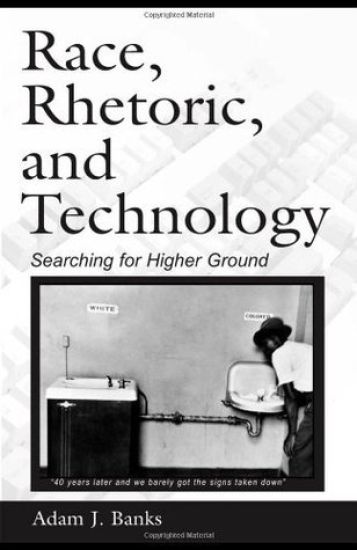
In this book Adam Banks uses the concept of the Digital Divide as a metonym for America's larger racial divide, in an attempt to figure out what meaningful access for African Americans to technologies and the larger American society can or should mean. He argues that African American rhetorical traditions--the traditions of struggle for justice and equitable participation in American society--exhibit complex and nuanced ways of understanding the difficulties inherent in the attempt to navigate through the seemingly impossible contradictions of gaining meaningful access to technological systems with the good they seem to make possible, and at the same time resisting the exploitative impulses that such systems always seem to present.Banks examines moments in these rhetorical traditions of appeals, warnings, demands, and debates to make explicit the connections between technological issues and African Americans' equal and just participation in American society. He shows that the big questions we must ask of our technologies are exactly the same questions leaders and lay people from Martin Luther King to Malcolm X to slave quilters to Critical Race Theorists to pseudonymous chatters across cyberspace have been asking all along. According to Banks the central ethical questions for the field of rhetoric and composition are technology access and the ability to address questions of race and racism. He uses this book to imagine what writing instruction, technology theory, literacy instruction, and rhetorical education can look like for all of us in a new century.Just as Race, Rhetoric, and Technology: Searching for Higher Ground is a call for a new orientation among those who study and profess African American rhetoric, it is also a call for those in the fields that make up mainstream English Studies to change their perspectives as well. This volume is intended for researchers, professionals, and students in Rhetoric and Composition, Technical Communication, the History of Science and Society, and African American Studies.
Race, Rhetoric, and Technology

Race, Rhetoric, and Technology

Adam J. Banks

Routledge Member of the Taylor and Francis Group
2005
nidottu
In this book Adam Banks uses the concept of the Digital Divide as a metonym for America's larger racial divide, in an attempt to figure out what meaningful access for African Americans to technologies and the larger American society can or should mean. He argues that African American rhetorical traditions--the traditions of struggle for justice and equitable participation in American society--exhibit complex and nuanced ways of understanding the difficulties inherent in the attempt to navigate through the seemingly impossible contradictions of gaining meaningful access to technological systems with the good they seem to make possible, and at the same time resisting the exploitative impulses that such systems always seem to present.Banks examines moments in these rhetorical traditions of appeals, warnings, demands, and debates to make explicit the connections between technological issues and African Americans' equal and just participation in American society. He shows that the big questions we must ask of our technologies are exactly the same questions leaders and lay people from Martin Luther King to Malcolm X to slave quilters to Critical Race Theorists to pseudonymous chatters across cyberspace have been asking all along. According to Banks the central ethical questions for the field of rhetoric and composition are technology access and the ability to address questions of race and racism. He uses this book to imagine what writing instruction, technology theory, literacy instruction, and rhetorical education can look like for all of us in a new century.Just as Race, Rhetoric, and Technology: Searching for Higher Ground is a call for a new orientation among those who study and profess African American rhetoric, it is also a call for those in the fields that make up mainstream English Studies to change their perspectives as well. This volume is intended for researchers, professionals, and students in Rhetoric and Composition, Technical Communication, the History of Science and Society, and African American Studies.
Digital Griots

Digital Griots

Adam J. Banks

Southern Illinois University Press
2011
nidottu
Scholar Adam J. Banks offers a mixtape of African American digital rhetoric in his innovative study Digital Griots: African American Rhetoric in a Multimedia Age. Presenting the DJ as a quintessential example of the digital griot-high-tech storyteller-this book shows how African American storytelling traditions and their digital manifestations can help scholars and teachers shape composition studies, thoroughly linking oral, print, and digital production in ways that centralize African American discursive practices as part of a multicultural set of ideas and pedagogical commitments. DJs are models of rhetorical excellence; canon makers; time binders who link past, present, and future in the groove and mix; and intellectuals continuously interpreting the history and current realities of their communities in real time. Banks uses the DJ's practices of the mix, remix, and mixtape as tropes for reimagining writing instruction and the study of rhetoric. He combines many of the debates and tensions that mark black rhetorical traditions and points to ways for scholars and students to embrace those tensions rather than minimize them. This commitment to both honoring traditions and embracing futuristic visions makes this text unique, as do the sites of study included in the examination: mixtape culture, black theology as an activist movement, everyday narratives, and discussions of community engagement. Banks makes explicit these connections, rarely found in African American rhetoric scholarship, to illustrate how competing ideologies, vernacular and academic writing, sacred and secular texts, and oral, print, and digital literacies all must be brought together in the study of African American rhetoric and in the teaching of culturally relevant writing. A remarkable addition to the study of African American rhetorical theory and composition studies, Digital Griots: African American Rhetoric in a Multimedia Age will compel scholars and students alike to think about what they know of African American rhetoric in fresh and useful ways.
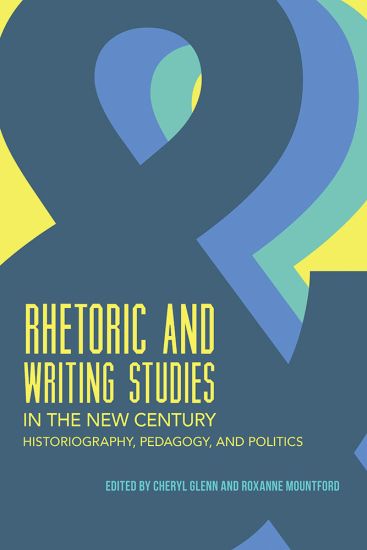
Rhetoric and Writing Studies in the New Century

Rhetoric and Writing Studies in the New Century

Adam J. Banks

Southern Illinois University Press
2017
nidottu
This collection of essays investigates the historiography of rhetoric, global perspectives on rhetoric, and the teaching of writing and rhetoric, offering diverse viewpoints. Addressing four major areas of research in rhetoric and writing studies, contributors consider authorship and audience, discuss the context and material conditions in which students compose, cover the politics of the field and the value of a rhetorical education, and reflect on contemporary trends in canon diversification. Providing both retrospective and prospective assessments, Rhetoric and Writing Studies in the New Century offers original research by important figures in the field.
Radio Free Stein

Radio Free Stein

Adam J. Frank

NORTHWESTERN UNIVERSITY PRESS
2024
nidottu
Returns us to Gertrude Stein’s theater by way of the modernist medium of radio What happens when we listen to Gertrude Stein’s plays as radio and music theater? This book explores the sound of Stein’s theater and proposes that radio, when approached both historically and phenomenologically, offers technical solutions to her texts’ unique challenges. Adam J. Frank documents the collaborative project of staging Stein’s early plays and offers new critical interpretations of these lesser-known works. Radio Free Stein grapples with her innovative theater poetics from a variety of disciplinary perspectives: sound and media studies, affect and object relations theory, linguistic performativity, theater scholarship, and music composition.
Radio Free Stein

Radio Free Stein

Adam J. Frank

NORTHWESTERN UNIVERSITY PRESS
2024
sidottu
Returns us to Gertrude Stein’s theater by way of the modernist medium of radio What happens when we listen to Gertrude Stein’s plays as radio and music theater? This book explores the sound of Stein’s theater and proposes that radio, when approached both historically and phenomenologically, offers technical solutions to her texts’ unique challenges. Adam J. Frank documents the collaborative project of staging Stein’s early plays and offers new critical interpretations of these lesser-known works. Radio Free Stein grapples with her innovative theater poetics from a variety of disciplinary perspectives: sound and media studies, affect and object relations theory, linguistic performativity, theater scholarship, and music composition.
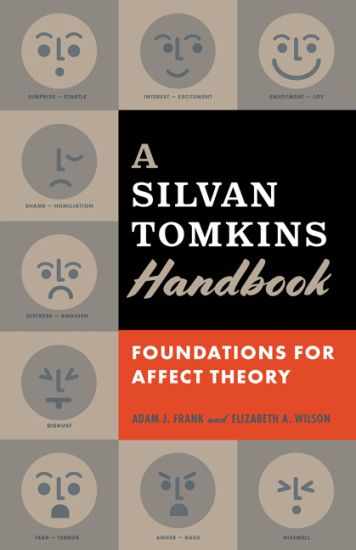
A Silvan Tomkins Handbook

A Silvan Tomkins Handbook

Adam J. Frank; Elizabeth A. Wilson

University of Minnesota Press
2020
sidottu
An accessible guide to the work of American psychologist and affect theorist Silvan Tomkins The brilliant and complex theories of psychologist Silvan Tomkins (1911–1991) have inspired the turn to affect in the humanities, social sciences, and elsewhere. Nevertheless, these theories are not well understood. A Silvan Tomkins Handbook makes his theories portable across a range of interdisciplinary contexts and accessible to a wide variety of contemporary scholars and students of affect. A Silvan Tomkins Handbook provides readers with a clear outline of Tomkins’s affect theory as he developed it in his four-volume masterwork Affect Imagery Consciousness. It shows how his key terms and conceptual innovations can be used to build robust frameworks for theorizing affect and emotion. In addition to clarifying his affect theory, the Handbook emphasizes Tomkins’s other significant contributions, from his broad theories of imagery and consciousness to more focused concepts of scenes and scripts. With their extensive experience engaging and teaching Tomkins’s work, Adam J. Frank and Elizabeth A. Wilson provide a user-friendly guide for readers who want to know more about the foundations of affect studies.
A Silvan Tomkins Handbook

A Silvan Tomkins Handbook

Adam J. Frank; Elizabeth A. Wilson

University of Minnesota Press
2020
nidottu
An accessible guide to the work of American psychologist and affect theorist Silvan Tomkins The brilliant and complex theories of psychologist Silvan Tomkins (1911–1991) have inspired the turn to affect in the humanities, social sciences, and elsewhere. Nevertheless, these theories are not well understood. A Silvan Tomkins Handbook makes his theories portable across a range of interdisciplinary contexts and accessible to a wide variety of contemporary scholars and students of affect. A Silvan Tomkins Handbook provides readers with a clear outline of Tomkins’s affect theory as he developed it in his four-volume masterwork Affect Imagery Consciousness. It shows how his key terms and conceptual innovations can be used to build robust frameworks for theorizing affect and emotion. In addition to clarifying his affect theory, the Handbook emphasizes Tomkins’s other significant contributions, from his broad theories of imagery and consciousness to more focused concepts of scenes and scripts. With their extensive experience engaging and teaching Tomkins’s work, Adam J. Frank and Elizabeth A. Wilson provide a user-friendly guide for readers who want to know more about the foundations of affect studies.
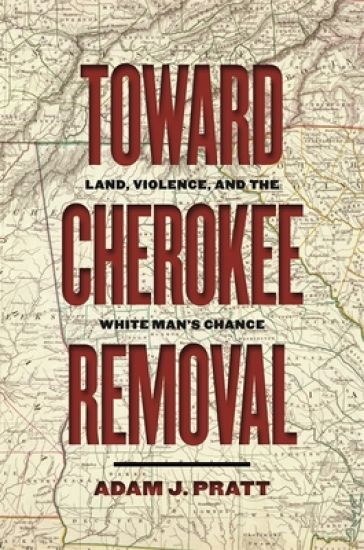
Toward Cherokee Removal

Toward Cherokee Removal

Adam J. Pratt

University of Georgia Press
2020
sidottu
Cherokee Removal excited the passions of Americans across the country. Nowhere did those passions have more violent expressions than in Georgia, where white intruders sought to acquire Native land through intimidation and state policies that supported their disorderly conduct. Cherokee Removal and the Trail of Tears, although the direct results of federal policy articulated by Andrew Jackson, were hastened by the state of Georgia. Starting in the 1820s, Georgians flocked onto Cherokee land, stole or destroyed Cherokee property, and generally caused havoc. Although these individuals did not have official license to act in such ways, their behavior proved useful to the state. The state also dispatched paramilitary groups into the Cherokee Nation, whose function was to intimidate Native inhabitants and undermine resistance to the state’s policies. The lengthy campaign of violence and intimidation white Georgians engaged in splintered Cherokee political opposition to Removal and convinced many Cherokees that remaining in Georgia was a recipe for annihilation. Although the use of force proved politically controversial, the method worked. By expelling Cherokees, state politicians could declare that they had made the disputed territory safe for settlement and the enjoyment of the white man’s chance.Adam J. Pratt examines how the process of one state’s expansion fit into a larger, troubling pattern of behavior. Settler societies across the globe relied on legal maneuvers to deprive Native peoples of their land and violent actions that solidified their claims. At stake for Georgia’s leaders was the realization of an idealized society that rested on social order and landownership. To achieve those goals, the state accepted violence and chaos in the short term as a way of ensuring the permanence of a social and political regime that benefitted settlers through the expansion of political rights and the opportunity to own land. To uphold the promise of giving land and opportunity to its own citizens—maintaining what was called the white man’s chance—politics within the state shifted to a more democratic form that used the expansion of land and rights to secure power while taking those same things away from others.
Toward Cherokee Removal

Toward Cherokee Removal

Adam J. Pratt

UNIVERSITY OF GEORGIA PRESS
2022
pokkari
Cherokee Removal excited the passions of Americans across the country. Nowhere did those passions have more violent expressions than in Georgia, where white intruders sought to acquire Native land through intimidation and state policies that supported their disorderly conduct. Cherokee Removal and the Trail of Tears, although the direct results of federal policy articulated by Andrew Jackson, were hastened by the state of Georgia. Starting in the 1820s, Georgians flocked onto Cherokee land, stole or destroyed Cherokee property, and generally caused havoc. Although these individuals did not have official license to act in such ways, their behavior proved useful to the state. The state also dispatched paramilitary groups into the Cherokee Nation, whose function was to intimidate Native inhabitants and undermine resistance to the state’s policies. The lengthy campaign of violence and intimidation white Georgians engaged in splintered Cherokee political opposition to Removal and convinced many Cherokees that remaining in Georgia was a recipe for annihilation. Although the use of force proved politically controversial, the method worked. By expelling Cherokees, state politicians could declare that they had made the disputed territory safe for settlement and the enjoyment of the white man’s chance.Adam J. Pratt examines how the process of one state’s expansion fit into a larger, troubling pattern of behavior. Settler societies across the globe relied on legal maneuvers to deprive Native peoples of their land and violent actions that solidified their claims. At stake for Georgia’s leaders was the realization of an idealized society that rested on social order and landownership. To achieve those goals, the state accepted violence and chaos in the short term as a way of ensuring the permanence of a social and political regime that benefitted settlers through the expansion of political rights and the opportunity to own land. To uphold the promise of giving land and opportunity to its own citizens—maintaining what was called the white man’s chance—politics within the state shifted to a more democratic form that used the expansion of land and rights to secure power while taking those same things away from others.
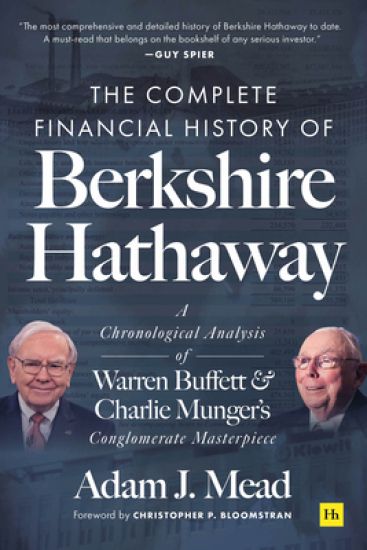
The Complete Financial History of Berkshire Hathaway

The Complete Financial History of Berkshire Hathaway

Adam J. Mead

Harriman House Publishing
2021
sidottu
For the first time the complete financial history of Berkshire Hathaway is available under one cover in chronological format. Beginning at the origins of the predecessor companies in the textile industry, the reader can examine the development of the modern-day conglomerate year-by-year and decade-by-decade, watching as the struggling textile company morphs into what it has become today.This comprehensive analysis distils over 10,000 pages of research material, including Buffett's Chairman's letters, Berkshire Hathaway annual reports and SEC filings, annual meeting transcripts, subsidiary financials, and more. The analysis of each year is supplemented with Buffett's own commentary where relevant, and examines all important acquisitions, investments, and other capital allocation decisions. The appendices contain balance sheets, income statements, statements of cash flows, and key ratios dating back to the 1930s, materials brought together for the first time.The structure of the book allows the new student to follow the logic, reasoning, and capital allocation decisions made by Warren Buffett and Charlie Munger from the very beginning. Existing Berkshire shareholders and long-time observers will find new information and refreshing analysis, and a convenient reference guide to the decades of financial moves that built the modern-day respected enterprise that is Berkshire Hathaway.