Kirjojen hintavertailu. Mukana 11 244 527 kirjaa ja 12 kauppaa.

Kirjahaku

Etsi kirjoja tekijän nimen, kirjan nimen tai ISBN:n perusteella.

820 tulosta hakusanalla Adamson Ged

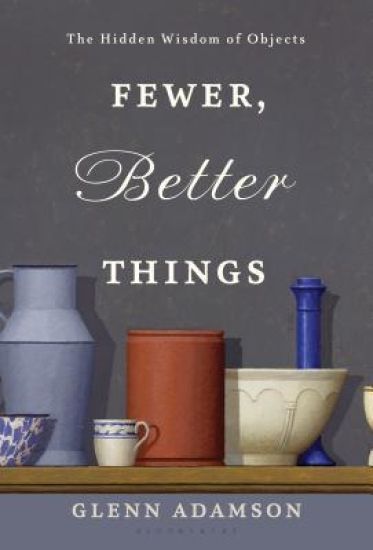
Fewer, Better Things

Fewer, Better Things

Adamson Glenn

Bloomsbury Publishing USA
2018
sidottu
From the former director of the Museum of Arts and Design in New York, a timely and passionate case for the role of the well-designed object in the digital age. Curator and scholar Glenn Adamson opens Fewer, Better Things by contrasting his beloved childhood teddy bear to the smartphones and digital tablets children have today. He laments that many children and adults are losing touch with the material objects that have nurtured human development for thousands of years. The objects are still here, but we seem to care less and know less about them. In his presentations to groups, he often asks an audience member what he or she knows about the chair the person is sitting in. Few people know much more than whether it's made of wood, plastic, or metal. If we know little about how things are made, it's hard to remain connected to the world around us. Fewer, Better Things explores the history of craft in its many forms, explaining how raw materials, tools, design, and technique come together to produce beauty and utility in handmade or manufactured items. Whether describing the implements used in a traditional Japanese tea ceremony, the use of woodworking tools, or the use of new fabrication technologies, Adamson writes expertly and lovingly about the aesthetics of objects, and the care and attention that goes into producing them. Reading this wise and elegant book is a truly transformative experience.
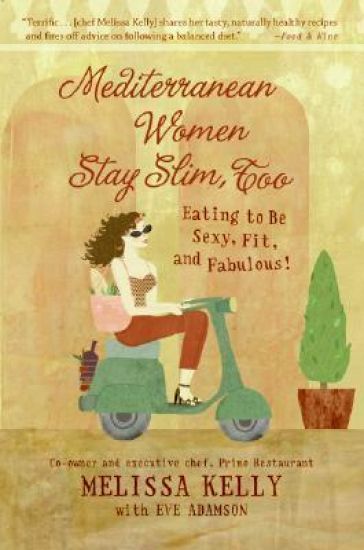
Mediterranean Women Stay Slim Too

Mediterranean Women Stay Slim Too

Eve Adamson; Melissa Kelly

HarperCollins
2007
nidottu
A popular chef introduces a nutritious, heart-healthy approach to good eating based on the benefits of the Mediterranean style of eating, offering one hundred delicious and healthful recipes that emphasize the use of olive oil, seasonal ingredients, and natural, whole foods. Reprint. 35,000 first printing.
The Outlander

The Outlander

Gil Adamson

Ecco Press
2009
nidottu
"A remarkable first novel, full of verve, beautifully written, and with all the panache of a great adventure." --Michael Ondaatje In 1903 a mysterious young woman flees alone across the West, one heart-pounding step ahead of the law. At 19, Mary Boulton has just become a widow--and her husband's killer. As bloodhounds track her frantic race toward the mountains, she is tormented by the knowledge that her two ruthless brothers-in-law are in pursuit, determined to avenge their younger brother's death. Responding to little more than the primitive fight for life, the widow retreats ever deeper into the wilderness--and into the wilds of her own mind--encountering an unforgettable cast of eccentrics along the way.With the stunning prose and captivating mood of great works like Charles Frazier's Cold Mountain or early Cormac McCarthy, Gil Adamson's intoxicating debut novel is the brilliant and gripping tale of one woman's desperate escape.
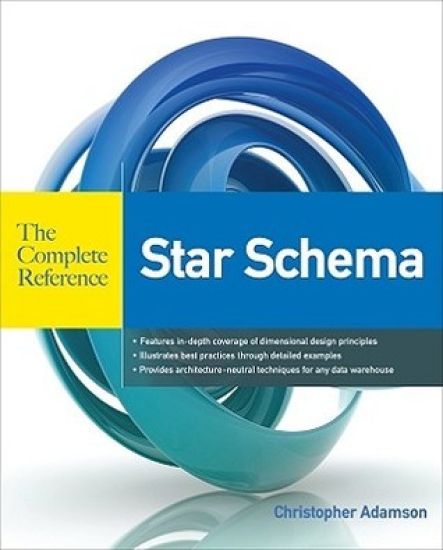
Star Schema The Complete Reference

Star Schema The Complete Reference

Christopher Adamson

McGraw-Hill Professional
2010
nidottu
Publisher's Note: Products purchased from Third Party sellers are not guaranteed by the publisher for quality, authenticity, or access to any online entitlements included with the product.The definitive guide to dimensional design for your data warehouseLearn the best practices of dimensional design. Star Schema: The Complete Reference offers in-depth coverage of design principles and their underlying rationales. Organized around design concepts and illustrated with detailed examples, this is a step-by-step guidebook for beginners and a comprehensive resource for experts.This all-inclusive volume begins with dimensional design fundamentals and shows how they fit into diverse data warehouse architectures, including those of W.H. Inmon and Ralph Kimball. The book progresses through a series of advanced techniques that help you address real-world complexity, maximize performance, and adapt to the requirements of BI and ETL software products. You are furnished with design tasks and deliverables that can be incorporated into any project, regardless of architecture or methodology.Master the fundamentals of star schema design and slow change processingIdentify situations that call for multiple stars or cubesEnsure compatibility across subject areas as your data warehouse growsAccommodate repeating attributes, recursive hierarchies, and poor data qualitySupport conflicting requirements for historic dataHandle variation within a business process and correlation of disparate activitiesBoost performance using derived schemas and aggregatesLearn when it's appropriate to adjust designs for BI and ETL tools
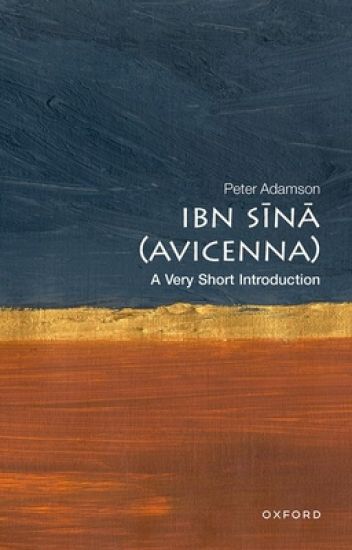
Ibn Sina (Avicenna)

Ibn Sina (Avicenna)

Peter Adamson

Oxford University Press
2023
nidottu
Very Short Introductions: Brilliant, Sharp, Inspiring This book provides an introduction to the most important philosopher of the Islamic world, Ibn Sina, often known in English by his Latinized name Avicenna. After introducing the man and his works, with an overview of the historical context in which he lived, the book devotes chapters to the different areas of Ibn Sina's thought. Among the topics covered are his innovations in logic, his theory of the human soul and its powers, the relation between his medical writings and his philosophy, and his metaphysics of existence. Particular attention is given to two famous arguments: his flying man thought experiment and the so-called “demonstration of the truthful,” a proof for the existence of God as the Necessary Existent. A distinctive feature of the book is its attention to the relationship between Ibn Sina and Islamic rational theology (kalam): in which we see how Ibn Sina responded to this tradition in many areas of his thought. A final chapter looks at Ibn Sina's legacy in both the Islamic world and in Latin Christendom. Here Adamson focuses on the critical responses to Ibn Sina in subsequent generations by such figures as al-Ghazali, al-Suhrawardi, and Fakhr al-Din al-Razi. ABOUT THE SERIES: The Very Short Introductions series from Oxford University Press contains hundreds of titles in almost every subject area. These pocket-sized books are the perfect way to get ahead in a new subject quickly. Our expert authors combine facts, analysis, perspective, new ideas, and enthusiasm to make interesting and challenging topics highly readable.
Byzantine and Renaissance Philosophy

Byzantine and Renaissance Philosophy

Peter Adamson

Oxford University Press
2022
sidottu
Peter Adamson explores the rich intellectual history of the Byzantine Empire and the Italian Renaissance. Peter Adamson presents an engaging and wide-ranging introduction to the thinkers and movements of two great intellectual cultures: Byzantium and the Italian Renaissance. First he traces the development of philosophy in the Eastern Christian world, from such early figures as John of Damascus in the eighth century to the late Byzantine scholars of the fifteenth century. He introduces major figures like Michael Psellos, Anna Komnene, and Gregory Palamas, and examines the philosophical significance of such cultural phenomena as iconoclasm and conceptions of gender. We discover the little-known traditions of philosophy in Syriac, Armenian, and Georgian. These chapters also explore the scientific, political, and historical literature of Byzantium. There is a close connection to the second half of the book, since thinkers of the Greek East helped to spark the humanist movement in Italy. Adamson tells the story of the rebirth of philosophy in Italy in the fifteenth and sixteenth centuries. We encounter such famous names as Christine de Pizan, Niccolò Machiavelli, Giordano Bruno, and Galileo, but as always in this book series such major figures are read alongside contemporaries who are not so well known, including such fascinating figures as Lorenzo Valla, Girolamo Savonarola, and Bernardino Telesio. Major historical themes include the humanist engagement with ancient literature, the emergence of women humanists, the flowering of Republican government in Renaissance Italy, the continuation of Aristotelian and scholastic philosophy alongside humanism, and breakthroughs in science. All areas of philosophy, from theories of economics and aesthetics to accounts of the human mind, are featured. This is the sixth volume of Adamson's History of Philosophy Without Any Gaps, taking us to the threshold of the early modern era.
Medieval Philosophy

Medieval Philosophy

Peter Adamson

Oxford University Press
2022
nidottu
Peter Adamson presents a lively introduction to six hundred years of European philosophy, from the beginning of the ninth century to the end of the fourteenth century. The medieval period is one of the richest in the history of philosophy, yet one of the least widely known. Adamson introduces us to some of the greatest thinkers of the Western intellectual tradition, including Peter Abelard, Anselm of Canterbury, Thomas Aquinas, John Duns Scotus, William of Ockham, and Roger Bacon. And the medieval period was notable for the emergence of great women thinkers, including Hildegard of Bingen, Marguerite Porete, and Julian of Norwich. Original ideas and arguments were developed in every branch of philosophy during this period - not just philosophy of religion and theology, but metaphysics, philosophy of logic and language, moral and political theory, psychology, and the foundations of mathematics and natural science.
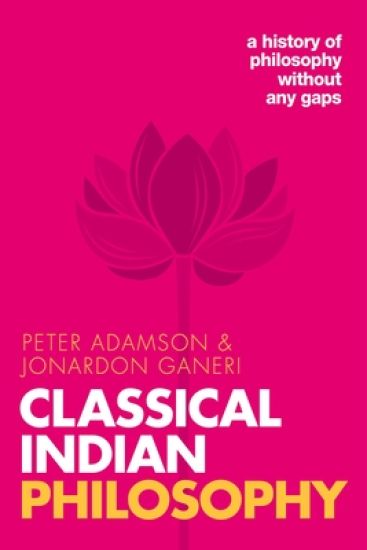
Classical Indian Philosophy

Classical Indian Philosophy

Peter Adamson; Jonardon Ganeri

Oxford University Press
2022
nidottu
Peter Adamson and Jonardon Ganeri present a lively introduction to one of the world's richest intellectual traditions: the philosophy of classical India. They begin with the earliest extant literature, the Vedas, and the explanatory works that these inspired, known as Upanisads. They also discuss other famous texts of classical Vedic culture, especially the Mahabharata and its most notable section, the Bhagavad-Gita, alongside the rise of Buddhism and Jainism. In this opening section, Adamson and Ganeri emphasize the way that philosophy was practiced as a form of life in search of liberation from suffering. Next, the pair move on to the explosion of philosophical speculation devoted to foundational texts called 'sutras,' discussing such traditions as the logical and epistemological Nyaya school, the monism of Advaita Vedanta, and the spiritual discipline of Yoga. In the final section of the book, they chart further developments within Buddhism, highlighting Nagarjuna's radical critique of 'non-dependent' concepts and the no-self philosophy of mind found in authors like Dignaga, and within Jainism, focusing especially on its 'standpoint' epistemology. Unlike other introductions that cover the main schools and positions in classical Indian philosophy, Adamson and Ganeri's lively guide also pays attention to philosophical themes such as non-violence, political authority, and the status of women, while considering textual traditions typically left out of overviews of Indian thought, like the Carvaka school, Tantra, and aesthetic theory as well. Adamson and Ganeri conclude by focusing on the much-debated question of whether Indian philosophy may have influenced ancient Greek philosophy and, from there, evaluate the impact that this area of philosophy had on later Western thought.
Al-Kindi

Al-Kindi

Peter Adamson

Oxford University Press Inc
2006
sidottu
The first book in the Great Medieval Thinkers series to focus on an Islamic philosopher. It offers a brief, accessible introduction to the thought of the philosopher al -Kindi (died roughly 870 AD). His works, though brief, are of great historical importance. Al-Kindi was the first philosopher of the Islamic world. Peter Adamson will survey what is known of al-Kindi's life, examine his thought on a wide range of topics, and consider the relationship of al-Kindi's work to his Greek sources.
Al-Kindi

Al-Kindi

Peter Adamson

Oxford University Press Inc
2007
nidottu
This will be the first book in the Great Medieval Thinkers series to focus on an Islamic philosopher. It will offer a brief, accessible introduction to the thought of the philosopher al-Kindî (died about 870 AD). The classical tradition of Arabic philosophy may be said to have five most prominent figures: al-Kindî, al-Fârâbî, Avicenna, al-Ghazâlî, and Averroes. Of these, only al-Kindî has not been the subject of a scholarly monograph. This is despite the fact that his philosophy is much more tractable than that of the others insofar as the corpus of his surviving works is of modest size. His works, though brief, are of great historical importance. Al-Kindî was the first philosopher of the Islamic world. He was a central figure in the translation movement of 9th-century Baghdad, which rendered much of Greek philosophy, science, and medicine into Arabic. His works are also of great intrinsic philosophical interest, since al-Kindî, in engaging with the Greek tradition, develops original theories on key questions of philosophy of religion, metaphysics, physical science, and ethics. Peter Adamson will survey what is known of al-Kindîs life, examine his thought on a wide range of topics, and consider the relationship of al-Kindîs work to his Greek sources. Adamson is also preparing a one-volume translation of al-Kindîs works to be published in OUP Pakistan's series, Studies in Islamic Philosophy. Together these two volumes will offer the only reliable access for non-specialists to this important thinker.
Feminist Organizing for Change

Feminist Organizing for Change

Nancy Adamson

Oxford University Press, Canada
1988
nidottu
Focusing on the practices, ideology, organizations, and strategies of the women's liberation movement, this study documents and analyzes the struggle of the contemporary women's movement in Canada. It begins with a detailed history of the "second wave" (post-1960), and makes a primary distinction between grass-roots and institutionalized feminism. Emphasizing the former, the book reveals a part of feminist organizing that has often been invisible.
Al-Razi

Al-Razi

Peter Adamson

Oxford University Press Inc
2021
nidottu
This book introduces readers to Abu Bakr al-Razi (known in Latin as Rhazes), one of the most innovative and divisive figures of the early philosophical tradition in the Islamic world. Drawing on his extant works on ethics and a range of quotations and testimony from often hostile medieval authors, Adamson reconstructs Razi's cosmological system, which posits four principles alongside God for the making of the universe: Soul, Matter, Time, and Place. Adamson argues that this system is fundamentally based on Plato, while it accepts Aristotle's physics as a "relative" or superficial description of the universe. This notorious theory of the "five eternals" led to charges of heresy. But through an examination of his debates with contemporary Islamic theologians and representatives of Ismaili Shiism, Adamson shows that Razi's ideas about religion and prophecy may have been distorted by intellectual opponents. Razi's scientific contributions are also considered in depth. One chapter is devoted to the philosophically rewarding aspects of Razi's extensive writings on medicine. His ideas about alchemy are also discussed along with his atomist account of matter. The final chapter looks at Razi's views on ethics, and argues against a prominent interpretation of him as a hedonist inspired by Epicureanism. The book presupposes no prior knowledge of Razi or specialist knowledge of this period in the history of philosophy. It will be rewarding for anyone with an interest in the reception of Greek philosophy, especially Plato, in the history of medicine, or of medieval philosophy more generally.
Philosophy in the Hellenistic and Roman Worlds

Philosophy in the Hellenistic and Roman Worlds

Peter Adamson

Oxford University Press
2015
sidottu
Peter Adamson offers an accessible, humorous tour through a period of eight hundred years when some of the most influential of all schools of thought were formed: from the third century BC to the sixth century AD. He introduces us to Cynics and Skeptics, Epicureans and Stoics, emperors and slaves, and traces the development of Christian and Jewish philosophy and of ancient science. Chapters are devoted to such major figures as Epicurus, Lucretius, Cicero, Seneca, Plotinus, and Augustine. But in keeping with the motto of the series, the story is told 'without any gaps,' providing an in-depth look at less familiar topics that remains suitable for the general reader. For instance, there are chapters on the fascinating but relatively obscure Cyrenaic philosophical school, on pagan philosophical figures like Porphyry and Iamblichus, and extensive coverage of the Greek and Latin Christian Fathers who are at best peripheral in most surveys of ancient philosophy. A major theme of the book is in fact the competition between pagan and Christian philosophy in this period, and the Jewish tradition also appears in the shape of Philo of Alexandria. Ancient science is also considered, with chapters on ancient medicine and the interaction between philosophy and astronomy. Considerable attention is paid also to the wider historical context, for instance by looking at the ascetic movement in Christianity and how it drew on ideas from Hellenic philosophy. From the counter-cultural witticisms of Diogenes the Cynic to the subtle skepticism of Sextus Empiricus, from the irreverent atheism of the Epicureans to the ambitious metaphysical speculation of Neoplatonism, from the ethical teachings of Marcus Aurelius to the political philosophy of Augustine, the book gathers together all aspects of later ancient thought in an accessible and entertaining way.
Classical Philosophy

Classical Philosophy

Peter Adamson

Oxford University Press
2016
nidottu
Classical Philosophy is the first of a series of books in which Peter Adamson aims ultimately to present a complete history of philosophy, more thoroughly but also more enjoyably than ever before. In short, lively chapters, based on the popular History of Philosophy podcast, he offers an accessible, humorous, and detailed look at the emergence of philosophy with the Presocratics, the probing questions of Socrates, and the first full flowering of philosophy with the dialogues of Plato and the treatises of Aristotle. The story is told 'without any gaps', discussing not only such major figures but also less commonly discussed topics like the Hippocratic Corpus, the Platonic Academy, and the role of women in ancient philosophy. Within the thought of Plato and Aristotle, the reader will find in-depth introductions to major works, such as the Republic and the Nicomachean Ethics, which are treated in detail that is unusual in an introduction to ancient philosophy. Adamson looks at fascinating but less frequently read Platonic dialogues like the Charmides and Cratylus, and Aristotle's ideas in zoology and poetics. This full coverage allows him to tackle ancient discussions in all areas of philosophy, including epistemology, metaphysics, philosophy of language, philosophy of science, ethics and politics. Attention is also given to the historical and literary context of classical philosophy, with exploration of how early Greek cosmology responded to the poets Homer and Hesiod, how Socrates was presented by the comic playwright Aristophanes and the historian Xenophon, and how events in Greek history may have influenced Plato's thought. This is a new kind of history which will bring philosophy to life for all readers, including those coming to the subject for the first time.
Philosophy in the Hellenistic and Roman Worlds

Philosophy in the Hellenistic and Roman Worlds

Peter Adamson

Oxford University Press
2018
nidottu
Peter Adamson offers an accessible, humorous tour through a period of eight hundred years when some of the most influential of all schools of thought were formed: from the third century BC to the sixth century AD. He introduces us to Cynics and Skeptics, Epicureans and Stoics, emperors and slaves, and traces the development of Christian and Jewish philosophy and of ancient science. Chapters are devoted to such major figures as Epicurus, Lucretius, Cicero, Seneca, Plotinus, and Augustine. But in keeping with the motto of the series, the story is told 'without any gaps,' providing an in-depth look at less familiar topics that remains suitable for the general reader. For instance, there are chapters on the fascinating but relatively obscure Cyrenaic philosophical school, on pagan philosophical figures like Porphyry and Iamblichus, and extensive coverage of the Greek and Latin Christian Fathers who are at best peripheral in most surveys of ancient philosophy. A major theme of the book is in fact the competition between pagan and Christian philosophy in this period, and the Jewish tradition also appears in the shape of Philo of Alexandria. Ancient science is also considered, with chapters on ancient medicine and the interaction between philosophy and astronomy. Considerable attention is paid also to the wider historical context, for instance by looking at the ascetic movement in Christianity and how it drew on ideas from Hellenic philosophy. From the counter-cultural witticisms of Diogenes the Cynic to the subtle skepticism of Sextus Empiricus, from the irreverent atheism of the Epicureans to the ambitious metaphysical speculation of Neoplatonism, from the ethical teachings of Marcus Aurelius to the political philosophy of Augustine, the book gathers together all aspects of later ancient thought in an accessible and entertaining way.