

Kirjahaku
Etsi kirjoja tekijän nimen, kirjan nimen tai ISBN:n perusteella.
1000 tulosta hakusanalla Ainger Alfred
Mrs. Leicester's School and Other Writings in Prose and Verse
Charles Lamb; Alfred (CON) Ainger
Kessinger Pub
2007
pokkari

Literarisches Rokoko
Alfred Anger
J.B. Hetzler'sche Verlagsbuchhandlung und Carl Ernst Poeschel GmbH
1962
nidottu

Deutsche Rokoko-Dichtung
Alfred Anger
J.B. Hetzler'sche Verlagsbuchhandlung und Carl Ernst Poeschel GmbH
1963
sidottu

The Eton Latin Grammar, Compiled by A.C. Ainger and H.G. Wintle, Part 1
Arthur Campbell Ainger
Hutson Street Press
2025
sidottu
The Eton Latin Grammar, Compiled by A.C. Ainger and H.G. Wintle, Part 1
Arthur Campbell Ainger
Hutson Street Press
2025
pokkari

"A Gillbert is of no use without a Sullivan" - with those words, W. S. Gillbert summed up his reasons for persisting in his collaberation with Arthur Sullivan despite the combative nature of their relationship. In fact, Micheal Ainger suggests in Gillbert and Sullivan, the pair's success is a direct result of their personality clash, as each partner challenged the other to produce his best work. After exhaustive research into the D'Oyly Carte collection of documents, Ainger offers the most detailed account to date of Gillbert and Sullivan's starkly different backgrounds and long working partnership. Having survived an impoverished and insecure childhood, Gillbert flourished as a financially successful theatre professional, married happily and established himself as a property owner. His sense of proprietorship extended beyond real estate, and he fought tenaciously to protect the integrity of his musical works. Sullivan, the product of a supportive family who nourished his talent, was much less satisfied with stability than his collaborator. His creative self-doubts and self-demands led to nervous and physical breakdowns, but also propelled the team to break the successful mode of their earliest work to produce more ambitious pieces of theatre, including The Mikado and The Yeoman of the Guard. Offering previously unpublished draft librettos and personal letters, this thorough double biography will be an essential addition to the library of any Gillbert and Sullivan fan.
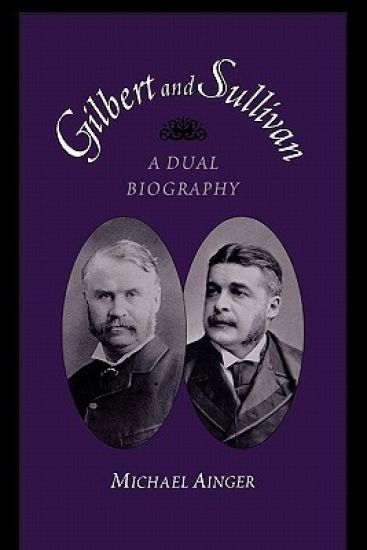
'A Gilbert is of no use without a Sullivan.' With these words, W.S. Gilbert summed up his reasons for persisting in his collaboration with Arthur Sullivan despite the combative nature of their relationship. In fact, Michael Ainger suggests in Gilbert and Sullivan the success of the pair's work is a direct result of their personality clash, as each partner challenged the other to produce his best work. After exhaustive research into the D'Oyly Carte collection of documents, Ainger offers the most detailed account to date of Gilbert and Sullivan's starkly different backgrounds and long working partnership. Having survived an impoverished and insecure childhood, Gilbert flourished as a financially successful theater professional, married happily and established himself as a property owner. His sense of proprietorship extended beyond real estate, and he fought tenaciously to protect the integrity of his musical works. Sullivan, the product of a supportive family who nourished his talent, was much less satisfied with stability than his collaborator. His creative self-doubts and self-demands led to nervous and physical breakdowns, but it also propelled the team to break the successful mode of their earliest work to produce more ambitious pieces of theater, including The Mikado and The Yeoman of the Guards . Offering previously-unpublished draft libretti and personal letters, this thorough double-biography will be an essential addition to the library of any Gilbert and Sullivan fan.
Sustainable Water is a practical and accessible book for built environment professionals who play vital roles in creating and maintaining water services. It outlines a framework of fundamental principles, methodologies and approaches needed to deliver high quality, economical and sustainable infrastructure across the globe by approaching it from the time-limited, output-driven perspective of practical infrastructure engineers and practitioners. The applied examples from existent civil engineering projects identify the key sustainability issues and challenges for the water sector, their common principles and how these can be applied in practice. As an invaluable resource Sustainable Water: Identifies the sector priorities for change to sustainabilityUses the latest best practiceDescribes opportunities and methodologies with leading edge examplesDiscusses the barriers and potential ways to innovateIdentifies opportunities and constraintsAdvises on the right questions to ask at each stage of project delivery Sustainable Water identifies and applies the critical changes needed to provide more sustainable solutions, and to embed these into a tradition of excellent by delivering sufficient water through a good service, of the right quality and at an affordable cost, as straightforwardly as possible.
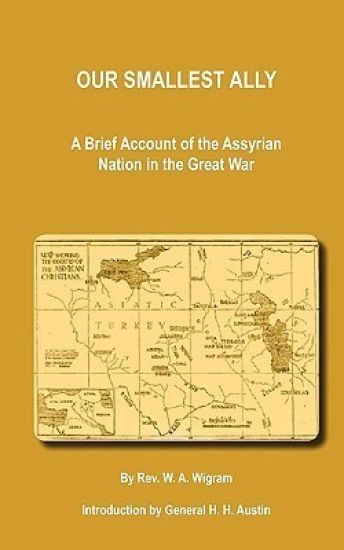
An Introduction to the History of the Assyrian Church
William Ainger Wigram
Kessinger Pub
2009
pokkari
Public Peace And Quietness The Fruits Of Christian Truth And The People Of God Called Upon To Build His House Of Prayer (1836)
William Ainger; James S. M. Anderson; Thomas Bagnall-Baker
KESSINGER PUBLISHING, LLC
2009
pokkari
The Fifteenth Chapter Of St. Paul's First Epistle To The Corinthians: Explained And Illustrated In A Series Of Sermons (1860)
Thomas Ainger
KESSINGER PUBLISHING, LLC
2008
nidottu
An Introduction to the History of the Assyrian Church: Or the Church of the Sassanid Persian Empire, 100-640 (1910)
William Ainger Wigram
Literary Licensing, LLC
2014
sidottu
""An Introduction To The History Of The Assyrian Church: Or The Church Of The Sassanid Persian Empire, 100-640"" is a historical book written by William Ainger Wigram and first published in 1910. The book provides a comprehensive overview of the Assyrian Church, also known as the Church of the East, which was established in the Sassanid Persian Empire during the period of 100-640 AD. The book covers the origins of the Assyrian Church, its doctrines, and its relationship with other Christian churches, particularly the Eastern Orthodox and Roman Catholic Churches. It also explores the political and cultural context in which the Assyrian Church emerged, including the influence of Zoroastrianism and the Persian Empire. Wigram's book is widely regarded as an authoritative and valuable resource for scholars and enthusiasts of early Christian history and the Assyrian Church.This Is A New Release Of The Original 1910 Edition.This scarce antiquarian book is a facsimile reprint of the old original and may contain some imperfections such as library marks and notations. Because we believe this work is culturally important, we have made it available as part of our commitment for protecting, preserving, and promoting the world's literature in affordable, high quality, modern editions, that are true to their original work.
An Introduction to the History of the Assyrian Church: Or the Church of the Sassanid Persian Empire, 100-640 (1910)
William Ainger Wigram
Literary Licensing, LLC
2014
nidottu
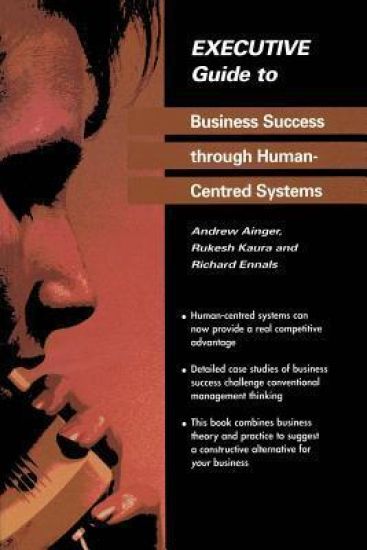
Executive Guide to Business Success through Human-Centred Systems
Andrew Ainger; Rukesh Kaura; Richard Ennals
Springer-Verlag Berlin and Heidelberg GmbH Co. K
1995
nidottu
This book is about people and skilled work. There has been much turmoil in the business environment about how to best manage the balance between people and technology, at a time when pressures for cost reduction are ever greater. Our argument is that people are central to business success, and the appropriate use of technology should support their needs. This is not always easy in practice. We work in a period when change occurs in ever-shortening cycles. Black-and-white solutions may seem attractive, but the long-term consequences are rarely advantageous. A new system is required, build ing on lessons from the past. Human-centred systems build upon core skills of the workforce within a rich, emancipatory environment, utilising the benefits of tech nology. Change can be embraced to achieve competitive advantage and mutual benefit. The three authors are, respectively, engineering director of an inno vative international manufacturing company; analyst for an inter national merchant bank; and university business school professor. The book is intended to offer a new synthesis of theory and practical experience, derived from recent British and European collaborative pro grammes. We are grateful to our colleagues and families for their tolerance during the writing of this book. Even human-centred books impose pressures on busy people. Old Windsor, Brighton and Kingston, June 1995 A.A. R.K.