Kirjojen hintavertailu. Mukana 12 390 323 kirjaa ja 12 kauppaa.

Kirjahaku

Etsi kirjoja tekijän nimen, kirjan nimen tai ISBN:n perusteella.

1000 tulosta hakusanalla Akita Inu Notebooks

Evaluating Evidence

Evaluating Evidence

George Akita

University of Hawai'i Press
2008
sidottu
Evaluating Evidence is based on the grueling lessons learned by a senior scholar during three decades of tutoring by, and collaboration with, Japanese historians. George Akita persisted in the difficult task of reading documentary sources in Japanese, most written in calligraphic style (sosho), out of the conviction of their centrality to the historian's craft and his commitment to a positivist methodology to research and scholarship. He argues forcefully in this volume for an inductive process in which the scholar seeks out facts on a subject and, through observation and examination of an extensive body of data, is able to discern patterns until it is possible to formulate certain propositions.In his introduction, Akita relates how and why he decided to adopt a positivist approach and explains what he means by the term as it applies to humanistic studies. He enumerates the difficulties linked with reading primary sources in Japanese by looking at a variety of unpublished and published materials and identifying a major problem in reading published primary sources: the intervention of editors and compilers. He illustrates the pitfalls of such intervention by comparing the recently published seventeen-volume diary of Prime Minister Hara Takashi (1856-1921), a photo reproduction of the diary in Hara's own hand, and an earlier published version.Using documents related to Yamagata Aritomo (1838-1922), a figure of central importance in Japan's post-Restoration political history, he demonstrates the use of published and transcribed primary sources to sustain, question, or strengthen some of the themes and approaches adopted by non-Japanese scholars working on modern Japanese history. He ends his inquiry with two ""case studies,"" examining closely the methods of the highly acclaimed American historians John W. Dower and Herbert P. Bix.
A Japanese Jungian Perspective on Mental Health and Culture
A Japanese Jungian Perspective on Mental Health and Culture: Wandering Madness explores differences between Western and Japanese models of mental health. It argues that while the advent of modern mental health has brought about seminal changes in our understanding of and relationship to those who face its challenges, the cure also seems to be something of the cause, as the classification of mental disorders continues to expand and increasing numbers of people show up to fill them. In this book, psychiatrist and Jungian analyst Iwao Akita presents a new theory of psycheology in order to highlight what has been lost in our rush to medicalize the psyche, as well as offer a remedy for restoring balance. Drawing upon examples from both Japanese and Western cultures, Dr. Akita discusses an alternative perspective to the polarized viewpoint towards which the West tends. He distinguishes the concept of madness from psychopathology and outlines its dynamics through numerous clinical and cultural examples. He describes the underlying dynamics of substance use and personality disorders, makes important links between these conditions, and clarifies how they can develop into madness. With references to familiar stories and myths from Western and Japanese cultures, this book makes an important contribution to our understanding of mental illness and health, while also making us more aware of how these issues are common to the human experience. This book will be of key interest to academics, researchers, and postgraduate students in the fields of psychoanalysis, Jungian and Post-Jungian studies, and mental health studies. It will also appeal to psychiatrists and other mental health professionals, as well as those with a particular interest in substance use, personality disorders, madness, and cross-cultural comparisons of mental health models.
A Japanese Jungian Perspective on Mental Health and Culture
A Japanese Jungian Perspective on Mental Health and Culture: Wandering Madness explores differences between Western and Japanese models of mental health. It argues that while the advent of modern mental health has brought about seminal changes in our understanding of and relationship to those who face its challenges, the cure also seems to be something of the cause, as the classification of mental disorders continues to expand and increasing numbers of people show up to fill them. In this book, psychiatrist and Jungian analyst Iwao Akita presents a new theory of psycheology in order to highlight what has been lost in our rush to medicalize the psyche, as well as offer a remedy for restoring balance. Drawing upon examples from both Japanese and Western cultures, Dr. Akita discusses an alternative perspective to the polarized viewpoint towards which the West tends. He distinguishes the concept of madness from psychopathology and outlines its dynamics through numerous clinical and cultural examples. He describes the underlying dynamics of substance use and personality disorders, makes important links between these conditions, and clarifies how they can develop into madness. With references to familiar stories and myths from Western and Japanese cultures, this book makes an important contribution to our understanding of mental illness and health, while also making us more aware of how these issues are common to the human experience. This book will be of key interest to academics, researchers, and postgraduate students in the fields of psychoanalysis, Jungian and Post-Jungian studies, and mental health studies. It will also appeal to psychiatrists and other mental health professionals, as well as those with a particular interest in substance use, personality disorders, madness, and cross-cultural comparisons of mental health models.

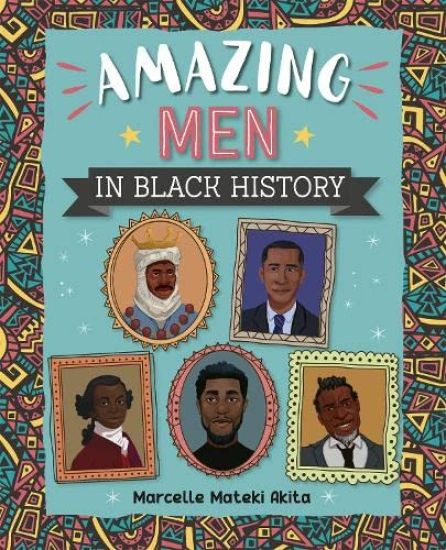
Reading Planet: Astro – Amazing Men in Black History - Stars/Turquoise band
Black History is not just history - it is the history of people left out of the history books. But this book is different! In this book, we are going to meet eight amazing Black men. They did amazing things in the past - and some are doing amazing things today! Learn about Mansa Musa, the richest man EVER, Walter Tull, the fantastic footballer and hero, and William Kamkwamba, the boy that made electricity for his town! Children can also read about Amazing Women in Black History too, in the partner book at Mars/Stars band. Amazing Men in Black History is part of the Astro range from Rising Stars Reading Planet. Astro books are ideal for struggling and reluctant readers aged 7-11. Each book is dual-banded so that children can improve their fluency whilst enjoying exciting fiction and non-fiction relevant to their age. Astro books for Stars/Turquoise band are also highly-decodable so ideal for extra phonics practice. Reading Planet books have been carefully levelled to support children in becoming fluent and confident readers. Each book features useful notes and questions to support reading at home and develop comprehension skills. Interest age: 7-8 Reading age: 6-7 years
Reading Planet - Fatama and Mami Wata's Secret - Turquoise: Galaxy
Fatama lives with her family in Freetown, Sierra Leone. She is fascinated by stories about Mami Wata, a water goddess from African legend. When the family go on a trip to the beach, will Fatama get to meet this famous water spirit? Fatama and Mami Wata's Secret is part of the Galaxy range of books from Rising Stars Reading Planet. Galaxy provides captivating fiction and non-fiction for Pink A to White band. The rich collection of highly decodable books immerses children in a range of cross-curricular topics and genres. Reading Planet books have been carefully levelled to support children in becoming fluent and confident readers. Each book features useful notes and activities to support reading at home as well as comprehension questions to check understanding.Reading age: 6-7 years
Unmasking Manhood

Unmasking Manhood

Richard Akita

Independently Published
2017
nidottu
HOW DOES A MAN EMBRACE THE CALL OF MANHOOD without compromising the core role in society? In Unmasking Manhood, the author points out that, our masculinity is not the question but the function of manhood. According to him, in recognising the difference, an unmasked man will embrace the joy and call to being the generator as well as the sustainer of legacy not only in their family but within the community.Every culture has an expectation of 'man' and their role, yet paradoxically these expectations become the unwritten standard. But in separating the role and function of manhood, 'men' will learn best practices from mentors, coaches, cultures, fathers and heroes. Just imagine the impact we can have on our sons and grandsons Richard Akita states, "My journey thus far has been enlightening; a culmination of a great marriage to Najate, mentors, heroes, mistakes and self-discovery has prepared me not only as father to my biological children - Marcelle and Ryzard - but granted me the grace to step into fathering the community and be in readiness for grand parenting."Wherever you are in your life's journey, read this awesome book, learn great lessons and live well, as you unmask your legacy Richard Akita
Sorcerous Stabber Orphen (Manga) Vol. 1: Heed My Call, Beast! Part 1
While studying as a sorcerer at the most prestigious institute for magic in the land, an arcane accident sees Orphen’s oldest friend, Azalie, transformed into a horrifying monster. When the sorcerers’ academy decides to cover up the accident instead of trying to fight the curse, Orphen takes matters into his own hands. He forsakes his position and even his own name, departing on a wanderer’s quest to gather the knowledge and artifacts necessary to make Azalie human again. Adventure and danger await in this brand-new adaptation of the fan-favourite Orphen franchise!
Sorcerous Stabber Orphen (Manga) Vol. 2: Heed My Call, Beast! Part 2
While studying as a sorcerer at the most prestigious institute for magic in the land, an arcane accident sees Orphen’s oldest friend, Azalie, transformed into a horrifying monster. When the sorcerers academy decides to cover up the accident instead of trying to fight the curse, Orphen takes matters into his own hands. He forsakes his position and even his own name, departing on a wanderer’s quest to gather the knowledge and artifacts necessary to make Azalie human again. Adventure and danger await in this brand-new adaptation of the fan-favourite Orphen franchise!
Self-Love Starts With God

Self-Love Starts With God

Cynthia Akita

Lulu.com
2022
pokkari
See yourself through the lens of Christ. Living in a world where beauty is defined as a specific box that most don't fit into, it gets harder to appreciate the unique person that God created you to be. In a world filled with opinions louder than your thoughts, it's important to build yourself up with the armor of God, which was already created to be your guide. For 30 days, you will be encouraged with biblical affirmations and a devotional to help you understand the value that is within you. You will also have verses to meditate on, a prayer, and journal prompts, with space for your reflections. While this devotional will not cure the cancer of self-hate, it will definitely help build a solid foundation to help you stand firm against the negativity that you will encounter in a world that is so far from God. At the end of it all, self-love starts with God. This is your beginning
Regional Inequality and Development

Regional Inequality and Development

Takahiro Akita; Mitsuhiko Kataoka

SPRINGER VERLAG, SINGAPORE
2022
sidottu
This book addresses three main issues in regional income inequality and development: meaning of regional inequality, measurement of regional inequality and the relationship between national economic development and regional income inequality. It provides analytical methods useful in exploring the determinants of regional inequality in income and productivity. Some software commands in Stata (statistical software package) available for the measurement and analysis of income inequality are also introduced. Some researchers have argued that spatial concentration of population in and around major cities and the concurrent increase in regional inequality do not hinder national economic development, and may stimulate it. Nevertheless, many national governments seek to promote balanced regional economic development and reduce regional income inequality, because unbalanced development and higher levels of regional inequality may cause political or ethnic conflicts between different regions of the country. As the applications of the analytical methods introduced in the first part of the book, the second part presents four independent empirical studies on regional inequality and development in Indonesia. They offer very interesting case studies for the formulation of policies and programs to reduce regional inequalities, because as the world’s largest archipelagic country with more than 13 thousand islands and 300 ethnic groups, Indonesia is spatially diverse in terms of its ecology, natural resource endowments, economy, ethnicity and culture.This book can be used as a textbook for undergraduate and graduate students who are interested in national economic development and regional income inequality. It is also beneficial for practitioners and policy makers who are in charge of the formulation, implementation and evaluation of development policies and programs.
Regional Inequality and Development

Regional Inequality and Development

Takahiro Akita; Mitsuhiko Kataoka

SPRINGER VERLAG, SINGAPORE
2023
nidottu
This book addresses three main issues in regional income inequality and development: meaning of regional inequality, measurement of regional inequality and the relationship between national economic development and regional income inequality. It provides analytical methods useful in exploring the determinants of regional inequality in income and productivity. Some software commands in Stata (statistical software package) available for the measurement and analysis of income inequality are also introduced. Some researchers have argued that spatial concentration of population in and around major cities and the concurrent increase in regional inequality do not hinder national economic development, and may stimulate it. Nevertheless, many national governments seek to promote balanced regional economic development and reduce regional income inequality, because unbalanced development and higher levels of regional inequality may cause political or ethnic conflicts between different regions of the country. As the applications of the analytical methods introduced in the first part of the book, the second part presents four independent empirical studies on regional inequality and development in Indonesia. They offer very interesting case studies for the formulation of policies and programs to reduce regional inequalities, because as the world’s largest archipelagic country with more than 13 thousand islands and 300 ethnic groups, Indonesia is spatially diverse in terms of its ecology, natural resource endowments, economy, ethnicity and culture.This book can be used as a textbook for undergraduate and graduate students who are interested in national economic development and regional income inequality. It is also beneficial for practitioners and policy makers who are in charge of the formulation, implementation and evaluation of development policies and programs.