The classic debut collection from Pulitzer Prize winner James Alan McPhersonHue and Cry is the remarkably mature and agile debut story collection from James Alan McPherson, one of America's most venerated and most original writers. McPherson's characters -- gritty, authentic, and pristinely rendered -- give voice to unheard struggles along the dividing lines of race and poverty in subtle, fluid prose that bears no trace of sentimentality, agenda, or apology.First published in 1968, this collection includes the Atlantic Prize-winning story "Gold Coast" (selected by John Updike for the collection Best American Short Stories of the Century). Now with a new preface by Edward P. Jones, Hue and Cry introduced America to McPherson's unforgettable, enduring vision, and distinctive artistry.
Sarah Santana received a phone call. Her only family had been killed in a fire in Spain. Harry Dolan, a notorious London crook was responsible because he'd lost face on a deal. After the funeral Sarah found out her family had been murdered the five bodies were burnt to hide the evidence. Being in America thirty years she'd been long forgotten. Yet Sarah was a top federal agent in the FBI. Using her skills she found out the sickening truth which turned her into an avenging angel. Now aged 48 she sought retribution on Dolans family all five of them including the evil assassin. Committing a crime is easy-but the hard part is getting away with it. Foolishly, Harry Dolan had forgotten about Sarah Santana. A woman can be as tough as a man. But man can't be as soft as a woman. She was.................THE DEAD MAN'S SISTER.
Baxter had a choice to make. Pay back the GBP200.000 to the gangster he owed the money to within seven days, or he and his partner Angela would die a slow agonising death, but first he would be forced to watch her die then he would suffer the same fate.The other choice was to rob a high end Jewellery shop in Hatton Garden of two huge diamonds. This would pay of his debt to the gangster, but leaving him with a million pounds.That was the choice's he was given. However, Baxter had a third choice he could keep all the money then disappear with his partner. Yet the risks were very high.All he had was five days notice to carry out the heist. Baxter was a very resourceful man what he did was nothing short of amazing. However, he forgot one thing, the gangsters tentacles were everywhere.
In sixty years no-one called upon Hans Grubber ex German POW to reveal the whereabouts of the stolen masterpieces, gold, and looted diamonds from all over Europe by the Nazi's during WW11.Then without warning his past caught up with him. And now he became a hunted man.The Black Cats, a secret German organisation, hid the loot at the end of WW11. The Blue knights a German Mafia, wanted the loot now worth untold millions. Hidden in Scotland, for over 50 years the loot was moved to north Majorca. It was secretly hidden in an old Monastery in Puerto Soller. Only Hans Grubber knew the secret riddle to its whereabouts. But now Han's was dead. He was the last black cat.Ex royal marine and army intelligence Officer Harry Cooper, unexpectedly managed to solve the riddle, but only after several brutal murders.
Two nationally renowned authorities on multiple murders hold a magnifying glass to the minds of the perpetrators of these hideous crimes to explain the seemingly inexplicable. Fox and Levin leave no stone unturned as they examine the psychological, sociological, and biological explanations behind these savage misdeeds. Illustrations.
This comprehensive, evidence-based examination looks at violence and security across the entire spectrum of education, from preschool through college. In Violence and Security on Campus: From Preschool through College two expert authors take an evidence-based look at this important issue, dispelling myths and misconceptions about the problem and offering appropriate responses to it. Their book examines patterns, trends, correlations, and causes of violence, crime, and disorder in diverse educational settings, from elementary schools through colleges and universities. It reviews data and research evidence related to forms of violence, from bullying to murder, and it explores the varied security concerns that confront schools of different levels. In addition to describing the nature and extent of the school violence problem, which is often divergent from media reports, the authors point to other security issues that need to be considered and addressed by administrators and security personnel. Finally, they assess a variety of policy responses and security solutions—some popular yet ineffective, some challenging yet promising—offering advice that will enhance the security of any institution of learning.
During the Industrial Revolution, class relations were defined largely through the struggle to control the terms of exchange in the market. Integrating aspects of economic and social history as well as industrial sociology, this book examines the sources of the perception of the market on the part of both capital and labour and the elaboration of their alternative market ideologies. Of particular import is the argument that working-class culture expressed a fundamental acceptance of the utility of the market, a point that is supported by a detailed analysis of the labour process, workplace bargaining, and early-nineteenth-century trade unionism. The determination of market relations in this era therefore became a function of both class power and ideological prescription.
During the Industrial Revolution, class relations were defined largely through the struggle to control the terms of exchange in the market. Integrating aspects of economic and social history as well as industrial sociology, this book examines the sources of the perception of the market on the part of both capital and labour and the elaboration of their alternative market ideologies. Of particular import is the argument that working-class culture expressed a fundamental acceptance of the utility of the market, a point that is supported by a detailed analysis of the labour process, workplace bargaining, and early-nineteenth-century trade unionism. The determination of market relations in this era therefore became a function of both class power and ideological prescription.
With the same grace and lyrical precision that distinguish his vibrant short stories, James McPherson surveys the emotional upheaval of his last twenty-one years. From Baltimore, Maryland, to Cambridge, Massachusetts, to Iowa and Japan, Crabcakes witnesses McPherson's confrontation with the past, and his struggle to make sense of it and to bind it, peacefully, to the present. His elliptical search for meaning -- and his ultimate understanding of what makes us human -- finds in Crabcakes a powerful and enduring voice.
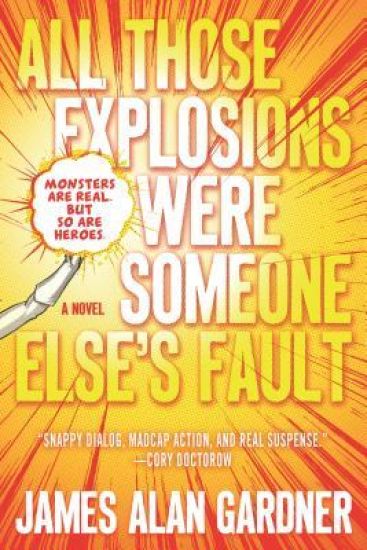
Monsters are real. But so are heroes. Sparks are champions of weird science. Boasting capes and costumes and amazing superpowers that only make sense if you don't think about them too hard, they fight an eternal battle for truth and justice . .. mostly. Darklings are creatures of myth and magic: ghosts, vampires, were-beasts, and the like. Their very presence warps reality. Doors creak at their approach. Cobwebs gather where they linger. Kim Lam is an ordinary college student until a freak scientific accident (what else?) transforms Kim and three housemates into Sparks - and drafts them into the never ending war between the Light and Dark. They struggle to master their new abilities - and (of course) to design cool costumes and come up with great hero names. Turns out that "accident" was just the first salvo in a Mad Genius's latest diabolical scheme. Now it's up to four newbie heroes to save the day, before they even have a chance to figure out what their team's name should be!
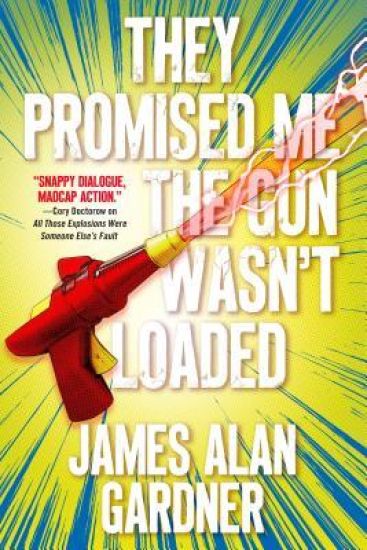
Only days have passed since a freak accident granted four college students superhuman powers. Now Jools and her friends (who haven’t even picked out a name for their superhero team yet) get caught up in the hunt for a Mad Genius’s misplaced super-weapon. But when Jools falls in with a modern-day Robin Hood and his band of super-powered Merry Men, she finds it hard to sort out the Good Guys from the Bad Guys - and to figure out which side she truly belong on. Especially since nobody knows exactly what the Gun does.
This is a savvy, straightforward, and smart book. It tells you the things you need to know--from how not to look bad on television--to how not to look stupid in any medium. I liked its pragmatic approach. I work part time as an on-air news commentator at our local CBS affiliate (KIRO-TV), and I see a lot of academics try to get their point across and fail miserably. Or worse, they never get the media interested enough to put them on. I really think this book will help them. In fact, I think the authors should get these stations to send this book to their guests. It would definitely help both parties! --Pepper Schwartz, University of Washington Do you know the "rules of the game" when dealing with the media? How do you get your views on the New York Times Op-Ed page? When the local newspaper calls, asking for a quote on a topic on which you are only marginally familiar, how do you respond? Why do you repeatedly see the same colleagues on television? Many scholars like yourself will come into contact with the media during the course of their careers. But, few know enough about the inner workings of the media to ensure that their views are not distorted or left on the cutting room floor. Noted criminologists/sociologists James Alan Fox and Jack Levin demystify the workings of the press and other media and give you concrete, practical advice on how to effectively work with them in this handy book. The authors have extensive media experience--their own NPR radio program, voluminous op-ed columns and quotes in the papers, and stints on TV shows from Geraldo to Face the Nation. Their wealth of knowledge will help you, the scholar, know what to say and how to say it the next time CNN or the Washington Post calls.
Like a phoenix, the twins Kevin and Robert and their younger brother Jonah, experience a rebirth after they barely survive the catastrophic house fire that killed their father and older brother. Now is their chance to start fresh in a new town with a loving adoptive family. The boys thrive in their new home, and they experience many of the typical ups and downs of a "normal" childhood in the 1950s. They are free of the abuses and draconian restrictions that their late father visited upon them after he became obsessed with the fanatical doctrines of the Radio Church of God. Kevin soon makes a desperate attempt to prevent a large family from falling victim to that abusive religious cult. The brothers can now freely pursue their own interests, the most alluring of which, are fledgling romantic relationships. Kevin gets bitten by the technology bug, and he starts building a number of electronic projects including a vacuum tube shortwave transmitter. But the boys' new life is tarnished when ominous vaguely written letters start to arrive at their new home that seemingly blame them for the house fire that resulted in the deaths of their father and older sibling. Although the boys bravely try to get on with their lives, their world soon comes crashing down when an unknown enemy decides it is time to take retribution on them for a sin they did not commit.Rebirth is the second book in the Threefold Cord series that follows the lives of the three young brothers who have developed an unbreakable bond with one another. A combination of nostalgia, youthful adventures, misadventures, and intrigue, this book is a delightful mix of genres that will keep readers entertained and enthralled until the last page.