This is part of the LeadWell training curriculum, specifically the SUCCESS Leadership Project Plan and serves as a journal for recording meeting decisions and notes.
LeadWell is the first organizational leadership training curriculum created specifically for 14-23 year olds. This is 1 of 4 modules, offering approx. 1 semester's worth (12 hours) of project-based activities, modeled after executive programs. LeadWell is designed by an organizational leadership specialist versus an educator, so it reflects what adults learn as leaders but is age-sized for teens and young adults. This is perfect for leadership programs, student government training, and leadership camps.This is a highly scripted curriculum that teachers, professors and youth workers can use. Half of it involves 15-20 minute activities and the other half uses a project plan to design, develop and deploy a single project. Participants work in teams of 4-7 and take turns as Team Leader, to develop leadership skills. In addition to leadership skill training, the Sapphire module also emphasizes qualities of integrity, recruiting, confidence and vision.Train-the-trainer resources are also included, available online through a code included in the Trainer's Manual. Workbooks are also available for students, along with other related materials that can be purchased on the LeadYoung Training website.
LeadYoung Koach Training Manual prepares adults to serve as leadership coaches for people using LeadNow (ages 10-13) and LeadWell (ages 14-18) curriculum to develop young leaders.
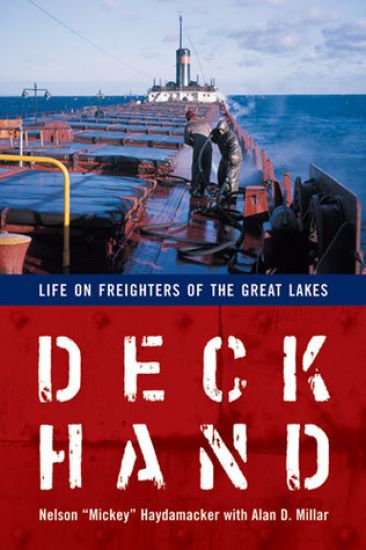
Long before popular television shows such as Dirty Jobs and The Deadliest Catch, everyday men and women---the unsung heroes of the job world---toiled in important but mostly anonymous jobs. One of those jobs was deckhand on the ore boats.With numerous photographs and engaging stories, Deckhand offers an insider's view of both the mundane and the intriguing duties performed by deckhands on these gritty cargo vessels. Boisterous port saloons, monster ice jams, near drownings, and the daily drudgery of soogeying---cleaning dirt and grime off the ships---are just a few of the experiences Mickey Haydamacker had as a young deckhand working on freighters of the Great Lakes in the early 1960s. Haydamacker sailed five Interlake Steamship Company boats, from the modern Elton Hoyt 2nd to the ancient coal-powered Colonel James Pickands with its backbreaking tarp-covered hatches.Deckhand will appeal to shipping buffs and to anyone interested in Great Lakes shipping and maritime history as it chronicles the adventures of living on the lakes from the seldom-seen view of a deckhand.Mickey Haydamacker spent his youth as a deckhand sailing on the freighters of the Great Lakes. During the 1962 and '63 seasons Nelson sailed five different Interlake Steamship Company ore boats. He later went on to become an arson expert with the Michigan State Police, retiring with the rank of Detective Sergeant. Alan D. Millar, to whom Haydamacker related his tale of deckhanding, spent his career as a gift store owner and often wrote copy for local newspaper, TV, and radio.
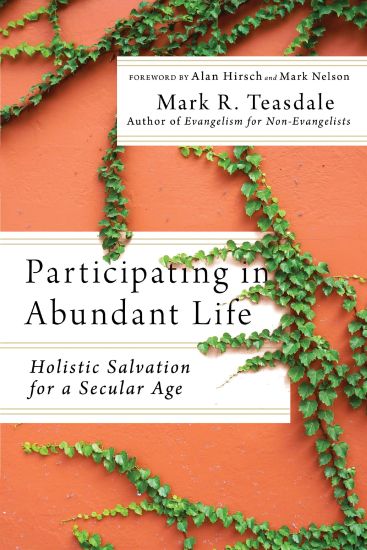
Our world is hungry for salvation, but we don't always know how to talk about it. Christians agree that God cares about people's lives both in this world and into eternity. But the ways we describe salvation often separate the spiritual from the material. Many groups emphasize one at the expense of the other, limiting the picture of what God has to offer. Mark Teasdale works to bridge the gaps by taking up Jesus' language of abundant life. This life is something Jesus invites us to participate in—to seek both for ourselves and for others. It's rich and multidimensional, not splitting spirits and minds from bodies and material needs. By connecting biblical perspectives of holistic salvation to contemporary concepts of well-being, Teasdale also shows how Christians can both better communicate in secular settings as well as partner with all people regardless of their faith to seek the common good. Incorporating concepts of material standard of living and subjective quality of life, Teasdale argues, gives Christians common language to share the promise of abundant life with those who hold to secular commitments. Yet we must also boldly present Jesus' invitation to eternal life and discipleship. For churches, ministry leaders, and laypeople Teasdale offers ideas to improve and measure methods of promoting all dimensions of salvation for the good of others.
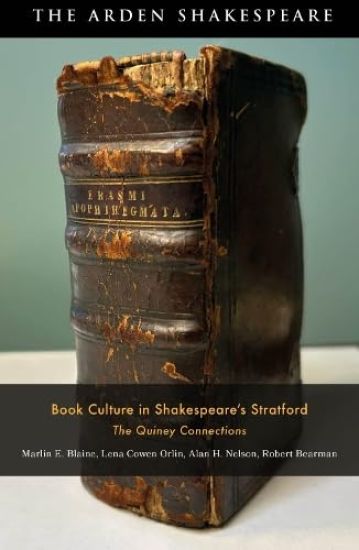
The recent discovery of two Latin books that once belonged to the Quiney family of Stratford-upon-Avon expands our understanding of Shakespeare’s grammar school education and of the social, material, and learned networks that operated in his hometown. One of these books, the Apophthegmata of Erasmus, belonged to Shakespeare’s friend and neighbour, Richard Quiney, while the other, a commentary on Aristotelian logic, was owned by a different Richard Quiney, who was Shakespeare’s grandson. Building from a simple account of these findings, Book Culture in Shakespeare’s Stratford: The Quiney Connections sheds new light on the use of Latin in the market town that produced the world’s most famous playwright. The story it tells weaves together analysis of letters, sermons, wills, public monuments and other printed books owned by local residents. Complementing these cultural explorations, biographical studies of Quiney family members and influential clergymen and teachers in Stratford evoke the impact of this learned culture on the lived experience of individual people. This study breaks new ground in our understanding of the rich educational environment that would enliven the plays and poems of William Shakespeare.
A chronicle of almost forty years of gig going and ten years of music journalism."Gig goers are a special breed: obsessive, compulsive, devoted and loyal. They are collectors and list-makers; they support music wherever it is played and whoever it is played by... they will talk about it until you are blue in the face... this book is for them." - Alan Neilson 2019Excerpts: "It still sounds like nothing else out there. That in itself is worthy of acknowledgement, when we now live in a world where being derivative is commonplace."this fame thing is a curious passage for those least able to deal with it.""He really could stand alone and still make the hairs stand up on the back of my neck with his open wound vocal style and vicious guitar sound.""buzzing like overhead pylons in a thunderstorm."
This book explores previously unexamined overlaps between the poetic imagination and the medical mind. It shows how appreciation of poetry can help us to engage with medicine in more intense ways based on ‘de-familiarising’ old habits and bringing poetic forms of ‘close reading’ to the clinic. Bleakley and Neilson carry out an extensive critical examination of the well-established practices of narrative medicine to show that non-narrative, lyrical poetry does different kind of work, previously unexamined, such as place eclipsing time. They articulate a groundbreaking ‘lyrical medicine’ that promotes aesthetic, ethical and political practices as well as noting the often-concealed metaphor cache of biomedicine. Demonstrating that ambiguity is a key resource in both poetry and medicine, the authors anatomise poetic and medical practices as forms of extended and situated cognition, grounded in close readings of singular contexts. They illustrate structural correspondences between poetic diction and clinical thinking, such as use of sound and metaphor. This provocative examination of the meaningful overlap between poetic and clinical work is an essential read for researchers and practitioners interested in extending the reach of medical and health humanities, narrative medicine, medical education and English literature.
This book explores previously unexamined overlaps between the poetic imagination and the medical mind. It shows how appreciation of poetry can help us to engage with medicine in more intense ways based on ‘de-familiarising’ old habits and bringing poetic forms of ‘close reading’ to the clinic. Bleakley and Neilson carry out an extensive critical examination of the well-established practices of narrative medicine to show that non-narrative, lyrical poetry does different kind of work, previously unexamined, such as place eclipsing time. They articulate a groundbreaking ‘lyrical medicine’ that promotes aesthetic, ethical and political practices as well as noting the often-concealed metaphor cache of biomedicine. Demonstrating that ambiguity is a key resource in both poetry and medicine, the authors anatomise poetic and medical practices as forms of extended and situated cognition, grounded in close readings of singular contexts. They illustrate structural correspondences between poetic diction and clinical thinking, such as use of sound and metaphor. This provocative examination of the meaningful overlap between poetic and clinical work is an essential read for researchers and practitioners interested in extending the reach of medical and health humanities, narrative medicine, medical education and English literature.
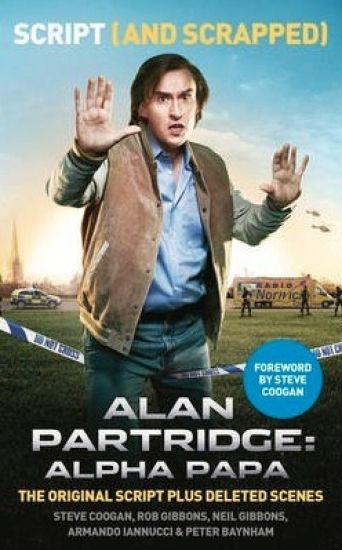
Journalist, presenter, broadcaster, husband, father, vigorous all-rounder: Alan Partridge. Star of action blockbuster Alpha Papa; a man with a fascinating past and an amazing future.
The official script for the box-office smash movie, featuring every ruddy word (and stage direction) of Alan’s seamless transformation from natural-born broadcaster into fully fledged and occasionally fully dressed hostage negotiator. Contains deleted scenes and an exclusive Foreword by Steve Coogan. With a television career behind him and a much-coveted breakfast slot in his spiritual home, regional digital radio, there was only one place left for Alan Partridge to turn: Hollywood! Or rather, an Anglo-French funded co-production for the big screen. Alan Partridge: Alpha Papa sees Alan face his biggest challenge since he spent six months in a travel tavern, and is almost certainly the first time he has handled a loaded gun since he was a prime-time BBC2 presenter. When his beloved income-source North Norfolk Digital is taken over by a faceless media conglomerate, Alan’s inimitable instinct for self-preservation leads to a violent and bloody siege on the radio station by an unhinged, nay mentalist, DJ, and a hostage crisis for which there can be only one man with the chat to diffuse it … Featuring a cast of old and new Partridge favourites, including Sidekick Simon, assistant Lynn and Michael the Geordie, Alpha Papa is proof that while the jury’s out on whether you can keep a good man down, it’s an outright fact that you can’t keep a good regional broadcaster off the airwaves.