Kirjojen hintavertailu. Mukana 11 244 527 kirjaa ja 12 kauppaa.

Kirjahaku

Etsi kirjoja tekijän nimen, kirjan nimen tai ISBN:n perusteella.

1000 tulosta hakusanalla Albert Auster; Leonard Quart

Albert Roussel

Albert Roussel

Robert Follet

Greenwood Press
1988
sidottu
Although recognized as one of the greatest French composers of the twentieth century, Albert Roussel (1869-1937) has been frequently overlooked in recent years. However, the publication of this bibliography coincides with a renewed interest, especially in Roussel's native land, in recording his compositions. While the majority of English-language works on Roussel have concentrated on the details of his life or attempted to define and analyze his compositional style, this first annotated bibliography and discography focuses on his opus and provides copious information about specific works, performances, recordings, and reviews. Born in Tourcoing, France, Roussel received recognition for his compositions as early as 1897. His productivity soared during the 1920s, when his work was influenced by Impressionism, and his neo-classical compositions of the 1930s achieved national recognition. The work commences with a biography, and then presents a listing voice, and includes a directory of publishers. A discography, broken into similar divisions, follows. The annotated bibliography covers books and articles about Roussel, program notes, and writings by the composer. Two appendices provide an index to first lines and a chronological list of compositions. An index of personal and corporate names completes the reference. This bibliography will be an important addition to university libraries and music departments.
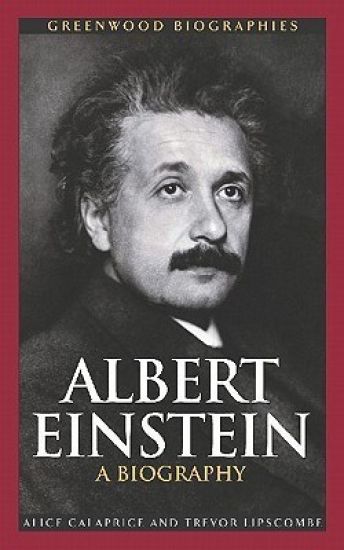
Albert Einstein

Albert Einstein

Alice Calaprice; Trevor Lipscombe

Greenwood Press
2005
sidottu
Albert Einstein remains one of most famous scientists in world history. His image is instantly recognizable by even the most scientifically uninformed person—for many people, Einstein personifies genius. But who was Einstein really? What was he like as a person? What did his science actually mean? This fresh biography of Albert Einstein provides students and general readers a concise, accessible introduction to the life and science of this revolutionary man. Underneath his genius, Einstein was an ordinary person, with human frailties and weaknesses, but also with charm, modesty, a wry sense of humor, and idiosyncrasies. Readers will understand why he was named the Person of the Century by Time magazine. Albert Einstein: A Biography will cover the entire history of this brilliant physicist's life and career, including: his early education, during which he was an excellent student, contrary to what is commonly believed; Einstein's struggles to find an academic position, which led him to work as a clerk at the Swiss patent office during the same period he was formulating his most famous and revolutionary theories; his troubled marriages and family life; Einstein's rise to international fame, and his use of that fame to fight for world peace; and Einstein's major contributions to physics, explained in ways that can be understood by anyone who wishes a fuller understanding of his scientific theories. The book includes a bibliography of secondary works that are useful for further reading, and a timeline of important dates in the life of Einstein.
Albert Camus

Albert Camus

Ramin Jahanbegloo

Routledge India
2019
sidottu
This book interprets the ideas, thoughts and concepts that characterize the writings and philosophy of Albert Camus for our contemporary times. It investigates Camus’ "revolted compassion" as an outsider and a philosopher-writer who in his own words believed in "creating dangerously". The author examines Camus’ interventions on political, philosophical and moral questions, such as Algerian independence, capital punishment, ideological violence, nihilism in the context of his ideals of the absurd and revolt, and justice and liberty. Further, it goes on to provide an exhaustive analysis of Camus’ critique of violence and his intellectual resistance to totalitarianism. Bringing together latest scholarship with an acute analysis of Albert Camus’ philosophy, this sourcebook throws a powerful light on the intellectual foundations of the twentieth century and its relevance for the twenty-first. The book will be of interest to scholars of literature, philosophy and African Studies.
Albert Einstein’s Special Theory of Relativity

Albert Einstein’s Special Theory of Relativity

Arthur I. Miller

Springer-Verlag New York Inc.
1997
nidottu
This book analyzes one of the three great papers Einstein published in 1905, each of which would alter forever the field it dealt with. The second of these papers, "On the Electrodynamics of Moving Bodies," had an impact in a much broader field than electrodynamics: it established what Einstein sometimes referred to (after 1906) as the "so-called Theory of Relativity." Miller uses the paper to provide a window into the intense intellectual struggles of physicists in the first decade of the 20th century: the interplay between physical theory and empirical data, the fiercely held notions that could not be articulated clearly or verified experimentally, the great intellectual investment in existing theories, data, and interpretations -- and associated intellectual inertia -- and the drive to the long-sought- for unification of the sciences. Since its original publication, this book has become a standard reference and sourcebook for the history and philosophy of science; however, it can equally well serve as a text in the history of ideas or of twentieth-century philosophy. From reviews of the previous edition: ÄMillerÜ has written a superb, perhaps definitive, historical study of Einstein's special theory of relativity.... One comes away from the book with a respect for both the creative genius of the man and his nerve: he simply brushed aside much of the work that was going on around him. - The New Yorker
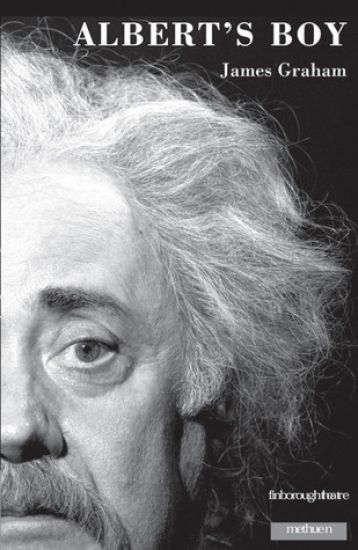
Albert's Boy

Albert's Boy

James Graham

Methuen Drama
2005
nidottu
Blackly humorous drama of Einstein's tortured conscience Why do you think I've been locked in this room? I've been grieving for a wife, a sister, three hundred thousand Japanese civilians, the presence of a universe gone mad, and the absence of a theory to explain it. Albert Einstein is not feeling too good. His house is empty, his cat is missing, he can't remember where he put his violin - and he is slowly driving himself insane as he struggles to solve the unanswerable question - "Did I do the right thing?" When a family friend, newly released from a Chinese POW camp, comes to visit, a warm reunion soon becomes an explosive collision of opposing beliefs on the subjects of evil, the winning of wars, and the construction of the world's first weapon of mass destruction - the atomic bomb. Albert's Boy commemorates the World Year of Physics, the 60th anniversary of the bombing of Hiroshima and Nagasaki, and the 50th anniversary of Einsteins death.This is the second play by 22 year old James Graham. His first play, Coal not Dole played at the Edinburgh Festival in 2002 and subsequently toured the North of England. He is writer in residence at the Finborough Theatre. Publication ties in with the world premiere at the Finborough Theatre, London, 19 July 2005 "Promising new playwright James Graham succeeds in producing a Ken Loach style comedy drama" Scotsman (on Coal not Dole)
Albert Ellis Revisited
Albert Ellis was one of the most influential psychotherapists of all time, revolutionizing the field through his writings, teachings, research, and supervision for more than half a century. He was a pioneer whose ideas, known as Rational Emotive Behavior Therapy (REBT), formed the basis of what has now become known as Cognitive Behavior Therapy (CBT), the most widely accepted psychotherapeutic approach in the world. This book contains some of Ellis’ most influential writings on a variety of subjects, including human sexuality, personality disorders, and religion, with introductions by some of today’s contemporary experts in the psychotherapy field. The 20 articles included capture Ellis’ wit, humor, and breadth of knowledge and will be a valuable resource for any mental health professional for understanding the key ingredients needed to help others solve problems and live life fully.
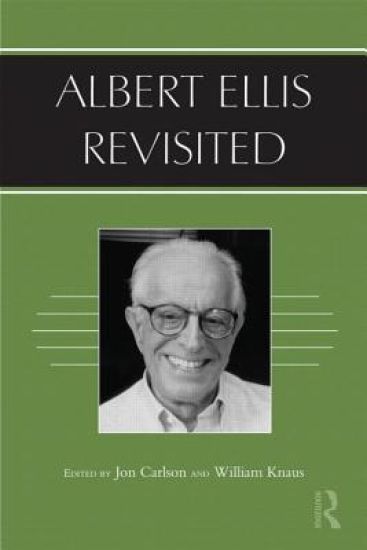
Albert Ellis Revisited
Albert Ellis was one of the most influential psychotherapists of all time, revolutionizing the field through his writings, teachings, research, and supervision for more than half a century. He was a pioneer whose ideas, known as Rational Emotive Behavior Therapy (REBT), formed the basis of what has now become known as Cognitive Behavior Therapy (CBT), the most widely accepted psychotherapeutic approach in the world. This book contains some of Ellis’ most influential writings on a variety of subjects, including human sexuality, personality disorders, and religion, with introductions by some of today’s contemporary experts in the psychotherapy field. The 20 articles included capture Ellis’ wit, humor, and breadth of knowledge and will be a valuable resource for any mental health professional for understanding the key ingredients needed to help others solve problems and live life fully.
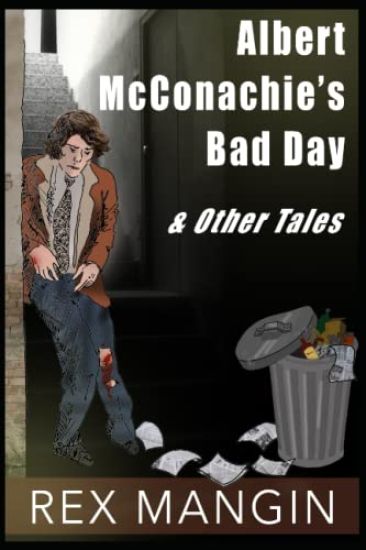
Albert McConghie's Bad Day & Other Tales
A collection of short stories covering a wide range of everyday experiences that most readers will be able to relate to. Childhood memories feature large. Albert McConaghie's tale of matrimonial woe and subsequent happiness is told in three parts interspersed amongst amusing short stories.
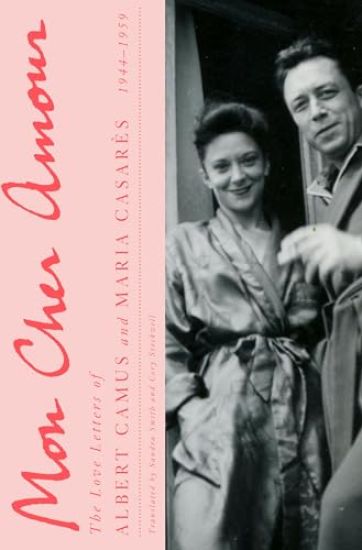
Mon Cher Amour: The Love Letters of Albert Camus and Maria Casares, 1944-1959
The impassioned correspondence between the Nobel Prize-winning author and the renowned Spanish French actress who appeared in his plays, tracing the extreme highs and lows of their all-consuming love affair--a bestseller in France, translated for the first time into English Albert. Albert ch ri. Write me sweet, passionate things. Tell me you love me and how you love me. Tell me you'll take me to the sea one day--any sea at all--and that we'll spend time on the shore and in the water. Tell me you'll always be with me. Tell me about you, and today, especially, talk to me about us. --Maria Casar s to Albert Camus, Feb 1, 1950 It's said that the affair began on June 6, 1944, the day the Allied forces landed in Normandy. The twenty-one-year-old Casar s was starring in a production of the thirty-year-old Camus's play The Misunderstanding--and one thing (an after-party hosted by Jean-Paul Sartre and Simone de Beauvoir) led to another. Though their fling would be cut short by the end of the Occupation--and the return to Paris of Camus's wife, Francine--the two were destined to meet again: four years later, to the day, they crossed paths by chance on the Boulevard Saint-Germain. Over the next twelve years, without interruption--until the car wreck of January 4, 1960, that stole Camus's life--the author and actress would correspond furiously, their words swelling and shimmering and surging like the ocean. Ah It's so hard to leave you, your dear face will again fade into the night, but I'll find you once more in this ocean you love, at the time of evening when the sky takes on the color of your eyes. --Albert Camus to Maria Casar s, June 1, 1949 Across 865 letters of immense and exquisite emotion, they cry and laugh and bicker and beg, make and break promises, talk Stendhal and Proust and Orwell, French theater, sickness, death, writer's block, and, most of all, they pine--leaving behind a record of one of the great love stories of the twentieth century.
Albert's Quiet Quest

Albert's Quiet Quest

Isabelle Arsenault

Random House Books for Young Readers
2019
sidottu
Albert wants a quiet place to read...but his friends just want to play Can they figure out how to have fun together? Albert's home is very loud--and all he wants to do is read He escapes outside for some peace, and thinks he's found it at last. But, one by one, his friends boisterously infiltrate his space until Albert just can't take it anymore...and snaps How will his friends react? While they leave him alone at first, they slowly return...with books in hand. This beautifully illustrated story models flexible, empathic play, and articulates a range of ways a group can have fun together. A useful tool for any classroom or neighborhood
Albert's Quiet Quest

Albert's Quiet Quest

Isabelle Arsenault

Random House Books for Young Readers
2019
sidottu
Albert wants a quiet place to read...but his friends just want to play Can they figure out how to have fun together? Albert's home is very loud--and all he wants to do is read He escapes outside for some peace, and thinks he's found it at last. But, one by one, his friends boisterously infiltrate his space until Albert just can't take it anymore...and snaps How will his friends react? While they leave him alone at first, they slowly return...with books in hand. This beautifully illustrated story models flexible, empathic play, and articulates a range of ways a group can have fun together. A useful tool for any classroom or neighborhood
Albert Make Us Laugh

Albert Make Us Laugh

Jimmie Chinn

Samuel French Ltd
1996
pokkari
Albert Nuttal, aged 11, is special - some would say backward. He is a poet and visionary who, as he grows into manhood, inspires unexpected depths of emotion in other people. This play, designed to be enacted entirely by adults comes from the author of "Straight and Narrow".
Albert's Bridge

Albert's Bridge

Tom Stoppard

Samuel French Ltd
1969
nidottu
Albert has a degree in philosophy and with a job as bridge painter has a new perspective on life up high. Through CPSs and programmed efficiency, he replaces four painters and the bridge is all his. He also has to get married - but that's another story. He's bothered by a reluctant suicide and by 1400 additional painters causing the bridge and Albert's dream to collapse.-2 women, 10 men
Albert's Plot

Albert's Plot

Bob Hartwell

Samuel French Ltd
1987
nidottu
To Albert, retired miner, his allotment is his piece of England, his escape from the world. The Council places a repossession order on the land; Albert is determined to keep his tenancy. Several people urge him to give up and familiar facets of human behaviour are revealed. Eventually nature takes its course in this gently amusing 'slice of life'.4 women, 4 men