Kirjojen hintavertailu. Mukana 11 342 296 kirjaa ja 12 kauppaa.

Kirjahaku

Etsi kirjoja tekijän nimen, kirjan nimen tai ISBN:n perusteella.

1000 tulosta hakusanalla Alexander Heyner

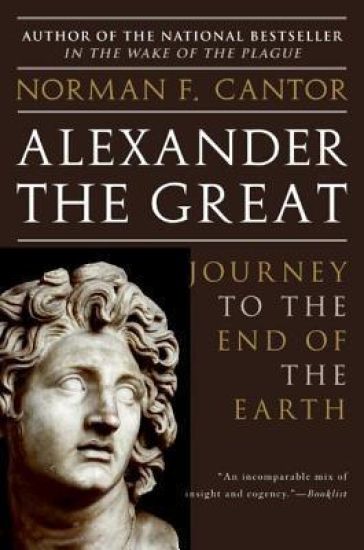
Alexander the Great

Alexander the Great

Norman F. Cantor

HarperPerennial
2007
nidottu
Relying on four biographies of Alexander's contemporaries, combined with modern psychiatric and cultural studies, Cantor describes Alexander's relations with his parents, his Oedipal complex and his bisexuality. At the center of the book are Alexander's attempts to bridge the East and West, the Greek and Persian worlds, especially his using Achilles, the hero of the Trojan War, as his model. Finally, Cantor explores Alexander's view of himself in relation to the pagan gods of Greece and Egypt. The result is a psychological and cultural study of a great figure of the ancient world whose often puzzling personality had so much to do with his career.
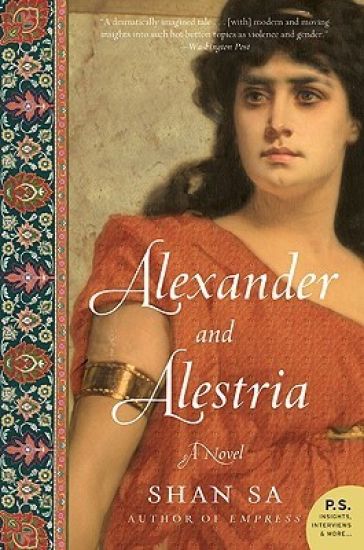
Alexander and Alestria

Alexander and Alestria

Shan Sa

HarperPerennial
2009
nidottu
Beginning with Alexander's childhood in Macedonia with his abusive father, tyrannical King Philip and his overbearing mother Olympias - educated by Aristotle and trained in the military training - he develops the fierce character, strength, and ambition to overthrow his abusive father and take the crown. Meanwhile, in the wilds of the Siberian steppe, Alestria is queen of the Amazons - the tribe of female warriors who dominate this vast land at the edge of the known world. Switching between the distinct voices of Alexander, Alestria, and Tania (the queen's loyal follower and confidante), Shan Sa brings the reader to the center of harsh physical and emotional battles. After Alexander conquers and unifies all of ancient Greece and Egypt and sets out to the Orient to conquer his rival, King Darius of Persia, Alexander and Alestria first encounter each other on the battlefield; surprised to find that his adversary is a woman, Alexander is instantly smitten: her hair is long and black, her body muscular and bronzed, and her skin scarred from years of battle. And at last, this independent woman who had renounced men has found a reason to leave her tribe. Beautifully translated by Adriana Hunter (who also translated the critically acclaimed "Empress").
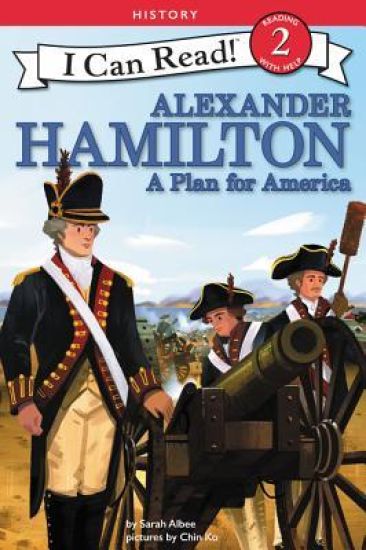
Alexander Hamilton: A Plan for America
The life of Alexander Hamilton, a key leader in the United States after the Revolutionary War, is introduced in this early reader biography.Alexander Hamilton was one of America's founders. He was the first secretary of the treasury and George Washington's right-hand man. But he also made some dangerous enemies during his short yet dramatic life.Beginning readers will learn about the milestones in Alexander Hamilton's life in this Level Two I Can Read biography, which combines a traditional, illustrated narrative with historical illustrations and photographs at the back of the book--complete with a timeline, illustrations, and interesting facts.Alexander Hamilton: A Plan for America is a Level Two I Can Read, geared for kids who read on their own but still need a little help.
Alexander Hamilton: A Plan for America
The life of Alexander Hamilton, a key leader in the United States after the Revolutionary War, is introduced in this early reader biography.Alexander Hamilton was one of America's founders. He was the first secretary of the treasury and George Washington's right-hand man. But he also made some dangerous enemies during his short yet dramatic life.Beginning readers will learn about the milestones in Alexander Hamilton's life in this Level Two I Can Read biography, which combines a traditional, illustrated narrative with historical illustrations and photographs at the back of the book--complete with a timeline, illustrations, and interesting facts.Alexander Hamilton: A Plan for America is a Level Two I Can Read, geared for kids who read on their own but still need a little help.
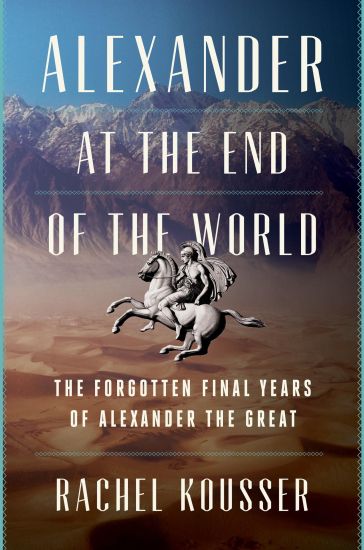
ALEXANDER AT THE END OF THE WORLD

ALEXANDER AT THE END OF THE WORLD

HARPERCOLLINS PUBLISHERS INC
2024
nidottu
"A heart-pounding, mind-bending adventure." --Ilyon WooA riveting biography of Alexander the Great's final years, when the leader's insatiable desire to conquer the world set him off on an exhilarating, harrowing journey that would define his legacy. By 330 B.C.E., Alexander the Great had reached the pinnacle of success. Or so it seemed. He had defeated the Persian ruler Darius III and seized the capital city of Persepolis. His exhausted and traumatized soldiers were ready to return home to Macedonia. Yet Alexander had other plans. He was determined to continue heading east to Afghanistan in search of his ultimate goal: to reach the end of the world. Alexander's unrelenting desire to press on resulted in a perilous seven-year journey through the unknown eastern borderlands of the Persian empire that would test the great conqueror's physical and mental limits. He faced challenges from the natural world, moving through deadly monsoons and extreme temperatures; from a rotating cast of well-matched adversaries, who conspired against him at every turn; and even from his own men, who questioned his motives and distrusted the very beliefs on which Alexander built his empire. This incredible sweep of time, culminating with his death in 323 BC at the age of 32, would come to determine Alexander's legacy and shape the empire he left behind. In Alexander at the End of the World, renowned classicist and art history professor Rachel Kousser vividly brings to life Alexander's labyrinthine, treacherous final years, weaving together a brilliant series of epic battles, stunning landscapes, and nearly insurmountable obstacles. Meticulously researched and grippingly written, Kousser's narrative is an unforgettable tale of daring and adventure, an inspiring portrait of grit and ambition, and a powerful meditation on the ability to learn from failure.
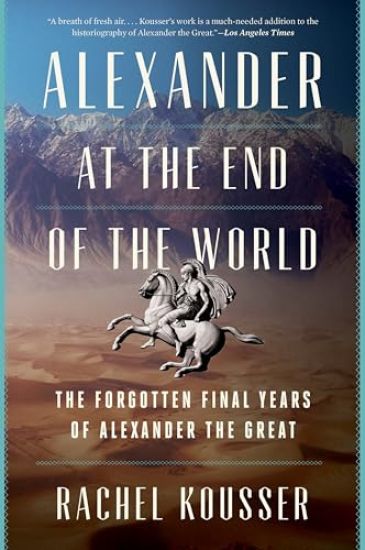
Alexander at the End of the World: The Forgotten Final Years of Alexander the Great
"A heart-pounding, mind-bending adventure." --Ilyon WooA riveting biography of Alexander the Great's final years, when the leader's insatiable desire to conquer the world set him off on an exhilarating, harrowing journey that would define his legacy. By 330 B.C.E., Alexander the Great had reached the pinnacle of success. Or so it seemed. He had defeated the Persian ruler Darius III and seized the capital city of Persepolis. His exhausted and traumatized soldiers were ready to return home to Macedonia. Yet Alexander had other plans. He was determined to continue heading east to Afghanistan in search of his ultimate goal: to reach the end of the world. Alexander's unrelenting desire to press on resulted in a perilous seven-year journey through the unknown eastern borderlands of the Persian empire that would test the great conqueror's physical and mental limits. He faced challenges from the natural world, moving through deadly monsoons and extreme temperatures; from a rotating cast of well-matched adversaries, who conspired against him at every turn; and even from his own men, who questioned his motives and distrusted the very beliefs on which Alexander built his empire. This incredible sweep of time, culminating with his death in 323 BC at the age of 32, would come to determine Alexander's legacy and shape the empire he left behind. In Alexander at the End of the World, renowned classicist and art history professor Rachel Kousser vividly brings to life Alexander's labyrinthine, treacherous final years, weaving together a brilliant series of epic battles, stunning landscapes, and nearly insurmountable obstacles. Meticulously researched and grippingly written, Kousser's narrative is an unforgettable tale of daring and adventure, an inspiring portrait of grit and ambition, and a powerful meditation on the ability to learn from failure.
Alexander Technique

Alexander Technique

Chris Stevens

Vermilion
1996
nidottu
What is the Alexander Technique? Could it help me? How does it work? Is it expensive? Where do I find a teacher? The Alexander Technique is a natural postural and breathing technique devised by an Australian actor called FM Alexander in the 1800s. It can be used in an effective way to ease stress-related disorders and in rehabilitation after illness. This guide to the Alexander Technique concentrates on the method itself, seen from the student's viewpoint. In a straightforward way, it answers all your questions about the Technique and provides background information on its development.
Alexander the Great

Alexander the Great

Robin Lane Fox

Penguin Books Ltd
2004
pokkari
From award-winning historian Robin Lane Fox, Alexander the Great searches through the mass of conflicting evidence and legend to focus on Alexander as a man of his own time. Tough, resolute, fearless, Alexander was a born warrior and ruler of passionate ambition who understood the intense adventure of conquest and of the unknown. When he died in 323 BC aged thirty-two, his vast empire comprised more than two million square miles, spanning from Greece to India. His achievements were unparalleled - he had excelled as leader to his men, founded eighteen new cities and stamped the face of Greek culture on the ancient East. The myth he created is as potent today as it was in the ancient world. Combining historical scholarship and acute psychological insight, Alexander the Great brings this colossal figure vividly to life. 'So enjoyable and well-written ... Fox's book became my main guide through Alexander's amazing story' Oliver Stone, director of Alexander 'I do not know which to admire most, his vast erudition or his imaginative grasp of so remote and complicated a period and such a complex personality' Cyril Connolly, Sunday Times 'An achievement of Alexandrian proportions' New Statesman Robin Lane Fox was the main historical advisor to Oliver Stone on his film Alexander, and took part in many of its most dramatic re-enactments. His books include The Classical World: An Epic History of Greece and Rome, The Unauthorised Version: Truth and Fiction in the Bible, Travelling Heroes: Greeks and their Myths in the Epic Age of Homer and Pagans and Christians in the Mediterranean World from the Second Century AD to the Conversion of Constantine.
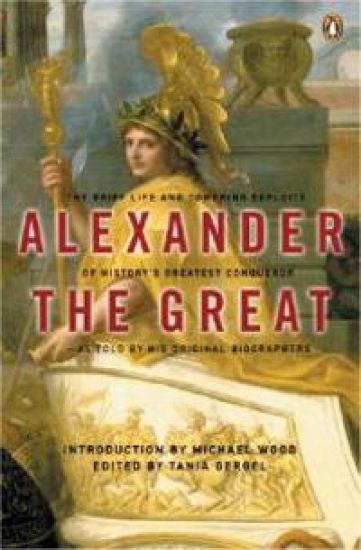
Alexander the Great: The Brief Life and Towering Exploits of History's Greatest Conqueror
Inspired in his leadership, fearless in battle, and boundless in his ambition, Alexander the Great was worshiped as a god during his lifetime, and his legend has only grown since. Inheriting his father's empire at the age of twenty, Alexander resolved to expand it, and by the time of his death at thirty-two, his empire streched from Greece to India, spanning three continents and encompassing two million square miles. Comprising selections from the writings of Arrian, Plutarch, and Quintus Curtius Rufus, this definitive biography of the greatest conqueror in history features an introduction on Alexander's enduring legacy by acclaimed British television personality and Princeton University Professor Michael Wood.
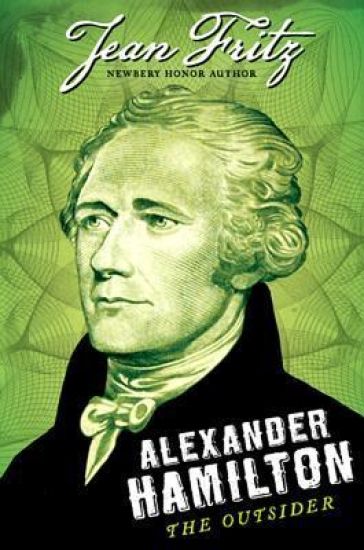
Alexander Hamilton: the Outsider

Alexander Hamilton: the Outsider

Jean Fritz

Penguin Young Readers Group
2012
nidottu
The perfect chapter book biography for young fans of the Hamilton musical Most people know that Alexander Hamilton was killed in a duel with Aaron Burr, and that his face is on the ten dollar bill. But he was much more than that Born in the West Indies, Hamilton arrived in New York as an immigrant, an outsider. He fought in the American Revolution and became George Washington's most valuable aide-de-camp. As one of America's Founding Fathers, he was there for the writing of the Constitution and became the first Secretary of the Treasury. Jean Fritz's award-winning talent for bringing history to life shines as she shares the true story of Alexander Hamilton, a man of action who was honorable, ambitious, and fiercely loyal to his adopted country.
Alexander Hamilton

Alexander Hamilton

Ron Chernow

PENGUIN BOOKS
2005
nidottu
The #1 New York Times bestseller, and the inspiration for the hit Broadway musical Hamilton Pulitzer Prize-winning author Ron Chernow presents a landmark biography of Alexander Hamilton, the Founding Father who galvanized, inspired, scandalized, and shaped the newborn nation. "Grand-scale biography at its best--thorough, insightful, consistently fair, and superbly written . . . A genuinely great book." --David McCullough "A robust full-length portrait, in my view the best ever written, of the most brilliant, charismatic and dangerous founder of them all." --Joseph Ellis Few figures in American history have been more hotly debated or more grossly misunderstood than Alexander Hamilton. Chernow's biography gives Hamilton his due and sets the record straight, deftly illustrating that the political and economic greatness of today's America is the result of Hamilton's countless sacrifices to champion ideas that were often wildly disputed during his time. "To repudiate his legacy," Chernow writes, "is, in many ways, to repudiate the modern world." Chernow here recounts Hamilton's turbulent life: an illegitimate, largely self-taught orphan from the Caribbean, he came out of nowhere to take America by storm, rising to become George Washington's aide-de-camp in the Continental Army, coauthoring The Federalist Papers, founding the Bank of New York, leading the Federalist Party, and becoming the first Treasury Secretary of the United States.Historians have long told the story of America's birth as the triumph of Jefferson's democratic ideals over the aristocratic intentions of Hamilton. Chernow presents an entirely different man, whose legendary ambitions were motivated not merely by self-interest but by passionate patriotism and a stubborn will to build the foundations of American prosperity and power. His is a Hamilton far more human than we've encountered before--from his shame about his birth to his fiery aspirations, from his intimate relationships with childhood friends to his titanic feuds with Jefferson, Madison, Adams, Monroe, and Burr, and from his highly public affair with Maria Reynolds to his loving marriage to his loyal wife Eliza. And never before has there been a more vivid account of Hamilton's famous and mysterious death in a duel with Aaron Burr in July of 1804. Chernow's biography is not just a portrait of Hamilton, but the story of America's birth seen through its most central figure. At a critical time to look back to our roots, Alexander Hamilton will remind readers of the purpose of our institutions and our heritage as Americans.
Alexander the Great: Tie in Edition
Tough, resolute, fearless. Alexander was a born warrior and a ruler of passionate ambition who understood the intense adventure of conquest and of the unknown. When he died in 323 B.C.E. at age thirty-two, his vast empire comprised more than two million square miles, spanning from Greece to India. His achievements were unparalleled--he had excelled as leader to his men, founded eighteen new cities, and stamped the face of Greek culture on the ancient East. the myth he created is as potent today as it was in the ancient world.Robin Lane Fox's superb account searches through the mass of conflicting evidence and legend to focus on Alexander as a man of his own time. Combining historical scholarship and acute psychological insight, it brings this colossal figure vividly to life.
Alexander Hamilton

Alexander Hamilton

R. B. Bernstein

OXFORD UNIVERSITY PRESS INC
2025
nidottu
This is a brief introduction to the life, thought, work, and legacy of Alexander Hamilton (1755-1804), but it is not a traditional biography. Public curiosity about Hamilton, his life, and his work has swelled, particularly among those intrigued by popular-culture portrayals in the Broadway musical Hamilton: An American Musical. This book presents a summary of Hamilton's life and explores his role in revolution, constitutionalism, economics, diplomacy, and war, as well as his relationship to honor culture and duelling. The epilogue considers Hamilton's legacies. The book considers Hamilton as a key founding father, focusing on his work as a politician, a constitutional thinker, and the nation's first secretary of the treasury. In that role, Hamilton was perhaps the leading American domestic policy-maker and nationalist. He led the effort to write the brilliant defense and exposition of the Constitution, The Federalist, and later, as treasury secretary, he pioneered efforts to interpret the Constitution broadly, as a generous grant of national power to the government of the United States. As part of that effort, he also pioneered expositions of the Constitution as a source of executive and judicial power. In addition, as a leading figure in the American world of honor culture, Hamilton was also a principal exponent of political combat in defense of personal and political honor. As such, he was a tragic victim of the honor culture he did so much to establish as a component of national politics, dying as the result of a mortal wound he suffered in his 1804 duel with Aaron Burr, his longtime antagonist and Vice President of the United States. Though not often an admired political figure in his own time, Hamilton was perhaps the leading and most enthusiastic exponent of American constitutional nationalism. In the more than two centuries since his death in 1804, Hamilton has continued to be the principal advocate of a nationalist reading of US constitutionalism.
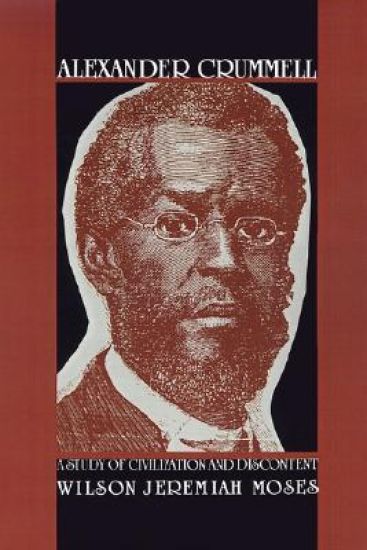
Alexander Crummell

Alexander Crummell

Wilson Jeremiah Moses

Oxford University Press Inc
1989
sidottu
Alexander Crummell (1819-1898) was one the most prominent Afro-American intellectuals of the nineteenth-century. This biography places Crummell's ideas within the context of his life and times.
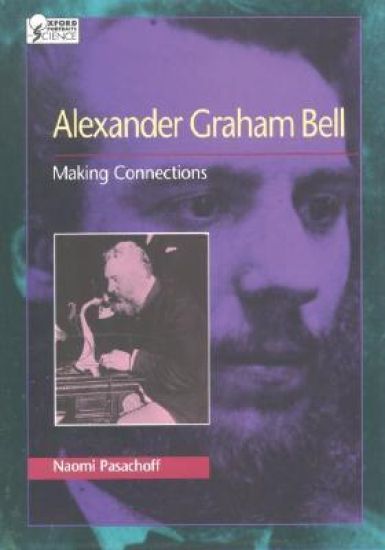
Alexander Graham Bell

Alexander Graham Bell

Naomi Pasachoff

Oxford University Press Inc
2013
sidottu
Alexander Graham Bell forever changed the world. The telephone and his many other landmark inventions rank among the most transforming and enduring of the modern era. But it was his work with the deaf, teaching as well as inventing tools to ease communication, that he considered his life's work. The son of a speech therapist father and hearing impaired mother, his stellar achievements in sound reproduction and aviation give proof that he fit his own definition of an inventor. He said, "An inventor a man who looks upon the world and is not contented with things as they are. He wants to improve whatever he sees, he wants to benefit the world." This is a compelling biography of a true scientific visionary. Oxford Portraits in Science is an on-going series of scientific biographies for young adults. Written by top scholars and writers, each biography examines the personality of its subject as well as the thought process leading to his or her discoveries. These illustrated biographies combine accessible technical information with compelling personal stories to portray the scientists whose work has shaped our understanding of the natural world.
Alexander and the East

Alexander and the East

A.B. Bosworth

Clarendon Press
1996
sidottu
In this study Brian Bosworth looks at the critical period between 329 and 325 BC, when Alexander the Great was active in Central Asia and what is now Pakistan. He documents Alexander's relations with the peoples he conquered, and addresses the question of what it meant to be on the receiving end of the conquest, drawing a bleak picture of massacre and repression. At the same time Alexander's views of empire are investigated, his attitude to his subjects, and the development of his concepts of personal divinity and universal monarchy. Analogies are thus drawn with the Spanish conquest of Mexico, which has a comparable historiographical tradition and parallels many of Alexander's dealings with his subjects. Although of concern to the specialist, this book is equally directed at the general reader interested in the history of Alexander and the morality of empire.
Alexander and the East

Alexander and the East

A.B. Bosworth

Clarendon Press
1998
nidottu
In this study Brian Bosworth looks at the critical period between 329 and 325 BC, when Alexander the Great was active in Central Asia and what is now Pakistan. He documents Alexander's relations with the peoples he conquered, and addresses the question of what it meant to be on the receiving end of the conquest, drawing a bleak picture of massacre and repression. At the same time Alexander's views of empire are investigated, his attitude to his subjects, and the development of his concepts of personal divinity and universal monarchy. Analogies are thus drawn with the Spanish conquest of Mexico, which has a comparable historiographical tradition and parallels many of Alexander's dealings with his subjects. Although of concern to the specialist, this book is equally directed at the general reader interested in the history of Alexander and the morality of empire.
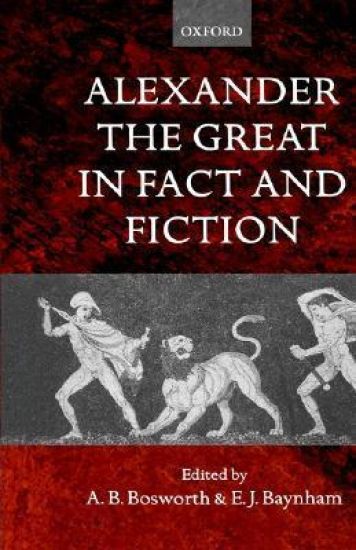
Alexander the Great in Fact and Fiction
This book collects together ten contributions by leading scholars in the field of Alexander studies which represent the most advanced scholarship in this area. They span the gamut between historical reconstruction and historiographical research, and viewed as a whole represent a wide spectrum of methodology. This first English collection of essays on Alexander includes a comparison of the Spanish conquest of Mexico with the Macedonians in the east which examines the attitudes towards the subject peoples and the justification of conquest, an analysis of the attested conspiracies at the Macedonian and Persian courts, and studies of panhellenic ideology and the concept of kingship. There is a radical new interpretation of the hunting fresco from Tomb II at Vergina, and a new date for the pamphlet on Alexander's last days which ends the Alexander romance, and a re-interpretation of the bizarre portents of his death. Three chapters on historiography address the problem of interpreting Alexander's attested behaviour, the indirect source tradition used by Polybius, and the resonances of contemporary politics in the extant histories.