Kirjojen hintavertailu. Mukana 11 244 527 kirjaa ja 12 kauppaa.

Kirjahaku

Etsi kirjoja tekijän nimen, kirjan nimen tai ISBN:n perusteella.

1000 tulosta hakusanalla Alexandra Fields

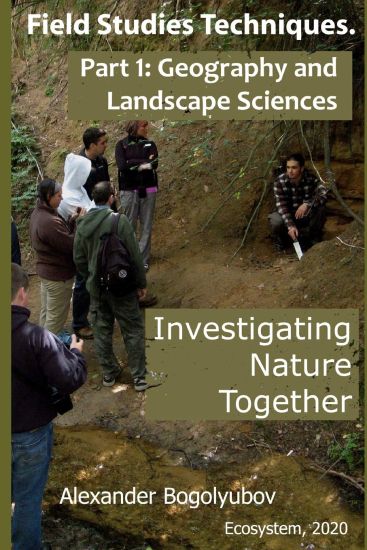
Field Studies Techniques. Part 1. Geography and Landscape Sciences: Investigating Nature Together
This book contains ecological field studies techniques, that can be conducted in wild nature by non-professional researchers - school and university students together with their teachers, single beginning investigators, families, amateurs of all ages. The whole book "Field Studies Techniques" includes 5 parts/series corresponding to a specific field sciences (Geography, Botany, Zoology, Hydrobiology and Bioindication) with totally 40 environmental study lessons (see below) covered a wide variety of activities in nature which can be arranged in different seasons of the year. Each series contains techniques focusing on practical skills which can be applied in the field research. This book promotes a wide variety of outcomes which correspond to established educational standards in many countries. The ecological field study activities address content standards in the areas of earth science, life science, biology and ecology. Intellectual skill development includes questioning, data collection, analysis and drawing conclusions. This book is addressed to the middle and secondary level science teachers and students, and for all those who would like to investigate local wild nature, to share ecological and cultural information and work together to help create a better environment. This specific book "Field Studies Techniques. Part 1: Geography and Landscape Sciences" is the first in the series. Practical skills emphasize orienteering on the study area, simple eye survey (mapping) with compass and lessons focus on geology, soil and relief, as well as hydrology studies of small streams and snow cover. These activities are the basis of future field work. The techniques described in this book, were written by Alexander Bogolyubov (1996-2002), translated into English by Tatiana Tatarinova (2002) and edited by Michael Brody (2003). The list of all field study lessons: I. GEOGRAPHY: Orienteering in the forest Eye Survey of the Field Study Site Mapping Forest Vegetation Geological Exposure Description Minerals and Rocks in Your Area Profile of a River Valley Slope Soil Description Integrated Study on Landscape Profile Description of Small Rivers and Streams Study of Snow Cover Making a Campfire II. BOTANY: Species Composition and Number of Fungi Making a Herbarium Plants in Your Local Environment Vertical Structure of a Forest Green Plants Under Snow Ecology of Early Flowering Plants Phenology of Plant Florescence Assessment of Ecological Features of Meadows Vital State of Coniferous Underbrush Growth Dynamics of Trees Based on Annual Rings Vital State of a Forest Based on Pine-tree Analysis Environmental State of the Forest Based on Leaves' Asymmetry III. ZOOLOGY: Forest Invertebrates 1: Forest Litter and Wood Forest Invertebrates 2: Grass, Tree Crowns and Air Water Invertebrates in a Local River Species Composition and Abundance of Amphibians Making Feeders and Nesting Boxes Species Composition and Census of Birds Studies of Bird Populations by Different Methods Day Activity of Singing Birds Birds' Nesting Life Observation of a Chickadee Flock's Territorial Behavior Winter Mammals Route Census by Footprints Mammal Ecology According to Their Tracks IV. HYDROBIOLOGY: Description of Small Rivers and Streams Physical and Chemical Properties of Natural Waters Water Invertebrates in a Local River Study of Plankton Fauna of Spring Temporary Water Bodies Species Composition and Abundance of Amphibians V. BIOINDICATION: Air Pollution by Lichen Indication Method Vital State of a Forest Based on Pine-tree Analysis Ecological Features of Meadows on the Base of Vegetation Cover Environmental State of the Forest Based on Leaves' Asymmetry Vital State of Coniferous Underbrush Complex Environmental Assessment of Human Impact on an Area Water Invertebrates and Assessment of River Environmental State
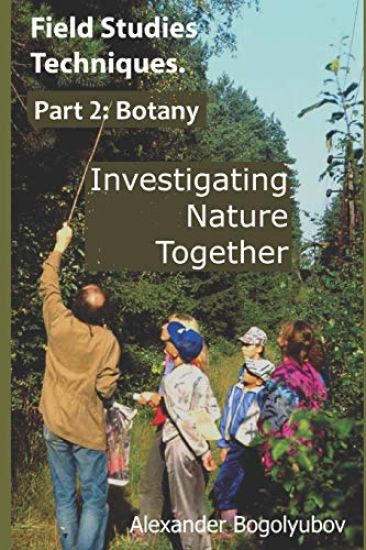
Field Studies Techniques. Part 2. Botany: Investigating Nature Together
This book contains ecological field studies techniques, that can be conducted in wild nature by non-professional researchers - school and university students together with their teachers, single beginning investigators, families, amateurs of all ages. The whole book "Field Studies Techniques" includes 5 parts/series corresponding to a specific field sciences (Geography, Botany, Zoology, Hydrobiology and Bioindication) with totally 40 environmental study lessons (see below) covered a wide variety of activities in nature which can be arranged in different seasons of the year. Each series contains techniques focusing on practical skills which can be applied in the field research. This book promotes a wide variety of outcomes which correspond to established educational standards in many countries. The ecological field study activities address content standards in the areas of earth science, life science, biology and ecology. Intellectual skill development includes questioning, data collection, analysis and drawing conclusions. This book is addressed to the middle and secondary level science teachers and students, and for all those who would like to investigate local wild nature, to share ecological and cultural information and work together to help create a better environment. This specific book "Field Studies Techniques. Part 2: Botany" is the second in the series. Practical skills include the study of fungi and flora of the local area, making a herbarium, geobotanical study of the forest, as well as study of green plants under snow, primrose ecology and phenology of flowering plants. All these techniques are the basis for the most of zoological and monitoring research projects. The techniques described in this book, were written by Alexander Bogolyubov (1996-2002), translated into English by Tatiana Tatarinova (2002) and edited by Michael Brody (2003). The list of all field study lessons: I. GEOGRAPHY: Orienteering in the forest Eye Survey of the Field Study Site Mapping Forest Vegetation Geological Exposure Description Minerals and Rocks in Your Area Profile of a River Valley Slope Soil Description Integrated Study on Landscape Profile Description of Small Rivers and Streams Study of Snow Cover Making a Campfire II. BOTANY: Species Composition and Number of Fungi Making a Herbarium Plants in Your Local Environment Vertical Structure of a Forest Green Plants Under Snow Ecology of Early Flowering Plants Phenology of Plant Florescence Assessment of Ecological Features of Meadows Vital State of Coniferous Underbrush Growth Dynamics of Trees Based on Annual Rings Vital State of a Forest Based on Pine-tree Analysis Environmental State of the Forest Based on Leaves' Asymmetry III. ZOOLOGY: Forest Invertebrates 1: Forest Litter and Wood Forest Invertebrates 2: Grass, Tree Crowns and Air Water Invertebrates in a Local River Species Composition and Abundance of Amphibians Making Feeders and Nesting Boxes Species Composition and Census of Birds Studies of Bird Populations by Different Methods Day Activity of Singing Birds Birds' Nesting Life Observation of a Chickadee Flock's Territorial Behavior Winter Mammals Route Census by Footprints Mammal Ecology According to Their Tracks IV. HYDROBIOLOGY: Description of Small Rivers and Streams Physical and Chemical Properties of Natural Waters Water Invertebrates in a Local River Study of Plankton Fauna of Spring Temporary Water Bodies Species Composition and Abundance of Amphibians V. BIOINDICATION: Air Pollution by Lichen Indication Method Vital State of a Forest Based on Pine-tree Analysis Ecological Features of Meadows on the Base of Vegetation Cover Environmental State of the Forest Based on Leaves' Asymmetry Vital State of Coniferous Underbrush Complex Environmental Assessment of Human Impact on an Area Water Invertebrates and Assessment of River Environmental State
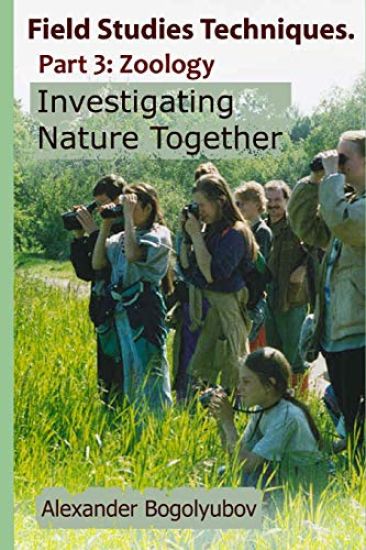
Field Studies Techniques. Part 3. Zoology: Investigating Nature Together
This book contains ecological field studies techniques, that can be conducted in wild nature by non-professional researchers - school and university students together with their teachers, single beginning investigators, families, amateurs of all ages. The whole book "Field Studies Techniques" includes 5 parts/series corresponding to a specific field sciences (Geography, Botany, Zoology, Hydrobiology and Bioindication) with totally 40 environmental study lessons (see below) covered a wide variety of activities in nature which can be arranged in different seasons of the year. Each series contains techniques focusing on practical skills which can be applied in the field research. This book promotes a wide variety of outcomes which correspond to established educational standards in many countries. The ecological field study activities address content standards in the areas of earth science, life science, biology and ecology. Intellectual skill development includes questioning, data collection, analysis and drawing conclusions. This book is addressed to the middle and secondary level science teachers and students, and for all those who would like to investigate local wild nature, to share ecological and cultural information and work together to help create a better environment. This specific book "Field Studies Techniques. Part 3: Zoology" is the third in the series. Practical skills include the study of the invertebrates, living in the forest litter, wood, grass, tree crowns and air, as well as water invertebrates (macrozoobenthos). Also the methods of species composition, abundance and behavior of amphibians, birds and mammals are described. The techniques described in this book, were written by Alexander Bogolyubov (1996-2002), translated into English by Tatiana Tatarinova (2002) and edited by Michael Brody (2003). The list of all field study lessons: I. GEOGRAPHY: Orienteering in the forest Eye Survey of the Field Study Site Mapping Forest Vegetation Geological Exposure Description Minerals and Rocks in Your Area Profile of a River Valley Slope Soil Description Integrated Study on Landscape Profile Description of Small Rivers and Streams Study of Snow Cover Making a Campfire II. BOTANY: Species Composition and Number of Fungi Making a Herbarium Plants in Your Local Environment Vertical Structure of a Forest Green Plants Under Snow Ecology of Early Flowering Plants Phenology of Plant Florescence Assessment of Ecological Features of Meadows Vital State of Coniferous Underbrush Growth Dynamics of Trees Based on Annual Rings Vital State of a Forest Based on Pine-tree Analysis Environmental State of the Forest Based on Leaves' Asymmetry III. ZOOLOGY: Forest Invertebrates 1: Forest Litter and Wood Forest Invertebrates 2: Grass, Tree Crowns and Air Water Invertebrates in a Local River Species Composition and Abundance of Amphibians Making Feeders and Nesting Boxes Species Composition and Census of Birds Studies of Bird Populations by Different Methods Day Activity of Singing Birds Birds' Nesting Life Observation of a Chickadee Flock's Territorial Behavior Winter Mammals Route Census by Footprints Mammal Ecology According to Their Tracks IV. HYDROBIOLOGY: Description of Small Rivers and Streams Physical and Chemical Properties of Natural Waters Water Invertebrates in a Local River Study of Plankton Fauna of Spring Temporary Water Bodies Species Composition and Abundance of Amphibians V. BIOINDICATION: Air Pollution by Lichen Indication Method Vital State of a Forest Based on Pine-tree Analysis Ecological Features of Meadows on the Base of Vegetation Cover Environmental State of the Forest Based on Leaves' Asymmetry Vital State of Coniferous Underbrush Complex Environmental Assessment of Human Impact on an Area Water Invertebrates and Assessment of River Environmental State

Field Theoretic Method in Phase Transformations

Field Theoretic Method in Phase Transformations

Alexander Umantsev

Springer International Publishing AG
2023
nidottu
This book describes a novel and popular method for the theoretical and computational study of phase transformations and materials processing in condensed and soft matter. The field theoretic method for the study of phase transformations in material systems, also known as the phase-field method, allows one to analyze different stages of transformations within a unified framework. It has received significant attention in the materials science community due to many recent successes in solving or illuminating important problems. In a single volume, this book addresses the fundamentals of the method starting from the basics of the field theoretic method along with its most important theoretical and computational results and some of the most advanced recent results and applications. Now in a revised and expanded second edition, the text is updated throughout and includes material on the classical theory of phase transformations. This book serves as both a primer in the area of phase transformations for those new to the field and as a guide for the more seasoned researcher. It is also of interest to historians of physics.
Instructions for Field Artillery

Instructions for Field Artillery

Alexander W Stark

Hansebooks
2021
pokkari
Instructions for Field Artillery - Compiled from Standard Military Authority is an unchanged, high-quality reprint of the original edition of 1864. Hansebooks is editor of the literature on different topic areas such as research and science, travel and expeditions, cooking and nutrition, medicine, and other genres. As a publisher we focus on the preservation of historical literature. Many works of historical writers and scientists are available today as antiques only. Hansebooks newly publishes these books and contributes to the preservation of literature which has become rare and historical knowledge for the future.
The Mushroom Hunter's Field Guide

The Mushroom Hunter's Field Guide

Alexander H Smith; Nancy Smith Weber

The University of Michigan Press
1980
sidottu
The Mushroom Hunter's Field Guide is the guide that tells when, where, and how to find delicious edible mushrooms and how to avoid poisonous ones. Beginners as well as experts will be able to identify mushrooms in a matter of minutes. All of the mushrooms included are illustrated in beautiful color, adding visual enjoyment to the textual materials. The descriptions are tinged with wit and wisdom, making the use of this guide an enjoyable and rewarding experience.This edition of The Mushroom Hunter's Field Guide should be useful throughout the United States and Canada, but users should remember that each region has certain species peculiar to it, and it is impossible to include all of them here. The coverage is best for the Northeast, Great Lakes region, Rocky Mountains, and the Pacific Northwest. It includes most of the truly fine edible wild mushrooms, whether they are common or rare. It also includes the most dangerous ones in order that collectors may recognize them for what they are."Whether you are picking mushrooms to eat, or simply want to identify the many strange and beautiful mushrooms you find on walks through the woods, this field guide is highly recommended."-- American Horticulturalist"This is the mushroom forager's Bible. Don't go into the wilderness without it."--Creative Living". . . should be on the bookshelf of all serious amateurs, and the professionals will also find it helpful."--MycologiaThe late Alexander H. Smith was Professor Emeritus of Botany, University of Michigan. Nancy Smith Weber is Associate Professor of Forest Science, Oregon State University.
Condensed Matter Field Theory

Condensed Matter Field Theory

Altland Alexander; Simons Ben D.

Cambridge University Press
2010
sidottu
Modern experimental developments in condensed matter and ultracold atom physics present formidable challenges to theorists. This book provides a pedagogical introduction to quantum field theory in many-particle physics, emphasizing the applicability of the formalism to concrete problems. This second edition contains two new chapters developing path integral approaches to classical and quantum nonequilibrium phenomena. Other chapters cover a range of topics, from the introduction of many-body techniques and functional integration, to renormalization group methods, the theory of response functions, and topology. Conceptual aspects and formal methodology are emphasized, but the discussion focuses on practical experimental applications drawn largely from condensed matter physics and neighboring fields. Extended and challenging problems with fully worked solutions provide a bridge between formal manipulations and research-oriented thinking. Aimed at elevating graduate students to a level where they can engage in independent research, this book complements graduate level courses on many-particle theory.
Probing the Consistency of Quantum Field Theory I

Probing the Consistency of Quantum Field Theory I

Alexander S. Blum

Cambridge University Press
2026
nidottu
This two-volume Element reconstructs and analyzes the historical debates on whether renormalized quantum field theory is a mathematically consistent theory. This volume covers the years the years immediately following the development of renormalized quantum electrodynamics. It begins with the realization that perturbation theory cannot serve as the foundation for a proof of consistency, due to the non-convergence of the perturbation series. Various attempts at a nonperturbative formulation of quantum field theory are discussed, including the Schwinger–Dyson equations, GunnarKällén's nonperturbative renormalization, the renormalization group of MurrayGell-Mann and Francis Low, and, in the last section, early axiomatic quantum field theory. The second volume of this Element covers the establishment of Haag's theorem, which proved that even the Hilbert space of perturbation theory is an inadequate foundation for a consistent theory. This title is also available as Open Access on Cambridge Core.
Probing the Consistency of Quantum Field Theory I

Probing the Consistency of Quantum Field Theory I

Alexander S. Blum

Cambridge University Press
2026
sidottu
This two-volume Element reconstructs and analyzes the historical debates on whether renormalized quantum field theory is a mathematically consistent theory. This volume covers the years the years immediately following the development of renormalized quantum electrodynamics. It begins with the realization that perturbation theory cannot serve as the foundation for a proof of consistency, due to the non-convergence of the perturbation series. Various attempts at a nonperturbative formulation of quantum field theory are discussed, including the Schwinger–Dyson equations, GunnarKällén's nonperturbative renormalization, the renormalization group of MurrayGell-Mann and Francis Low, and, in the last section, early axiomatic quantum field theory. The second volume of this Element covers the establishment of Haag's theorem, which proved that even the Hilbert space of perturbation theory is an inadequate foundation for a consistent theory. This title is also available as Open Access on Cambridge Core.
Return to the Field

Return to the Field

Alexander Fullerton

Canelo
2022
pokkari
A stunning adventure in war-torn France.It's the spring of 1944 and Rosie Ewing is returning to German-occupied France. By air, this time.She’s carrying a radio, half a million francs, a pistol and two cyanide capsules to Finistere in north-west Brittany. With D-Day looming, Rosie fears that the man who’ll be meeting her on the ground tonight may be a traitor.She knows also that the likely end of the road for female agents is Ravensbrück – or l’enfer des femmes, as the Resistance calls it… the dreaded concentration camp for women.The second in the unputdownable Rosie Ewing Spy Thrillers, perfect for fans of Philip Kerr, Ian Fleming and John Le Carré.
Polish Media Art in an Expanded Field

Polish Media Art in an Expanded Field

Aleksandra Kaminska

Intellect Books
2016
nidottu
From an Eastern nation on the global periphery to a European neoliberal democracy enmeshed in transnational networks, Poland has experienced a dramatic transformation in the last century. Polish Media Art in an Expanded Field uses the lens, and mirror, of media art to think through the politics of a post-socialist 'New Europe', where artists are negotiating the tension between global cosmopolitanism and national self-enfranchisement. Situating Polish media art practices in the context of Poland’s aesthetic traditions and political history, Aleksandra Kaminska provides an important contribution to site-specific histories of media art. Polish Media Art in an Expanded Field demonstrates how artists are using and reflecting upon technology as a way of entering into larger civic conversations around the politics of identity, place, citizenship, memory and heritage. Building on close readings of artworks that serve as case studies, as well as interviews with leading artists, scholars and curators, this is the first full-length study of Polish media art.
Walks and Talks in the Geological Field

Walks and Talks in the Geological Field

Alexander Winchell

Hansebooks
2023
pokkari
Walks and Talks in the Geological Field is an unchanged, high-quality reprint of the original edition of 1890. Hansebooks is editor of the literature on different topic areas such as research and science, travel and expeditions, cooking and nutrition, medicine, and other genres. As a publisher we focus on the preservation of historical literature. Many works of historical writers and scientists are available today as antiques only. Hansebooks newly publishes these books and contributes to the preservation of literature which has become rare and historical knowledge for the future.