

Kirjahaku
Etsi kirjoja tekijän nimen, kirjan nimen tai ISBN:n perusteella.
1000 tulosta hakusanalla Alexei V. Finkelstein

El libro 6 de la saga Underdog Enfrentamiento (Underdog VI) Serie LitRPG: https: //www.amazon.es/dp/B09QQRG6L6 Tras acabar con el nido de draks, Eric se encuentra ahora tambi n en una trampa. Para evitar morir en un derrumbe, activa el manuscrito que recibi por derrotar a la Dama de la Anomal a. Un portal lleva a Eric al mirador de la misteriosa Ciudadela del Caos. La entrada a la Ciudadela est custodiada por el Guardi n de la Puerta, un enorme trol enfundado de pies a cabeza en una armadura de placas. Gracias a su amuleto de Amigo de los Trolls, Eric consigue evitar luchar contra l y, por tanto, supera la primera prueba del guardi n y puede entrar en la Ciudadela del Caos para participar en sus misterios. Sin embargo, Eric no est interesado en sus misterios y se lo dice directamente al trol. Incluso llega a decir que prefiere seguir su camino y abandonar la Ciudadela. Pero el Guardi n de la Puerta informa a Eric de que no podr marcharse tan f cilmente porque, ahora que ha activado el manuscrito, debe someterse a una prueba conocida como la Unidad con el Caos. Por un lado, Eric comprende que participar en esta actividad, sin duda peligrosa, amenaza con acabar no s lo con la p rdida de tiempo, sino tambi n con la p rdida de la vida. Por otro lado, sin embargo, recuerda perfectamente de qu es capaz la Magia del Caos. Y si Eric es capaz de superar la prueba? Le conceder el Caos el poder? Al fin y al cabo, Eric es consciente de que, a pesar de lo mucho que ha cambiado y se ha hecho m s fuerte, a n no es ni de lejos tan poderoso como el Rey del Acero, que mantiene cautivas a Maya y a Mee. Podr an los dioses estar dici ndole a Eric que ha llegado el momento de hacer lo que Leshi orden ? Ha llegado el momento de hacerse m s fuerte

Simwolika krasnogo cweta w "Vecherah na hutore..." N.V.Gogolq
Alexej Trofimchuk
Lap Lambert Academic Publishing
2011
nidottu

CONTRA SPEM SPERO V poiskah utrachennogo bessmertiq
Bojko Alexej
Lap Lambert Academic Publishing
2018
nidottu

Uluchshenie uslovij truda v uchrezhdeniyah dopolnitel'nogo obrazovaniya
German Pachurin; Alexej Filippov; Tat'Yana Zhuravleva
Lap Lambert Academic Publishing
2017
nidottu
Mediaciya v razreshenii sporov mezhdu grazhdanami i organami vlasti
Tat'yana Nikolaenko; Maxim Trofimov; Alexej Nikolaenko
Lap Lambert Academic Publishing
2016
nidottu

Safe Robot Navigation Among Moving and Steady Obstacles
Andrey V. Savkin; Alexey S. Matveev; Michael Hoy; Chao Wang
Butterworth-Heinemann Inc
2015
nidottu
Safe Robot Navigation Among Moving and Steady Obstacles is the first book to focus on reactive navigation algorithms in unknown dynamic environments with moving and steady obstacles. The first three chapters provide introduction and background on sliding mode control theory, sensor models, and vehicle kinematics. Chapter 4 deals with the problem of optimal navigation in the presence of obstacles. Chapter 5 discusses the problem of reactively navigating. In Chapter 6, border patrolling algorithms are applied to a more general problem of reactively navigating. A method for guidance of a Dubins-like mobile robot is presented in Chapter 7. Chapter 8 introduces and studies a simple biologically-inspired strategy for navigation a Dubins-car. Chapter 9 deals with a hard scenario where the environment of operation is cluttered with obstacles that may undergo arbitrary motions, including rotations and deformations. Chapter 10 presents a novel reactive algorithm for collision free navigation of a nonholonomic robot in unknown complex dynamic environments with moving obstacles. Chapter 11 introduces and examines a novel purely reactive algorithm to navigate a planar mobile robot in densely cluttered environments with unpredictably moving and deforming obstacles. Chapter 12 considers a multiple robot scenario. For the Control and Automation Engineer, this book offers accessible and precise development of important mathematical models and results. All the presented results have mathematically rigorous proofs. On the other hand, the Engineer in Industry can benefit by the experiments with real robots such as Pioneer robots, autonomous wheelchairs and autonomous mobile hospital.
Plasmonic Effects in Metal-Semiconductor Nanostructures
Alexey A. Toropov; Tatiana V. Shubina
Oxford University Press
2015
sidottu
Metal-semiconductor nanostructures represent an important new class of materials employed in designing advanced optoelectronic and nanophotonic devices, such as plasmonic nanolasers, plasmon-enhanced light-emitting diodes and solar cells, plasmonic emitters of single photons, and quantum devices operating in infrared and terahertz domains. The combination of surface plasmon resonances in conducting structures, providing strong concentration of an electromagnetic optical field nearby, with sharp optical resonances in semiconductors, which are highly sensitive to external electromagnetic fields, creates a platform to control light on the nanoscale. The design of the composite metal-semiconductor system imposes the consideration of both the plasmonic resonances in metal and the optical transitions in semiconductors - a key issue being their resonant interaction providing a coupling regime. In this book the reader will find descriptions of electrodynamics of conducting structures, quantum physics of semiconductor nanostructures, and guidelines for advanced engineering of metal-semiconductor composites. These constituents form together the physical basics of the metal-semiconductor plasmonics, underlying many effective practical applications. The list of covered topics also includes the review of recent results, such as the achievement of a strong coupling regime, and the preservation of non-classical statistics of photons in plasmonic cavities combined with semiconductor nanostructures.

Qualitative Theory of Hybrid Dynamical Systems
Alexey S. Matveev; Andrey V. Savkin
Birkhauser Boston Inc
2000
sidottu
Hybrid dynamical systems, both continuous and discrete dynamics and variables, have attracted considerable interest recently. This emerging area is found at the interface of control theory and computer engineering, focusing on the analogue and digital aspects of systems and devices. They are essential for advances in modern digital- controller technology. "Qualitative Theory of Hybrid Dynamical Systems" provides a thorough development and systematic presentation of the foundations and framework for hybrid dynamical systems. The presentation offers an accessible, but precise, development of the mathematical models, conditions for existence of limit cycles, and criteria of their stability. The book largely concentrates on the case of discretely controlled continuous-time systems and their relevance for modeling aspects of flexible manufacturing systems and dynamically routed queuing networks. Features and topics: *differential automata*development and use of the concept "cyclic linear differential automata" (CLDA)*switched single-server flow networks coverage*application to specific models of manufacturing systems and queuing networks*select collection of open problems for the subject*self-contained presentation of topics, with the necessary background This new book is an excellent resource for the study and analysis of hybrid dynamical systems used in systems and control engineering. Researchers, postgraduates and professionals in control engineering and computer engineering will find the book an up-to-date development of the relevant new concepts and tools.
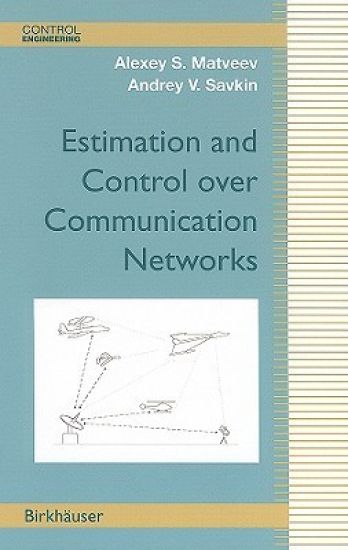
Estimation and Control over Communication Networks
Alexey S. Matveev; Andrey V. Savkin
Birkhauser Boston Inc
2008
sidottu
Although there is an emerging literature on the topic, this is the first book that attempts to present a systematic theory of estimation and control over communication networks. Using several selected problems of estimation and control over communication networks, the authors present and prove a number of results concerning optimality, stability, and robustness having practical significance for networked control system design. In particular, various problems of Kalman filtering, stabilization, and optimal control over communication channels are considered and solved. The results establish fundamental links among mathematical control theory, Shannon information theory, and entropy theory of dynamical systems. This essentially self-contained monograph offers accessible mathematical models and results for advanced postgraduate students, researchers, and practitioners working in the areas of control engineering, communications, information theory, signal processing, and applied mathematics.
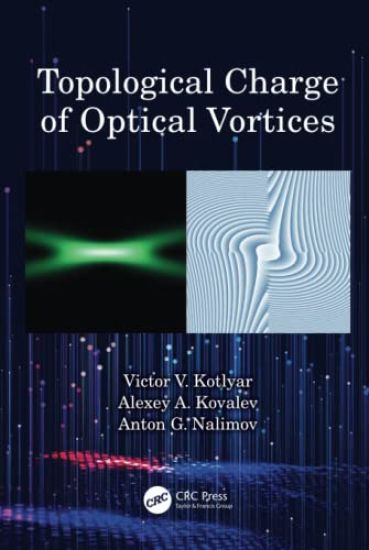
Topological Charge of Optical Vortices
Victor V. Kotlyar; Alexey A. Kovalev; Anton G. Nalimov
TAYLOR FRANCIS LTD
2022
sidottu
This book is devoted to the consideration of unusual laser beams – vortex or singular beams. It contains many numerical examples, which clearly show how the phase of optical vortices changes during propagation in free space, and that the topological charge is preserved.Topological Charge of Optical Vortices shows that the topological charge of an optical vortex is equal to the number of screw dislocations or the number of phase singularities in the beam cross-section. A single approach is used for the entire book: based on M. Berry’s formula. It is shown that phase singularities during beam propagation can be displaced to infinity at a speed greater than the speed of light. The uniqueness of the book is that the calculation of the topological charge for scalar light fields is extended to vector fields and is used to calculate the Poincare–Hopf singularity index for vector fields with inhomogeneous linear polarization with V-points and for the singularity index of vector fields with inhomogeneous elliptical polarization with C-points and C- lines.The book is written for opticians, and graduate students interested in an interesting section of optics – singular optics. It will also be of interest to scientists and researchers who are interested in modern optics. In order to understand the content of the book, it is enough to know paraxial optics (Fourier optics) and be able to calculate integrals.
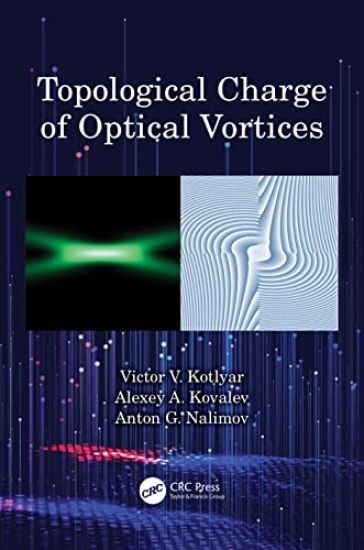
Topological Charge of Optical Vortices
Victor V. Kotlyar; Alexey A. Kovalev; Anton G. Nalimov
TAYLOR FRANCIS LTD
2024
nidottu
This book is devoted to the consideration of unusual laser beams – vortex or singular beams. It contains many numerical examples, which clearly show how the phase of optical vortices changes during propagation in free space, and that the topological charge is preserved.Topological Charge of Optical Vortices shows that the topological charge of an optical vortex is equal to the number of screw dislocations or the number of phase singularities in the beam cross-section. A single approach is used for the entire book: based on M. Berry’s formula. It is shown that phase singularities during beam propagation can be displaced to infinity at a speed greater than the speed of light. The uniqueness of the book is that the calculation of the topological charge for scalar light fields is extended to vector fields and is used to calculate the Poincare–Hopf singularity index for vector fields with inhomogeneous linear polarization with V-points and for the singularity index of vector fields with inhomogeneous elliptical polarization with C-points and C- lines.The book is written for opticians, and graduate students interested in an interesting section of optics – singular optics. It will also be of interest to scientists and researchers who are interested in modern optics. In order to understand the content of the book, it is enough to know paraxial optics (Fourier optics) and be able to calculate integrals.
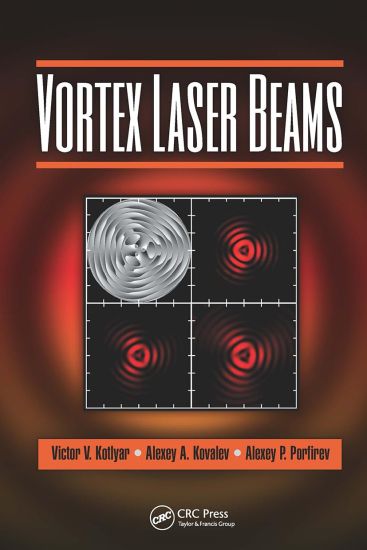
Vortex Laser Beams
Victor V. Kotlyar; Alexey A. Kovalev; Alexey P. Porfirev
TAYLOR FRANCIS LTD
2023
nidottu
This book deals with theoretical bases of the modern optics division concerned with coherent light fields with singularities characterized by phase uncertainty. Singular light fields include laser vortex beams or beams that carry orbital angular momentum. Laser vortex beams that have been introduced in optics in recent years are discussed in detail. Among them, of special notice are families of asymmetric laser vortex beams that, while being devoid of radial symmetry, remain unchanged upon propagation. What makes the laser vortex beams especially interesting is the ability to preserve their structure while propagating in a scattering medium or through a turbulent atmosphere. The orbital angular momentum is an extra degree of freedom of laser vortices because beams with different topological charge can be utilized as independent channels for data transmission in wireless communications. Laser vortex beams are generated from conventional Gaussian beams using liquid crystal light modulators, which are now readily available at any optical laboratory. Provide a framework for the comparative analysis of the efficiency of different vortex beams for micromanipulation. Includes detailed illustrations, enabling the vortex structure to be easily understood even by non-experts. Presents detailed descriptions of more than a dozen most popular types of vortex laser beams. Explores how optical vortices have been used in many practical applications including conventional and quantum wireless communications, micromanipulation, optical measurements with super-resolution, spiral interferometry, microscopy, and atom cooling. Presents in a systematic and detailed form many analytical and numerical results for the propagation vortex optical beams (chiefly in the linear propagation regime).
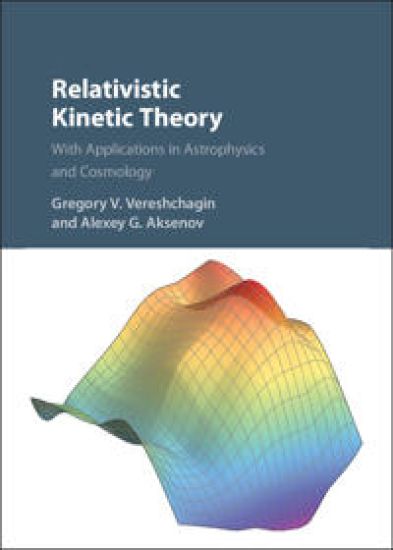
Relativistic Kinetic Theory
Gregory V. Vereshchagin; Alexey G. Aksenov
Cambridge University Press
2017
sidottu
Relativistic kinetic theory has widespread application in astrophysics and cosmology. The interest has grown in recent years as experimentalists are now able to make reliable measurements on physical systems where relativistic effects are no longer negligible. This ambitious monograph is divided into three parts. It presents the basic ideas and concepts of this theory, equations and methods, including derivation of kinetic equations from the relativistic BBGKY hierarchy and discussion of the relation between kinetic and hydrodynamic levels of description. The second part introduces elements of computational physics with special emphasis on numerical integration of Boltzmann equations and related approaches, as well as multi-component hydrodynamics. The third part presents an overview of applications ranging from covariant theory of plasma response, thermalization of relativistic plasma, comptonization in static and moving media to kinetics of self-gravitating systems, cosmological structure formation and neutrino emission during the gravitational collapse.

This book deals with theoretical bases of the modern optics division concerned with coherent light fields with singularities characterized by phase uncertainty. Singular light fields include laser vortex beams or beams that carry orbital angular momentum. Laser vortex beams that have been introduced in optics in recent years are discussed in detail. Among them, of special notice are families of asymmetric laser vortex beams that, while being devoid of radial symmetry, remain unchanged upon propagation. What makes the laser vortex beams especially interesting is the ability to preserve their structure while propagating in a scattering medium or through a turbulent atmosphere. The orbital angular momentum is an extra degree of freedom of laser vortices because beams with different topological charge can be utilized as independent channels for data transmission in wireless communications. Laser vortex beams are generated from conventional Gaussian beams using liquid crystal light modulators, which are now readily available at any optical laboratory. Provide a framework for the comparative analysis of the efficiency of different vortex beams for micromanipulation. Includes detailed illustrations, enabling the vortex structure to be easily understood even by non-experts. Presents detailed descriptions of more than a dozen most popular types of vortex laser beams. Explores how optical vortices have been used in many practical applications including conventional and quantum wireless communications, micromanipulation, optical measurements with super-resolution, spiral interferometry, microscopy, and atom cooling. Presents in a systematic and detailed form many analytical and numerical results for the propagation vortex optical beams (chiefly in the linear propagation regime).

Qualitative Theory of Hybrid Dynamical Systems
Alexey S. Matveev; Andrey V. Savkin
Springer-Verlag New York Inc.
2012
nidottu
Hybrid dynamical systems, both continuous and discrete dynamics and variables, have attracted considerable interest recently. This emerging area is found at the interface of control theory and computer engineering, focusing on the analogue and digital aspects of systems and devices. They are essential for advances in modern digital- controller technology. "Qualitative Theory of Hybrid Dynamical Systems" provides a thorough development and systematic presentation of the foundations and framework for hybrid dynamical systems. The presentation offers an accessible, but precise, development of the mathematical models, conditions for existence of limit cycles, and criteria of their stability. The book largely concentrates on the case of discretely controlled continuous-time systems and their relevance for modeling aspects of flexible manufacturing systems and dynamically routed queuing networks. Features and topics: *differential automata*development and use of the concept "cyclic linear differential automata" (CLDA)*switched single-server flow networks coverage*application to specific models of manufacturing systems and queuing networks*select collection of open problems for the subject*self-contained presentation of topics, with the necessary background This new book is an excellent resource for the study and analysis of hybrid dynamical systems used in systems and control engineering. Researchers, postgraduates and professionals in control engineering and computer engineering will find the book an up-to-date development of the relevant new concepts and tools.
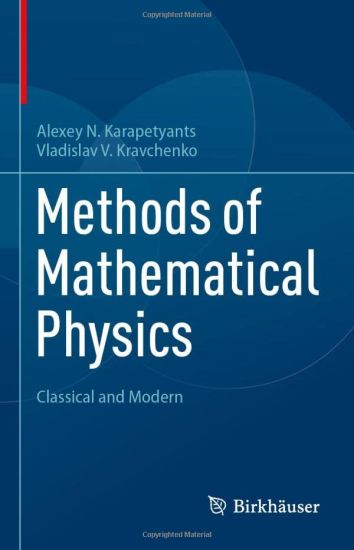
Methods of Mathematical Physics
Alexey N. Karapetyants; Vladislav V. Kravchenko
BIRKHAUSER VERLAG AG
2022
sidottu
This textbook provides a thorough overview of mathematical physics, highlighting classical topics as well as recent developments. Readers will be introduced to a variety of methods that reflect current trends in research, including the Bergman kernel approach for solving boundary value and spectral problems for PDEs with variable coefficients. With its careful treatment of the fundamentals as well as coverage of topics not often encountered in textbooks, this will be an ideal text for both introductory and more specialized courses.The first five chapters present standard material, including the classification of PDEs, an introduction to boundary value and initial value problems, and an introduction to the Fourier method of separation of variables. More advanced material and specialized treatments follow, including practical methods for solving direct and inverse Sturm-Liouville problems; the theory of parabolic equations, harmonic functions, potential theory, integral equations and the method of non-orthogonal series.Methods of Mathematical Physics is ideal for undergraduate students and can serve as a textbook for a regular course in equations of mathematical physics as well as for more advanced courses on selected topics.

Methods of Mathematical Physics
Alexey N. Karapetyants; Vladislav V. Kravchenko
BIRKHAUSER VERLAG AG
2023
nidottu
This textbook provides a thorough overview of mathematical physics, highlighting classical topics as well as recent developments. Readers will be introduced to a variety of methods that reflect current trends in research, including the Bergman kernel approach for solving boundary value and spectral problems for PDEs with variable coefficients. With its careful treatment of the fundamentals as well as coverage of topics not often encountered in textbooks, this will be an ideal text for both introductory and more specialized courses.The first five chapters present standard material, including the classification of PDEs, an introduction to boundary value and initial value problems, and an introduction to the Fourier method of separation of variables. More advanced material and specialized treatments follow, including practical methods for solving direct and inverse Sturm-Liouville problems; the theory of parabolic equations, harmonic functions, potential theory, integral equations and the method of non-orthogonal series.Methods of Mathematical Physics is ideal for undergraduate students and can serve as a textbook for a regular course in equations of mathematical physics as well as for more advanced courses on selected topics.

Optical Hall Effect in the Sharp Focus of Laser Light
Victor V. Kotlyar; Alexey A. Kovalev; Anton G. Nalimov
Springer International Publishing AG
2024
sidottu
This book explores the optical Hall effect in the sharp focus of laser light. It builds upon the established theory of Richards-Wolf (1959), providing numerous real-world examples that illustrate both spin and orbital Hall effects near the focal point. Within the focal zone, distinct regions of left and right circular polarization emerge, showcasing the orbital Hall effect. This effect becomes apparent when localized areas within the focal plane experience transverse energy flow, rotating either clockwise or counterclockwise. The spin Hall effect, a fundamental occurrence, is demonstrated when a linearly polarized Gaussian beam is concentrated. Furthermore, the book reveals spin and orbital Hall effects in light fields with nonuniform linear polarization, where the polarization direction varies within the beam cross section. While the optical or photonic Hall effect has been recognized since 2004, a comprehensive monograph detailing its focal dynamics has been lacking until now. Drawing from the cohesive theoretical framework of the Richards-Wolf theory, this book offers specific examples and results from computer modeling. It equips readers with analytical relations for calculating energy and spin fluxes near a sharp focus across various initial light vector fields. Designed for a diverse audience, including scientists, engineers, and students in optics and photonics, this book serves as a valuable resource. It caters to undergraduate and graduate students in applied mathematics, physics, informatics, and optics, and can also benefit researchers and professionals in the field. Moreover, the book holds potential as a foundational text for advanced graduate courses