Kirjojen hintavertailu. Mukana 11 244 527 kirjaa ja 12 kauppaa.

Kirjahaku

Etsi kirjoja tekijän nimen, kirjan nimen tai ISBN:n perusteella.

1000 tulosta hakusanalla Alfred Polgar

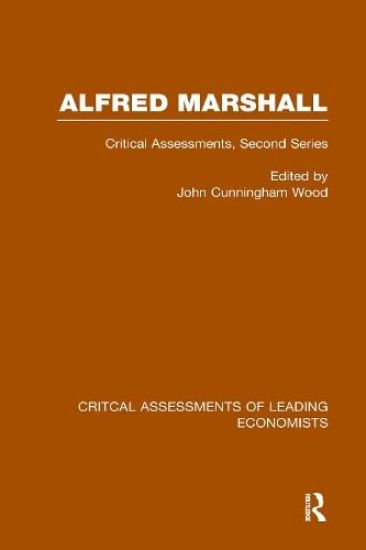
Alfred Marshall
This 4 volume set contains the most significant contributions and new developments in Marshallian scholarship since the publication of the earlier critical assessments set. Articles reproduced here address issues such as gender and ethics.
Alfred Marshall
Alfred Marshall remains one of the most significant figures in the development of economic analysis. These volumes give students immediate access to that development by reproducing the most important articles debating his expositions.
Alfred Marshall: Critical Responses
This is the first collection that documents a comprehensive range of material from Marshall's own lifetime. Alfred Marshall is one of the most important figures in the history of economics. Although there are several collections which draw together parts of the vast critical literature that has developed on Marshall in the twentieth century, this extensive set is the first to cover the whole of Marshall's career, and draws on a very wide range of sources, many of which are extremely rare. It includes:* a selection of Marshall's own writings not previously reprinted* press reviews of Marshall's writings, including reviews of both his major and minor books, and review notices of articles and addresses* biographical material from contemporary Who's Who publications and obituaries
Alfred Adler: Problems of Neurosis

Alfred Adler: Problems of Neurosis

Philippe Mairet

Routledge
1999
sidottu
First Published in 1999. This is Volume XV of twenty-one of the Individual Differences Psychology series. Written in 1929, this study gathers together case histories of Adlerian psychology and the science of Individual Psychology that teaches that the recurring theme of all neurosis and conflict is a sense of discouragement and inferiority.
Alfred Adler

Alfred Adler

W. Beran Wolfe

Routledge
1999
sidottu
First Published in 1999. Alfred Adler has given us the key to this understanding in his monumental contributions to modern psychology, but before the compilation of this volume of case histories the student of the methods of Individual Psychology has been compelled to search for his case material among the German publications of Adler and his pupils. Many of these published cases deal with conditions germane to continental environments, but puzzling to American readers. The principles and practice of Individual Psychology, however, are universally valid in their application, as this volume of purely American cases demonstrates.
Alfred P. Sloan
Alfred P. Sloan is credited with the invention of the modern corporation. At the helm of General Motors from 1923 to 1946, he had a profound influence on management thinking in America and much of the Western world through his unique, ahead-of-its-time, management style.Sloan's leadership and the sheer success of General Motors led to an enormous amount of study and writings on his contribution to management theory and practice.This set is part of the Critical Evaluations in Business and Management series. Future titles in the series will include:George Elton MayoW.E. DemingJoseph M. JuranPeter F. DruckerHerbert SimonH. Igor AnsoffAlfred D. ChandlerFor further information on these titles please contact [email protected]
Alfred Russell Wallace Contributions to the theory of Natural Selection, 1870, and Charles Darwin and Alfred Wallace , 'On the Tendency of Species to form Varieties' (Papers presented to the Linnean Society 30th June 1858)
Wallace noticed on expeditions to the Amazon and the Malay archipelego that mammals in Southeast Asia are more advanced than their Australian cousins. His suggestion was that the two continents had split before the better adapted mammals had evolved in Asia. The isolated Australian marsupials were able to thrive, whilst those in Asia were driven to extinction by competition from more advanced mammals. This led to his theory of natural selection, which he presented to the Linnean Society in 1858 with Charles Darwin. This volume reprints those papers presented to the Linnean Society.
Alfred D. Chandler: Critical Evaluation
Alfred D. Chandler (1918–2007) was the founder of modern business history. He was a critical early influence on strategic management and is famous for the dictum that ‘structure follows strategy’. This two-volume collection, a new title in the Routledge Major Works series, Critical Evaluations in Business and Management, gathers together the key journal articles and other vital research on Chandler to enable students and scholars to explore fully the impact of his ideas.Together with an extensive annotated bibliography and a full index, the collection has a comprehensive introduction, newly written by the editors, which places the collected material in its historical and intellectual context. It is an essential work of reference and will be valued by scholars and students of business and management as a vital one-stop research and pedagogic resource.
Alfred Marshall

Alfred Marshall

David Reisman

Routledge
2011
muu
First published in 1986, 1987 and 1990, this three volume reissue covers the life and times of leading economic theorist, Alfred Marshall - one of the founders of neoclassical economics. David Reisman's incisive and comprehensive study divides Marshall's work into three key areas: economics, progress and politics, and moral principles. The author deals with everything from Marshall's magnum opus Principles of Economics through to his contribution to the progressive evolution in Victorian politics; and finally the way in which his background and upbringing influenced his highly moral approach to economic theory.
Alfred Hitchcock
‘Will there ever be an end to the supply of books about Alfred Hitchcock?’, pleaded the Times Literary Supplement in 2008. It is a fair question for, as Michael Walker pointed out in Hitchcock’s Motifs, more has been written about Hitchcock (1899–1980) than any other film director. Indeed, Jane E. Sloan’s 1993 Hitchcock bibliography revealed that well over seventy-five scholarly books and nearly 1,000 articles had been published by 1990; and those figures have, of course, continued inexorably to rise.So, while the prospective viewer of Vertigo or Rear Window is likely to feel a compelling need for some preparation before consuming the film itself, the daunting quantity (and variable quality) of Hitchcock criticism makes it difficult to discriminate the useful from the tendentious, superficial, and otiose. That is why this new Routledge title, compiled by Neil Badmington, is so urgently needed. In four volumes, the collection meets the need for an authoritative reference work to allow researchers and students to make sense of the vast Hitchcock literature and the continuing explosion in research output. Users will now be able easily and rapidly to locate the best and most influential critical scholarship, work that is otherwise often inaccessible or scattered throughout a variety of specialist journals and books. With material gathered into one easy-to-use set, researchers and students can now spend more of their time with the key journal articles, book chapters, and other pieces, rather than on time-consuming (and sometimes fruitless) archival searches.The collection is supplemented with a comprehensive introduction newly written by the editor, which places the collected material in its historical and intellectual context. It is also fully indexed and includes an expertly compiled ‘Thematic Guide’ to enable users readily to discover and follow thematic pathways through the assembled works. Alfred Hitchcock is an essential reference work and is destined to be valued as a vital research resource.
Alfred Marshall: Progress and Politics (Routledge Revivals)
First published in 1987, Alfred Marshall: Progress and Politics provides an enlightening insight into Marshall's thoughts on social improvement, adaptive upgrading, policy and polity. He planned books on these subjects which he never subsequently wrote, but the thesis of this work is that a close study of such writings as Marshall did complete makes possible a very detailed reconstruction of the important contribution which Marshall was capable of making to Victorian evolutionary thought (much in the shadow of Darwin and Spencer). In the ongoing debate on the political element in political economy, he reveals himself to have been as much an eclectic as was Adam Smith and as much a man of commitment as was T. H. Green.
Alfred Marshall's Mission (Routledge Revivals)
Alfred Marshall was anxious to do good. Intended by an Evangelical father for the vocation of clergyman, the author of the mould-shaping Principles of Economics remained to the end of his days a great preacher deeply committed to raising the tone of life. First published in 1990, Alfred Marshall’s Mission explains how this most moral of political economists sought to blend the downward sloping utility function of Jevons and Menger with the organic evolutionism of Darwin and Spencer, how this celebrated theorist of social alongside economic growth sought to combine the mathematical marginalism of Cournot. Thunen and Edgeworth with the ethical uplift of Green, Jowett and Toynbee. The conclusion reached is that perhaps Marshall was, after all, too anxious to do good. Far more economists, however, have been not anxious enough; and that in itself gives this study of Marshall’s life and times a present day relevance which would, no doubt, have appealed strongly to the shy Cambridge professor who is its subject.
Alfred Marshall: Progress and Politics (Routledge Revivals)
First published in 1987, Alfred Marshall: Progress and Politics provides an enlightening insight into Marshall's thoughts on social improvement, adaptive upgrading, policy and polity. He planned books on these subjects which he never subsequently wrote, but the thesis of this work is that a close study of such writings as Marshall did complete makes possible a very detailed reconstruction of the important contribution which Marshall was capable of making to Victorian evolutionary thought (much in the shadow of Darwin and Spencer). In the ongoing debate on the political element in political economy, he reveals himself to have been as much an eclectic as was Adam Smith and as much a man of commitment as was T. H. Green.
Alfred Marshall's Mission (Routledge Revivals)
Alfred Marshall was anxious to do good. Intended by an Evangelical father for the vocation of clergyman, the author of the mould-shaping Principles of Economics remained to the end of his days a great preacher deeply committed to raising the tone of life. First published in 1990, Alfred Marshall’s Mission explains how this most moral of political economists sought to blend the downward sloping utility function of Jevons and Menger with the organic evolutionism of Darwin and Spencer, how this celebrated theorist of social alongside economic growth sought to combine the mathematical marginalism of Cournot. Thunen and Edgeworth with the ethical uplift of Green, Jowett and Toynbee. The conclusion reached is that perhaps Marshall was, after all, too anxious to do good. Far more economists, however, have been not anxious enough; and that in itself gives this study of Marshall’s life and times a present day relevance which would, no doubt, have appealed strongly to the shy Cambridge professor who is its subject.
Alfred Adler: Problems of Neurosis

Alfred Adler: Problems of Neurosis

Philippe Mairet

Routledge
2014
nidottu
First Published in 1999. This is Volume XV of twenty-one of the Individual Differences Psychology series. Written in 1929, this study gathers together case histories of Adlerian psychology and the science of Individual Psychology that teaches that the recurring theme of all neurosis and conflict is a sense of discouragement and inferiority.
Alfred Adler

Alfred Adler

W. Beran Wolfe

Routledge
2013
nidottu
First Published in 1999. Alfred Adler has given us the key to this understanding in his monumental contributions to modern psychology, but before the compilation of this volume of case histories the student of the methods of Individual Psychology has been compelled to search for his case material among the German publications of Adler and his pupils. Many of these published cases deal with conditions germane to continental environments, but puzzling to American readers. The principles and practice of Individual Psychology, however, are universally valid in their application, as this volume of purely American cases demonstrates.
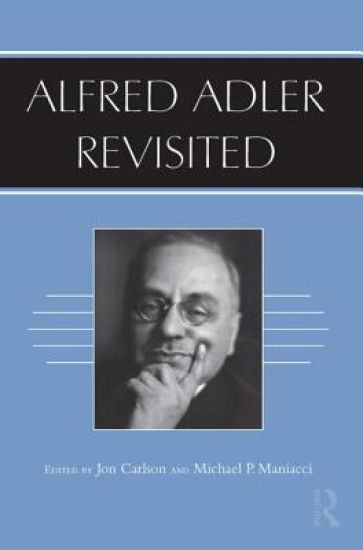
Alfred Adler Revisited
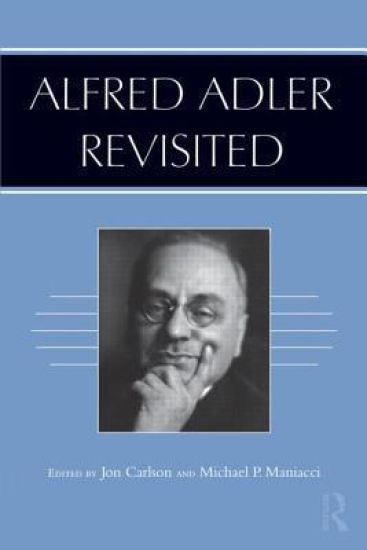
Alfred Adler was one of the most influential thinkers in psychotherapy – a physician, psychiatrist, author, and professor who wanted to answer the questions that plagued people during a significant time in history. His original ideas serve as a foundation for most modern theories of counseling and psychotherapy, ideas and writings that are brought back to life in this volume. Within, contemporary experts comment and introduce Adler's work through the lens of the 21st century. In doing so, they pay tribute to, analyze, and disseminate his classic, seminal papers that have significantly impacted the therapy field. The 23 papers included were chosen because of their relevance to today's issues, and their importance in Adlerian theory and practice. They detail the core elements of his theory, the tactics he used to advocate change in individuals and systems, and emphasize how contemporary his ideas are. Alfred Adler Revisited not only plays homage to a great professional, it revives his ideas and encourages debate over fundamental human issues.
Alfred Adler Revisited
Alfred Adler was one of the most influential thinkers in psychotherapy – a physician, psychiatrist, author, and professor who wanted to answer the questions that plagued people during a significant time in history. His original ideas serve as a foundation for most modern theories of counseling and psychotherapy, ideas and writings that are brought back to life in this volume. Within, contemporary experts comment and introduce Adler's work through the lens of the 21st century. In doing so, they pay tribute to, analyze, and disseminate his classic, seminal papers that have significantly impacted the therapy field. The 23 papers included were chosen because of their relevance to today's issues, and their importance in Adlerian theory and practice. They detail the core elements of his theory, the tactics he used to advocate change in individuals and systems, and emphasize how contemporary his ideas are. Alfred Adler Revisited not only plays homage to a great professional, it revives his ideas and encourages debate over fundamental human issues.