Kirjojen hintavertailu. Mukana 12 437 390 kirjaa ja 12 kauppaa.

Kirjahaku

Etsi kirjoja tekijän nimen, kirjan nimen tai ISBN:n perusteella.

288 tulosta hakusanalla Anca Niculae

Necessidades de informação da pessoa submetida a artroplastia da anca

Necessidades de informação da pessoa submetida a artroplastia da anca

João Ventura; Olga Ribeiro; Assunção Nogueira

Novas Edicoes Academicas
2018
pokkari
A Artroplastia Total da Anca pode apresentar-se como uma forma de corre o da coxartrose, sendo esta ltima uma consequ ncia das altera es inerentes ao processo de envelhecimento. Esta interven o constitui-se como o modo de restaurar a autonomia da pessoa, que se encontra comprometida, refletindo-se na realiza o dos autocuidados. Durante o per odo p s-operat rio, a pessoa carece de informa es/ensinos, que visem o restabelecimento das suas capacidades funcionais, pelo que o enfermeiro o ator principal na identifica o, planeamento e execu o destas atividades, com vista promo o dos seus autocuidados, comprometidos pela interven o cir rgica.
Ottimizzazione della forma dell'impianto femorale nell'artroplastica totale dell'anca
I meccanismi di fallimento, come il rimodellamento osseo avverso indotto dall'impianto, le sollecitazioni eccessive dell'interfaccia impianto-osso e la mancanza di stabilit primaria, sono noti per influenzare l'esito dell'artroplastica totale d'anca (PTA) non cementata. stato riferito che questi meccanismi di fallimento sono influenzati dal design dell'impianto femorale. Utilizzando l'ottimizzazione della forma come strumento di progettazione pre-clinica, le geometrie degli steli possono essere valutate in base a questi obiettivi di fallimento. Tuttavia, questi obiettivi possono talvolta essere in conflitto tra loro. Pertanto, necessario implementare l'ottimizzazione multi-obiettivo della forma per affrontare il conflitto di progettazione. Utilizzando un femore specifico per il paziente e un progetto iniziale di stelo TriLock(R) (DePuy), stato sviluppato uno schema di ottimizzazione tridimensionale completamente automatizzato basato sulla minimizzazione del rimodellamento osseo e delle sollecitazioni di interfaccia. Nello studio sono stati ricercati ulteriori design compromessi di impianti femorali, introducendo un nuovo schema ibrido per la minimizzazione simultanea di tutti e tre gli obiettivi. Lo studio ha favorito i design con apertura laterale, sezioni trasversali prossimali rettangolari e steli di dimensioni maggiori per migliorare la stabilit . Le geometrie finali dello stelo hanno previsto un trasferimento del carico favorevole e una migliore fissazione.
Otimização da forma do implante femoral na artroplastia total da anca
Sabe-se que os mecanismos de falha, como a remodela o ssea adversa induzida pelo implante, as tens es excessivas na interface implante-osso e a falta de estabilidade prim ria, afectam o resultado da artroplastia total da anca (ATQ) n o cimentada. Estes mecanismos de falha s o alegadamente influenciados pelo desenho do implante femoral. Utilizando a otimiza o da forma como ferramenta de conce o pr -cl nica, as geometrias das hastes podem ser avaliadas com base nestes objectivos de falha. No entanto, estes objectivos podem, por vezes, ser mutuamente conflituosos. Por conseguinte, necess rio implementar a otimiza o da forma com m ltiplos objectivos para resolver o conflito de conce o. Utilizando um f mur espec fico de um doente e um desenho inicial da haste TriLock(R) (DePuy), foi desenvolvido um esquema de otimiza o da forma 3-D totalmente automatizado com base na minimiza o da remodela o ssea e das tens es da interface. No estudo, procurou-se obter mais designs comprometidos de implantes femorais atrav s da introdu o de uma nova estrutura h brida para a minimiza o simult nea dos tr s objectivos. O estudo favoreceu os designs com abertura lateral, com sec es transversais proximais rectangulares e tamanhos de haste maiores para melhorar a estabilidade. As geometrias finais da haste de compensa o previram uma transfer ncia de carga favor vel e uma melhor fixa o.
Avaliação da Perícia de Luta Livre com Arremesso de Anca

Avaliação da Perícia de Luta Livre com Arremesso de Anca

Dnyaneshwar Mane

Edicoes Nosso Conhecimento
2023
pokkari
No dom nio da luta livre, existem poucos testes de per cia para avaliar o desempenho dos jogadores de luta livre. Assim, o autor empreendeu o estudo para desenvolver o teste de per cia do jogo de luta livre para lutadores masculinos de n vel j nior. O objetivo do estudo era construir e padronizar o "Teste" para sele o, avalia o e aprecia o do desempenho dos lutadores. O estudo foi confinado aos jogadores de luta livre masculina de n vel j nior da categoria de peso 55kg do distrito de Pune. Este livro uma tentativa de analisar as compet ncias b sicas importantes utilizadas pelos jogadores de luta livre masculina j nior da categoria de peso de 55 kg com a ajuda de especialistas da rea da luta livre. O teste de habilidades rec m-projetado foi administrado em jogadores juniores de luta livre masculina da categoria de peso 55 kg de v rios clubes e casas de pr tica em Pune e o teste foi revisado, ap s algumas modifica es o teste foi finalizado. As normas do Head Lock Hip Toss Test podem ser teis para avaliar a habilidade do lutador j nior masculino da categoria de peso de 55 kg.
Debating Surrogacy

Debating Surrogacy

Anca Gheaus; Christine Straehle

OXFORD UNIVERSITY PRESS INC
2024
sidottu
Surrogacy is the commissioning of a woman to gestate and give birth to a child for another would-be parent. The practice raises several ethical questions, such as the commodification of the surrogate and of the baby, and the exploitation of the surrogate, issues which have been extensively debated. This book offers a fresh take on surrogacy, by concentrating on questions which bear on its justifiability: Is providing gestational services a permissible way of employing a woman's body? Indeed, is it a legitimate form of work? Are the children born out of surrogacy in any way wronged by surrogacy agreements? In the first part of the book, Christine Straehle proposes an account of surrogacy work as legitimate work for women, as a way to realize certain goals in women's lives through the fruit of their labour. She defends a right to become a surrogate as necessary to protect women's autonomy. Anca Gheaus criticises surrogacy by arguing that it always wrongs children--whether or not it also harms them--by disrespecting them; therefore, gestational services are impermissible. In the second part, Straehle responds to Gheaus, questioning that children are wronged by the practice of surrogacy. Instead, she defends an intentional model of parental rights, which indicates that having a child through surrogacy should count as a ground to assign parental rights. In her response, Gheaus objects that Straehle's view fails to properly account for the interests of either surrogates or children. However, she accepts that women may gestate without the intention to have custody over the newborn, and is therefore open to some kind of post-surrogacy practice that would radically depart, in the allocation of legal parenthood, from any historical or currently proposed form of surrogacy.
Debating Surrogacy

Debating Surrogacy

Anca Gheaus; Christine Straehle

OXFORD UNIVERSITY PRESS INC
2024
nidottu
Surrogacy is the commissioning of a woman to gestate and give birth to a child for another would-be parent. The practice raises several ethical questions, such as the commodification of the surrogate and of the baby, and the exploitation of the surrogate, issues which have been extensively debated. This book offers a fresh take on surrogacy, by concentrating on questions which bear on its justifiability: Is providing gestational services a permissible way of employing a woman's body? Indeed, is it a legitimate form of work? Are the children born out of surrogacy in any way wronged by surrogacy agreements? In the first part of the book, Christine Straehle proposes an account of surrogacy work as legitimate work for women, as a way to realize certain goals in women's lives through the fruit of their labour. She defends a right to become a surrogate as necessary to protect women's autonomy. Anca Gheaus criticises surrogacy by arguing that it always wrongs children--whether or not it also harms them--by disrespecting them; therefore, gestational services are impermissible. In the second part, Straehle responds to Gheaus, questioning that children are wronged by the practice of surrogacy. Instead, she defends an intentional model of parental rights, which indicates that having a child through surrogacy should count as a ground to assign parental rights. In her response, Gheaus objects that Straehle's view fails to properly account for the interests of either surrogates or children. However, she accepts that women may gestate without the intention to have custody over the newborn, and is therefore open to some kind of post-surrogacy practice that would radically depart, in the allocation of legal parenthood, from any historical or currently proposed form of surrogacy.
The Traffic in Women's Work

The Traffic in Women's Work

Anca Parvulescu

University of Chicago Press
2014
sidottu
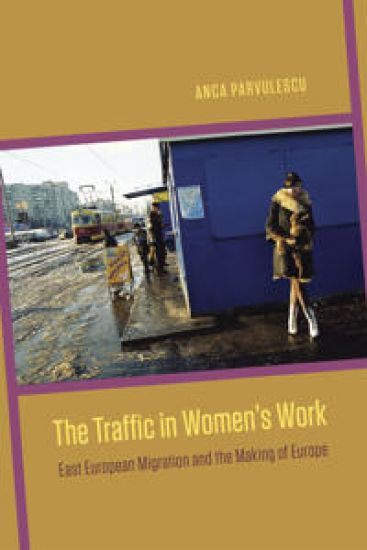
"Welcome to the European family!" When East European countries joined the European Union under this banner after 1989, they agreed to the free movement of goods, services, capital, and persons. In this book, Anca Parvulescu analyzes an important niche in this imagined European kinship: the traffic in women, or the circulation of East European women in West Europe in marriage and as domestic servants, nannies, personal attendants, and entertainers. Analyzing film, national policies, and an impressive range of work by theorists from Giorgio Agamben to Judith Butler, she develops a critical lens through which to think about the transnational continuum of "women's work." Parvulescu revisits Claude Levi-Strauss' concept of kinship and its rearticulation by second-wave feminists, particularly Gayle Rubin, to show that kinship has traditionally been anchored in the traffic in women. Reading recent cinematic texts that help frame this, she reveals that in contemporary Europe, East European migrant women are exchanged to engage in labor customarily performed by wives within the institution of marriage. Tracing a pattern of what she calls Americanization, Parvulescu argues that these women thereby become responsible for the labor of reproduction. A fascinating cultural study as much about the consequences of the enlargement of the European Union as women's mobility, The Traffic in Women's Work questions the foundations of the notion of Europe today.
The Traffic in Women's Work

The Traffic in Women's Work

Anca Parvulescu

University of Chicago Press
2014
nidottu
"Welcome to the European family!" When East European countries joined the European Union under this banner after 1989, they agreed to the free movement of goods, services, capital, and persons. In this book, Anca Parvulescu analyzes an important niche in this imagined European kinship: the traffic in women, or the circulation of East European women in West Europe in marriage and as domestic servants, nannies, personal attendants, and entertainers. Analyzing film, national policies, and an impressive range of work by theorists from Giorgio Agamben to Judith Butler, she develops a critical lens through which to think about the transnational continuum of "women's work." Parvulescu revisits Claude Levi-Strauss' concept of kinship and its rearticulation by second-wave feminists, particularly Gayle Rubin, to show that kinship has traditionally been anchored in the traffic in women. Reading recent cinematic texts that help frame this, she reveals that in contemporary Europe, East European migrant women are exchanged to engage in labor customarily performed by wives within the institution of marriage. Tracing a pattern of what she calls Americanization, Parvulescu argues that these women thereby become responsible for the labor of reproduction. A fascinating cultural study as much about the consequences of the enlargement of the European Union as women's mobility, The Traffic in Women's Work questions the foundations of the notion of Europe today.
Trade, Development and Structural Change

Trade, Development and Structural Change

Anca M. Voicu; Somnath Sen; Inmaculada Martinez-Zarzoso

Palgrave Macmillan
2018
sidottu
This book examines the evolution of trade and trade patterns in Central and Eastern European countries (CEEC) and assesses the implications of these patterns on structural change and economic development within transition economies. Taking the fall of the Iron Curtain in 1989 as a starting point, the authors discuss the transition of former communist CEE countries from centrally planned to market-driven economies, arguing that trade was the primary engine for the economic growth and transition process they experienced. The chapters in this book incorporate the results of previous studies – some of which are based on original research conducted by the authors – dedicated to the integration process of international and European trade. More importantly, the authors look at the broader aspects of structural change and economic development, indeed the whole process of economic transformation. Thus, the book moves well beyond the core ‘trade and growth’ framework to look at technologicalprogress, foreign investment, institutional development and structural change in Central and Eastern European countries.
No Return Address

No Return Address

Anca Vlasopolos

Columbia University Press
2000
sidottu
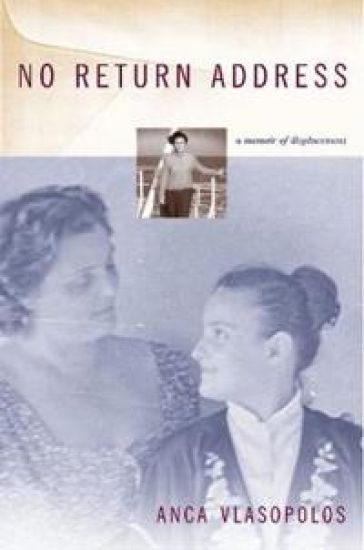
No Return Address is a vivid memoir of a life in exile and a poignant meditation on pleasure and loss, repression and transgression, and the complexities of love under harsh human conditions. In recounting her life's journey from Romania to Paris and Brussels, then on to the United States, Anca Vlasopolos writes movingly of the peculiar attributes of displacement in the contemporary world-the hyphenated, ambiguous identities; the purgatory in which immigrants await transfer to another country; the mysterious nostalgia for places and events dimly recalled. Throughout, she describes the constant search for a place to truly call home. Vlasopolos renders a clear and loving portrait of her mother, an Auschwitz survivor courageously raising a young girl by herself after the death of her husband, a political dissident. She details their years of limbo in Brussels and Paris and of settlement in Detroit, Michigan, as well as her ultimate decision to identify the United States as home, inspired by the strong multicultural quality that allows so many others to do the same.
Laughter

Laughter

Anca Parvulescu

MIT Press
2010
pokkari
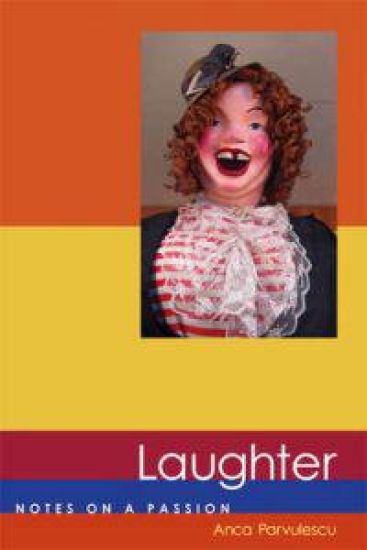
Uncovering an archive of laughter, from the forbidden giggle to the explosive guffaw.Most of our theories of laughter are not concerned with laughter. Rather, their focus is the laughable object, whether conceived of as the comic, the humorous, jokes, the grotesque, the ridiculous, or the ludicrous. In Laughter, Anca Parvulescu proposes a return to the materiality of the burst of laughter itself. She sets out to uncover an archive of laughter, inviting us to follow its rhythms and listen to its tones. Historically, laughter-especially the passionate burst of laughter-has often been a faux pas. Manuals for conduct, abetted by philosophical treatises and literary and visual texts, warned against it, offering special injunctions to ladies to avoid jollity that was too boisterous. Returning laughter to the history of the passions, Parvulescu anchors it at the point where the history of the grimacing face meets the history of noise. In the civilizing process that leads to laughter's "falling into disrepute," as Nietzsche famously put it, we can see the formless, contorted face in laughter being slowly corrected into a calm, social smile. How did the twentieth century laugh? Parvulescu points to a gallery of twentieth-century laughers and friends of laughter, arguing that it is through Georges Bataille that the century laughed its most distinct laugh. In Bataille's wake, laughter becomes the passion at the heart of poststructuralism. Looking back at the century from this vantage point, Parvulescu revisits four of its most challenging projects: modernism, the philosophical avant-gardes, feminism, and cinema. The result is an overview of the twentieth century as seen through the laughs that burst at some of its most convoluted junctures.