Based on a series of booklets written by bestselling motivational writer Napoleon Hill, Andrew Carnegie's Gift outlines the importance of three essential principles of success: self-discipline, learning from defeat, and the Golden Rule. In 1908, Napoleon Hill met industrialist Andrew Carnegie for what he believed would be a short interview for an article. Instead, Carnegie spent hours detailing his principles of success to the young magazine reporter--and challenged Hill to devote 20 years to expanding that philosophy. Hill accepted the challenge, which resulted in his bestselling book, Think and Grow Rich, as well as a series of pamphlets he called Mental Dynamite. Now, the Napoleon Hill Foundation has retrieved those long-forgotten booklets and selected three major principles for elaboration: Self-Discipline, which includes a 13-point psychological formula to use as a daily mantra and to overcome past difficulties, both personal and professional; Learning from Defeat, which helps you find happiness with others, become self-determining, and turn stumbling blocks into stepping stones; and the Golden Rule, for developing a strong character and leading a selfless life. Each chapter draws upon Carnegie's words and advice as inspiration, with annotations by author James Whittaker explaining why they are essential--not just helpful--for reaching your goals and prospering.
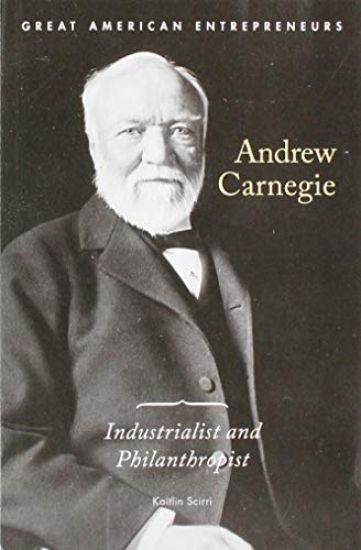
Industrialist Andrew Carnegie achieved great financial success in the steel industry in nineteenth-century America. An immigrant from Scotland, Carnegie came to America as a boy and worked hard to become one of the wealthiest men in the world. After retiring from the steel industry, he gave his fortune away, believing the wealthy had an obligation to those less fortunate. Students will follow Carnegie's rags-to-riches story, learning about the industrialization of America and Carnegie's most influential works and achievements. They will also learn of Carnegie's business strategies, how he overcame obstacles and criticism, and his philanthropic work that continues through many institutes and organizations today.
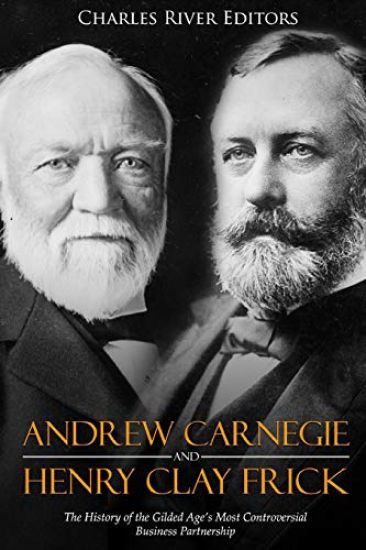
*Includes pictures *Includes online resources and a bibliography for further reading The Gilded Age and the dawn of the 20th century are often remembered as an era full of monopolies, trusts, and economic giants in heavy industries like oil and steel. Men like John Rockefeller built empires and financiers like J.P. Morgan merged and consolidated them. The era also made names like Astor, Cooke, and Vanderbilt instantly recognizable across the globe. Over time, the unfathomable wealth generated by the businesses made the individuals on top incredibly rich, and that in turn led to immense criticism and an infamous epithet used to rail against them: robber barons. The term robber baron has largely fallen into disuse in the 21st century but there was a time when it was a popular epithet that described the kind of man who, it was believed, built his fortune by taking things belonging to others. The Gilded Age and the dawn of the 20th century are often remembered as an era full of monopolies, trusts, and economic giants in heavy industries like oil and steel. Men like Andrew Carnegie built empires like Carnegie Steel, and financiers like J.P. Morgan merged and consolidated them. The era also made names like Astor, Cooke, and Vanderbilt instantly recognizable across the globe. Over time, the unfathomable wealth generated by the businesses made the individuals on top incredibly rich, and that in turn led to immense criticism and an infamous epithet used to rail against them: robber barons. The industrial might wielded by men like Gould in the later 19th century directly led to a public backlash and made President Teddy Roosevelt the "trust buster", and there has since been countless regulations to attempt to avoid the types of monopolies found over 100 years ago. However, many 20th century historians and writers pushed back against the allegations hurled at the "robber barons" and even took issue with the name. For example, Libertarian writer John Stossel argued, "They weren't robbers, because they didn't steal from anyone, and they weren't barons-they were born poor..." Dozens of these men would be pilloried as "robber barons," but few of them were as wealthy or influential as Andrew Carnegie, who built America's foremost steel empire. Ironically, Carnegie epitomized the American Dream, migrating with his poor family to America in the mid-19th century and rising to the top of the business world in his adopted country. A prodigious writer in addition to his keen sense of business, Carnegie was one of the most outspoken champions of capitalism at a time when there was pushback among lower social classes who witnessed the great disparities in wealth; as he once put it, "Upon the sacredness of property civilization itself depends-the right of the laborer to his hundred dollars in the savings bank, and equally the legal right of the millionaire to his millions." In a similar vein, he said, "Those who would administer wisely must, indeed, be wise, for one of the serious obstacles to the improvement of our race is indiscriminate charity." Though his was not the "rags to riches" story one often hears of this era, Henry Clay Frick's drive and ambition helped transform a young man from a solidly middle class family into a millionaire by the age of 30. At the same time, despite the characteristic ruthlessness with which he dealt with business associates and foes alike, he was devoted and sometime even tender to his friends and family. After surviving an assassination attempt, he lived to toast the 20th century and avoided going down with so many others of his era on the Titanic, only to see the world he had worked to create consumed by a European war that spread around the world.
*Includes pictures *Includes online resources and a bibliography for further reading The Gilded Age and the dawn of the 20th century are often remembered as an era full of monopolies, trusts, and economic giants in heavy industries like oil and steel. Men like John Rockefeller built empires and financiers like J.P. Morgan merged and consolidated them. The era also made names like Astor, Cooke, and Vanderbilt instantly recognizable across the globe. Over time, the unfathomable wealth generated by the businesses made the individuals on top incredibly rich, and that in turn led to immense criticism and an infamous epithet used to rail against them: robber barons. The term robber baron has largely fallen into disuse in the 21st century but there was a time when it was a popular epithet that described the kind of man who, it was believed, built his fortune by taking things belonging to others. The Gilded Age and the dawn of the 20th century are often remembered as an era full of monopolies, trusts, and economic giants in heavy industries like oil and steel. Men like Andrew Carnegie built empires like Carnegie Steel, and financiers like J.P. Morgan merged and consolidated them. The era also made names like Astor, Cooke, and Vanderbilt instantly recognizable across the globe. Over time, the unfathomable wealth generated by the businesses made the individuals on top incredibly rich, and that in turn led to immense criticism and an infamous epithet used to rail against them: robber barons. The industrial might wielded by men like Gould in the later 19th century directly led to a public backlash and made President Teddy Roosevelt the "trust buster", and there has since been countless regulations to attempt to avoid the types of monopolies found over 100 years ago. However, many 20th century historians and writers pushed back against the allegations hurled at the "robber barons" and even took issue with the name. For example, Libertarian writer John Stossel argued, "They weren't robbers, because they didn't steal from anyone, and they weren't barons-they were born poor..." Dozens of these men would be pilloried as "robber barons," but few of them were as wealthy or influential as Andrew Carnegie, who built America's foremost steel empire. Ironically, Carnegie epitomized the American Dream, migrating with his poor family to America in the mid-19th century and rising to the top of the business world in his adopted country. A prodigious writer in addition to his keen sense of business, Carnegie was one of the most outspoken champions of capitalism at a time when there was pushback among lower social classes who witnessed the great disparities in wealth; as he once put it, "Upon the sacredness of property civilization itself depends-the right of the laborer to his hundred dollars in the savings bank, and equally the legal right of the millionaire to his millions." In a similar vein, he said, "Those who would administer wisely must, indeed, be wise, for one of the serious obstacles to the improvement of our race is indiscriminate charity." Though his was not the "rags to riches" story one often hears of this era, Henry Clay Frick's drive and ambition helped transform a young man from a solidly middle class family into a millionaire by the age of 30. At the same time, despite the characteristic ruthlessness with which he dealt with business associates and foes alike, he was devoted and sometime even tender to his friends and family. After surviving an assassination attempt, he lived to toast the 20th century and avoided going down with so many others of his era on the Titanic, only to see the world he had worked to create consumed by a European war that spread around the world.
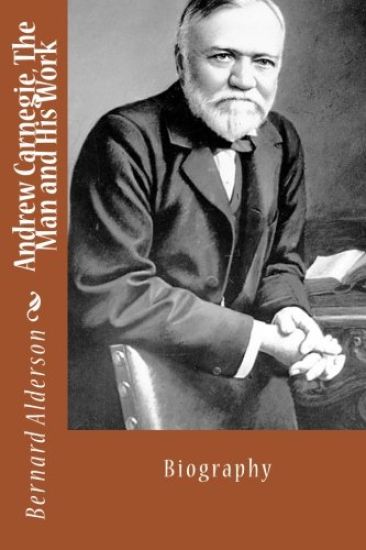
Andrew Carnegie amassed wealth that inspired generations of entrepreneurs and industrialists. Starting with nothing in Scotland, he gradually built so much wealth that those at the top of the current Forbes list would still not be able to match him.This book presents the life of one of the gentlest and kindest men in history and the way he made his money. His fortune was ultimately almost three times more than the richest men on the planet today.The purpose of this book is to go beyond the facts of his life and present the events and consequences of his actions along with the philosophies that ruled his heart and mind.Carnegie was not merely a businessman. He understood the meaning of life and how men thought, which gave him an advantage.He began working at a young age, and the lessons he learned from observing his surroundings gave him the foundational structure that allowed him to build his wealth and etch his name in the minds of generations to come.This is not just a history book about a man who did something almost two hundred years ago. It is a book about what it takes to be a man who can change his fortunes and the world around him.What are you waiting for? Scroll up and click the 'Buy Now' to learn more about this business magnate and how he changed the course of history for the better.
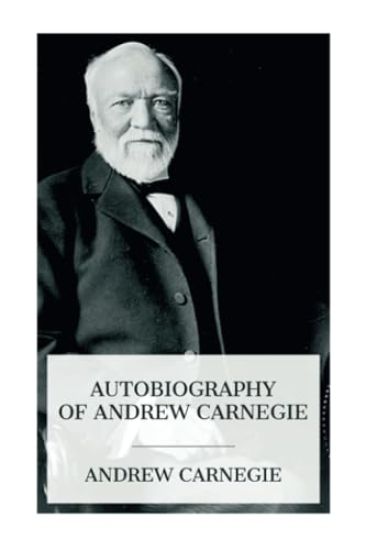
His good friend Mark Twain dubbed him "St. Andrew." British Prime Minister William Gladstone called him an "example" for the wealthy. Such terms seldom apply to multimillionaires. But Andrew Carnegie was no run-of-the-mill steel magnate. At age 13 and full of dreams, he sailed from his native Dunfermline, Scotland, to America. The story of his success begins with a $1.20-a-week job at a bobbin factory. By the end of his life, he had amassed an unprecedented fortune-and given away more than 90 percent of it for the good of mankind.
Andrew Carnegie may be one of the most famous names in American history, and his story is nothing short of an inspiration. An immigrant born in Scotland, Carnegie immigrated to the U.S. and became one of the richest industrialists of his day. This biographical text explores Carnegie's fascinating life and his contributions to the steel industry. Through age-appropriate language and historical photos, readers learn how Carnegie's entrepreneurial spirit and philanthropic nature helped shaped nineteenth-century American industry and the spirit that came to define it. A timeline and primary sources complete this comprehensive learning experience.
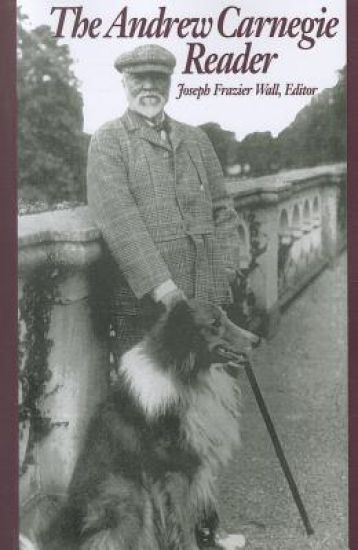
Andrew Carnegie is the only American entrepreneur who could have won distinction as an author, even if he had never seen a steel mill,” writes Joseph Frazier Wall. A skillful and prolific writer, Andrew Carnegie published sixty three articles in major magazines of his time, such as The North American Review, and eight books. Although he is best remembered today for the radical philosophy expressed in the title essay of his book The Gospel of Wealth, his other writings are readable and provocative.The Andrew Carnegie Reader is the first anthology to bring together in a single volume a representative selection of Carnegie’s writings which show him as a shrewd businessman, celebrated philanthropist, champion of democracy, and eternal optimist. Carnegie’s first letter to the editor at the age of seventeen was the beginning of a lifelong attempt to satisfy an insatiable journalistic desire. Always voluble and candid, Carnegie was as active with his pen as with his tongue.This intriguing collection covers sixty years of the industrial giant’s life, from his letters to his cousin George Lauder, written in 1853, to the final chapter od his autobiography, completed in 1914. In his own simple, abrupt style, colored with fierce optimism, Carnegie captivated his audience.Although most of the selections were penned for an audience now long gone, today’s reader will be intrigued by the pertinence and timelessness of Carnegie’s hopes for world peace, his views on labor, and his concern for better race relations in America and their continuing applicability to humankind. A brief essay by the editor introduces each selection.
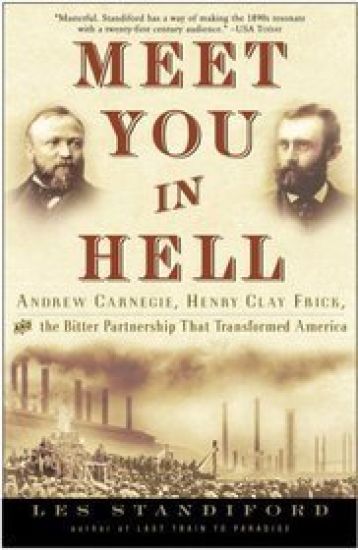
Provides an insightful study of the relationship between two of the founding fathers of American industry--Andrew Carnegie and Henry Clay Frick--the Homestead Steel Strike of 1892, and the resulting bloody clash between labor and management that led to the dissolution of their partnership. Reprint. 30,000 first printing.